SANDRINGHAM, AUCKLAND | Webfit News
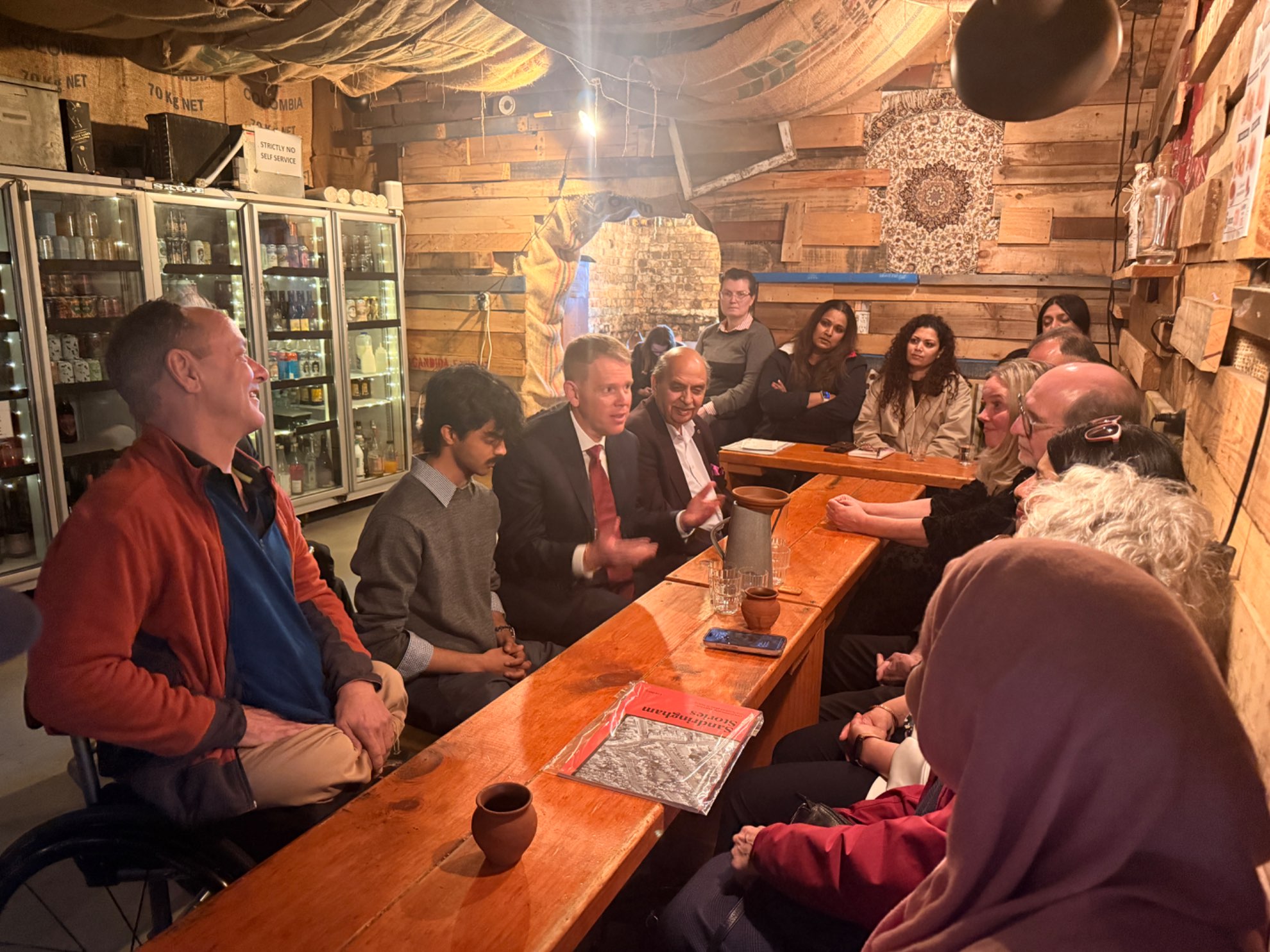
A local meeting in Sandringham brought together former Prime Minister Chris Hipkins, local business owners, community representatives and residents to discuss some of the major issues affecting Auckland families and businesses.
The discussion covered the cost of living, rising food and fuel prices, pressure on small businesses, community funding, financial literacy, artificial intelligence, data centres, immigration and the proposed New Zealand-India Free Trade Agreement.
Small businesses feeling the pressure
One local family business owner spoke openly about the challenges facing hospitality businesses.
The family has been running its business for around 35 years, with several family members working across its stores. The owner said business had actually performed better during the COVID-19 lockdown period when contactless services were widely used.
Today, however, rising costs and lower consumer spending are creating significant pressure.
The business owner said the cost of raw materials had increased substantially, while businesses could not simply pass those increases on to customers.
“We can’t put the prices up high because it’s not fair on our customers,” was the message.
The owner said the family was also working extremely long hours to keep the business operating, while staff hours had been reduced because of financial pressure.
The discussion highlighted the difficult balance between keeping prices affordable for customers and paying sustainable wages while covering increasing operating costs.
Food and fuel prices
The cost of food and fuel was another major concern raised during the meeting.
Hipkins said the high cost of living was reducing the amount of money people had available to spend, creating a flow-on effect for businesses.
He also raised concerns about competition in the grocery wholesale market and the influence of the major players in the sector.
Fuel prices were also discussed, with concerns raised about the impact of fuel costs on transport, businesses and household budgets.
Hipkins said the previous Labour Government had reduced fuel prices during its term and argued against further increases in petrol-related costs while households were already under pressure.
Support for community organisations
Community and voluntary organisations also raised concerns about funding.
Representatives said many organisations were struggling because funding had become more difficult to secure, while demand for their services remained high.
One key message was the need for longer-term funding certainty, rather than relying on short-term six- or 12-month funding arrangements.
The meeting also discussed the important role community organisations play in keeping young people engaged in positive activities such as sport, arts and other programmes.
A powerful example was shared of young people who had been at risk of entering a life of crime but were redirected through a boxing programme.
The discussion highlighted how investment in community programmes can have benefits beyond sport or recreation, including helping young people reconnect with school and their communities.
Financial literacy for young people
Financial education was also raised by a young entrepreneur who asked whether financial literacy should become a stronger part of the school curriculum.
Hipkins agreed that financial education is currently inconsistent across schools.
He said a standard financial literacy programme should be available to students across New Zealand, including education about concepts such as compound interest and responsible borrowing.
Artificial intelligence and the future of work
Artificial intelligence was another major topic.
Hipkins said Labour had recently released an AI action plan and argued that New Zealand needed stronger rules around AI, including privacy, copyright, data centres and the use of AI in government decision-making.
He said AI would change the nature of many jobs but did not believe it would eliminate the need for people to work altogether.
He also stressed that where AI is used by government to assist with decisions affecting individuals, a human should remain responsible for the final decision.
Data centres
The growth of data centres in New Zealand was also discussed.
Hipkins said there was a place for data centres in New Zealand but argued that their water and electricity use needed to be sustainable.
He said new electricity generation should be considered rather than having large data centres compete with existing consumers for electricity, and that renewable energy should be prioritised.
New Zealand-India Free Trade Agreement
The proposed New Zealand-India Free Trade Agreement was another topic raised during the meeting.
Hipkins said he supported greater trade between New Zealand and India and believed the agreement could create opportunities for New Zealand exporters.
He also rejected claims that the agreement would automatically create significant immigration concerns, saying Labour had examined the immigration provisions.
However, he raised concerns about an investment provision relating to New Zealand investment into India, saying he did not believe the proposed target was realistic.
Racism and social cohesion
The meeting also touched on concerns about racism and political rhetoric.
Hipkins criticised what he described as the increasing use of divisive and racist rhetoric in politics, saying it was not representative of New Zealand’s identity as a diverse country.
Participants discussed the potential impact of political language on communities, particularly when negative rhetoric can contribute to people feeling targeted or unsafe.
The importance of maintaining social cohesion and rejecting hate-based politics was strongly emphasised during the discussion.
Strong opposition and political accountability
Another participant asked Hipkins about the importance of having a strong opposition in Parliament.
Hipkins acknowledged that being Leader of the Opposition involves a difficult balance between holding the government accountable and presenting an alternative vision for the country.
He said Labour’s focus moving towards the election would increasingly be on what it wanted to do in government rather than simply criticising its opponents.
Questions were also raised about government decisions affecting social services, including processing delays and benefit payments.
Hipkins criticised the Government’s approach and called for greater accountability from ministers.
Why return to politics?
One of the more personal moments came when Hipkins was asked why he wanted to return as Prime Minister.
He said his motivation was largely connected to his children and the future they will inherit.
He spoke about wanting young people to have access to good jobs, secure homes and a healthy environment in the future.
For Hipkins, he said, the motivation was about making decisions today that would create a better New Zealand for the next generation.
A community looking for practical solutions
The Sandringham meeting provided an opportunity for local business owners and community members to raise issues directly with a senior opposition leader.
From rising food and fuel costs to pressure on small businesses, community funding, youth programmes, financial education and the impact of new technology, the discussion reflected the wide range of challenges being experienced by people and organisations across Auckland.
For local businesses, the message was clear: the cost of doing business is rising while customers are becoming increasingly careful about spending.
For community organisations, the priority is greater certainty and support.
And for families, the broader concern remains the same: how to build a stronger economy while keeping New Zealand affordable, inclusive and secure for the next generation.
Webfit News will continue to follow the issues raised by local businesses and community members in Auckland.