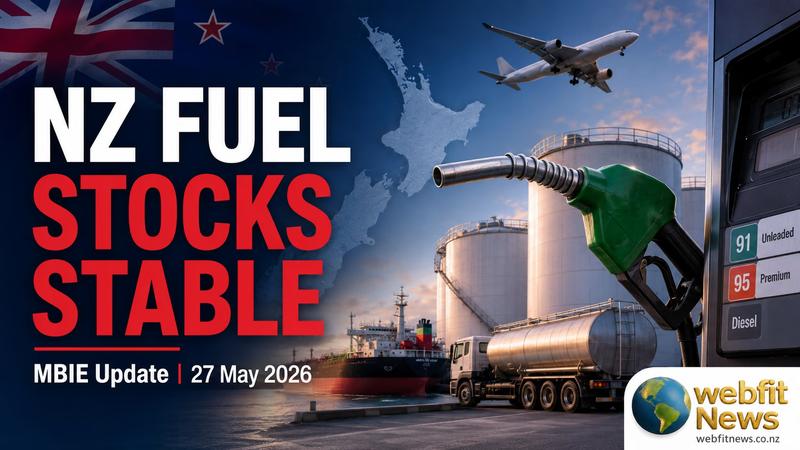
Right now, MBIE’s position is that this chain is working.
Why Petrol Is Up But Diesel And Jet Fuel Are Down
Some readers may look at the figures and ask: if petrol increased, why did diesel and jet fuel fall?
The answer is not dramatic. Fuel stocks rise when a shipment arrives and fall as fuel is used. MBIE says the latest movements are consistent with routine shipping patterns and are what would be expected even without conflict in the Middle East. Since the previous update, petrol stocks increased by 7.9 days, diesel decreased by 3.3 days, and jet fuel decreased by 3.4 days.
This is normal for a country that works on rolling shipments. The key issue is not whether one fuel category moves up or down between updates. The key question is whether the overall level remains above minimum requirements and whether future shipments are confirmed.
On both points, MBIE says the picture is stable. Fuel importers have confirmed orders through to late June, with planned orders extending into August.
The Middle East Factor Still Matters
Although MBIE says the latest stock movements are routine, New Zealand is not operating in a normal global environment. International conflict and shipping uncertainty can still affect fuel prices, supply routes and importer costs.
MBIE’s fuel response page says New Zealand is currently in Phase 1 of the National Fuel Response Plan 2026, with stable supply and sufficient stocks. The Government says it has secured an additional 90 million litres of fuel supply, aligned some fuel specifications with Australia to improve supply flexibility, and continued working with industry on possible future disruption scenarios.
That does not mean there is a shortage. It means officials are watching the situation closely because fuel is not just a consumer product. It is part of national resilience.
Diesel keeps freight moving. Jet fuel keeps aviation running. Petrol keeps workers, families and small businesses mobile. If fuel prices rise or supply becomes uncertain, the impact flows quickly into supermarket shelves, tradie invoices, courier charges, airfares and the cost of doing business.
What This Means For Auckland And Wider New Zealand
For Auckland, the country’s largest city and a major logistics hub, fuel security is not an abstract policy topic. It affects daily life.
Auckland’s roads carry commuters, buses, courier vans, ride-share drivers, tradies and trucks feeding supermarkets and construction sites. Auckland Airport depends heavily on jet fuel for domestic and international flights. The Port of Auckland, logistics yards and distribution centres all sit inside a wider system that relies on diesel.
For rural New Zealand, diesel is even more critical. Farming, freight, contractors and regional transport networks depend on it. A serious diesel squeeze would hit rural communities and food supply chains quickly.
For households already dealing with high living costs, the concern is not only whether fuel is available. It is also whether fuel remains affordable. MBIE has previously noted that global conditions are contributing to volatility in fuel price data and importer margins.
Webfit News Perspective
From a Webfit News perspective, today’s update should be read with balance, not fear. The data is reassuring, but it should not make New Zealand complacent.
The positive part is clear: fuel is flowing, ships are arriving, and stocks are above minimum requirements. The public should not panic.
The harder question is bigger than today’s numbers: how comfortable should New Zealand be with a system that depends so strongly on overseas supply and regular shipping? This is where the national conversation needs to mature. Fuel security is not just about emergency plans. It is about storage, pricing transparency, transport resilience, alternative energy investment and honest communication with the public.
The Bottom Line
Today’s MBIE update gives New Zealand a stable short-term picture. Petrol stocks are up, diesel and jet fuel have eased slightly, and future orders give officials confidence through late June and into August.
But the update also reminds us that fuel security is a live national issue in 2026. New Zealanders do not need to panic. Businesses do need to plan. Government agencies need to keep publishing clear data. And the public deserves calm, regular information without political spin.
For now, the message is steady: the pumps are not running dry, the ships are still coming, and the system is working. But in a world of global disruption, fuel security can no longer be treated as something that only matters when there is a crisis.
References
Ministry of Business, Innovation and Employment, Fuel stock and shipping updates
Ministry of Business, Innovation and Employment, Fuel supply disruption response
Ministry of Business, Innovation and Employment, Weekly fuel price monitoring