14 October 2026
New Zealand businesses were told on Wednesday that India's most populous state has room for small Kiwi companies, but only for those willing to pick a narrow target, check every supplier and stay for the long haul.
14 October 2026 New Zealand businesses were told on Wednesday that India's most populous state has room for small Kiwi companies, but only for those willing to pick a narrow...
14 October 2026
New Zealand businesses were told on Wednesday that India's most populous state has room for small Kiwi companies, but only for those willing to pick a narrow target, check every supplier and stay for the long haul.
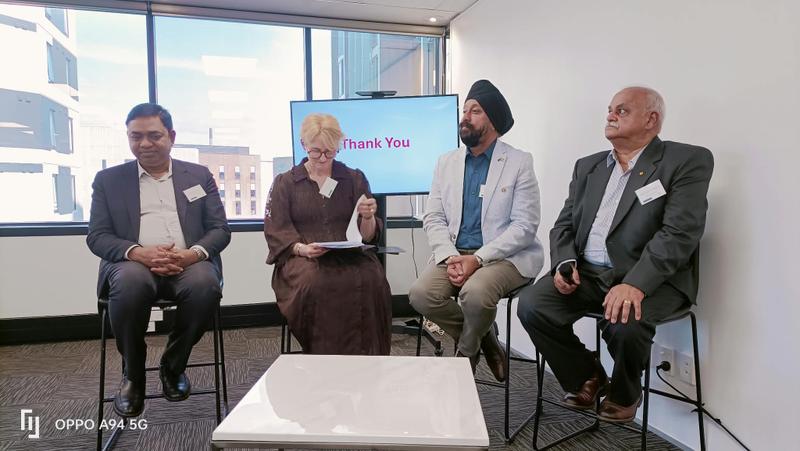
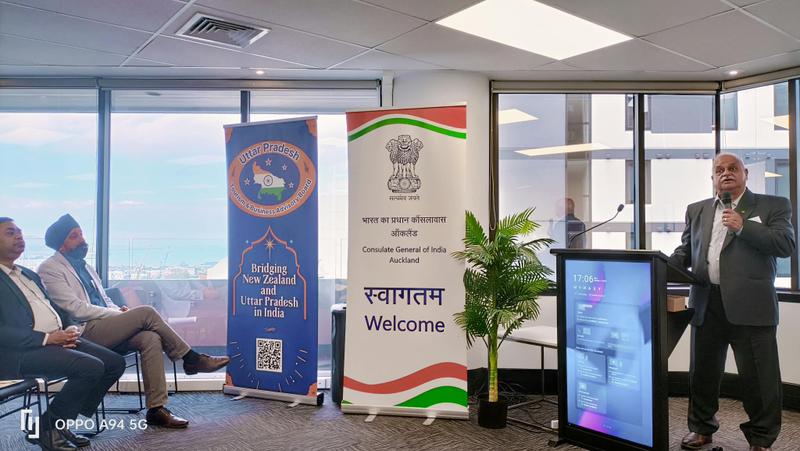
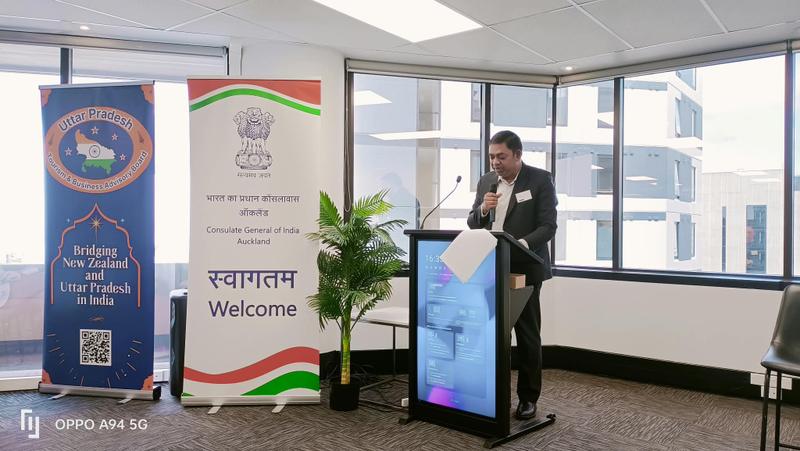
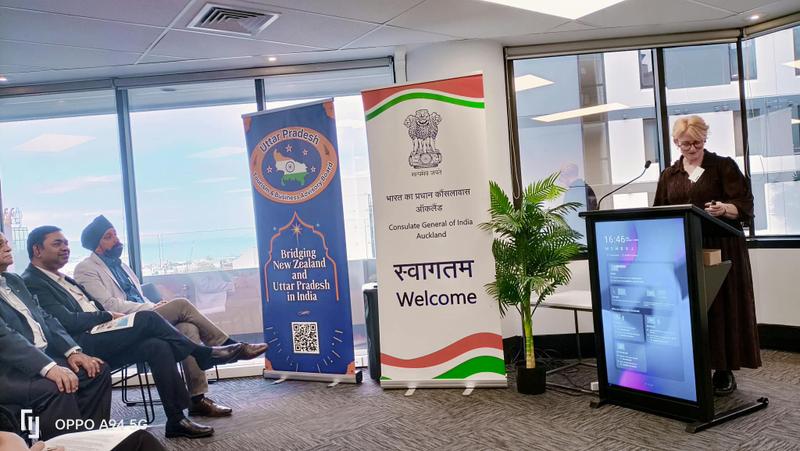
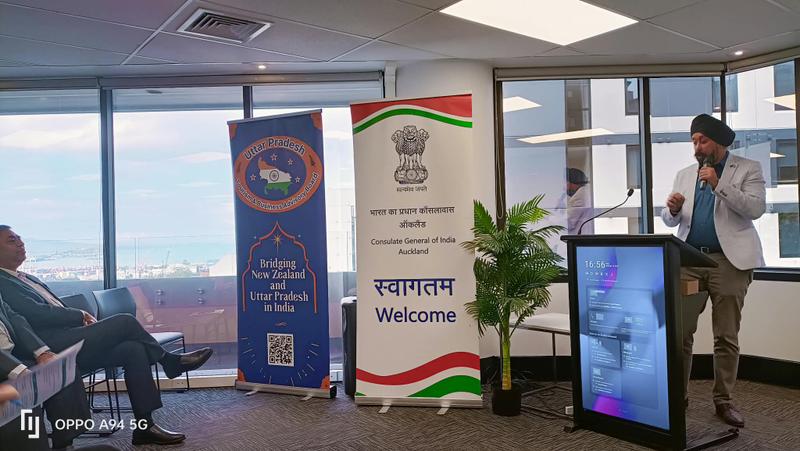
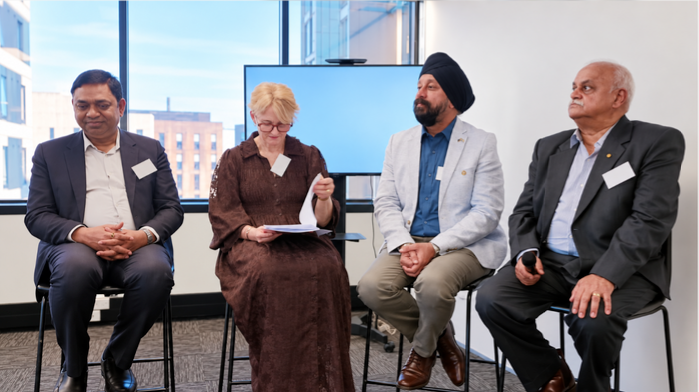
The Auckland Business Chamber's India Unlocked forum focused on Uttar Pradesh, often shortened to UP, a northern Indian state of about 240 million people. Speakers covered exporting to India, investing there and importing from it.
The timing was deliberate. The New Zealand-India Free Trade Agreement comes into force on Tuesday, 20 October, six days after the event.
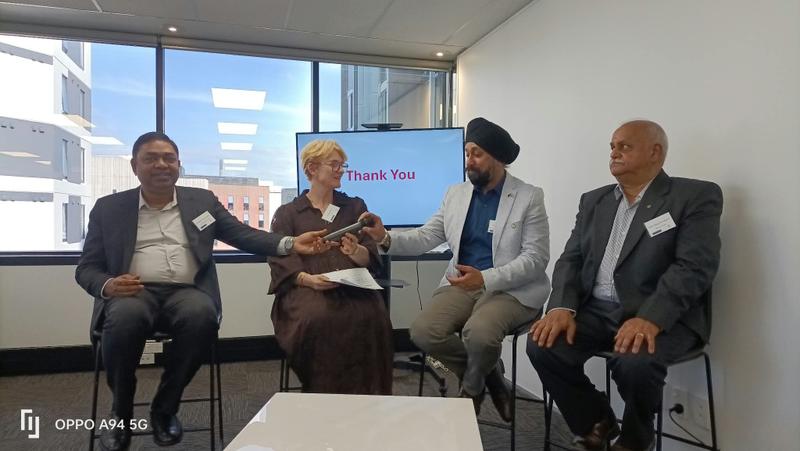
The speakers
| Speaker | Role | Focus |
|---|---|---|
| Dr Madan Mohan Sethi | Consul General of India in Auckland | Investing in India |
| Anne Collins | India FTA Implementation Manager, New Zealand Trade and Enterprise (NZTE) | Exporting under the FTA |
| Gurdeep Talwar | President, Uttar Pradesh Tourism and Business Advisory Board NZ | Importing from UP |
| Deen Dayal Srivastava | Director, Flair for Success | Partnerships and value |
It was the fourth event in the chamber's India Unlocked series, each focused on a different Indian state.
The FTA in numbers
| Measure | Figure |
|---|---|
| Entry into force | 20 October 2026 |
| NZ exports to India tariff-free on day one | 57% |
| NZ exports tariff-free when fully implemented | 82% |
| NZ exports with tariffs eliminated or reduced over time | 95% |
| Indian exports entering NZ duty-free on day one | 100% |
| Second round of tariff cuts | 1 January 2027 |
The New Zealand Government says sheep meat, wool and coal, and more than 95 per cent of forestry and wood exports, become tariff-free immediately.
The 95 per cent headline needs care. It means tariffs will be cut or removed on goods making up 95 per cent of the value of current exports to India. It does not mean every product gets a 95 per cent tariff cut, and most dairy products still face tariffs.
The angle importers should not miss
Most FTA coverage has focused on what New Zealand can sell to India. For businesses thinking about buying from India, the change is bigger and faster.
From 20 October, all Indian goods enter New Zealand without customs duty. India's government says this covers every tariff line, including textiles, leather, footwear, engineering goods and processed food. New Zealand's tariffs on these goods were up to 10 per cent.
That matters directly for the handmade goods Talwar presented. A carpet, saddle or embroidered garment from UP that previously attracted duty may now enter tariff-free. Importers still need to meet the agreement's rules of origin, and GST, biosecurity and food safety rules still apply.
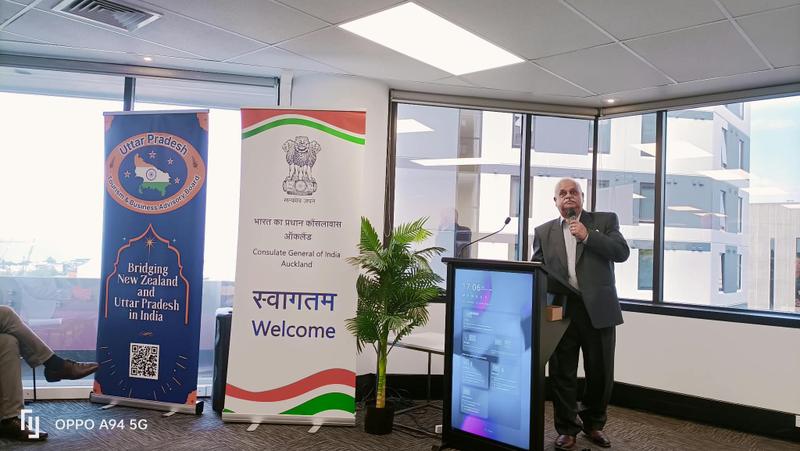
Dr Sethi: "a market of markets"
Dr Sethi opened with India's scale: about 1.4 billion people, a young population and growth projected at more than 7 per cent a year.
He said India's economy is driven mainly by domestic consumption, which sets it apart from export-led economies.
He described rapid change in India's infrastructure and digital systems:
He pointed to the Make in India programme, launched in 2014, and the Production Linked Incentive scheme, which rewards companies for increasing manufacturing output in India.
India received more than US$1 trillion in foreign direct investment between April 2000 and September 2024, he said. Investors include Google, Microsoft, Amazon, Apple, Samsung, Nestlé and Airbus.
Where New Zealand fits
Dr Sethi named sectors open to foreign investment, including manufacturing, food processing, renewable energy, IT, healthcare, education and tourism.
He said New Zealand's strengths in agriculture, horticulture, post-harvest technology, forestry, education and logistics fit what India needs. He described a recent visit to a Northland aquaculture and horticulture centre as an example.
Investment could take several forms:
He said several New Zealand universities are in talks about setting up campuses in India, and that two business delegations have already visited. Another, led by Gujarat's agriculture minister, is expected in November.
His practical advice was to narrow the focus. Pick a sector, study its regulations, then choose a city.
"India is a market of markets," he said.
He offered the consulate's help with business meetings, introductions to officials and private companies, and sector-specific requests. He also urged businesses to talk to New Zealand's Indian community, which he put at more than 300,000 people, about local competitors, prices and how goods reach consumers.
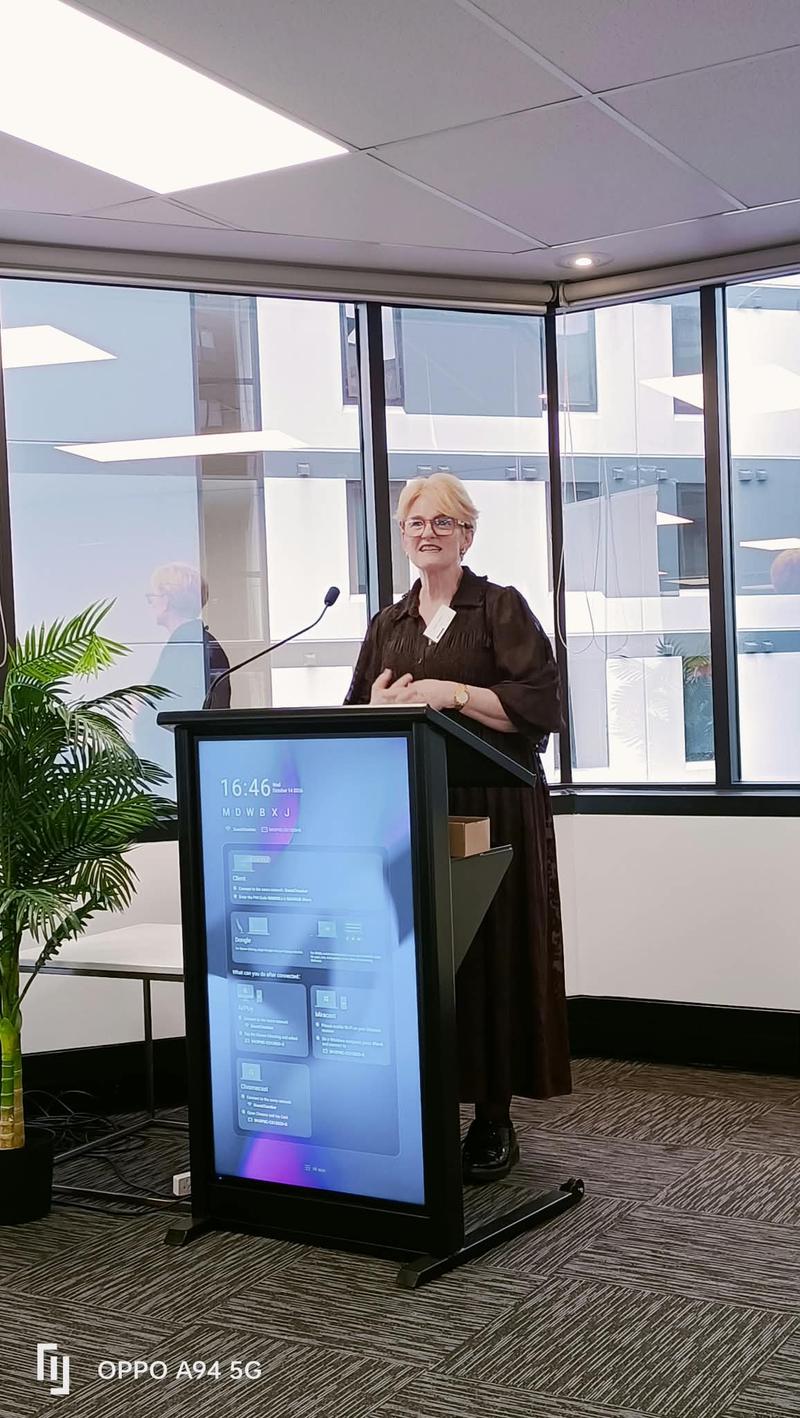
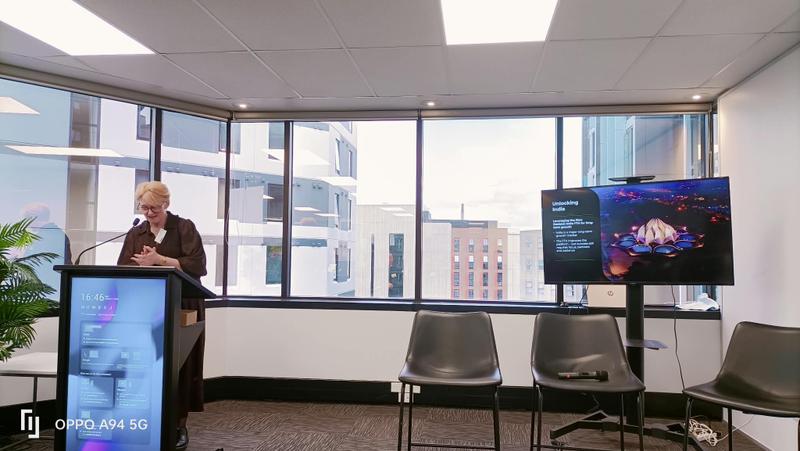
Anne Collins: choose your part of India
Collins said India is becoming more important to New Zealand as a way to diversify exports in an uncertain trading world.
India's median age is 29. She said its middle class is expected to grow to about 700 million in the next five years, more than the population of the European Union.
But she warned against treating India as one market. It has 28 states, eight union territories and 22 official languages.
"Saying that you want to enter India is a bit like saying that you want to enter Asia," she said.
Instead, she said businesses should start with one region, city, customer group or sales channel where their product fits best.
They also need to be sharp about why they are different, whether that is safety, science, provenance, quality, traceability or sustainability. Products may need new pack sizes, prices or formats to work in India.
Desktop research helps, she said, but it is no substitute for time on the ground. The most successful exporters keep turning up in person, and overnight success in India usually takes around 10 years.
She summed up NZTE's advice as the "four Ps":
| Principle | What it means |
|---|---|
| Patience | Entering the market takes time |
| Persistence | Expect repeated rejection, and silence as a common reply |
| Perseverance | It takes stamina |
| Partnership | The right partner can change everything; the wrong one can do damage |
The FTA mistake exporters make
During questions, Collins said one of the biggest problems with FTAs generally is that businesses don't use them.
Exporters often assume their Indian importer knows the agreement exists. Many importers handle thousands of products and don't. To claim the lower tariff, the importer must know the correct rate and tick the right box on customs paperwork.
She urged exporters to talk to importers about who keeps the tariff saving: whether it lowers the shop price, boosts the distributor's margin or funds marketing.
She also recommended checking certificates of origin, the paperwork proving goods qualify for FTA rates, and using MFAT's Tariff Finder. It shows year-by-year tariff rates and paperwork requirements by product.
The chamber noted that it processes about 90,000 certificates of origin a year.
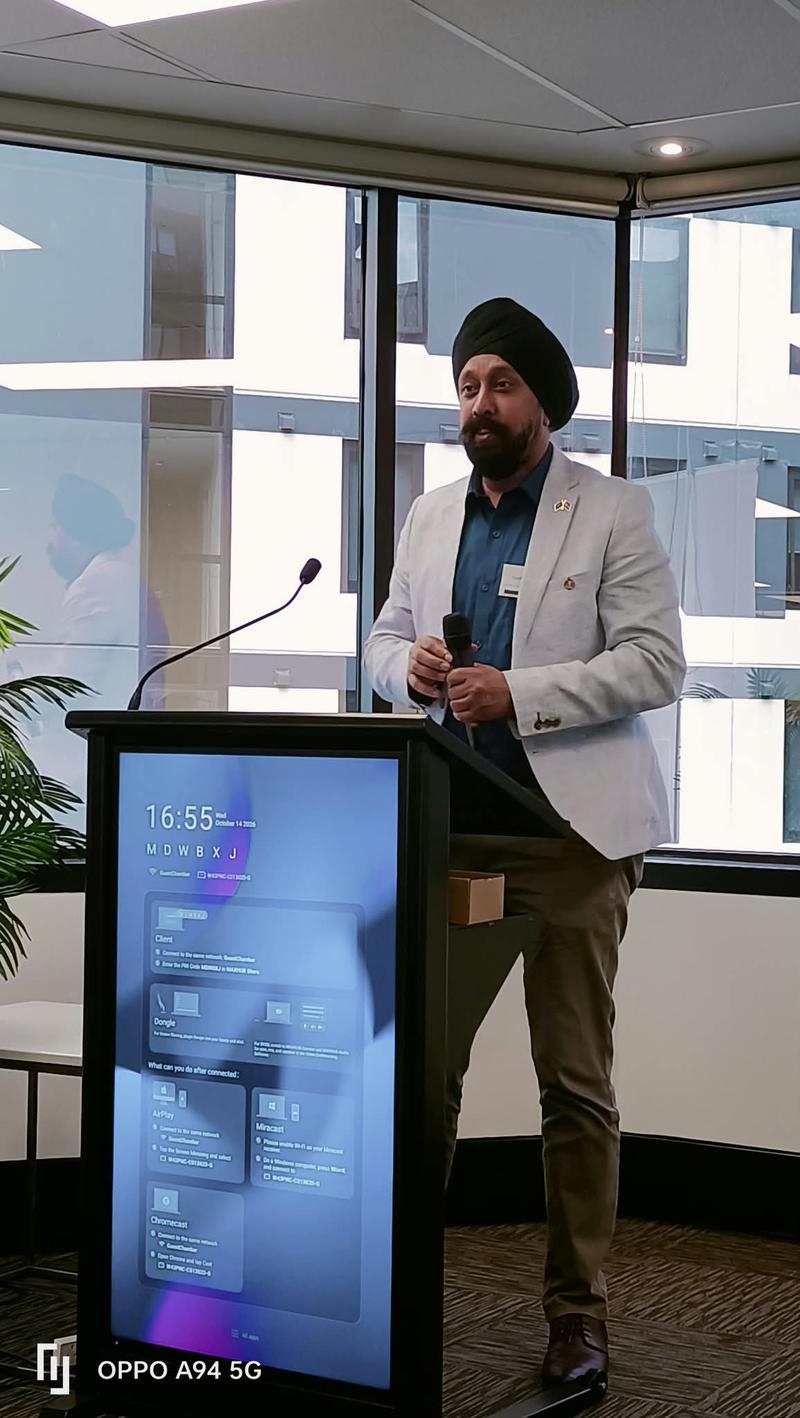
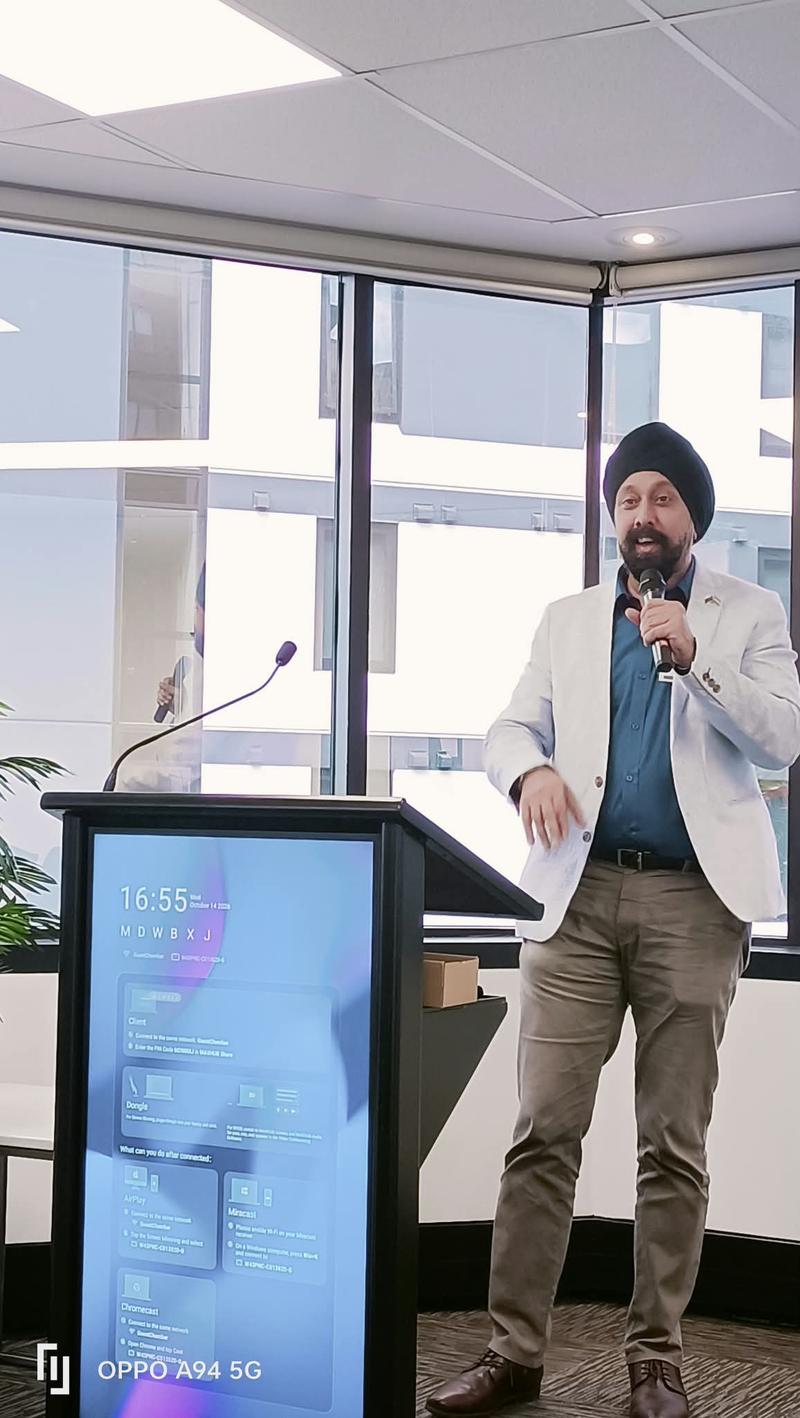
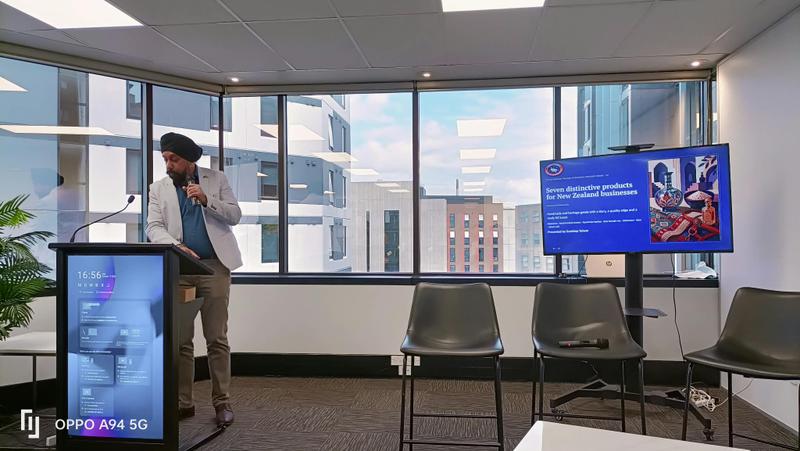
Gurdeep Talwar: seven products from UP
Talwar flipped the question, presenting seven handmade or regional UP products he said New Zealand buyers have largely overlooked.
The figures below come from his presentation. They have not been independently verified, and some mix NZ and US dollars or older years.
| Product | Where in UP | UP figures (presenter) | NZ market (presenter) | Suggested buyers |
|---|---|---|---|---|
| Hand-finished glassware | Firozabad | About US$1.2b industry turnover | About NZ$331.9m of glass imports (2025, all types) | Homeware, restaurants, wineries, corporate gifts |
| Hand-knotted carpets | Bhadohi weaving belt | About 60% of India's carpet exports | About US$105m of carpets and floor coverings imported (2024) | Interior designers, specialist rug shops |
| Equestrian leather | Kanpur | About 46% of India's leather exports | 31,184 horses on farms (2023), about 120,000 in total (estimate) | Tack shops, riding clubs, racing |
| Kala Namak rice | Eastern UP | About 82,000 hectares, about 500 tonnes exported last year | US$70.8m of rice imported (2024) | Specialty grocers, chefs |
| Chikankari embroidery | Lucknow | About US$65m a year, about US$20m exported | US$560m of woven apparel imports (2025) | Boutiques, bridal, resort wear |
| Attar perfume oils | Kannauj | About 375 makers | About NZ$81.7m of perfume imports (2019) | Niche fragrance shops, day spas |
| Brass and copperware | Moradabad | About US$635m exported a year | US$41m of iron and steel houseware imports (2019) | Homeware stores, hospitality |
His pitch was craft over mass production. Firozabad glass is blown or pressed and finished by hand. Bhadohi carpets are knotted by hand on wooden looms, and he called them "an investment piece", not fast furniture.
On saddles and bridles, he said New Zealand's horse owners care about strength, fit and safety, and will spend heavily on the right gear.
Chikankari is a white-on-white embroidery using up to 32 traditional stitches. It has had geographical indication protection since 2009, which legally ties the name to its region. A single kurta can take 7 to 20 days to make, according to his slides, and retails for about US$107 to US$203 in the United States.
Attar is an alcohol-free perfume oil, made by heating flowers in copper vessels and capturing the scented steam in sandalwood oil.
Kala Namak, sometimes called "Buddha rice", is an unpolished rice with a history traced back about 2,600 years. Talwar's slides claimed a lower glycaemic index and more protein, iron and zinc than common rice. Importers should note that health claims on food labels are regulated in New Zealand, and any food imported for sale must come through a registered food importer.
Talwar's organisation was set up in late 2023 as a not-for-profit and launched at India's High Commission in Wellington. He stressed that it is an advisory body, not a trader. It has a memorandum of understanding with a UP chamber of commerce.
Deen Dayal Srivastava: think value, not volume
Srivastava, who grew up in UP and studied mechanical engineering at IIT Kanpur, focused on the scale gap.
He said UP has roughly 50 times New Zealand's population on a similar land area. He listed about 82 universities, more than 8,000 colleges, about 4,000 polytechnics and technical institutes, and 7,000 skills training centres.
That scale cuts both ways. A New Zealand company can supply only a tiny slice of UP's demand, he said, and he once saw a promising project stall once the size of the Indian market became clear.
He said UP has five international airports and 21 airports in total, with a large new airport under construction near Delhi, plus new high-speed freight corridors. But it has no seaport, and shipping costs from India can make imports less competitive than goods from China.
He credited the state's growth to a "safety, stability and speed" approach. UP was once known for crime and corruption, he said, but has improved under current governance. He acknowledged political debate about the government's firm approach.
His key advice for exporters was to sell intellectual property, software and know-how, with an Indian partner handling production.
"If you have to make everything from here and supply to India, it is not going to work," he said.
He said education below university level, such as coaching, mentoring and tutoring, could be delivered online at large scale.
"Don't think of volume. Think of value," he said. He argued that a product reaching even the top 1 per cent of Indian consumers could support a profitable business.
Questions from the floor
Asked where smaller Kiwi firms could find openings, Dr Sethi said more than 90 per cent of Indian enterprises are also small. He offered to set up online meetings connecting businesses in two or three sectors.
Collins initially thought wool and textiles offered the clearest opening, but said the presentations had changed her mind: the opportunities are broad, provided businesses stay targeted. Talwar said carpets were an obvious fit, with rugs in almost every second New Zealand home.
One attendee asked how a small New Zealand AI company could tap India's workforce. Collins said NZTE has two offices in India and can help, including for companies with turnover under $10 million. She stressed the opportunity is "not just about cheap labour".
Asked whether NZTE could publish a directory of smaller New Zealand firms already in India, she said privacy limits what can be shared, but NZTE can arrange peer introductions and webinars.
Talwar described the attendee's idea as business process outsourcing, long established in India, and said it relies on relationships, not online searches.
Checking a supplier
Asked what an importer should check before a first order, Talwar said: "Everything."
His advice was to visit in person, choose exporters who belong to recognised trade associations or chambers, and avoid pairing a first-time importer with an inexperienced exporter. He said buying houses, agents that source goods for overseas buyers, exist in UP but mostly serve the UK, Europe, the Middle East and Africa.
"Don't just get too excited," he said.
When to wait
Each speaker was asked what would make them tell a company to hold off.
Srivastava said a business should be confident the whole transaction can be completed, and that "distrust is a good thing to have".
Talwar urged calculated risks on niche products, after working out who will buy and what margin is left.
Collins said: "Research, research, research, and check, check, check."
Dr Sethi said New Zealand businesses should talk to Indian New Zealanders from the relevant state before committing.
What remains unclear
Much of the audience appeared to come from New Zealand's Indian community. Dr Sethi said his personal feeling was that the consulate had not engaged much with mainstream Kiwi businesses, and Srivastava said he had hoped for more New Zealanders without an Indian background.
That points to the real test of the FTA. The agreement creates the framework, but it will only pay off if businesses with no existing links to India start using it.
Several figures presented on the night also need checking before anyone builds a business plan on them.
What happens next
The FTA comes into force on 20 October, with a second round of tariff cuts on 1 January 2027.
The chamber's next India Unlocked event, on Maharashtra, is on 28 October. A New Zealand-India business, sport and innovation summit, co-hosted by organisations including NZTE, is also planned.
For businesses, the practical next steps are straightforward:
The opportunity is real, but the panel agreed it starts small and specific: one product, one customer group, one partner, and numbers that work for both sides.
Sources: Auckland Business Chamber India Unlocked event, presentations by Dr Madan Mohan Sethi, Anne Collins, Gurdeep Talwar and Deen Dayal Srivastava, New Zealand Government and Government of India FTA announcements.