For international students, skilled professionals, migrant workers and families waiting for residence decisions, the announcement raises understandable questions.
Will applications take longer? Is a New Zealand master’s degree still worth six points? What happens to applications already submitted? And should someone planning to study or work in New Zealand reconsider their immigration strategy?
Importantly, the change affects the order in which applications are processed, not the fundamental eligibility requirements for residence.
What exactly is changing on November 30?
The new instructions remove the automatic processing advantage previously available to Skilled Migrant Category applicants who qualified for six points without relying on additional skilled work experience.
This includes eligible applicants claiming six points through educational qualifications, occupational registration or employment income.
|
Immigration setting
|
Before November 30
|
From November 30
|
|
Six-point residence pathway
|
Available
|
Remains available
|
|
Six points without additional work experience
|
Priority processing
|
Automatic priority removed
|
|
New Zealand master’s degree points
|
Up to 6
|
Unchanged
|
|
Eligible doctoral qualifications
|
6 points
|
Unchanged
|
|
Qualifying occupational registration
|
Up to 6 points
|
Unchanged
|
|
High-income applicants qualifying for six points
|
Priority processing
|
Automatic priority removed
|
|
Green List Tier 1 employment
|
Priority processing
|
Priority retained
|
|
Applications sharing similar characteristics
|
Existing processing arrangements
|
New group-based prioritisation
|
Source: Immigration New Zealand, Amendment Circular 2026-39, effective 30 November 2026.
Applicants should understand the difference between qualifying for residence and receiving priority processing.
A person who meets the residence requirements can still apply. However, having six points from a single qualification, registration or income category will no longer automatically move that person’s application ahead of others.
The 44 percent figure behind Immigration New Zealand’s decision
One of the most significant findings in the announcement is the proportion of residence applicants qualifying through New Zealand master’s degrees.
Since the revised Skilled Migrant Category settings took effect on August 24, 2026, INZ has recorded an increase in both application volumes and the proportion of people claiming six points through educational qualifications.
According to the department, 44 percent of applications under the points-based pathway are now from people claiming six points through a New Zealand master’s degree.
|
Application category
|
Share
|
|
Applicants claiming six points through a New Zealand master’s degree
|
44%
|
|
All other points-based applicants
|
56%
|
|
Total points-based applications
|
100%
|
In other words, approximately 44 out of every 100 points-based applications fall into this particular master’s degree category.
INZ considers continuing to prioritise such a large proportion of applications impractical as volumes increase.
The department says the revised approach is intended to improve assessment efficiency and help immigration officers identify risks more effectively.
The announcement does not disclose the total number of applicants who could experience longer waiting times as a direct consequence of the change.
How will the new five-application grouping system work?
From Monday, INZ will initially group and prioritise applications where five or more applicants have claimed skilled employment in the same occupation.
The intention is to allow immigration officers to assess similar applications together rather than repeatedly examining comparable employment and occupational information across separate cases.
Consider the following hypothetical example.
|
Occupation claimed by applicants
|
Applications awaiting allocation
|
Potential initial grouping
|
|
Software Engineer
|
12
|
Yes
|
|
Civil Engineer
|
7
|
Yes
|
|
Accountant
|
5
|
Yes
|
|
Marketing Specialist
|
4
|
Not yet
|
|
Graphic Designer
|
2
|
Not yet
|
Illustrative example prepared by Webfit News. These are not actual INZ application volumes.
Under the initial approach, applications sharing the same occupation could be grouped when at least five are available.
Applications outside these groups may remain in the queue while the prioritised groups are processed.
INZ also has the authority to group applications using other common characteristics, such as employers or education providers.
For example, if several applications involve the same employer, an immigration officer may be able to verify common employment information through fewer enquiries.
However, the initial grouping announced for November 30 is based on shared occupations.
The department has not established a separate guaranteed processing timeframe for every occupation or group.
What happens if you have already submitted your residence application?
This is particularly important for migrants who have spent months preparing documents and are already waiting for a decision.
INZ has clarified that applications already allocated to an immigration officer will continue to be assessed.
Applications awaiting allocation will be considered under the revised prioritisation arrangements.
|
Your current situation
|
What the change means
|
|
Residence visa already approved
|
No direct impact from this processing change
|
|
Application already assigned to an immigration officer
|
Assessment continues
|
|
Application submitted but awaiting officer allocation
|
May be affected by the revised processing order
|
|
Six points achieved but application not yet submitted
|
You can still apply if all eligibility requirements are met
|
|
Expression of Interest submitted
|
Does not itself guarantee processing priority
|
|
Waiting to complete work experience
|
Existing eligibility requirements remain applicable
|
There is no general requirement to withdraw or resubmit an existing residence application simply because these processing instructions are changing.
Submitting an application before November 30 also does not necessarily guarantee continued priority if the application has not yet been assigned to an immigration officer.
The original application lodgement date remains unchanged.
Applicants should avoid rushing into incomplete applications in an attempt to secure an advantage that may no longer apply.
Is a New Zealand master’s degree still worth six residence points?
Yes, provided the applicant meets the applicable qualification requirements.
The revised Skilled Migrant Category settings introduced in August 2026 allow eligible New Zealand master’s graduates to claim six points if they meet specified conditions.
These generally include:
- Completing an eligible New Zealand master’s degree.
- Undertaking at least 30 weeks of full-time study in New Zealand as part of that qualification.
- Holding a supporting bachelor’s degree, which can be obtained in another country.
- Meeting the skilled employment and other residence visa requirements.
Applicants who do not meet the additional conditions for six points may be able to claim five points for their New Zealand master’s degree and obtain the remaining point through qualifying skilled work experience in New Zealand.
The November 30 announcement does not remove these qualification points.
Examples of how six points can be obtained
|
Applicant’s qualifying circumstances
|
Qualification or skill points
|
Additional skilled work experience generally required
|
|
Eligible doctoral degree
|
6
|
None for points
|
|
Eligible NZ master’s degree meeting six-point conditions
|
6
|
None for points
|
|
NZ master’s degree qualifying for five points
|
5
|
1 year in New Zealand
|
|
Eligible NZ bachelor’s degree
|
5
|
1 year in New Zealand
|
|
Occupational registration qualifying for six points
|
6
|
None for points
|
|
Income of at least three times the applicable SMC wage threshold
|
6
|
None for points
|
These examples are subject to the full immigration instructions and individual employment circumstances.
Certain applicants working under contracts for services may have additional work experience requirements even when they qualify for six points from a single skill category.
Most importantly, six points alone do not guarantee a residence visa.
Applicants must still satisfy the relevant skilled employment, age, health, character and English-language requirements.
What does the high-income residence pathway look like?
The current Skilled Migrant Category wage threshold is NZ$35 per hour, effective from March 9, 2026.
Applicants claiming points through their income can qualify at different wage multiples.
|
Income-based points
|
Hourly pay threshold
|
Annual equivalent at 40 hours per week
|
Additional NZ skilled work experience generally required
|
|
3 points
|
$52.50
|
$109,200
|
3 years
|
|
4 points
|
$70.00
|
$145,600
|
2 years
|
|
6 points
|
$105.00
|
$218,400
|
None for points
|
Annual salary equivalents are Webfit News calculations based on 40 paid hours per week for 52 weeks.
Immigration assessment is based on the applicable wage rules, employment conditions and actual working hours, rather than annual salary alone.
The wage threshold applicable to historical work experience may differ under transitional provisions.
From November 30, someone earning enough to qualify for all six income points will no longer automatically receive processing priority solely because of their salary.
They can still qualify for residence if they meet the remaining requirements.
Who will continue to receive priority processing?
The November 30 changes do not remove all priority processing arrangements.
Immigration New Zealand’s amended operational instructions specifically retain priority for skilled residence applicants who are employed, or have an eligible employment offer, in an occupation listed under Tier 1 of the Green List.
These applications will generally be prioritised ahead of applications grouped according to common characteristics.
|
Applicant category
|
Processing position from November 30
|
|
Eligible Green List Tier 1 employment
|
Priority retained
|
|
Six points from a master’s or doctoral qualification alone
|
No automatic priority on that basis
|
|
Six points from occupational registration alone
|
No automatic priority on that basis
|
|
Six points from income alone
|
No automatic priority on that basis
|
|
Five or more applications sharing an occupation
|
May receive group-based priority
|
|
Other unallocated applications
|
May remain in the general queue
|
|
Genuine urgent circumstances
|
Individual escalation may be considered
|
An applicant who qualifies through more than one relevant circumstance may still benefit from another applicable priority provision.
For example, a master’s graduate working in an eligible Green List Tier 1 occupation could retain priority based on that employment, even though the master’s degree itself no longer provides automatic priority.
How long are Skilled Migrant residence applications currently taking?
Immigration New Zealand’s latest available indexed residence visa processing figures indicate the following timeframes for Skilled Migrant Category applications.
|
Processing indicator
|
Published timeframe
|
|
Time within which 50% of applications are processed
|
3.5 months
|
|
Time within which 80% of applications are processed
|
5 months
|
These figures reflect recently completed applications rather than a guaranteed timeframe for every new applicant.
Individual processing times can vary depending on the complexity of the case, employment verification, medical assessments, character checks, staffing levels and whether additional information is required.
The November 30 changes have not yet taken effect. Consequently, there is no post-implementation data showing how much longer or shorter applications will take under the new system.
Claims that all six-point applicants will now face a particular number of additional months should therefore be treated cautiously.
INZ intends the grouping approach to improve overall processing efficiency. Whether that translates into shorter waiting times across the wider applicant population will become clearer once processing data is available under the revised arrangements.
New Zealand still offers three Skilled Migrant Category pathways
Another important distinction is that the Skilled Migrant Category is no longer limited to the traditional points-based route.
Following the August 2026 reforms, three pathways are available under the category.
|
Residence pathway
|
Who it is designed for
|
Key requirements
|
|
Points-based pathway
|
Qualified professionals, registered workers and higher-income migrants
|
Six skilled residence points and eligible employment
|
|
Skilled Work Experience pathway
|
Experienced workers whose skills are primarily demonstrated through employment
|
At least five years of directly relevant experience, including at least two years of qualifying skilled work in New Zealand
|
|
Trades and Technician pathway
|
Workers in eligible trades and technical occupations
|
Relevant qualification and at least four years of post-qualification experience, including at least 18 months of qualifying skilled work in New Zealand
|
Additional occupation, qualification, wage and employment requirements apply to each pathway.
The November 30 announcement changes processing priorities. It does not close any of these three pathways.
For migrants who do not qualify through the six-point system, the other two routes may provide alternative opportunities depending on their professional background.
A practical guide for migrants living in New Zealand
For people currently working or studying in New Zealand, the most important consideration is maintaining lawful immigration status while pursuing residence.
A pending residence application does not, by itself, automatically extend an existing temporary visa.
Applicants should check the following before their current visa expires.
|
What to check
|
Why it matters
|
|
Current visa expiry date
|
Prevents immigration status problems
|
|
Employer accreditation
|
Relevant to skilled employment eligibility
|
|
Employment agreement
|
Confirms occupation, hours, remuneration and employment duration
|
|
Actual job responsibilities
|
Helps demonstrate that the role meets immigration occupation requirements
|
|
Qualification and registration evidence
|
Supports the points being claimed
|
|
Payslips and tax records
|
Helps verify income and qualifying work experience
|
|
Police and medical certificates
|
Ensures documents meet applicable validity requirements
|
|
Passport validity
|
Important for visa issuance and international travel
|
|
Dependent family members’ visas
|
Each family member must maintain lawful status
|
Some applicants may qualify for a Skilled Migrant Category Interim Visa if their existing temporary visa expires while their residence application is being assessed.
Eligible applicants may receive an interim visa valid for up to 24 months, subject to applicable conditions.
However, interim visa eligibility, work rights, travel conditions and restrictions should be checked carefully before making decisions about employment or overseas travel.
Applicants approaching their visa expiry date should obtain advice before the expiry occurs, rather than assuming their residence application will automatically protect their status.
What does this mean for international students planning to study in New Zealand?
The announcement is particularly relevant to students in India, China, the Philippines, Nepal, Sri Lanka and other countries considering New Zealand as a study destination.
An eligible New Zealand master’s degree remains valuable under the Skilled Migrant Category points system.
However, prospective students should not confuse completing a qualification with automatically obtaining residence.
Before committing to an international education programme, students should consider the entire pathway.
|
Question to ask
|
Why it matters
|
|
Is the qualification recognised in New Zealand?
|
Determines its potential immigration value
|
|
Does the programme meet the relevant study duration requirement?
|
Important for claiming six master’s degree points
|
|
Do I hold the supporting bachelor’s qualification required?
|
May affect the number of residence points available
|
|
Will I qualify for a Post Study Work Visa?
|
Determines potential work opportunities after graduation
|
|
Is there genuine employment demand in my chosen field?
|
Skilled employment remains central to residence eligibility
|
|
Can I afford living expenses while seeking employment?
|
Residence is not guaranteed immediately after study
|
|
Could immigration rules change before graduation?
|
Policies may evolve during a multi-year programme
|
The announcement reinforces the importance of selecting an education programme based on genuine career opportunities rather than relying exclusively on an immigration processing advantage.
A master’s degree may help a graduate meet the residence points threshold. Finding suitable employment and satisfying the remaining requirements are separate challenges.
How can someone overseas apply for skilled residence?
A person living outside New Zealand may be eligible for the points-based Skilled Migrant Category pathway if they meet the requirements, including having an appropriate skilled job offer from an accredited New Zealand employer.
The general application process involves several stages.
Step 1: Identify the appropriate residence pathway
Assess whether your qualifications, occupational registration, income or professional experience meet the relevant immigration requirements.
Step 2: Secure eligible skilled employment
Find a genuine job or qualifying employment offer with an accredited employer in New Zealand.
Step 3: Confirm qualifications and supporting evidence
An overseas qualification may require an International Qualification Assessment from the New Zealand Qualifications Authority, depending on applicable exemptions and immigration instructions.
Step 4: Calculate residence points or pathway eligibility
For the points-based pathway, establish whether six points can be claimed and whether additional New Zealand skilled work experience is necessary.
Step 5: Submit an Expression of Interest
There is no fee to submit a Skilled Migrant Category Expression of Interest.
Step 6: Receive an Invitation to Apply
If Immigration New Zealand determines that the Expression of Interest meets the relevant requirements, the applicant may receive an invitation to submit a residence visa application.
Step 7: Submit the residence application
Provide the required supporting documentation and pay the applicable residence application charges.
Step 8: Await assessment
Immigration New Zealand assesses the application under its eligibility requirements and processing priorities.
Applicants should never assume that an Expression of Interest or a job offer guarantees approval.
Is this the same as New Zealand’s Permanent Resident Visa changes?
No. Two separate immigration announcements have generated considerable discussion recently, but they address different stages of the residence journey.
|
Immigration change
|
Effective date
|
What it affects
|
|
Removal of automatic six-point SMC processing priority
|
30 November 2026
|
Processing order for Skilled Migrant Category residence applications
|
|
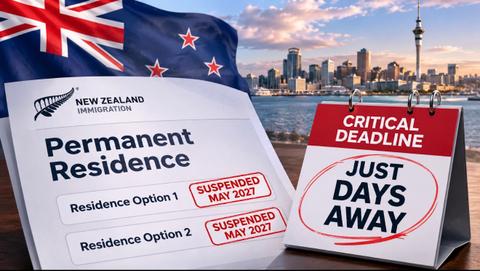
Suspension of two methods of demonstrating commitment for permanent residence
|
30 May 2027
|
Certain existing Resident Visa holders seeking a Permanent Resident Visa
|
The Skilled Migrant Category Resident Visa is a pathway to obtaining residence in New Zealand.
A Permanent Resident Visa is generally a subsequent stage available to eligible people who have held residence for the required period and satisfied applicable conditions.
Neither announcement should be interpreted as the complete closure of New Zealand’s skilled residence system.
Migrants should identify which stage of the immigration process applies to their circumstances before acting on either announcement.
Frequently asked questions
Will my six points be cancelled from November 30?
No. The announcement changes processing priority rather than removing the points you can claim under the applicable eligibility rules.
Will I need to complete another year of work after obtaining six points through my master’s degree?
Not as a general consequence of this announcement. The existing qualification and employment requirements continue to apply, including any additional requirements relevant to your circumstances.
Should I withdraw my existing application and submit a new one?
The announcement does not require applicants to do so. Withdrawing an application could create unnecessary complications, costs or immigration status issues.
Does applying before Monday guarantee faster processing?
No. Applications already assigned to an immigration officer will continue to be assessed, but simply submitting an application before November 30 does not guarantee continued priority.
Will people working in popular occupations automatically receive faster residence decisions?
Not necessarily. Applications sharing occupations may be prioritised for allocation, but every applicant must still satisfy the individual residence requirements.
Is Green List priority being removed?
No. Priority remains available for eligible skilled residence applicants employed or offered employment in Green List Tier 1 occupations.
Does this announcement cancel my Post Study Work Visa or Accredited Employer Work Visa?
No. This announcement concerns Skilled Migrant Category residence application processing. It does not itself cancel existing temporary visas.
Can I request urgent processing?
INZ retains the ability to consider urgent individual circumstances. Escalation requests are assessed separately and do not guarantee an expedited decision.
The next important immigration dates
|
Date
|
Immigration development
|
|
24 August 2026
|
Revised Skilled Migrant Category settings and new residence pathways took effect
|
|
25 November 2026
|
Revised processing instructions signed
|
|
26 November 2026
|
Immigration New Zealand publicly announced the processing changes
|
|
30 November 2026
|
Automatic six-point processing priority removed and new grouping approach begins
|
|
30 May 2027
|
Separate suspension of two permanent residence commitment options takes effect
|
What migrants should take away from Monday’s changes
New Zealand has not removed the six-point Skilled Migrant Category pathway. Nor has it cancelled the residence points available through eligible master’s degrees, doctoral qualifications, occupational registrations or higher-income employment.
What has changed is the advantage that certain applicants previously received in the immigration queue.
For people already working in New Zealand, the priority should be maintaining valid visas, protecting their employment eligibility and ensuring their residence applications contain accurate supporting documents.
For people planning to move here, the announcement serves as another reminder that an immigration pathway must be assessed as a complete journey, from education and employment to residence eligibility and eventual settlement.
Immigration New Zealand’s intention is to process similar applications more efficiently as demand increases. Whether the new approach achieves that objective without creating longer waits for applicants outside prioritised groups remains to be seen.
For now, eligible migrants can continue pursuing residence. They should, however, prepare for the possibility that their processing experience may be different from that of applicants who previously benefited from automatic six-point priority.
Webfit News | Immigration and Settlement
Sources: Immigration New Zealand announcement dated 26 November 2026; Amendment Circular 2026-39; Skilled Migrant Category Resident Visa instructions; INZ wage threshold guidance; resident visa processing statistics; Skilled Migrant Category reforms effective 24 August 2026.
This article provides general immigration information based on settings available as of 28 November 2026. It does not constitute personalised immigration advice. Applicants with individual eligibility questions should consult Immigration New Zealand, a licensed immigration adviser or another authorised immigration professional.