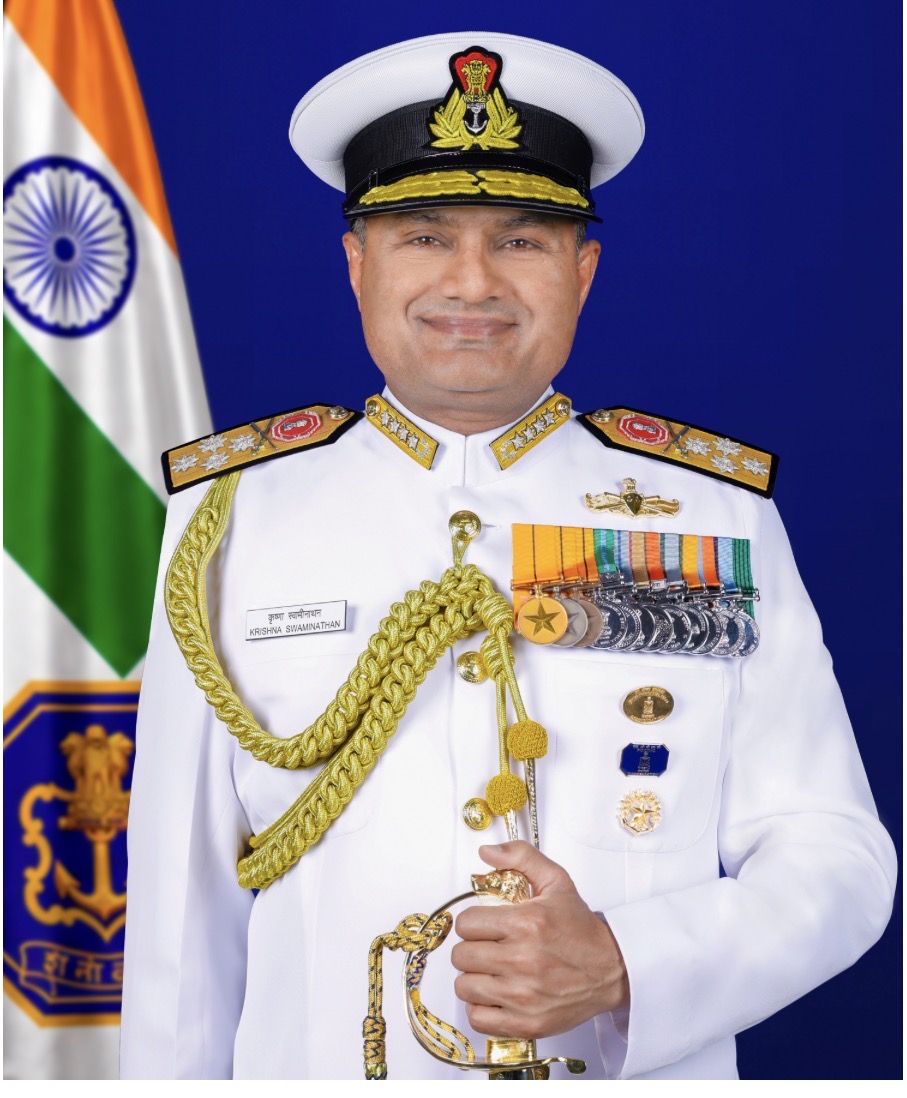
India's top naval officer is set to begin an official visit to Australia and New Zealand this week, a trip aimed squarely at deepening military cooperation with both countries at a time when Indo-Pacific security ties are drawing increasing attention across the region.
Admiral Krishna Swaminathan, Chief of the Naval Staff, will begin the visit on 9 September, with engagements planned across both countries covering everything from senior-level talks to hands-on visits with naval personnel.
Why This Visit Matters Right Now
This is not happening in isolation. The trip builds directly on a string of recent diplomatic milestones between India and both countries.
|
Country |
Recent Milestone |
When |
|
Australia |
Third India-Australia Annual Summit |
July 2026 |
|
Australia |
Second India-Australia Defence Ministers' Dialogue |
June 2026 |
|
New Zealand |
PM Narendra Modi's visit to New Zealand |
July 2026 |
|
New Zealand |
Bilateral relationship elevated to a Strategic Partnership |
July 2026 |
In other words, this naval visit is less a standalone event and more the next practical step following a year of high-level diplomatic groundwork already laid by political leaders on both sides.
What Will Actually Happen in Australia
During the Australia leg of the trip, Admiral Swaminathan will sit down with senior leadership from the Royal Australian Navy (RAN) for bilateral discussions.
The conversations are expected to cover a fairly broad range of practical military cooperation, including:
- Reviewing existing naval cooperation between the two countries
- Strengthening operational interaction and interoperability
- Expanding information sharing arrangements
- Training and professional exchange programmes
Beyond the boardroom discussions, the Admiral will also tour key operational and training establishments and meet directly with RAN personnel, with talks touching on maritime capabilities, emerging technologies and professional military education.
What Will Actually Happen in New Zealand
The New Zealand leg follows a similar pattern, engagement with the Royal New Zealand Navy's (RNZN) senior leadership, along with broader interaction with New Zealand's defence establishment.
Much like in Australia, the focus will be on strengthening operational interaction, information sharing, and training and professional exchanges between the two navies.
Admiral Swaminathan will also visit training establishments in New Zealand and meet personnel, including officers currently undergoing professional military education.
Why New Zealand Specifically Matters Here
One detail makes the New Zealand leg particularly significant: the visit comes shortly after the two countries finalised a Maritime Cooperation Arrangement, a formal framework that expands how India and New Zealand can practically work together at sea.
That timing is not a coincidence. Following a framework agreement with an actual naval visit signals that both sides intend to move from paper agreements to real operational cooperation fairly quickly.
The Bigger Regional Picture
Zooming out, this visit fits into a much larger pattern of India expanding its defence and maritime relationships across the Indo-Pacific region, an area that has become increasingly central to global strategic conversations in recent years.
The stated goal, according to the announcement, is straightforward: deepen practical maritime engagement with both the RAN and RNZN in a way that contributes to peace, security and stability in the wider Indo-Pacific.
For India, this is part of a broader strategy of building consistent, working-level relationships with multiple Indo-Pacific navies, not just high-profile diplomatic visits, but ongoing training exchanges, shared exercises and information sharing that continue regardless of which government is in power in any given country.
What to Watch Next
Since this is a bilateral naval visit rather than a treaty signing or major policy announcement, there is unlikely to be a single dramatic outcome. Instead, the real significance will likely show up over time, through joint naval exercises, expanded officer exchange programmes, and closer coordination the next time a genuine maritime security issue arises in the region.
For New Zealand specifically, this visit represents another concrete sign that its newly elevated Strategic Partnership with India is translating into direct engagement between the two countries' militaries, not just words exchanged between political leaders.