
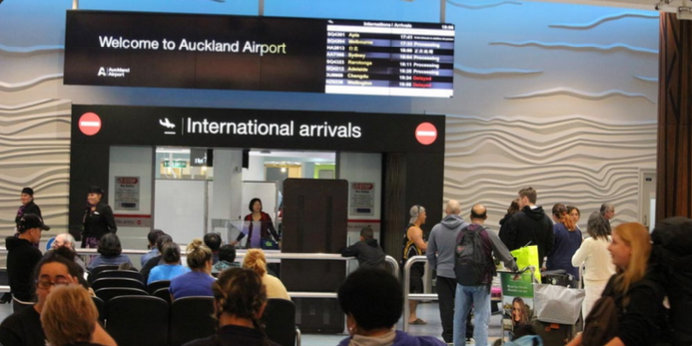
Immigration New Zealand has released its latest estimate of the number of people currently in the country who have overstayed their visa, putting the figure at approximately 19,153 people as at 1 July 2026.
That represents a decrease of around 8.7 percent from last year's estimate of 20,979, though INZ has been clear that most of this drop comes down to a methodology refinement rather than an actual change in overstayer numbers.
Why the Number Changed
INZ says it updated its methodology in 2025 to improve the accuracy of how it calculates this estimate, and further refinements were made this year.
Specifically, the agency removed Exemption NZeTA holders and Air Crew NZeTA holders from the count, groups that already align with visa categories excluded elsewhere in the methodology. According to INZ, this was about applying existing exclusion rules more consistently, not changing the underlying approach itself.
To put the scale of that adjustment in perspective, INZ noted that if the 2025 methodology had simply been reused this year, the estimate would have come in at 20,994, an increase of just 15 people from the previous year.
| Estimate Type | Figure |
|---|---|
| 2026 estimate (refined methodology) | 19,153 |
| 2025 estimate | 20,979 |
| What 2026 would have been under old methodology | 20,994 |
| Actual year-on-year change under consistent methodology | +15 |
Putting the Number in Context
Steve Watson, General Manager of Immigration Compliance and Investigations, said the estimate needs to be understood against the sheer volume of legitimate travel and migration New Zealand processes each year.
"Each year, INZ processes around one million visa applications and 1.6 million New Zealand Electronic Travel Authority requests and sees around 3.6 million non-New Zealand citizens arrive in New Zealand," Watson said.
He said the vast majority of people visiting, working or studying in New Zealand comply fully with their visa conditions, either departing before their visa expires or securing a further visa to remain lawfully.
That context becomes clearer when looking at overstaying specifically among people who arrived during a defined recent period. Between 1 July 2023 and 30 June 2026, around 5 million temporary visa arrivals were recorded in New Zealand. Of those, 6,559 individuals were later recorded as having overstayed, just 0.13 percent of all temporary arrivals over that three-year window.
Which Nationalities Make Up the Estimate
INZ's data breaks down the current overstayer estimate by nationality. It's worth noting this reflects cumulative totals built up over roughly 30 years of electronic immigration records, not just recent arrivals.
| Nationality | Estimated Overstayers (as at 1 July 2026) |
|---|---|
| China | 2,694 |
| Tonga | 2,541 |
| United States | 1,981 |
| India | 1,522 |
| Samoa | 1,462 |
| Great Britain | 1,117 |
| Philippines | 898 |
| Malaysia | 574 |
| Vietnam | 538 |
| Fiji | 512 |
| Other | 5,314 |
| Total | 19,153 |
These top 10 nationalities together account for 72.3 percent of the total estimate.
A More Useful Comparison: Overstaying Rates, Not Just Raw Numbers
Raw overstayer counts by nationality can be misleading on their own, since they partly reflect how many people from each country travel to New Zealand in the first place. INZ's second dataset, covering only people who arrived between 2023 and 2026, offers a clearer picture by calculating overstaying as a percentage of actual arrivals.
| Nationality | Temporary Visa Arrivals (2023–2026) | Recorded Overstayers | Overstay Rate |
|---|---|---|---|
| United States | 967,633 | 925 | 0.10% |
| Tonga | 31,054 | 666 | 2.14% |
| China | 761,140 | 653 | 0.09% |
| Great Britain | 456,710 | 580 | 0.13% |
| India | 303,457 | 518 | 0.17% |
| Samoa | 29,910 | 375 | 1.25% |
| Fiji | 66,342 | 222 | 0.33% |
| Philippines | 125,118 | 179 | 0.14% |
| Malaysia | 100,196 | 179 | 0.18% |
| Vietnam | 27,336 | 167 | 0.61% |
| Other | 2,177,182 | 2,095 | 0.10% |
| Total | 5,046,078 | 6,559 | 0.13% |
This framing tells a genuinely different story than the raw totals alone. For example, while China has the largest total number of overstayers historically, its overstay rate among recent arrivals sits at just 0.09 percent, one of the lowest in the table. By contrast, Tonga and Samoa show notably higher overstay rates relative to their arrival numbers, at 2.14 percent and 1.25 percent respectively.
What This Estimate Is, and Isn't, Used For
INZ has been explicit about the purpose and limits of this data. The estimate functions as a statistical model, used alongside other tools to support risk management, operational planning and policy development. It is not designed or used to identify specific individuals.
Why This Data Matters
Immigration overstaying is a recurring topic of public and political debate in New Zealand, and this annual estimate provides one of the clearest official pictures available of its actual scale. The headline takeaway from this year's release is fairly clear: even accounting for the methodology change, the overall rate of overstaying relative to the millions of people who travel to and through New Zealand each year remains very small, sitting at roughly 0.13 percent among recent temporary visa arrivals.
This article is based on a media release issued by Immigration New Zealand.