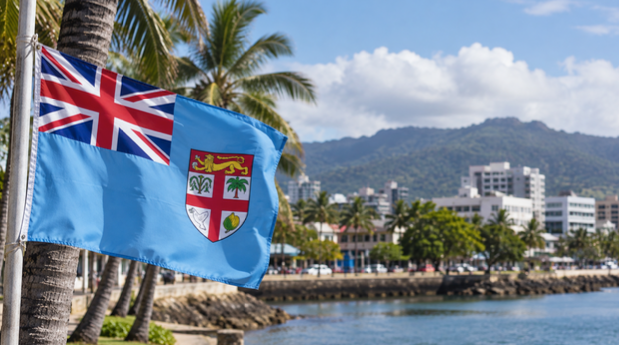
Fiji has declared a national HIV emergency after new data revealed the virus is spreading at one of the fastest rates recorded anywhere in the world, a crisis with direct relevance to New Zealand given the close ties between the two countries.
Fiji's Minister for Health and Medical Services, Dr Ratu Atonio Lalabalavu, announced the declaration on Tuesday, describing it as recognition that the situation has moved beyond what a standard outbreak response can manage.
How Fast the Numbers Have Grown
The scale of the increase is genuinely striking. Five years ago, roughly one in every 167 adults in Fiji was living with HIV. That figure now sits at approximately one in 60.
| Measure | Then | Now |
|---|---|---|
| Adults living with HIV | 1 in 167 (5 years ago) | 1 in 60 (2026) |
| New diagnoses per year | 126 (2019) | 2,016 (2025) |
| HIV-related deaths per year | 25 (2021) | 117 (2025) |
| Total estimated people living with HIV | — | Around 9,000 (population under 1 million) |
According to UNAIDS, new infections in Fiji have increased twelvefold over the past 15 years. The World Health Organization has identified Fiji as having the second-fastest-growing HIV epidemic in the Asia-Pacific region, behind only Papua New Guinea.
What's Driving the Surge
Health officials point to a specific and relatively new pattern of behaviour as a major factor: needle-sharing linked to injectable drug use, including methamphetamine.
According to UNAIDS, over half of Fiji's cases with a known transmission route are linked to sexual transmission, while 42 percent are linked to injecting drug use, a notably high proportion for a country where the epidemic was historically driven almost entirely by sexual transmission.
A Gap Between Cases and Care
Perhaps the most concerning detail in the data isn't the total number of cases, but how many people don't yet know their own status. According to UNAIDS Fiji adviser Renata Ram, only around 39 percent of people living with HIV in Fiji are aware they have it, and just 22 percent are currently receiving treatment.
"What concerns me most is the speed of the epidemic and the number of people who may be living with HIV without knowing it," Ram said.
Left untreated, HIV can progress to AIDS, leaving the body highly vulnerable to serious illness. That risk is amplified by Fiji's culturally conservative environment, where stigma around HIV remains a significant barrier to people seeking testing or care.
What Declaring an Emergency Actually Changes
Dr Lalabalavu was direct about why a stronger response was needed now.
"This decision recognizes the seriousness of the epidemic and the urgent, coordinated response our country now needs," he said. "An outbreak-level response is no longer sufficient."
In practical terms, the declaration is expected to unlock additional emergency funding and formalise international support. Fiji has already been receiving assistance from Australia, New Zealand, the Global Fund, India, and the UN Joint Team on HIV and AIDS, and Lalabalavu confirmed those partnerships will continue as part of the strengthened response.
UNAIDS Executive Director Winnie Byanyima welcomed the declaration, framing it as part of a broader global lesson.
"Fiji has recognized the urgency of the moment and is stepping up its response," Byanyima said. "It is also a stark reminder to the world that AIDS is not over."
Why This Matters for New Zealand
Fiji and New Zealand share deep, ongoing connections through family ties, migration, education, trade and tourism, which means Fiji's health challenges rarely stay entirely contained within its own borders.
New Zealand has already contributed directly to Fiji's response, committing NZ$4 million in July 2025 toward expanding community-based testing, treatment and harm-reduction initiatives.
New Zealand's Ministry of Foreign Affairs and Trade said its SafeTravel advice for Fiji remains current, and continues to encourage travellers to avoid activities that could increase infection risk.
University of Canterbury senior health lecturer Dr Jalal Mohammed said the declaration itself shouldn't cause alarm for most New Zealanders travelling to Fiji, but does offer a useful opportunity to reinforce basic health guidance.
"There is a few tourists that will engage in risky behaviours," Mohammed said, pointing to simple messaging around avoiding needle-sharing and practising safe sex as the practical takeaway for travellers.
A Word of Caution on How This Story Gets Told
Some health advocates have raised a genuinely important concern about how this crisis is being reported internationally, including in New Zealand media. Positive Women Inc National Coordinator Jane Bruning has specifically pushed back against framing that links Fiji's HIV epidemic to travel insurance warnings or describes people "catching HIV" from casual contact.
"People living with HIV have spent more than four decades dealing with fear, misinformation and discrimination," Bruning said, warning that this kind of framing risks reinforcing stigma rather than informing the public accurately.
It's worth noting that HIV is not spread through casual contact, and with effective treatment, people living with HIV can live long, healthy lives and, with sustained viral suppression, cannot transmit the virus to others, a principle known internationally as U=U (Undetectable = Untransmittable), which New Zealand's own government has formally endorsed.
What Happens Next
Fiji's Sexual Reproductive Health and HIV Programme Management Unit will coordinate the response across the country's health services and community partners. The government has also proposed establishing a parliamentary standing committee dedicated specifically to HIV and related health matters.
Dr Lalabalavu had a direct message for anyone recently diagnosed.
"A diagnosis does not take away your future," he said. "Effective treatment can help you live a long and healthy life."
For a country where tourism supports around 40 percent of GDP and roughly one in three jobs, addressing this crisis effectively carries significance well beyond public health alone, and for New Zealand, a country deeply connected to Fiji through family, travel and history, the outcome of this response is unlikely to remain a purely distant concern.
This article draws on reporting from CNN, ABC News, RNZ Pacific, Asia Pacific Report, Waatea News and UNAIDS.
This article discusses a serious health topic. If you have concerns about your own HIV risk or status, speak with a healthcare provider, or in New Zealand, contact the NZ AIDS Foundation / Burnett Foundation Aotearoa for confidential support and information.