
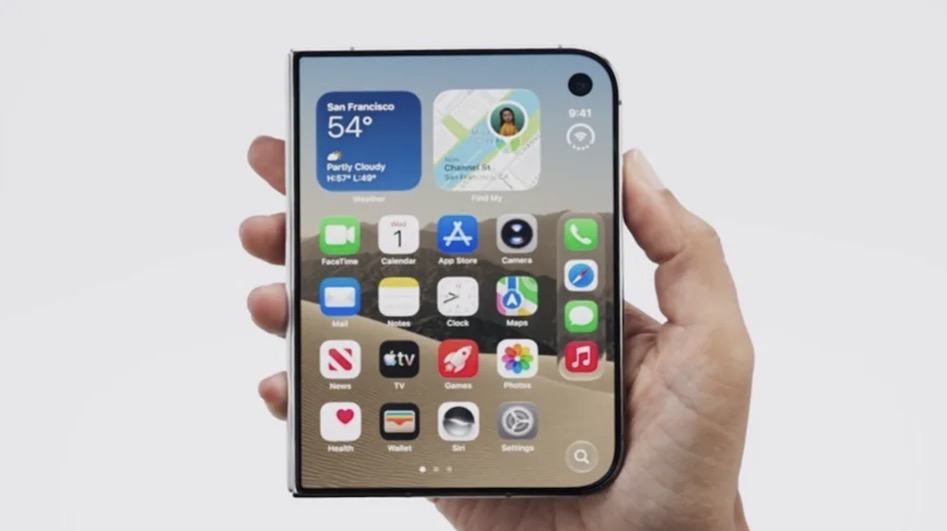
Apple has officially entered the foldable smartphone market with the launch of the iPhone Duo, the company’s first iPhone with a folding display.
The new device represents one of the biggest physical changes to the iPhone in years and gives Apple users their first opportunity to buy a foldable phone without leaving the iOS ecosystem.
The iPhone Duo opens to reveal a large 7.6-inch inner display while also offering a smaller 5.4-inch outer screen for everyday use when the phone is folded.
For Apple users in New Zealand, the launch is likely to generate significant interest, particularly among people who have watched Samsung and other Android manufacturers develop foldable phones over several generations.
A Foldable iPhone at Last
The iPhone Duo uses a passport-style folding design.
When closed, it works like a compact smartphone. When opened, it provides a much larger screen designed for multitasking, entertainment, browsing, video calls and productivity.
The inner display measures 7.6 inches and uses Apple’s Super Retina XDR technology.
The outer display measures 5.4 inches, allowing users to perform normal phone functions without opening the device.
Both displays support ProMotion and Always-On functionality, while the inner screen is designed to provide a more tablet-like experience.
iPhone Duo Key Features
The iPhone Duo includes:
• 7.6-inch Super Retina XDR folding inner display
• 5.4-inch Super Retina XDR outer display
• ProMotion display technology
• Always-On display support
• Up to 3,000 nits peak brightness
• A20 Pro processor
• Dual-battery architecture
• Vapour chamber cooling system
• Titanium construction
• Precision folding hinge
• 48MP Fusion Main camera
• 48MP Fusion Ultra Wide camera
• Split View multitasking
• iOS 27 designed for foldable use
• Apple Intelligence features
• Storage options from 256GB to 2TB
• Star White and Night Sky colour options
Apple is also expected to support Apple Pencil functionality with the device later.
iOS Redesigned for a Bigger Screen
One of the most important parts of the iPhone Duo is not just the hardware, but how Apple has redesigned iOS for the folding display.
The larger screen can display multiple applications at the same time.
Users can place apps side by side using Split View, making it possible to read an email while checking a calendar, browse the web while messaging someone, or watch content while working in another application.
Applications can also adjust their layout depending on whether the phone is fully open, folded or partially folded.
This could make the Duo particularly useful for business users, travellers, students and people who increasingly use their phone as their main computing device.
Major Focus on the Hinge and Durability
Durability has always been one of the biggest questions around foldable smartphones.
Apple has used a precision hinge mechanism along with titanium construction in an effort to strengthen the device.
The company has also introduced new screen protection technology for the folding display.
The inner panel is designed to reduce glare and make the fold less noticeable during normal use.
The phone also carries an IP68 rating for dust and water resistance.
Real-world durability will become clearer once customers and independent reviewers begin using the device over longer periods.
New Camera Possibilities
The folding design creates new ways to use the camera system.
The iPhone Duo includes a 48-megapixel Fusion Main camera and a 48-megapixel Fusion Ultra Wide camera.
Users can take selfies using the higher-quality rear cameras while viewing themselves on the outside screen.
The external display can also show a live preview to the person being photographed.
This means someone standing in front of the camera can see how the photograph is being framed before the image is taken.
The device also supports advanced video recording, including high-resolution 4K video.
A20 Pro Chip Powers the Duo
The iPhone Duo is powered by Apple’s new A20 Pro processor.
The chip is designed to handle the additional demands created by the larger display, multitasking and artificial intelligence features.
Apple has also included a vapour chamber cooling system designed to control temperatures during demanding tasks such as gaming, video editing and intensive multitasking.
The company claims the new chip provides a significant improvement in performance and efficiency compared with previous generations.
Dual Batteries Inside the Foldable Design
Apple has divided the battery system across both halves of the iPhone Duo.
This dual-battery arrangement allows Apple to make better use of the limited internal space created by the folding design.
Apple claims the Duo can provide up to around 31 hours of video playback when primarily using the larger inner screen.
Battery performance can extend further when the smaller outside display is used more heavily.
Actual battery life will depend on screen brightness, applications, connectivity and how frequently users open the larger display.
Storage Options Up to 2TB
The iPhone Duo will be available in four storage configurations:
256GB
512GB
1TB
2TB
The 2TB version is aimed primarily at people who store large amounts of video, photos, applications and professional content directly on their phone.
How Much Will the iPhone Duo Cost?
In the United States, the iPhone Duo starts at US$1,999 for the 256GB model.
Higher-storage versions become considerably more expensive, with the 2TB model reaching the ultra-premium end of the smartphone market.
For New Zealand customers, the most important number will be Apple’s official New Zealand retail price.
Simply converting the US price directly into New Zealand dollars may not provide an accurate estimate because Apple’s regional pricing can also reflect GST, distribution, exchange rates and other local factors.
New Zealand customers should therefore wait for official pricing rather than relying on direct currency conversions.
When Will the iPhone Duo Be Available?
Apple says pre-orders for the iPhone Duo are expected to begin on Friday, 16 October 2026, with general availability beginning on Friday, 23 October 2026.
New Zealand-specific availability through Apple, mobile carriers and authorised retailers is expected to become clearer closer to the release date.
Carrier instalment plans could also become important because of the phone’s premium price.
Apple Arrives Late to the Foldable Market
Apple is far from the first company to manufacture a foldable smartphone.
Samsung has been developing Galaxy Fold and Galaxy Z Fold devices for years, while brands including Huawei and Honor have also invested heavily in foldable technology.
Apple’s entry is important because of the enormous number of people already using iPhones.
Until now, Apple customers wanting a large book-style foldable phone generally had to move to Android.
The Duo changes that.
People already using Apple Watch, AirPods, Mac, iCloud and other Apple products can now consider a foldable smartphone while remaining inside Apple’s ecosystem.
Why the iPhone Duo Matters for New Zealand
For New Zealand consumers, the biggest appeal of the Duo could be convenience.
The device effectively attempts to combine a smartphone and a small tablet into one product.
A user can keep it folded for normal calls, messaging and everyday tasks, then open it when they need a larger screen for work, maps, movies, documents or multitasking.
That could appeal particularly to commuters, frequent travellers and professionals who would rather carry one device instead of both a phone and a tablet.
However, price will almost certainly be one of the biggest barriers.
With US pricing starting close to US$2,000, the Duo will sit at the very top end of the smartphone market.
New Zealand buyers will also want to consider insurance, repair costs, AppleCare coverage and carrier payment options before deciding whether the foldable experience is worth the premium.
Is This the Future of the iPhone?
The iPhone has gone through several major design changes over the years.
The original iPhone helped redefine touchscreen smartphones.
The iPhone X removed the traditional Home button and introduced a new all-screen design.
The iPhone Duo could become another major turning point if consumers embrace the foldable format.
But success is not guaranteed.
Foldable smartphones remain more expensive and mechanically complex than traditional phones, and Apple will need to prove that the larger folding screen provides enough practical benefit to justify the additional cost.
For many New Zealand Apple users, however, the immediate question will be much simpler:
How much will the iPhone Duo cost in New Zealand?
That answer could determine whether Apple’s first foldable becomes a mainstream hit or remains a premium device for early adopters.