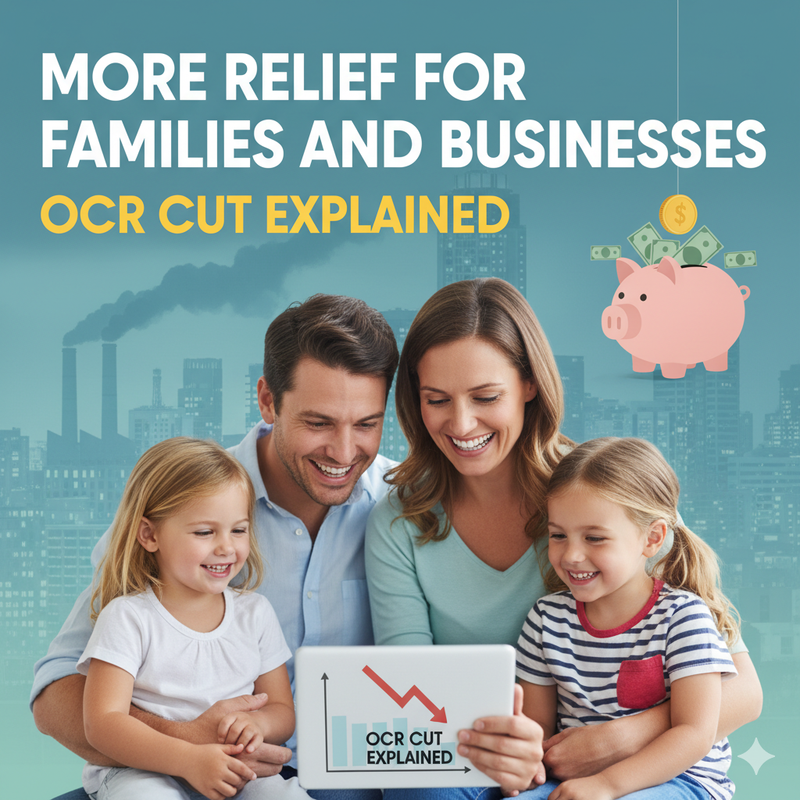
The latest cut aims to lower borrowing costs and support recovery.
What is the OCR
The Official Cash Rate is the short-term interest rate set by the Reserve Bank of New Zealand. It is the base price of money in the economy. When the OCR moves, it guides the rates banks charge or pay on many products, such as floating mortgages, business loans, and on-call deposits.
How the OCR affects people and businesses
- Home loans: A lower OCR usually puts downward pressure on floating rates and on new fixed rates. Repayments can fall when banks pass on cuts.
- Business finance: Lending costs for working capital and investment can drop, which can support hiring and expansion.
- Savings: Deposit and term investment rates often move in the same direction as the OCR. Lower OCR can mean lower returns for savers.
- Jobs and growth: Cheaper borrowing can lift spending and investment. Higher borrowing costs can slow the economy to control inflation.
- Exchange rate: OCR moves can influence the value of the New Zealand dollar, which affects import and export prices.
How often does the OCR change
The Reserve Bank reviews the OCR on a regular schedule throughout the year at Monetary Policy events. It can also make changes at other times if needed. The size and timing of changes depend on the outlook for inflation, employment, and financial stability.