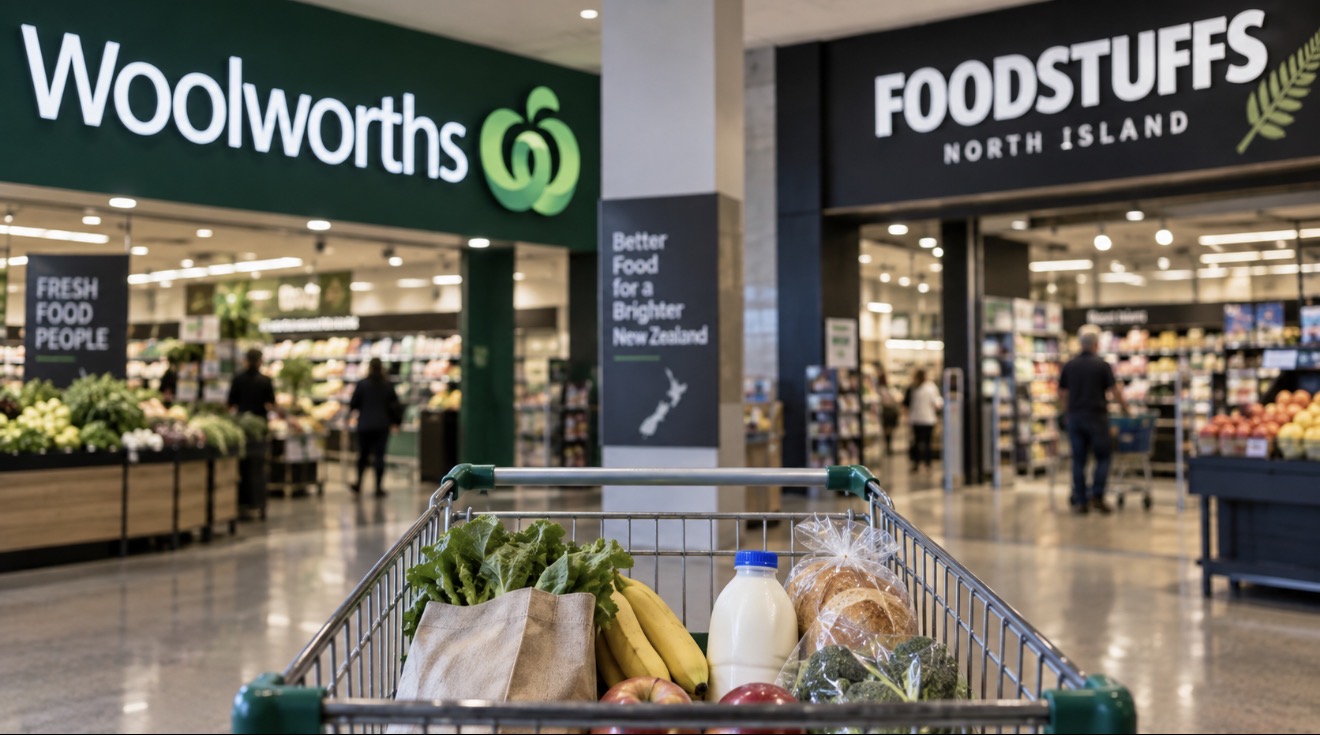
Labour says it would force New Zealand’s two major supermarket groups to operate their wholesale businesses independently from their retail stores if elected in November, arguing the change would give smaller grocers better access to products and increase competition.
UPPER HUTT, 20 September 2026: Labour has unveiled a major grocery-sector election policy that would separate the wholesale and retail operations of Foodstuffs and Woolworths New Zealand.
Under the proposal, two independently run wholesale businesses, Foodstuffs Wholesale and Woolworths Wholesale, would be established to supply retailers separately from the supermarket groups’ own stores.
Labour says the change would give independent supermarkets and smaller grocery retailers more opportunities to source products on competitive terms and make it easier for new supermarket operators to enter and expand in New Zealand.
The proposal was announced by Labour leader Chris Hipkins and commerce and consumer affairs spokesperson Arena Williams at Plenty Foods in Brewtown, Upper Hutt.
Labour targets wholesale competition
Williams said Labour believes the current structure allows the major supermarket groups to favour their own retail stores, leaving smaller competitors facing higher costs.
“The big supermarkets can favour their own retail stores, meaning smaller shops and independent supermarkets end up paying more. That makes it harder for them to compete and offer you a better deal,” Williams said, according to RNZ.
Labour’s proposal would require the wholesale businesses to operate independently from their respective supermarket retail operations.
The party also wants protections to prevent wholesalers from cutting off supplies when smaller retailers begin attracting more customers.
Labour would additionally seek to remove restraint-of-trade provisions that it says can prevent individual stores, including Four Square operators, from reducing prices, changing chains or becoming independent.
The policy would only be implemented if Labour forms the government following the November election.
Wholesale market has already faced scrutiny
Competition within New Zealand’s grocery sector has been under sustained scrutiny.
The previous Labour government required Foodstuffs and Woolworths to develop wholesale supply arrangements for other retailers, with regulated wholesale pricing available as a potential intervention.
A subsequent Commerce Commission review found improvements but concluded competition remained weak in areas including pricing, product range and access.
According to the findings cited by RNZ, Woolworths had strengthened its wholesale offering, including establishing a dedicated wholesale business and introducing measures intended to improve access and customer support.
Foodstuffs North Island had made more incremental improvements, while progress at Foodstuffs South Island was slower.
Labour now argues structural separation would go further by removing the incentive for a vertically integrated supermarket business to favour its own stores.
National questions Labour’s proposal
National has challenged the policy and questioned whether separating wholesale and retail operations would produce lower grocery prices.
Finance and Economic Growth spokesperson Nicola Willis described Labour’s announcement as light on detail and said structural separation had previously been considered and rated poorly compared with other grocery-market interventions.
Willis argued that the option had not progressed to detailed analysis, meaning questions remained around its cost, implementation and ultimate impact on shoppers.
National is pursuing a different approach to grocery-sector reform and says its proposal has been developed through cost-benefit analysis and independent review.
The disagreement means supermarket competition is emerging as a significant economic issue ahead of the 2026 election.
Greens continue to push KiwiMart
The Green Party is advocating a different model again.
Its proposal would establish KiwiMart, a government-owned supermarket chain intended to introduce another major competitor into the grocery market.
Green Party co-leader Chlöe Swarbrick welcomed the increased political focus on supermarket competition but said the proposals from Labour and National did not go far enough.
She argues a publicly owned supermarket operator would provide another long-term competitive force in the sector.
That leaves voters with distinctly different approaches being proposed to address the same problem: how to create stronger grocery competition and put downward pressure on household food costs.
Grocery prices shaping the election debate
The cost of groceries has become a prominent issue in the 2026 election campaign, with political parties proposing increasingly significant interventions in a sector dominated by Foodstuffs and Woolworths.
Labour has separately proposed making excessive price gouging illegal for essential goods and services, including groceries, where companies have significant market power.
Its latest proposal goes directly to the structure of the supermarket industry.
Rather than breaking up individual supermarket brands, Labour wants to separate the wholesale operations supplying groceries from the retail businesses selling those groceries directly to consumers.
The central question will be whether independent wholesale operations could give smaller supermarkets and new entrants access to products at prices that allow them to compete more effectively.
National disputes that Labour’s proposed model has been sufficiently tested, while the Greens argue that structural reforms alone will not deliver the level of competition they want.
For New Zealand households facing the weekly supermarket bill, the competing proposals mean grocery competition is likely to remain firmly on the political agenda through to November.
Source credit: Based on original reporting by RNZ Parliamentary reporters, with additional verification and context by Webfit News.