Australia is pushing ahead with some of the world’s most ambitious online safety reforms, targeting social media algorithms, harmful content and the responsibilities of major technology companies. The approach is attracting international attention, but questions remain over how effectively the rules can be enforced.
Sydney, 19 September 2026: Australia is attempting to position itself at the forefront of a growing international effort to make social media companies more responsible for what happens on their platforms.
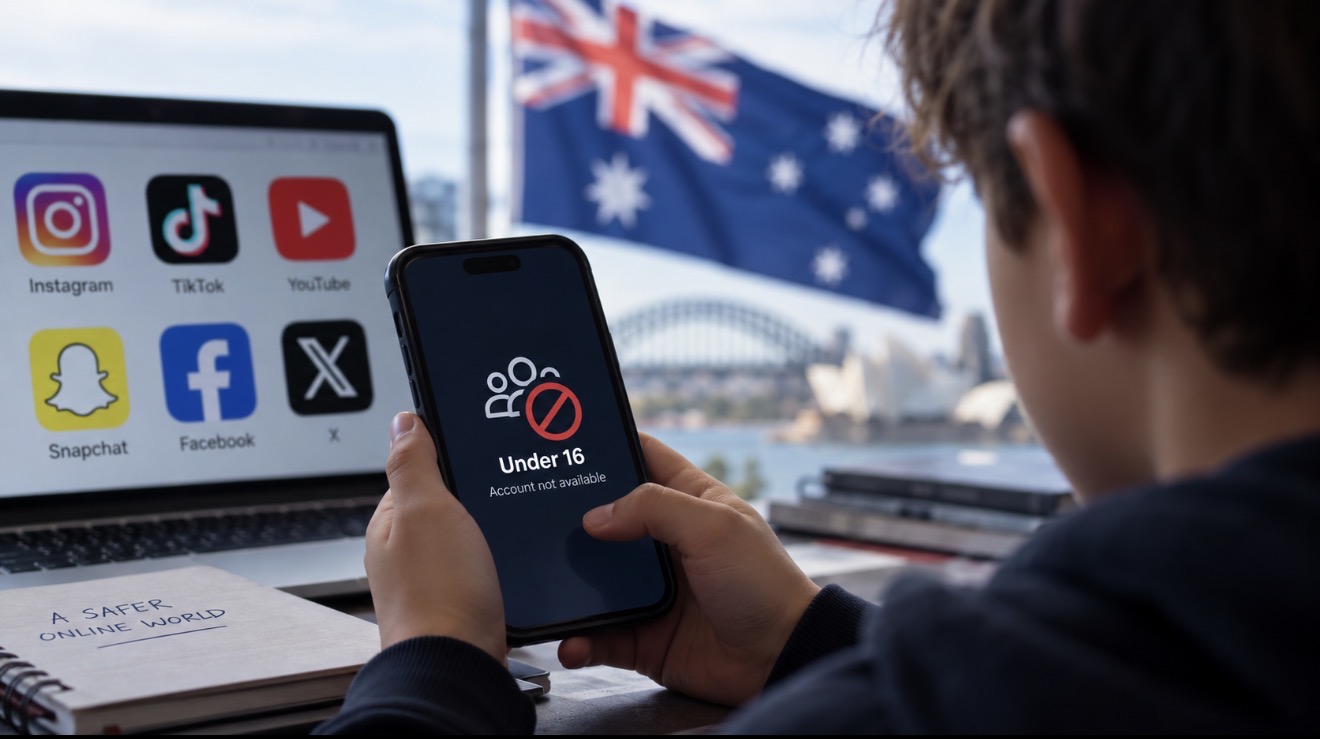
After introducing restrictions aimed at preventing children under 16 from holding social media accounts, the Australian government is preparing another round of reforms that would give users greater control over algorithms and impose stronger obligations on technology companies to reduce foreseeable online harms.
Prime Minister Anthony Albanese is expected to promote Australia’s approach during international meetings as his government seeks support from other countries confronting similar concerns about children’s online safety and the influence of major technology platforms.
Millions of accounts closed under under-16 rules
Australia’s social media age restrictions have become one of the most closely watched parts of its digital safety programme.
According to The Guardian, as many as five million accounts have been closed in Australia since the restrictions took effect.
But the headline number does not tell the entire story.
Research cited by The Guardian found that more than 80 percent of teenagers under 16 were still using social media after the ban, raising questions about age verification and enforcement.
The government has subsequently moved to increase penalties and strengthen the eSafety Commissioner’s compliance powers.
The effectiveness of the policy therefore remains contested, and experts say its longer-term impact may take years to establish.
Next target: the algorithm
Australia’s next major reform could affect adults as well as younger users.
The government plans to require social media platforms to provide users aged over 16 with the ability to opt out of algorithmically recommended content.
The proposal has been described as “my feed, my way.”
Instead of having platforms automatically decide what users see based on engagement and recommendation systems, people would have greater ability to choose a different type of feed.
Platforms that breach the proposed requirements could face penalties exceeding A$100 million.
A DemosAU poll reported by The Guardian found 66 percent of respondents supported requirements allowing people to opt out of algorithms, while 13 percent opposed the proposal.
Stronger protections proposed for children
The reforms also seek additional protections for people under 18.
The government wants platforms to take greater responsibility for exposure to categories of potentially harmful material, including pornography, content promoting eating disorders, abuse and bullying, misogynistic material and depictions of dangerous behaviour.
Communications Minister Anika Wells has argued that responsibility for dealing with harmful content should not rest primarily with victims after the damage has occurred.
The government is also targeting so-called “nudify” applications, which use artificial intelligence or other technology to create fake nude images of people without their consent.
Regulators cited by The Guardian say this form of abuse has increased more than fivefold since 2019.
Australia wants other countries involved
The Australian government argues that one country acting alone will struggle to fundamentally change the behaviour of global technology companies.
Albanese is therefore seeking greater international cooperation.
Countries including France, Brazil and Indonesia have pursued or considered measures influenced by the broader debate around children’s access to social media, while Greece, Britain and Denmark are also advancing proposals for restrictions.
European Commission President Ursula von der Leyen has also proposed an “EU Kids Act”, while pointing to Australia’s approach during the international debate about children’s online safety.
For technology companies operating internationally, coordinated rules across multiple countries could prove considerably more consequential than regulation in a single market.
But Australia’s approach has critics
The proposed reforms remain politically contested within Australia.
The Coalition has argued that the government’s proposals could provide excessive powers capable of affecting political expression and has raised concerns about safeguards.
The Greens, meanwhile, argue the government’s proposal does not go far enough. Rather than allowing users to opt out of algorithmic recommendations, they want users to actively choose to opt in.
The legislation is expected to undergo further consultation before being introduced to Parliament.
There could also be international resistance.
Many of the world’s biggest technology platforms are headquartered in the United States, and The Guardian reports that the US administration has indicated concerns could be raised with trading partners over measures targeting American technology companies.
Why New Zealand should be watching
Although these are Australian policies, the debate has obvious relevance across the Tasman.
New Zealand families use many of exactly the same platforms, including Facebook, Instagram, TikTok, Snapchat and YouTube.
The underlying questions are therefore familiar: How young is too young for social media? How much responsibility should sit with parents, and how much with technology companies? Should users have greater control over recommendation algorithms? And what obligations should platforms have when their products expose children to foreseeable harm?
Australia’s experience could provide useful evidence for countries considering their own approaches.
If the measures significantly reduce harmful exposure without creating disproportionate restrictions, they could strengthen arguments for similar regulation elsewhere.
If teenagers simply find ways around age restrictions, or if enforcement proves ineffective, that will be equally important evidence.
Big Tech regulation is entering a new phase
For years, governments largely responded to online harms after they occurred through content removal requests, complaints, investigations and penalties.
Australia is trying to move further towards prevention.
That means asking technology companies to consider foreseeable risks when designing products, giving users more control over recommendation systems and placing greater responsibility on platforms for protecting younger users.
Whether Australia ultimately becomes a model for other countries will depend less on the ambition of its legislation and more on what happens after those laws meet the reality of billions of users, rapidly changing technology and some of the world’s most powerful companies.
For New Zealand and other countries watching from the sidelines, Australia’s experiment may provide an important test of how far governments can realistically go in making the online world safer without unnecessarily restricting the benefits and freedoms that come with it.
Source credit: This Webfit News article is based on original reporting by Tom McIlroy and Josh Taylor for The Guardian Australia, published 19 September 2026. Additional context and framing for New Zealand readers by Webfit News.