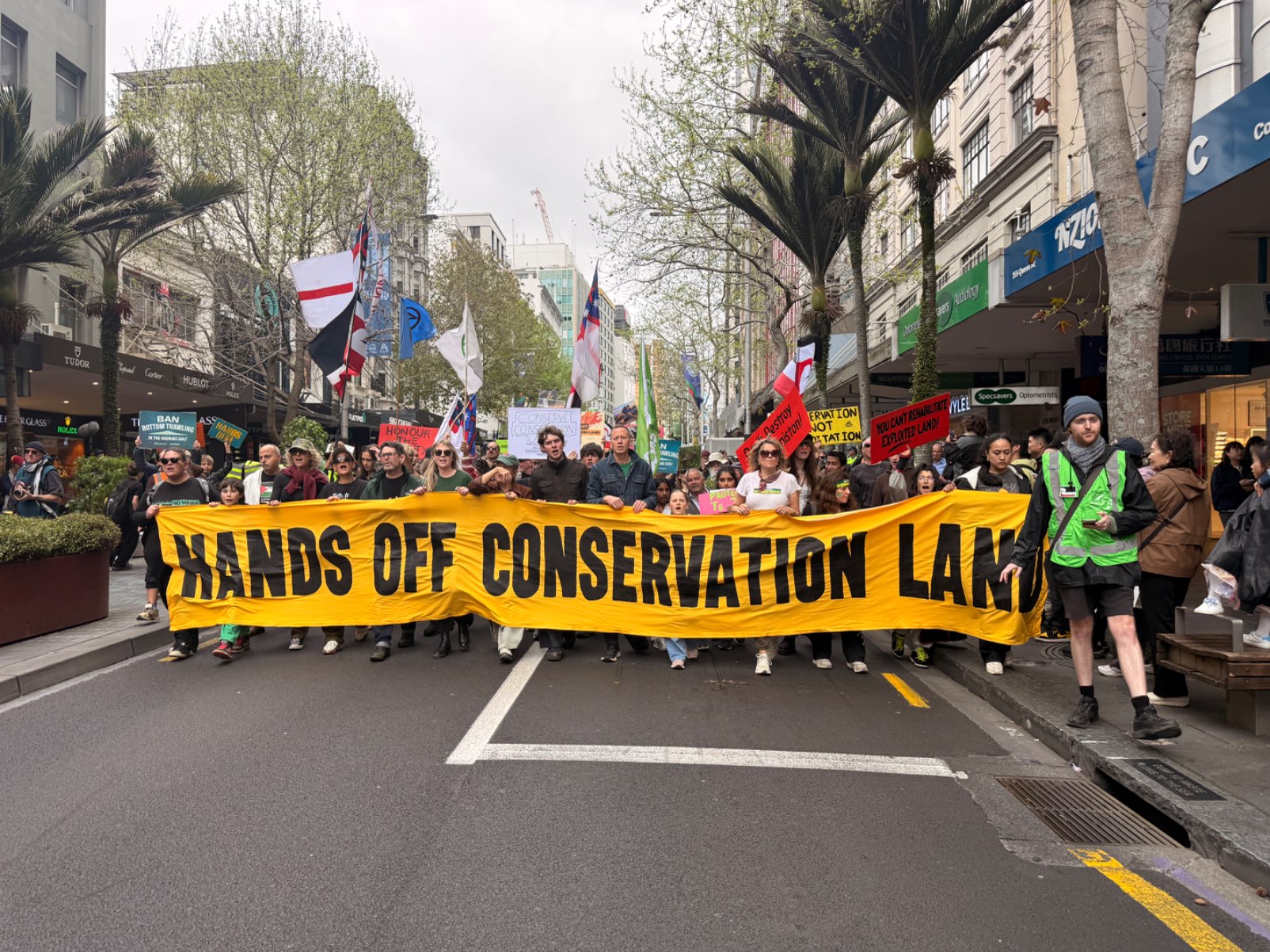
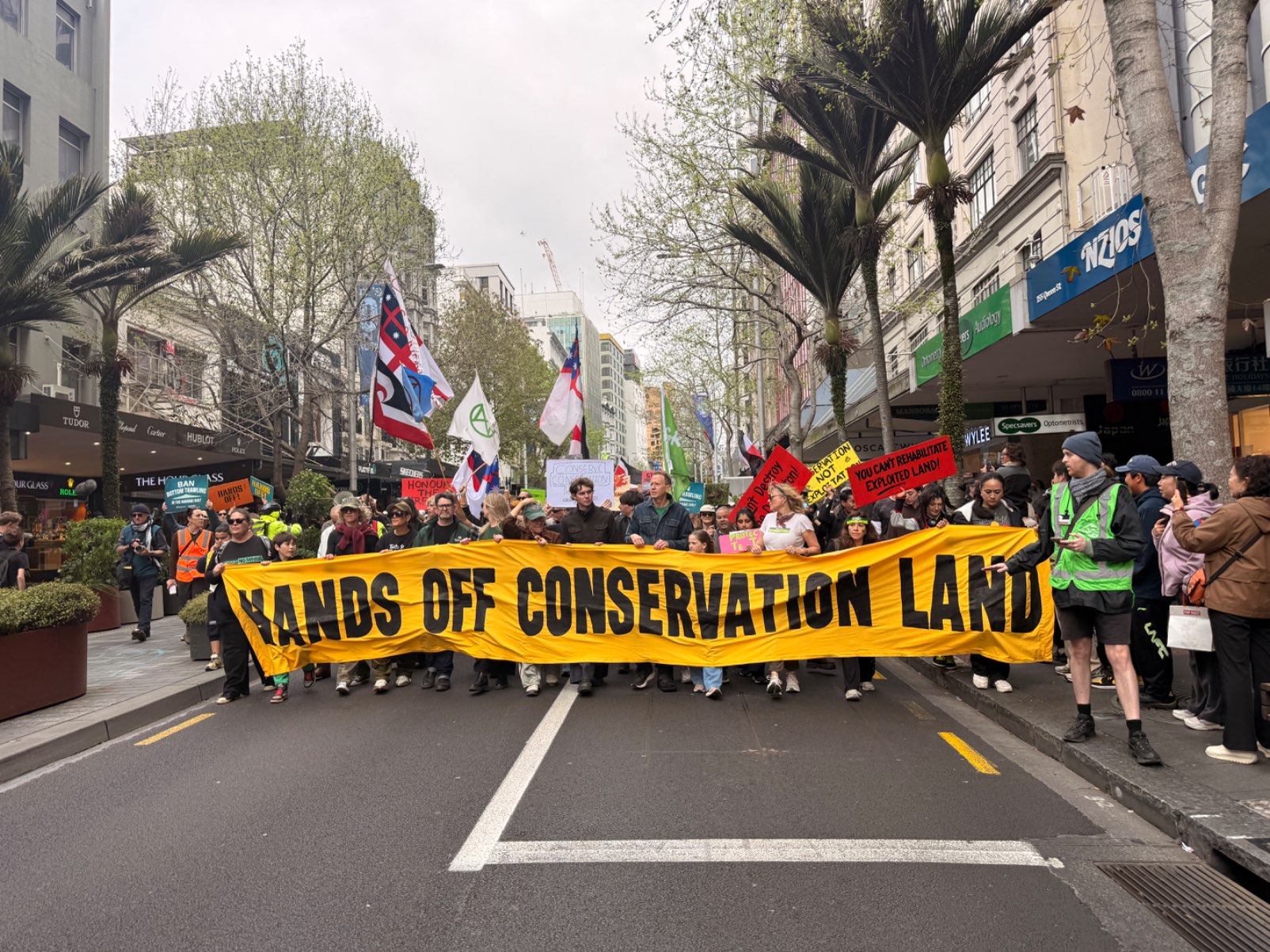
Thousands of people filled central Auckland on Saturday as environmental groups, families and supporters marched through Queen Street in opposition to the Government’s Conservation Amendment Bill. Webfit News was on the ground covering the demonstration and broadcasting live as the march moved through the city.
AUCKLAND, 19 September 2026: Queen Street was transformed into a sea of protesters on Saturday as thousands joined a major demonstration calling for stronger protection of New Zealand’s conservation land.
Webfit News was present throughout the march, capturing the crowd, atmosphere and demonstration as protesters made their way through central Auckland.
Greenpeace, which organised the March for Nature with support from Forest & Bird, said approximately 35,000 people participated. Police gave a significantly lower estimate, putting the maximum attendance at around 6,000 people.
Despite the difference in estimates, the scale of the demonstration was clearly visible across central Auckland, with a large crowd occupying Queen Street during the march.
Police reported no incidents.
Protesters take their message through Auckland
The demonstration was organised in response to the Government’s Conservation Amendment Bill, legislation intended to reform the way conservation land is managed in New Zealand.
People of different ages joined the march, carrying signs and moving through the heart of Auckland to voice concerns about the future of the country’s conservation estate.
Webfit News also broadcast live from the demonstration on its Facebook page, giving viewers a look at the protest as it unfolded.
The central message from organisers was that conservation land and environmental protections should not be weakened in the pursuit of economic development.
Why protesters oppose the bill
Greenpeace has strongly opposed aspects of the proposed conservation reforms, arguing they could make it easier for commercial activity to take place on conservation land and shift the balance away from environmental protection.
Greenpeace executive director Dr Russel Norman said the turnout demonstrated the level of concern surrounding the legislation.
Norman said protesters were sending the Government a message that New Zealanders were prepared to defend conservation land and existing environmental protections.
Forest & Bird also supported the demonstration and has raised concerns about the potential consequences of changing the country’s conservation framework.
What the Government says
The Government has presented the Conservation Amendment Bill as an effort to modernise legislation that has been in place for almost four decades.
It says the reforms are intended to simplify decision-making, reduce unnecessary administrative processes and enable appropriate economic activity while continuing to protect conservation values.
The Government has argued that tourism and businesses operating on and around conservation land make a significant contribution to regional economies and that the existing system can be slow and unnecessarily complicated.
The legislation has therefore become part of a wider national debate over how New Zealand balances conservation with tourism, infrastructure and economic development.
Controversial land sale provisions being removed
One important point in the current debate is that provisions relating to the disposal and exchange of conservation land were included when the bill was originally introduced.
Following public opposition, the Government announced in June that it had asked for those provisions to be removed as the legislation progressed through the parliamentary process.
The wider Conservation Amendment Bill, however, remains under consideration.
Environmental organisations continue to oppose other aspects of the reforms and argue that the overall direction of the legislation could weaken protections.
The Government disputes that characterisation and says conservation safeguards will remain.
Queen Street becomes centre of conservation debate
Saturday’s demonstration brought that national debate directly onto Auckland’s busiest city-centre streets.
From the ground, the march brought together environmental campaigners, community members and families, with participants moving through Queen Street as organisers called for the legislation to be withdrawn.
For many taking part, the issue extended beyond the technical details of one piece of legislation. The demonstration reflected broader concerns about what should happen to conservation land and how much commercial activity should be permitted within areas held for conservation purposes.
The competing attendance figures will inevitably form part of discussion about the scale of Saturday’s protest.
Greenpeace’s estimate of approximately 35,000 is substantially higher than the police estimate of a maximum of around 6,000. Neither figure should therefore be treated as an independently verified attendance count.
What was evident on the ground was a substantial and highly visible demonstration in the centre of Auckland.
Conservation debate now returns to Parliament
The Conservation Amendment Bill has not become law and remains part of the parliamentary process.
As consideration of the legislation continues, environmental organisations are expected to maintain pressure on the Government, while ministers continue to argue that New Zealand’s conservation framework needs modernisation.
Saturday’s Auckland march demonstrated that the issue has moved well beyond parliamentary debate and is capable of bringing thousands of people onto the streets.
For those who marched through Queen Street, the message was centred on protecting New Zealand’s conservation estate for future generations.
For the Government, the challenge will be convincing the public that its proposed reforms can deliver greater efficiency and economic opportunity without compromising those protections.
Webfit News was present in central Auckland and covered the March for Nature on the ground, including live coverage from the demonstration on the Webfit News Facebook page