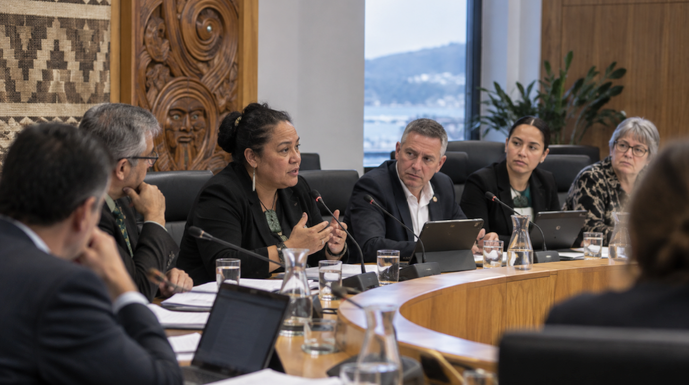

Te Pāti Māori co-leader Debbie Ngarewa-Packer was ejected from Parliament this week after admitting she used the c-word during a heated debate, in an exchange that also saw Labour's Willie Jackson removed from the chamber.
The incident unfolded while MPs were debating the Government's proposed police "move-on orders" for rough sleepers under urgency.
How It Started
The exchange began when Te Pāti Māori MP Oriini Kaipara used the phrase "bull crap" during a passionate speech on the legislation. Assistant Speaker Maureen Pugh responded by reminding the House to keep the language "Parliamentary."
Pugh did not personally hear what came next, and it wasn't picked up by Parliament's microphones. It was New Zealand First MP Casey Costello who raised a point of order alerting the Speaker to what had been said.
"As the Speaker gave a direction, the Māori Party member then used the word, which I will not use, that begins with C," Costello told the House.
Ngarewa-Packer's Explanation
Ngarewa-Packer admitted to using the word, but framed it as a comment directed at fellow MP Oriini Kaipara rather than at Pugh, made to make a point about apparent inconsistency in how strong language gets treated in the House.
She argued the word had already been used in Parliament before, referencing an earlier instance involving Act's Brooke van Velden, who had used the same word last year while quoting a newspaper column that had used the slur to attack her.
Ngarewa-Packer questioned why "bull crap" was drawing a warning when a more serious word had previously gone unpunished in the same chamber.
Pugh was not persuaded, telling Ngarewa-Packer she found the language offensive and ordering her to leave the House.
Jackson Removed as Well
The situation escalated further when Labour's Willie Jackson objected to what was happening, and he too was assisted from the chamber.
Speaking to reporters afterward, Jackson said he personally found the word inappropriate for use in the House, while acknowledging Ngarewa-Packer's right to use it as she saw fit.
He described his own view as somewhat old-fashioned on the matter, while separately noting that some see the word's use by women as a form of reclaiming language.
Not the First Time This Word Has Caused Uproar in Parliament
This is not an isolated incident for Parliament this year. In August, Ngarewa-Packer used the same word again during a separate, unrelated controversy involving Green co-leader Chlöe Swarbrick, who had been ejected and given a week-long suspension after refusing to withdraw comments about sanctioning Israel.
At that time, Ngarewa-Packer referenced the earlier van Velden incident directly while defending Swarbrick, arguing that if one use of the word had gone unpunished, the treatment of Swarbrick's suspension looked more like political suppression than consistent rule enforcement.
A Difficult Period for Te Pāti Māori
This latest ejection comes against the backdrop of a turbulent period for Te Pāti Māori more broadly. In November last year, the party's national council voted to expel two of its own MPs over alleged breaches of the party's kawa, or constitution, a decision that was itself questioned by a former party co-leader and a law expert over how the vote was conducted.
Why This Keeps Happening
The recurring nature of this specific dispute, whether the same word has effectively already been permitted in the House through prior unpunished use, points to a genuine, unresolved question about consistency in how Parliament's Speaker enforces language standards. With the word now having surfaced in the House on at least three separate occasions according to MPs' own accounts, the debate over whether it should be treated as an exceptional breach or an already-established precedent looks likely to resurface again.
This article is based on reporting by RNZ, with additional context from 1News, Stuff and the NZ Herald.