The wording of the questions is important when interpreting the results.
Respondents were first told:
“For the last few years, the Government has been spending more than it has been bringing in. This is currently expected to flip - called returning to surplus - in 2029.”
They were then asked whether they would support delaying that return to surplus by one year, until 2030, “in order to restore pay equity for New Zealand women.”
The result was:
Yes: 49%
No: 28%
Unsure: 23%
A second question explained the Government’s goal of getting net Government debt below 40% of GDP and said current forecasts suggested that could happen in 2032.
Respondents were asked whether they would support delaying that target by two years, until 2034, to restore pay equity.
The result:
Yes: 46%
No: 29%
Unsure: 25%
The wording matters because the survey did not ask respondents about delaying fiscal targets in isolation. It presented the delay specifically as a means of restoring pay equity.
National voters evenly divided on surplus question
One of the more interesting findings is the difference between supporters of political parties.
Among respondents identified as National voters, 39% supported delaying the return to surplus and 39% opposed it.
NZ First voters were also relatively divided, with 38% supporting the delay and 34% opposing it.
ACT voters were substantially more opposed, with 27% supporting a delay and 59% against.
Support was considerably higher among respondents aligned with parties on the political left.
The poll recorded:
TOP: 70% support, 13% oppose
Green: 68% support, 16% oppose
Labour: 61% support, 18% oppose
Te Pāti Māori: 46% support, 35% oppose
Those figures come directly from the Talbot Mills survey supplied with the PSA release.
Debt question produces slightly different result
Party differences were also apparent when respondents were asked about delaying the 40% debt target.
Green voters recorded 66% support and 16% opposition, followed by TOP voters at 65% to 19% and Labour voters at 55% to 19%.
Among National voters, the balance shifted slightly against the proposal: 37% supported delaying the target and 41% opposed it.
NZ First respondents recorded 33% support and 36% opposition.
ACT again showed the strongest opposition, with 27% supporting a delay and 58% opposed.
The results indicate that the size of the fiscal trade-off and the particular target involved can affect voter responses rather than support for pay equity automatically translating into support for every fiscal change.
Women more supportive than men
Gender differences also emerged.
On delaying the return to surplus, 53% of women supported the proposal compared with 45% of men.
On delaying the debt target, support was 50% among women and 42% among men.
The poll also found differences by ethnicity on the surplus question.
Māori respondents recorded 58% support, compared with 52% among NZ European respondents and 39% among Asian respondents.
Younger respondents more willing to delay debt target
Support for delaying the debt target was highest among younger respondents.
Among those aged 18 to 29, 51% supported a two-year delay and 24% opposed it.
For people aged 30 to 44, the result was 48% to 27%.
Among 45 to 59-year-olds, 45% supported it and 30% opposed it.
For respondents aged 60 and over, support remained ahead of opposition at 42% to 32%.
That means support exceeded opposition across every age category reported in the survey, although the gap narrowed among older respondents.
Why is pay equity back at the centre of the debate?
The dispute follows major changes made to the Equal Pay Act in May 2025.
The Government changed the criteria and process for bringing pay equity claims and discontinued existing claims, while allowing claims to be lodged again if they satisfied the new requirements.
At the time, Workplace Relations and Safety Minister Brooke van Velden said the previous system was not working as intended and argued stronger requirements were necessary to ensure claims were based on evidence of sex-based undervaluation.
The Government said the changes would make the system more robust and financially sustainable.
The changes affected existing claims involving an estimated 180,000 workers, according to figures subsequently discussed in Parliament. (The Beehive)
Billions were removed from previously expected pay equity spending
The fiscal consequences were substantial.
In its 2025 Budget, the Government said changes to the pay equity regime allowed it to repurpose an average of approximately $2.7 billion a year that had previously been set aside for expected pay equity costs.
A further $1.8 billion in previous contingencies was redirected towards capital expenditure.
The Government’s position was that changes were needed to ensure settlements focused on pay disparities resulting from sex-based discrimination and that the previous regime was creating very large fiscal pressures.
Treasury subsequently released extensive advice relating to the fiscal management of pay equity and the contingencies associated with claims. (The Beehive)
PSA says fiscal targets should not come first
The PSA strongly opposed the 2025 changes and is now using the new polling to argue that a future government would have public support to revisit them.
PSA national secretary Fleur Fitzsimons said the union rejected the suggestion that fiscal targets should take priority over pay equity.
“We reject the suggestion that fiscal targets are more important than paying women workers what it’s proven they are worth and this poll shows New Zealanders agree,” Fitzsimons said.
The PSA argues a future government could meet some of the cost through savings, revenue measures or Budget operating allowances rather than allowing the entire gross cost to flow directly through the Crown accounts.
Those are proposals from the union rather than current Government fiscal policy.
PSA models one-year surplus delay and two-year debt delay
The PSA says it has modelled the fiscal impact of restoring pay equity using Treasury’s Budget 2026 Fiscal Strategy Model.
According to the union’s analysis, assuming the full gross cost flowed through the Government accounts without offsetting savings, restoring pay equity would delay the operating balance returning to surplus from 2028/29 to 2029/30.
It says the Government’s 40% net core Crown debt target would be delayed from 2032 until 2034.
Those estimates are PSA modelling, rather than Treasury forecasts of a policy to restore the previous pay-equity arrangements.
Treasury’s Budget Economic and Fiscal Update remains the official source for the Government’s current economic and fiscal forecasts. (The Treasury New Zealand)
Council of Trade Unions national secretary Melissa Ansell-Bridges argued those delays would be manageable.
“These are fiscal adjustments that New Zealand can easily afford,” she said.
That assessment represents the CTU’s position on the trade-off between pay equity and the fiscal targets.
PSA also claims wider economic benefits
The union has made a broader economic case for restoring pay equity.
It says its previous analysis estimates restoration could increase economic activity by $13.5 billion over four years, create around 13,000 jobs and lift approximately 11,000 children out of poverty.
Those figures are PSA estimates and should not be interpreted as independent Treasury forecasts.
The union’s argument is that higher wages would flow back through household spending, tax revenue and lower government support costs, reducing the net fiscal cost.
The economic impact of any future pay-equity policy would ultimately depend on its design, which claims qualified, settlement amounts, implementation timing and how a future government chose to fund it.
What does the poll actually tell us?
The clearest finding is narrower than some of the political claims surrounding it.
When explicitly presented with a choice between the current fiscal timetable and restoring pay equity for women, more respondents chose a short delay to the fiscal targets than opposed doing so.
For the surplus question, support led opposition by 21 percentage points.
For the debt question, the gap was 17 points.
But substantial groups remained undecided: 23% on the surplus question and 25% on debt.
The results therefore demonstrate significant support for the trade-off presented by the survey, but they do not establish what voters would think about every possible method of funding pay equity or the exact form of a future pay-equity regime.
How the poll was conducted
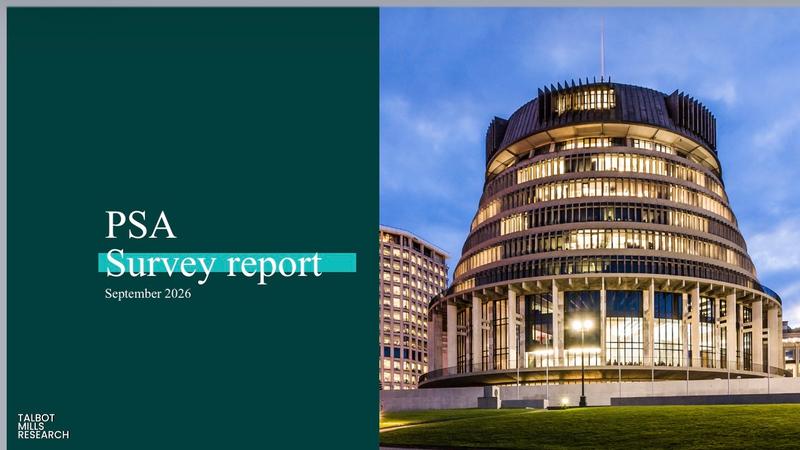
Talbot Mills Research conducted the nationwide online survey between 10 and 17 September 2026.
It surveyed 1,894 New Zealand adults aged 18 and over.
The research company says interlocked age, gender and regional quotas were used during sampling and the results were weighted to better represent New Zealand’s adult population.
It reports a maximum sampling error of ±2.3 percentage points at the 95% confidence level.
The poll was commissioned by the PSA, an organisation actively campaigning for restoration of pay equity.
That does not invalidate the results, but it is relevant context when considering both the questions selected for the survey and how the findings are being used publicly.
With the 7 November General Election approaching, the political question now moves from public sentiment to policy.
Parties seeking to restore the previous pay-equity framework would still have to explain what they would restore, what it would cost, how it would be funded and what consequences they would accept for other spending or fiscal objectives.
The new poll suggests a sizeable share of voters may be prepared to accept at least one of those trade-offs.
Source: Public Service Association Te Pūkenga Here Tikanga Mahi; Talbot Mills Research, September 2026; New Zealand Treasury; New Zealand Government and Parliamentary records. Additional reporting and context by Webfit News.