Stage One has delivered safer crossings, cycling facilities and new public spaces. The next challenge is upgrading the wider transport corridor while keeping local businesses accessible.
By Webfit News | 12 October 2026
Lincoln has marked the completion of the first stage of its town centre transformation, but residents and businesses face another substantial construction programme beginning later this month.
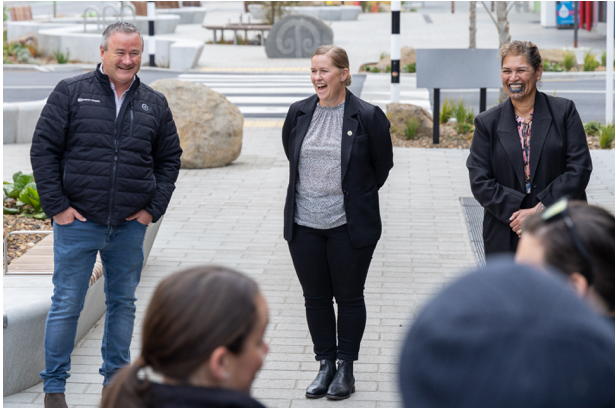
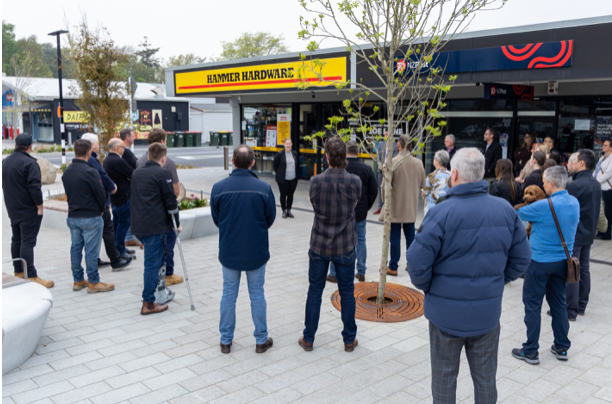
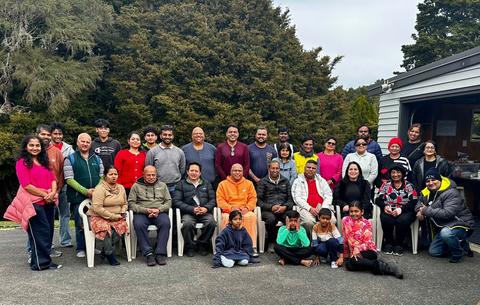
A blessing ceremony held on Monday in the new Gerald Street plaza formally acknowledged Stage One’s completion. The upgrade has introduced a 40km/h town centre speed environment, pedestrian crossings, cycling facilities and more than 50 new trees.
Attention now turns to Stages Two and Three, which Selwyn District Council plans to build together from late October. Fulton Hogan has been awarded the contract, with the next phases expected to take approximately 18 months.
The milestone therefore brings two different prospects for Lincoln: an improved central gathering space ready to use, and further road and infrastructure works still ahead.
A town centre designed for more than passing through
Stage One’s most visible addition is the public plaza on Gerald Street, providing somewhere for people to meet and spend time.
Alongside the new crossings, lower-speed environment and landscaping, it reflects the council’s intention to make the centre more welcoming for people walking, cycling and visiting local businesses.
Mayor Lydia Gliddon said the completed spaces were already helping create a more people-focused centre.
“The new plaza, pedestrian spaces and landscaping are helping create places where people can stop, connect and spend time, while also improving safety and accessibility for everyone using the town centre.”
The opening ceremony included a karakia whakawātea led by Puamiria Parata-Goodall of Te Taumutu Rūnanga.
Cultural elements within the plaza include split boulders, hīnaki-inspired basket features and tuna, or eel, designs, connecting the public space with the area’s cultural narratives.
Growth explains what comes next
The next construction stages extend the project’s focus from central public spaces to the roads and services supporting Lincoln’s growth.
Council forecasts put Gerald Street traffic at around 16,000 vehicle movements a day by 2045, up from approximately 10,000. Lincoln’s household count is projected to increase from 3,500 to 6,000 by 2040.
Planned works include traffic lights at the Gerald Street, Springs Road and Ellesmere Junction Road intersection, and at Gerald Street and Vernon Drive. The programme also includes cycling facilities, new bus shelters, underground powerlines and water and stormwater upgrades.
These are forecasts and planned improvements, rather than guarantees of future traffic conditions. They nevertheless explain why the council is undertaking work beyond the newly completed plaza.
Business access becomes a central test
For local businesses, the next phase will bring renewed concern about how customers, deliveries and services reach their premises.
Council infrastructure and property executive director Tim Mason acknowledged the patience required during Stage One.
“This project has required patience from residents, businesses and road users throughout construction, and I want to sincerely thank everyone for their support,” he said.
Gliddon also thanked businesses for continuing to welcome customers through the disruption.
“Lincoln is open for business, and we encourage everyone to come and enjoy the new town centre.”
For Stages Two and Three, the council says business access will be maintained, although routes may change as construction progresses. Temporary traffic arrangements could include lane shifts, stop/go controls and partial closures.
A Lincoln Town Centre Fund is available to eligible businesses directly affected by the next stages. The council also says lessons from Stage One have informed its approach, including greater attention to access and earlier communication.
That makes access and communication practical measures by which the next phase can be assessed, alongside the delivery of the construction itself.
Improvements beneath the surface
Stage One has also delivered work that is less visible than the plaza and planting.
Roads, drainage, lighting and underground infrastructure have been upgraded. Rain gardens are designed to naturally treat stormwater before it returns to the Liffey Stream, helping protect the waterway.
Additional parking includes two public car parks completed before construction began.
Together, these features show the project’s wider purpose: improving how the town centre functions, as well as how it looks.
What residents can expect
Project phase
What it means for Lincoln
Stage One complete
New plaza, crossings, cycling facilities, landscaping and infrastructure improvements are in place
Stages Two and Three
Construction is scheduled to begin in late October 2026
Expected duration
Approximately 18 months
During construction
Access arrangements may change, with temporary traffic controls required
Business support
Eligible affected businesses can seek assistance through the Lincoln Town Centre Fund
The upgrade follows a town centre plan first adopted in 2016, intended to accommodate growth while retaining Lincoln’s character.
Monday’s opening provides the first substantial opportunity to use the redesigned centre. The next phase will test how effectively the council and its contractors can deliver further improvements while keeping the town working.
Photo caption: Fulton Hogan Canterbury Regional Manager Paul O’Meara, Selwyn Mayor Lydia Gliddon and Te Taumutu Rūnanga representative Puamiria Parata-Goodall mark the opening of Lincoln Town Centre Stage One.
Sources: Selwyn District Council media release, 12 October 2026; council construction announcement and project information.