By Webfit News | 15 October 2026
With just over three weeks until New Zealand’s general election, disturbing scenes of damaged political campaign posters in central Auckland are raising fresh concerns about vandalism and respect for democracy.
By Webfit News | 15 October 2026 With just over three weeks until New Zealand’s general election, disturbing scenes of damaged political campaign posters in central Auckland are...
Part of our coverageNZ Election 2026Polls, policies, candidates and how to vote, all in one place. →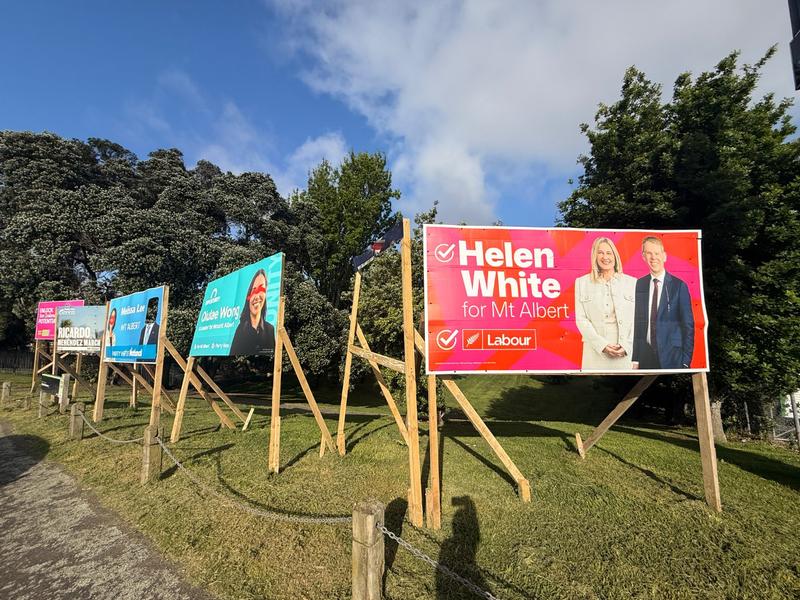
By Webfit News | 15 October 2026
With just over three weeks until New Zealand’s general election, disturbing scenes of damaged political campaign posters in central Auckland are raising fresh concerns about vandalism and respect for democracy.
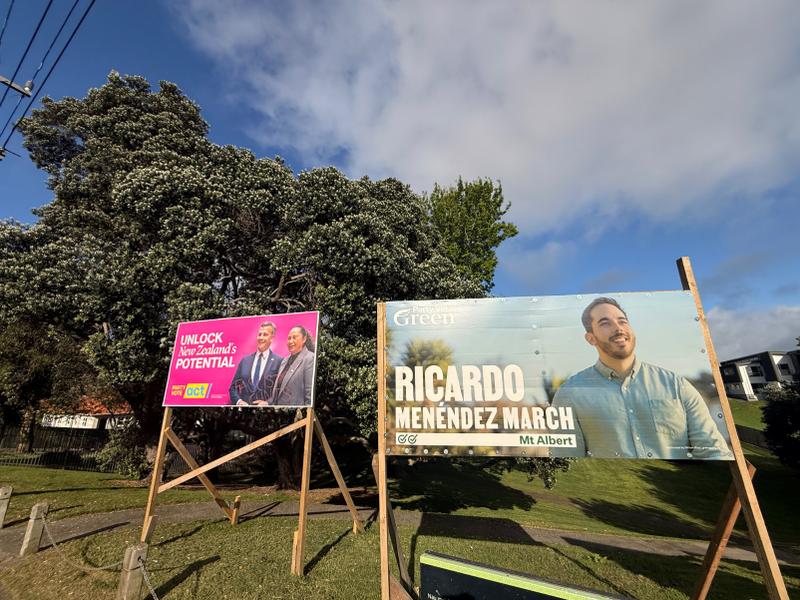
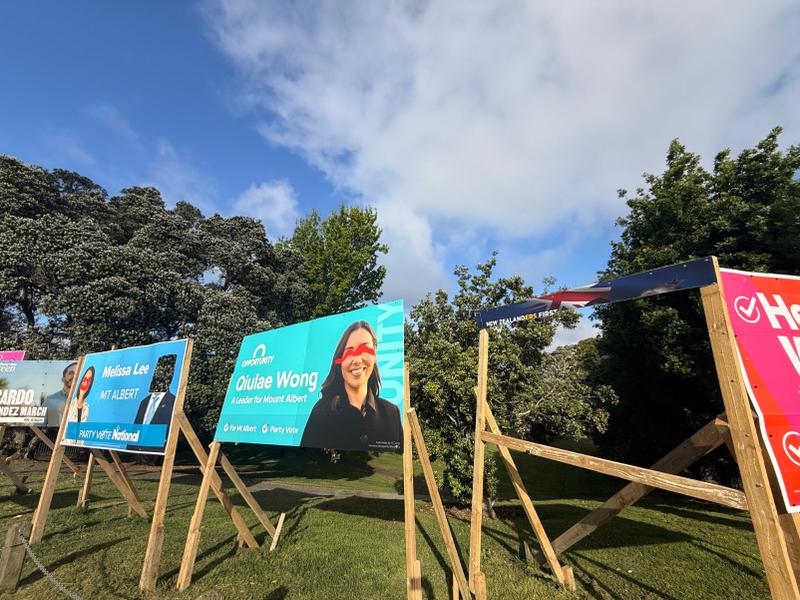
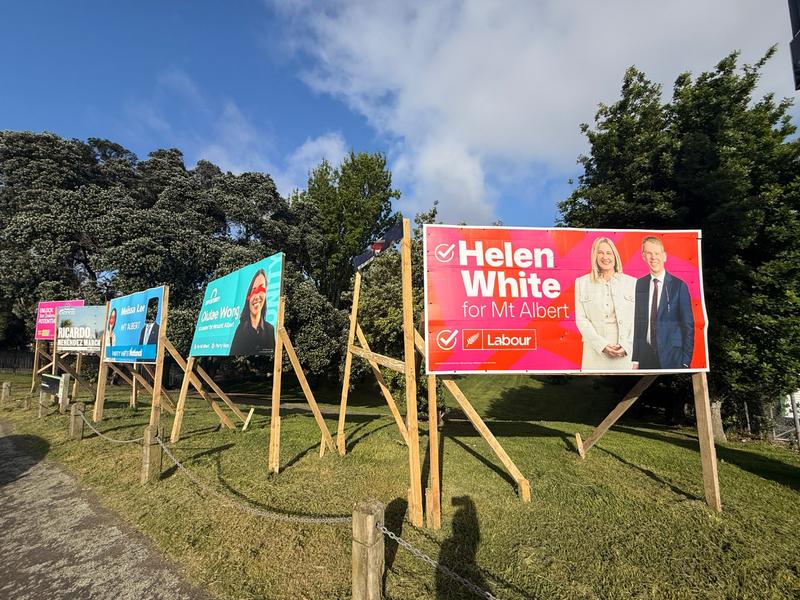
Photographs taken in Auckland and obtained by Webfit News show election hoardings belonging to several political parties with candidates’ faces spray-painted, sections of posters cut out and entire advertising panels apparently removed.
The damage is not confined to one political party.
Campaign signs representing National, the Green Party and New Zealand First show visible damage, while nearby Labour, ACT and other party advertisements illustrate how closely competing political campaigns are displayed.
The photographs raise a simple but important question: Have political disagreements reached a point where damaging an opponent’s face on a poster is becoming an acceptable form of expression?
Candidates’ Faces Targeted
Among the most striking images is a National Party hoarding featuring Melissa Lee.
Red markings cover part of her face, while a large section of the same billboard, including another person’s face, appears to have been cut away.
Just metres away, a campaign poster featuring Opportunity Party leader Qiulae Wong has red paint or graffiti drawn across her eyes.
Another hoarding carrying New Zealand First branding has lost most of its advertising panel, leaving the wooden support structure exposed.
The photographs suggest deliberate interference with several campaign displays, although Webfit News has not established who caused the damage, when it occurred or whether the incidents are connected.
There is currently no evidence identifying those responsible or establishing a political motive.
What is clear is that election campaign material has been damaged in a prominent public location.
South Auckland: Man Charged After Repeated Vandalism
The central Auckland photographs are not an isolated example of damaged election advertising.
On 29 September, New Zealand Police confirmed that a 34-year-old man had been arrested following repeated reports of election hoardings being vandalised in Takanini, South Auckland.
Police said members of the public had observed someone defacing and removing election signs.
Officers subsequently encountered a suspect allegedly vandalising a hoarding on Great South Road on 28 September.
The man was arrested and charged with seven counts of theft under $2,000.
Inspector Matt Hoyes, Counties Manukau South Area Prevention Manager, warned that deliberately damaging campaign material would have consequences.
Police also thanked members of the public who reported the incidents.
Tauranga: Around 30 Hoardings Damaged in Two Hours
The problem has also been reported in the Bay of Plenty.
On 10 September, approximately 30 political hoardings were damaged across Pāpāmoa, Tauranga, during a two-hour period.
Police said the incidents began on Parton Road at about 6.30am.
A 43-year-old man was subsequently charged with four counts of wilful damage.
Senior Sergeant Shannon Clifford described the destruction as an unnecessary financial burden on those responsible for the signs and made clear that police would not tolerate such behaviour.
A second incident occurred on 16 September, when officers were called to Pāpāmoa Beach Road following reports of a disturbance.
Police said they encountered a man damaging election hoardings.
A 49-year-old man was arrested and charged with two counts of wilful damage.
These incidents demonstrate that vandalism of political advertising is not limited to Auckland.
Women Candidates Have Faced Similar Attacks Before
The targeting of candidates’ faces is particularly concerning because similar incidents have previously been documented in Auckland.
During the 2025 local elections, female candidates reported having their posters defaced with offensive messages.
Auckland councillor Josephine Bartley reported that one of her campaign signs had been vandalised with racist abuse.
Another poster reportedly had her face and name cut out shortly after installation.
Such incidents raise concerns about the personal nature of some attacks on election advertising.
While the motivation behind the damage in the latest Auckland photographs remains unknown, deliberately marking or removing a candidate’s face goes beyond ordinary political criticism.
Political Disagreement Is Not a Licence to Destroy
New Zealand is a democracy where people have the right to disagree with politicians, criticise government decisions, challenge candidates and campaign for change.
That freedom is fundamental to the electoral process.
But there is a clear difference between expressing disagreement and damaging someone else’s property.
Police have previously confirmed that defacing, destroying or removing election hoardings can result in criminal charges.
Depending on the circumstances, offenders may face prosecution for wilful damage or theft.
Election hoardings are paid for and maintained by political parties, candidates and their supporters. Destroying them also creates additional costs and work for campaign volunteers.
More importantly, vandalism risks replacing political debate with intimidation and hostility.
Why This Matters Ahead of 7 November
New Zealanders will vote in the general election on Saturday, 7 November 2026.
Political competition is expected to intensify as election day approaches.
Campaign advertisements are designed to help voters recognise candidates and understand which parties are contesting their electorate.
Damaging those advertisements does not strengthen democracy. It simply prevents campaign messages from being presented as intended.
The latest photographs also raise questions about whether political parties are reporting damage consistently and how quickly vandalised signs are being replaced.
There is no suggestion that any of the political parties whose signs appear in the central Auckland photographs were responsible for the damage.
A Call for Respect Across Political Divides
The issue is not about supporting National, Labour, the Greens, ACT, New Zealand First or any other party.
It is about respecting the democratic process.
Voters have every right to reject a candidate at the ballot box. They have every right to question policies, challenge campaign promises and criticise political leaders.
But spray-painting faces, cutting photographs out of billboards and destroying campaign materials should never become a normal feature of an election.
The ballot box is where political disagreements should ultimately be settled.
With election day approaching, Webfit News encourages anyone witnessing damage to political hoardings to report it to Police rather than confronting those involved.
People can report non-emergency incidents through Police on 105.
Have you seen election hoardings vandalised in your neighbourhood? Webfit News invites readers across New Zealand to share photographs and details of similar incidents.
Photographs: Damaged election campaign hoardings in central Auckland, October 2026. Images supplied to Webfit News.