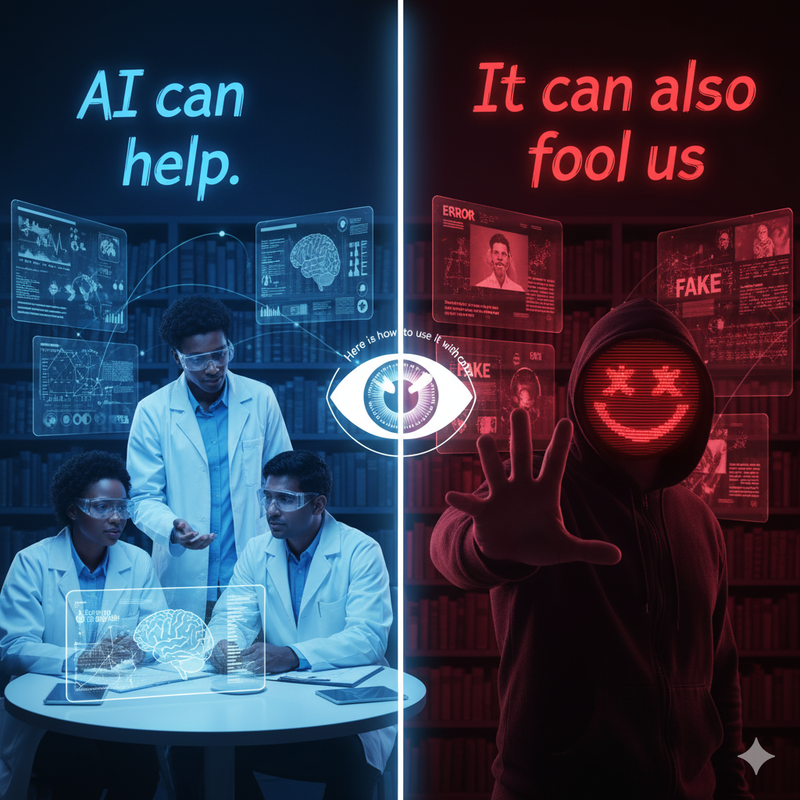
AI is now inside reports, briefings, audits, and even courtroom summaries. Used well, it saves time. Used blindly, it scales small errors into big ones.
A recent case in Australia shows the risk. A high-value government report, valued at approximately AU$440,000, was created using a generative AI tool. Reviewers later found fake academic references and even a quote that did not exist in the legal record. Following public scrutiny, the firm corrected the report, admitted that AI was used for a core task, and agreed to refund the final payment. The bigger loss was trust. The first version did not disclose AI use. Disclosure came only after outside experts raised concerns.
What went wrong
- Generative AI predicts likely words. It can sound confident while inventing facts. This is called hallucination.
- The firm used AI to fill “traceability and documentation gaps.” That is exactly where facts matter most.
- The failure was not only technical. It was a governance failure. No strong review. No early disclosure. No clear owner for accuracy.
Why this is a watershed
When a paid assurance report uses synthetic facts, the whole model of independent advice is at risk. If a client cannot trust citations, legal quotes, or footnotes, the conclusions fall over. The lesson is simple. AI can draft, but humans must verify every claim that matters.