A woman was deported from New Zealand at an estimated cost of $85,000 to taxpayers, after both she and her own government declined to cover the expense, new figures reveal.
The case is one of several details emerging from newly released immigration data showing 1,400 deportations took place in the year to July, roughly a third of which were enforced and paid for directly by Immigration New Zealand.
A Deportation Over a Decade in the Making
The case, flagged to ministers under the "no surprises" policy last year, involved a Korean woman who had been overstaying her visa since 2012. She was told to leave New Zealand a year later, in 2013, but did not, and effectively disappeared from authorities' radar for more than a decade.
She only resurfaced on officials' radar again in 2024, and not through any immigration enforcement action, but because police were trying to identify a woman found in hospital who had suffered two strokes.
A Deportation Complicated by Serious Health Needs
By the time her case reached officials, her medical situation had become significant.
"The client remains in hospital and has since undergone two brain operations and requires significant ongoing rehabilitative care," officials told Immigration Minister Erica Stanford.
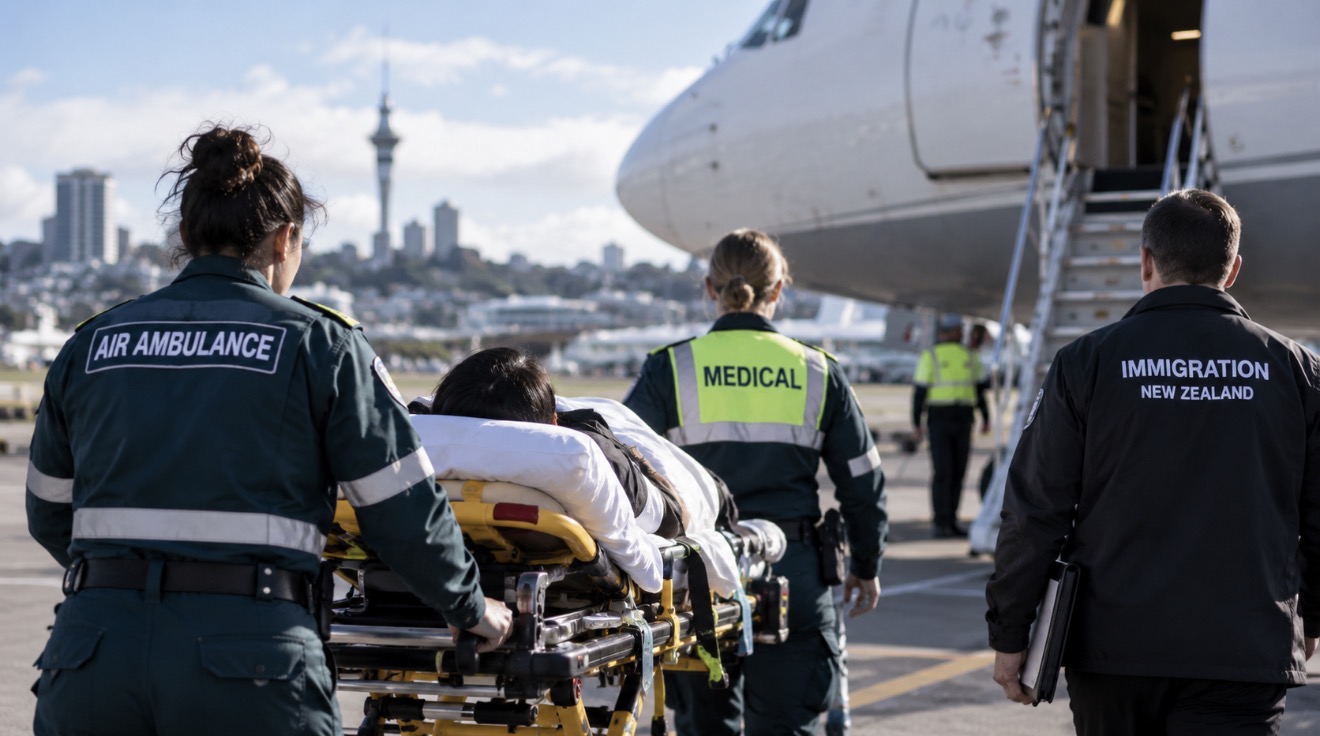
Her deportation wasn't a simple matter of booking a flight. According to officials, she needed specialised medical support just to travel.
"The client is expected to be cleared to fly in the coming weeks, however she requires two medical escorts as part of a medical transportation plan for her deportation," officials said.
Neither Government Wanted to Foot the Bill
Immigration Compliance officials met with the Korean Consulate and Auckland health management in March last year to work through how her deportation would actually happen, and who would pay for it.
The answer, from Korea's side, was clear.
"The Korean Consulate confirmed that the Korean government will not pay for the repatriation costs of the client as she is unregistered in Korea due to her period of absence from the country," officials said.
Korea did, however, agree to issue an emergency travel document once flights were arranged, a necessary step given how long she had been outside the country's official records.
The Actual Cost
With no funding forthcoming from Korea, New Zealand needed to arrange and pay for the medical transport itself.
"A quote for medical repatriation using the accredited New Zealand Air Ambulance Service was provided to Immigration Compliance at a total cost of $85,000," officials said.
Given the scale of the cost and the medical complexity involved, the deportation required sign-off at deputy chief executive level. It was ultimately approved, and the woman was deported in May last year.
What the Wider Deportation Numbers Show
This case sits within a broader picture of deportation activity that's climbing, though still well below pre-pandemic levels.
|
Deportation Category |
Share (2024 figures) |
|
Overstayers |
Just over half |
|
Other visa breaches |
30% |
|
Criminal offending |
About 1 in 6 |
While enforced deportations are on the rise year over year, they remain less than half the number recorded before the Covid-19 pandemic disrupted international travel and border enforcement.
How Many Overstayers Are Actually in New Zealand
New figures released this week put the estimated overstayer population in New Zealand at around 19,000 people, with 6,559 of them having arrived within the past three years.
Why This Case Matters
Beyond the specific circumstances of one woman's decade-plus overstay, this case illustrates a genuinely difficult and costly grey area within immigration enforcement: what happens when someone who has overstayed for years develops serious medical needs, and their home country declines any financial responsibility for their return.
With deportation numbers trending upward but still recovering from pandemic-era lows, and with cases like this one highlighting the real financial exposure New Zealand taxpayers can face in complex, medically sensitive removals, this data offers a rare, detailed look at costs that rarely make headlines but form a genuine part of the immigration enforcement system's day-to-day reality.
This article is based on reporting by Gill Bonnett for RNZ.