Retail NZ has welcomed new guidelines from the New Zealand Security Association aimed at helping security staff navigate the country's expanded citizen's arrest powers safely, guidelines the retail body says highlight just how genuinely complex these powers are to use correctly.
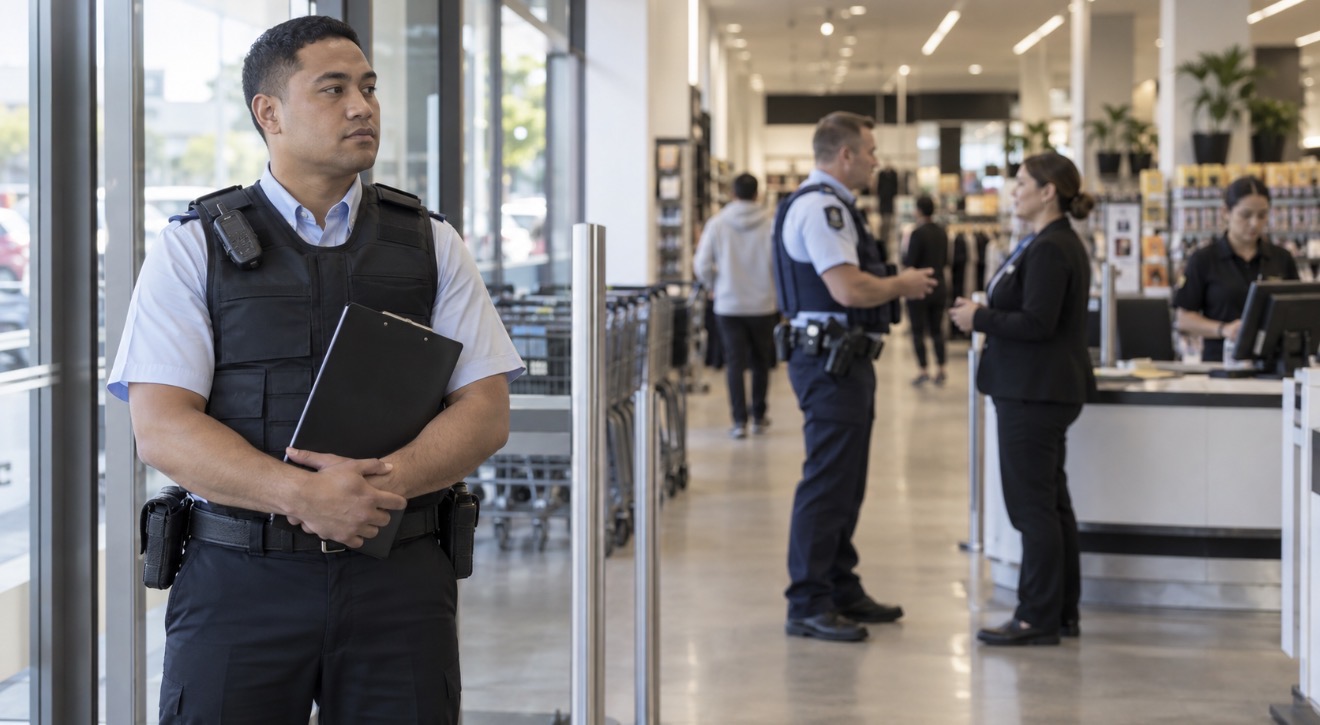
The NZSA launched the new guidance and supporting training today, giving security personnel a clearer framework for using citizen's arrest lawfully, safely and responsibly.
Why This Guidance Exists Now
To understand why this matters, it helps to know what actually changed. Back in August, Parliament passed the Crimes Amendment Bill, significantly expanding citizen's arrest powers as part of a broader coalition government push against retail crime.
|
What Changed |
Before |
Now |
|
When citizens can intervene |
Some offences (like theft under $1,000) only between 9pm–6am |
Any Crimes Act offence, any time of day |
|
Use of restraints |
Not clearly defined |
Permitted "when reasonable" |
|
Police contact |
Not mandated |
Now required, with instructions to be followed |
Justice Minister Paul Goldsmith framed the changes as a direct response to the financial toll retail crime takes on businesses.
"The economic cost of retail crime in New Zealand is in the billions," Goldsmith said when the law passed its final reading.
Retail NZ's Position: Cautious Support, Not Enthusiasm
Retail NZ Chief Executive Carolyn Young said the new NZSA guidelines underscore exactly the concerns her organisation raised while the legislation was still being debated in Parliament.
"Knowing when you can lawfully undertake citizen's arrest and doing so safely is very complex, and these guidelines from the Security Association show just how difficult and complicated it is to get right," Young said.
Retail NZ's core position remains that citizen's arrest should be treated as an absolute last resort, not a default response.
"Retail NZ remains of the view that citizen's arrest should only be performed by someone who has undergone appropriate training, and only as a last resort," Young said. "The NZSA's Good Practice Guidelines makes it clear that observation, de-escalation, evidence gathering and early Police involvement should all be prioritized as interventions, and it is important all New Zealanders take that to heart."
Real Risk, According to Retail NZ
This isn't a new concern for Retail NZ. During the bill's passage through Parliament, the organisation joined the Police Association and BusinessNZ in explicitly opposing the expansion, warning it could put untrained members of the public at genuine risk of serious harm.
Young was direct about why training matters so much here.
"Undertaking a citizen's arrest puts both the alleged offender and the person performing the action at significant risk of harm," Young said. "Without the proper understanding of the law and training on how to detain someone safely, it is very easy for things to go wrong, and we have seen at least one example of that in the media already."
What Retail NZ Is Asking Businesses to Do
Rather than opposing the guidance itself, Retail NZ is actively encouraging retailers to engage with it directly.
"We encourage retailers to read through these NZSA guidelines, which provides some practical direction around everything that needs to be considered before making a decision on whether to allow citizen's arrest in their store," Young said.
The Bigger Picture Behind This Debate
Retail crime in New Zealand isn't a minor issue. According to Retail NZ, it's estimated to cost businesses around $2.6 billion annually, a scale that helps explain why the Government pursued this legislative change despite significant pushback from retail, police and business groups during the select committee process.
At the same time, the concerns raised by opponents weren't purely theoretical. Police and Ministry of Justice officials themselves flagged risks around potential increased violence, untrained citizens using excessive force, and situations escalating during incidents, while some community groups raised separate concerns about the risk of racial profiling under the expanded powers.
Why This Matters for Everyday New Zealanders
For frontline retail workers and security staff specifically, this isn't an abstract legal debate, it's a genuine workplace safety question. The expanded law technically allows any member of the public to detain someone for any Crimes Act offence at any time, but as both Retail NZ and the NZSA are emphasising, having the legal power to do something and having the training to do it safely are two very different things.
With guidelines now in place and training becoming available, the practical test going forward will be whether retailers and security providers actually adopt this cautious, training-first approach the industry bodies are recommending, rather than treating the expanded powers as an invitation to intervene more readily.
This article is based on a media release issued by Retail NZ, with additional context from RNZ, 1News, Stuff, and Beehive.govt.nz.