RUAPEHU, 18 September 2026: More than two decades after the central North Island helped bring Middle-earth to life, cameras have returned to Ruapehu for the next chapter of The Lord of the Rings.
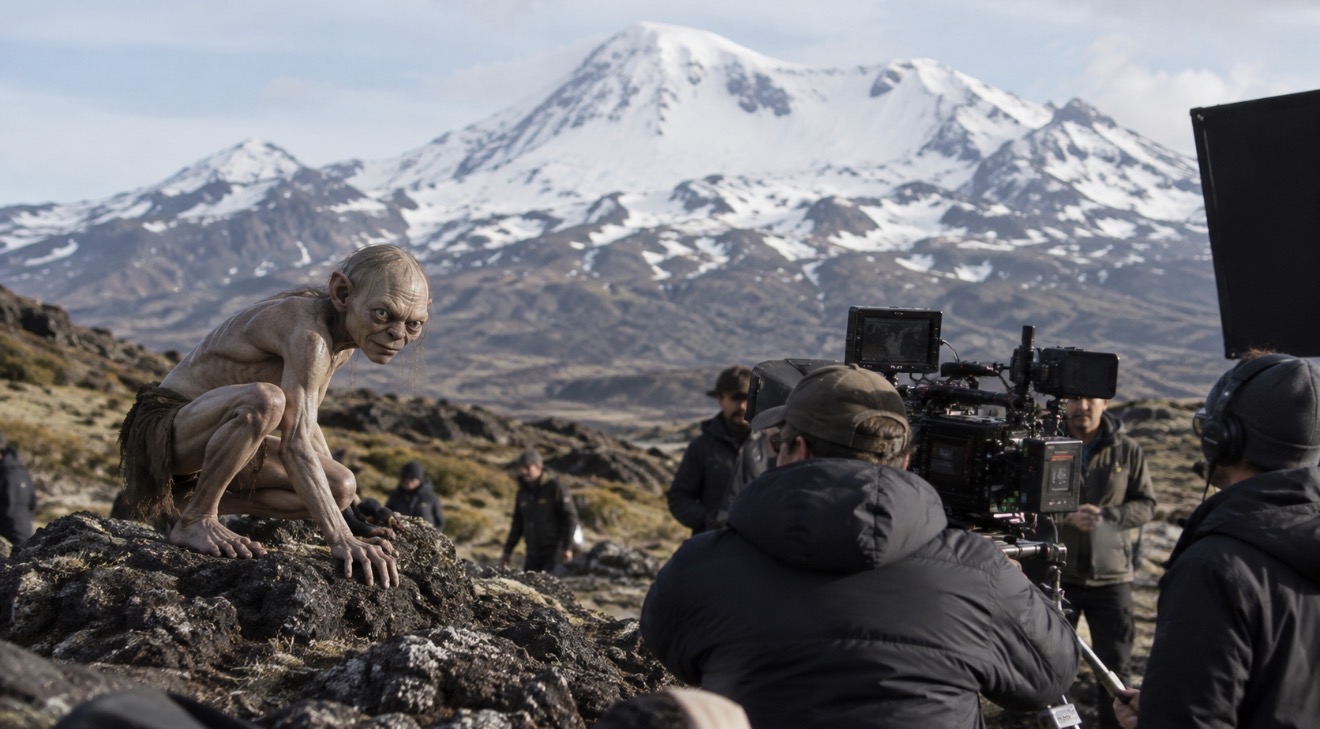
Cast and crew from The Lord of the Rings: The Hunt for Gollum have been filming in the Ruapehu region, bringing one of the world’s biggest film franchises back to a landscape already closely connected with its history.
The production reportedly spent about five days filming in the region before wrapping up its local shoot this week.
For Ruapehu, the return of The Lord of the Rings is more than a film crew coming to town. The region’s mountains and volcanic landscapes were part of Peter Jackson’s original Middle-earth, giving the latest production a strong connection to the films that first introduced millions of viewers to New Zealand’s dramatic scenery.
Gollum Returns, With Andy Serkis Behind the Camera
Andy Serkis is returning as Sméagol and Gollum, the character he famously portrayed through performance capture in Peter Jackson’s original trilogy.
This time, however, Serkis has an even bigger role. He is also directing the film.
Production began in New Zealand earlier this year, with behind-the-scenes footage showing Serkis once again wearing a motion-capture suit.
The return carries some personal significance for the actor and director. Ruapehu was among the locations associated with his early work as Gollum during the original Lord of the Rings productions.
More than 20 years later, Serkis has returned to New Zealand not only to play the character again, but to direct the next major Middle-earth film.
Ruapehu Becomes Middle-earth Again
Exactly what the Ruapehu locations will represent in the finished movie remains under wraps.
That is hardly surprising for a production of this scale.
The region offers an extraordinary range of landscapes, including volcanic terrain, mountains, tussock-covered plains, native forest and wide open spaces.
Ruapehu and the wider central North Island already have a special place in Lord of the Rings history. Tongariro National Park and surrounding areas were used extensively in the original trilogy, most famously helping create the hostile landscapes of Mordor and Mount Doom.
Whether the new film uses those locations in the same way remains to be seen.
A Welcome Boost for Local Businesses
A major film production also brings immediate activity to the communities where it is based.
Cast and crew need accommodation, food, transport, equipment and other local services. During breaks, they also visit local businesses and attractions.
Businesses in the Ruapehu region reportedly experienced increased activity while The Hunt for Gollum was filming, with members of the production also visiting local attractions.
For a tourism-dependent region, even a relatively short filming period can provide a useful economic boost.
But the bigger opportunity may come much later.
Could Ruapehu Get Another Lord of the Rings Tourism Boost?
The original Lord of the Rings films did something unusual for New Zealand. They did not simply use the country as a backdrop. They turned many filming locations into international tourism destinations.
Hobbiton is the best-known example, but fans have spent more than two decades travelling around New Zealand searching for places associated with Mordor, Edoras, Rivendell and other parts of Middle-earth.
The Hunt for Gollum could introduce those landscapes to another generation.
Many people who will watch the new film in 2027 were not even born when The Fellowship of the Ring arrived in cinemas in 2001.
If Ruapehu features prominently in the finished movie, the region could once again find itself attracting international fans wanting to see the real landscapes behind Middle-earth.
For local tourism operators, that exposure could last considerably longer than the filming itself.
Familiar Names Returning to Middle-earth
Andy Serkis may be directing, but several of the people responsible for the original films remain closely involved.
Peter Jackson is producing alongside Fran Walsh and Philippa Boyens, maintaining a strong creative connection between the new production and the earlier Lord of the Rings films.
Walsh and Boyens are also involved in writing the screenplay, alongside Phoebe Gittins and Arty Papageorgiou.
The involvement of Jackson, Walsh and Boyens means The Hunt for Gollum is not simply a new studio production using the Lord of the Rings name. Much of the creative team responsible for establishing cinematic Middle-earth is back.
New Zealand Remains Part of Middle-earth
Perhaps the most significant part of the Ruapehu filming is what it says about New Zealand’s continuing relationship with The Lord of the Rings.
More than 25 years have passed since cameras first began rolling on Peter Jackson’s original trilogy.
Since then, New Zealand and Middle-earth have become closely linked in the minds of audiences around the world.
The landscapes have appeared on cinema screens, tourism campaigns and the travel plans of countless international visitors.
Now those cameras are rolling here again.
When Will The Hunt for Gollum Be Released?
The Lord of the Rings: The Hunt for Gollum is scheduled for theatrical release on 17 December 2027.
That means audiences still have more than a year to wait before discovering exactly how Ruapehu appears in the finished film.
For now, much of the production remains deliberately secret.
But eventually those familiar mountains, valleys and volcanic landscapes will appear on cinema screens around the world once again.
And for New Zealand audiences, there may be a particularly satisfying moment when Middle-earth appears on screen and the landscape underneath all the movie magic looks unmistakably like home.
Source acknowledgement: This article is based in part on original reporting by the Whanganui Chronicle and NZ Herald on The Lord of the Rings: The Hunt for Gollum filming in Ruapehu, with additional context and reporting by Webfit News.