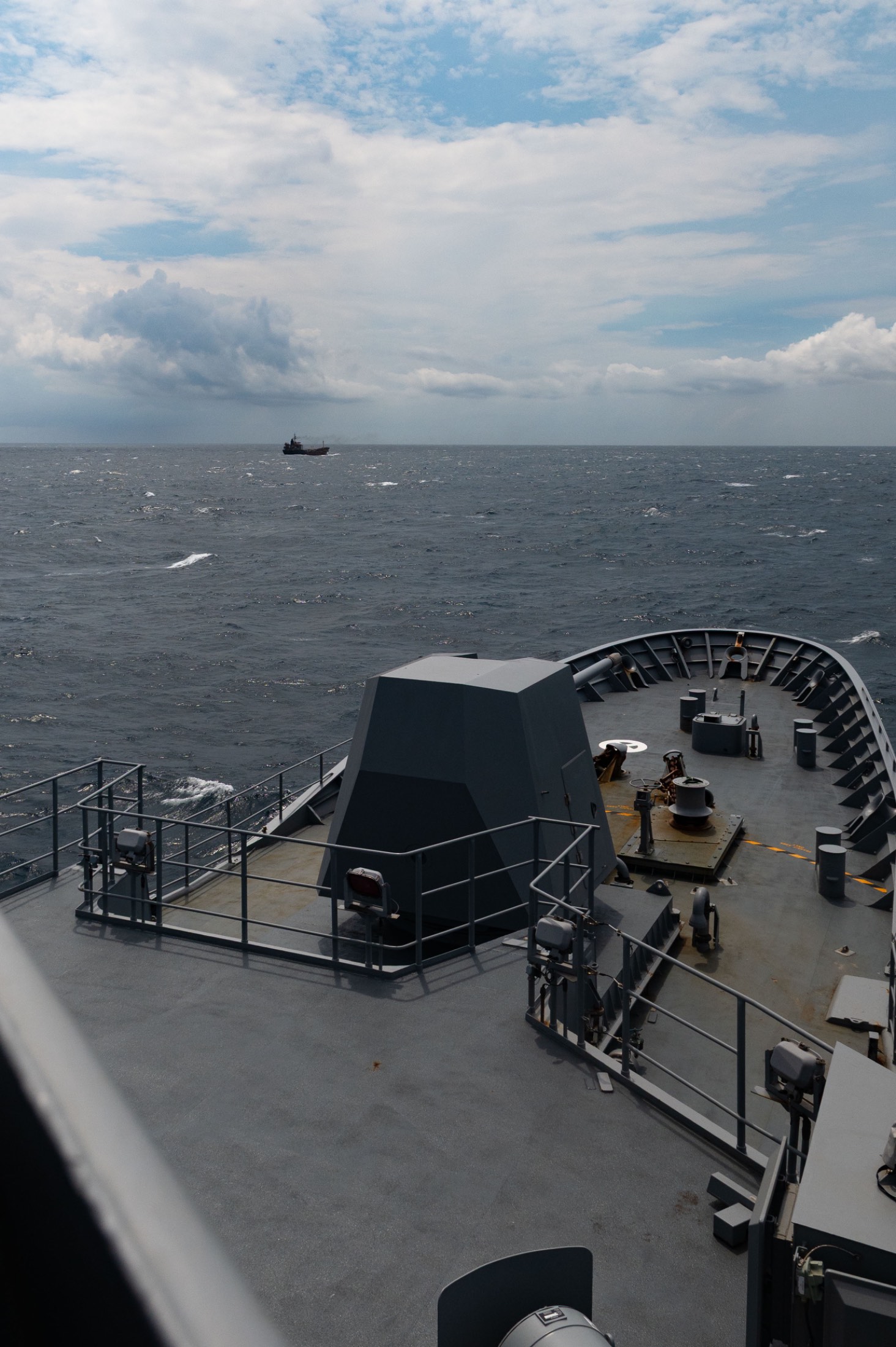
A Royal New Zealand Navy frigate has just wrapped up its first-ever deployment enforcing United Nations sanctions against North Korea, covering an area of ocean roughly the size of a small country while tracking vessels suspected of helping fund North Korea's weapons programmes.
HMNZS Te Mana, an Anzac-class frigate, carried out the patrols alongside sustainment vessel HMNZS Aotearoa as part of a broader three-month RNZN Task Group deployment across the Indo-Pacific.
What the Patrol Actually Covered
The numbers behind this deployment give a sense of just how large-scale a maritime monitoring operation like this actually is.
|
Measure |
Figure |
|
Area patrolled |
Roughly 180,000 square nautical miles |
|
Vessels of interest monitored |
7 |
|
Deterrence messages broadcast |
60 |
|
Ships in the task group |
2 (Te Mana and Aotearoa) |
|
Helicopters supporting operations |
2 x SH-2G(I) Seasprite |
That coverage area is genuinely enormous, roughly comparable in size to the entire state of California. Patrolling waters like the Yellow Sea and East China Sea at that scale isn't something a single ship can do alone, which is exactly why the two Seasprite helicopters mattered so much, extending detection range well beyond what the ships themselves could see, spotting vessels over the horizon before they'd otherwise be noticed.
How North Korea Actually Evades Sanctions
Part of what makes this kind of monitoring genuinely difficult is the sophistication of the evasion tactics involved. According to the Navy, North Korea relies on a "shadow fleet" and deceptive ship-to-ship transfers to move sanctioned goods undetected.
Specific tactics flagged during the patrols include:
- Vessels switching off their Automatic Identification Systems entirely
- Broadcasting spoofed location signals
- "Identity laundering," removing national flags and painting over a ship's name
- Deliberately altering how heavily loaded a vessel appears, making it look empty or fully laden depending on what crews want observers to believe
The goods being smuggled matter too. Vessels were suspected of trafficking refined petroleum into North Korea, while also exporting commodities like coal, iron ore and sand, exports that directly help fund the country's nuclear and ballistic missile programmes.
Why Sending Two Ships Together Made a Real Difference
Deploying Aotearoa alongside Te Mana wasn't incidental, it directly extended how long the frigate could stay operational at sea. Aotearoa conducted six separate replenishments at sea, resupplying not just Te Mana but other partner nations' vessels operating in the same region.
Maritime Component Commander, Commodore Shane Arndell, said the combined deployment demonstrated something beyond just sanctions enforcement itself.
"The combined effects of the two ships operating as a task group and providing regional support with like-minded partners shows the value of training, preparation and interoperability, and demonstrates how collectively we work together to achieve common goals," Arndell said.
He also noted this deployment reinforced Te Mana's versatility more broadly, showing the frigate's ability to move between very different mission types, from sanctions monitoring through to full warfighting capability if required.
A Mission With Real History Behind It
This isn't New Zealand's first involvement in this kind of work. The New Zealand Defence Force has contributed to international North Korea sanctions monitoring efforts, through both air and sea patrols, since 2018.
Commander Tuijo Thompson, Commanding Officer of Te Mana, framed this deployment as building directly on that legacy.
"Following the successful contributions made by Aotearoa and the Royal New Zealand Air Force P-8A Poseidon in previous years, Te Mana's involvement in the mission has given us the opportunity to utilise the various sensors, systems and capabilities that enhance maritime domain awareness and genuinely support regional security," Thompson said.
He also connected the deployment directly to earlier training, including recent participation in Exercise RIMPAC.
"With Aotearoa providing sustainment support to Te Mana and other partner navies in the region, sailors and officers of the RNZN Task Group have enjoyed the opportunity to put into practice what we have trained to do," Thompson said. "I am proud of what Te Mana and Aotearoa have achieved and New Zealand should be too."
Operating Within International Law
The Navy was explicit that every activity conducted during the deployment complied with international law, specifically the United Nations Convention on the Law of the Sea, the framework governing lawful conduct in international waters.
Part of a Wider International Partnership
New Zealand's involvement doesn't happen in isolation either. The country is a member of the Pacific Security Maritime Exchange, a coalition of nations working together specifically to detect and disrupt attempts to evade UN sanctions targeting North Korea's nuclear and ballistic missile development.
Why This Deployment Matters
For a country the size of New Zealand, contributing meaningfully to international sanctions enforcement thousands of kilometres from home is no small logistical undertaking. This deployment marks a genuine first for Te Mana specifically, while reinforcing a commitment New Zealand has maintained consistently since 2018. With North Korea's evasion tactics growing more sophisticated, spoofed signals, disguised vessels, deliberately misleading cargo loads, missions like this one represent an ongoing, technically demanding effort by New Zealand and its regional partners to keep pressure on a sanctions regime that depends entirely on nations actually showing up to enforce it.
This article is based on a media release issued by the New Zealand Defence Force.