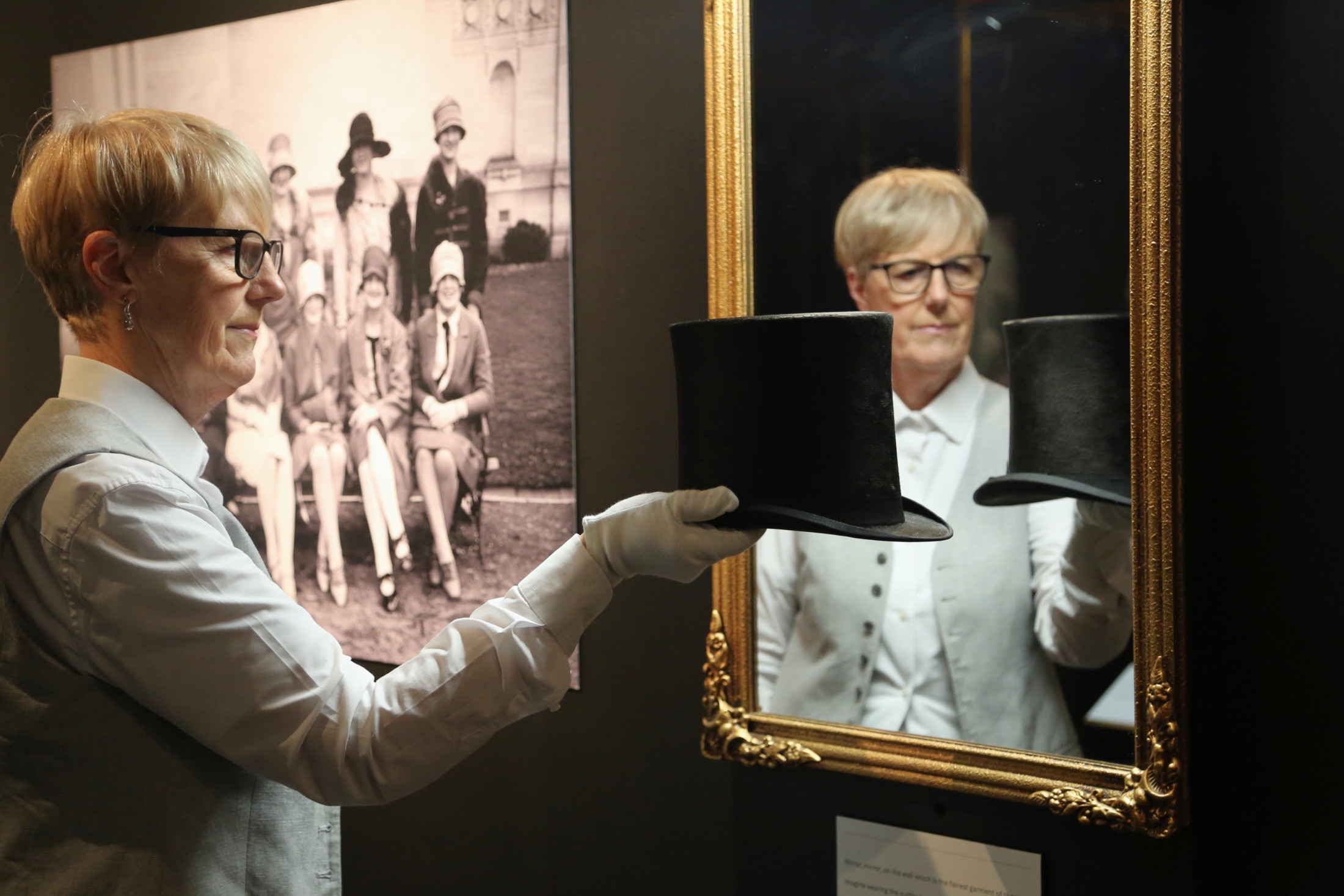
There's a top hat sitting in Whanganui Regional Museum's collection, elegant, stately, exactly the kind of thing you'd picture on a well-dressed Victorian gentleman, and it's got a poisonous secret baked right into the felt.
This October, the museum's Outfit of the Month talk goes there. Curator Stephanie Wood is pulling out a beaver-fur top hat and a men's black worsted wool dress suit, both from the 1870s, and using them to dig into what was actually happening beneath all that Victorian style.
The Poison Behind the Fashion
Making felt for hats back then meant curing animal pelts through a process called carrotting, and that process ran on mercuric nitrate. Breathe in enough mercury vapour over time, and it can cause mercury poisoning, including a condition with a genuinely memorable name: erethism, or "mad hatter disease."
Symptoms ran the gamut. Mood swings, hallucinations, tremors, memory loss, seizures. Not subtle stuff.
That's also where "mad as a hatter" actually comes from, a phrase describing real hatmakers dealing with real mercury exposure, long before Lewis Carroll borrowed it for his Mad Hatter in Alice's Adventures in Wonderland.
Where Fashion Meets Horror
Wood's timing isn't accidental either. With Halloween coming up, she's pairing the mercury history with something a bit more atmospheric, the Gothic side of Victorian dress.
"The Victorian period gave us some wonderfully dramatic fashions, tall hats, dark suits and silhouettes that could look elegant or imposing," Wood says. "But beneath that stately appearance is a much darker history."
She's got a point about how deep that visual language runs, too.
"Add a little fog, a darkened street and a character with questionable intentions, and you have the visual language of Gothic horror," she says. "It's fascinating to see how real fashions of the time have become so strongly connected with the villains we know from popular culture."
Who Actually Owned This Hat
The top hat itself belonged to John Randal, who left England for Whanganui back in 1875. He was a builder by trade, and a good one, putting up houses, businesses and several churches around the district.
It's one of 88 items, objects and photographs, that came from the Randal family collection at "Titchfield," later renamed "Holly Lodge," out at Papaiti. If the name Randal sounds familiar, that's because a 1910s muslin dress from the same collection featured in the museum's March Outfit of the Month talk. Annie and John Randal's granddaughter, Evelyn Vincent, donated the whole collection back in 1985.
And the Suit
The second piece, the black worsted wool dress suit, came from London tailor Curtis & Brooks of Fleet Street. Mrs Wooten donated it in 1979, from the estate of Mrs H.B. Fitzherbert.
Catching the Talk
The Outfit of the Month talk runs Friday 2 October, 12.15pm, at Whanganui Regional Museum. Free, no booking needed. Koha welcome if you want to support the museum's heritage work.
Both the hat and the suit will stay on display for the rest of October, so there's no rush if you can't make the talk itself.
Why This Story Sticks With You
There's something genuinely unsettling about learning the accessory that once signalled wealth and respectability was also quietly poisoning the people who made it. Wood's talk manages to hold both threads at once, the aesthetic history everyone recognises, and the industrial reality almost nobody thinks about, while tying it neatly into exactly the season people are already thinking about ghosts and villains anyway.
This article is based on a media release issued by Whanganui Regional Museum.