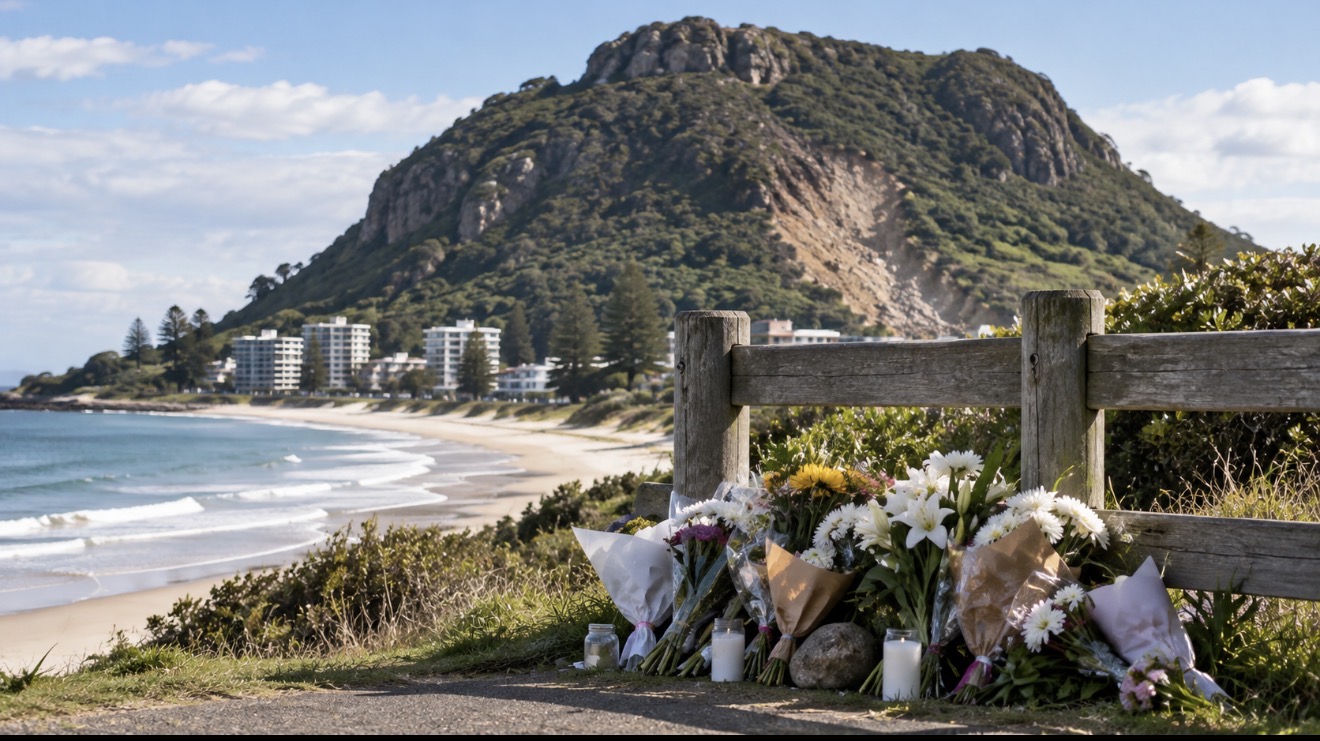
Tauranga City Council has approved the governance arrangements that will guide a major organisational improvement programme, a direct response to the findings of an external review into the landslide that claimed six lives at Mount Maunganui earlier this year.
The council stopped short of endorsing the full improvement programme itself, instead approving the oversight structure needed to develop it further before it comes back for formal consideration.
What Happened, and Why This Review Exists
On 22 January 2026, a large landslide above Mount Maunganui Beachside Holiday Park killed six people. In the aftermath, Mayor Mahé Drysdale and councillors commissioned an external review, led by Hon Paul Davison KSO KC, to examine what happened and what needed to change.
That review's findings were made public on 19 August. Less than two weeks later, on 1 September, Tauranga City Council formally accepted every finding and recommendation, committing to implement them in full.
Why the Full Programme Wasn't Approved Today
Rather than rubber-stamping the entire Organisational Improvement Programme in its current form, councillors chose a more cautious path, approving the governance framework first, while sending the programme itself back for further development.
Mayor Drysdale explained the reasoning behind that decision.
"The programme proposed today is heading in the right direction, however we need to see more information prior to fully endorsing it," Drysdale said. "I commend staff for pulling things together so quickly, as well as the changes already implemented following the tragic event."
He was specific about what still needs work.
"There is still work to be done, including defining how we will measure success, demonstrate improvement over time, and consider community feedback," he said.
Importantly, Drysdale was clear this wasn't about delaying progress.
"What my councillors and I were clear on today was that we do not want to slow progress. By putting the right governance structures in place to support the programme, we can continue moving forward with what will be a significant programme of organisational improvement."
How the New Governance Structure Will Actually Work
The approved arrangements set up a fairly comprehensive oversight system for what's clearly intended to be a significant, long-running piece of organisational change.
At the centre of it is a new Programme Steering Group, made up of:
- Elected member representation
- Executive team sponsors
- Independent expertise, brought in where required
Council will also appoint an independent Programme Director specifically to lead delivery of the improvement work. That role comes with a formal reporting structure built in, regular updates to the Programme Steering Group and the Audit and Risk Committee, alongside ongoing briefings to all elected members.
Council Taking Direct Ownership
Councillors were notably direct about where responsibility for this work actually sits.
"As Governors of this city, we are clear that we need to direct and own the changes required at Tauranga City Council," the council said. "While we will seek external advice where appropriate and continue to listen to our staff and community, responsibility for ensuring delivery of meaningful change sits with us. This is our responsibility, and we are committed to seeing it through."
The council also made clear who this work is ultimately for.
"January's devastating event has changed lives forever, and our thoughts remain with the families and loved ones of those who lost their lives. They are the reason we are committed to driving this work forward."
The Money Behind It
At today's meeting, councillors approved $500,000 in funding, earmarked specifically for two things: recruiting and appointing the independent Programme Director, and progressing immediate actions to improve risk management and strengthen organisational culture in the meantime.
A Deliberate Push for Simplicity
One detail worth noting is the council's explicit instruction about how this programme should actually be run. Rather than building something elaborate, the Mayor and councillors were clear the response needs to stay practical and proportionate.
The direction given to staff was to keep things simple rather than overcomplicated, relying on internal resources and prioritisation wherever possible, rather than defaulting to additional external contractors or consultants.
What Happens Next
Staff will now return to Council with a refined version of the Organisational Improvement Programme, this time including recommended budgets, resourcing requirements, an implementation timeline, and clear measures of success, all of which will need council approval before the full programme can proceed.
Why This Matters
For a council responding to a tragedy that claimed six lives, the approach taken today reflects a deliberate balance between urgency and rigour, moving fast enough to show meaningful progress, while still taking the time to get the underlying structure and accountability right before committing to a full programme of change. With a dedicated Programme Director, a steering group bringing together elected members and outside expertise, and formal reporting built directly into the process, the governance framework approved today is designed to ensure this work doesn't lose momentum, while also ensuring it doesn't move forward without proper scrutiny either.
This article is based on a media release issued by Tauranga City Council.