
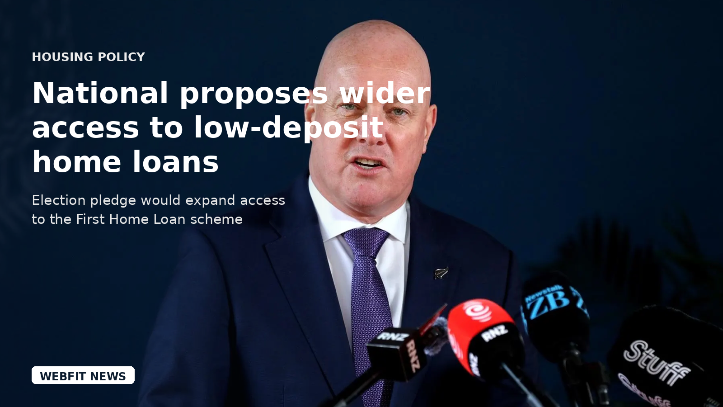
National says it will significantly expand access to New Zealand’s First Home Loan scheme if it is returned to government, potentially allowing more first-home buyers to purchase a property with just a 5 percent deposit.
Auckland, 6 September 2026: The National Party has announced a new housing policy that would raise the income threshold for the government-backed First Home Loan scheme to $300,000.
Under the proposal, individuals or combined buyers earning less than $300,000 would be able to apply for the scheme, subject to the usual lending and eligibility requirements.
The First Home Loan scheme, administered by Kāinga Ora, allows eligible buyers to purchase their first home with a deposit as low as 5 percent.
This is considerably lower than the 20 percent deposit often required under standard lending arrangements.
Current income limits exclude many buyers
At present, the income threshold is $95,000 for a single buyer without dependants.
For a single buyer with dependants, or two or more buyers purchasing together, the current combined income limit is $150,000.
National housing spokesperson Chris Bishop said these limits were now too restrictive and excluded many working New Zealanders who were still struggling to save a large deposit.
He said people such as junior doctors, teachers, electricians, police officers and other professionals could earn above the existing threshold while still finding it difficult to accumulate a 20 percent deposit.
Bishop said rising living costs, rent, childcare and household expenses meant earning above $150,000 as a couple did not necessarily make home ownership easy.
What the proposed change could mean
If National's policy is implemented, buyers earning up to $300,000 could potentially access the low-deposit scheme.
The financial difference can be substantial.
For a $700,000 home, a 20 percent deposit would be $140,000.
A 5 percent deposit would be $35,000.
For an $800,000 property, a 20 percent deposit would be $160,000, compared with $40,000 at 5 percent.
However, access to the scheme does not mean borrowers will automatically receive a home loan.
Participating banks and lenders would still assess whether applicants could afford the mortgage based on their income, expenses, debts and overall financial position.
Mortgage insurance costs still apply
Buyers using the First Home Loan scheme also need to account for Lender's Mortgage Insurance.
Under the current structure, borrowers are required to meet the cost of this insurance.
The premium is currently calculated at 1.2 percent of the loan amount and can generally be paid upfront or added to the mortgage.
This means buyers using a smaller deposit may still face additional borrowing costs.
National targets higher home ownership
National says the proposed expansion forms part of its wider plan to increase New Zealand's home ownership rate.
The party has indicated it wants home ownership to rise to around 74 percent, compared with approximately 66 percent currently.
Bishop said around half of first-home buyers were earning more than $146,000, which meant many households were close to or already above the existing combined income limit.
National estimates the proposed expansion of the scheme would cost between $4 million and $6 million and says the cost would be covered from existing government funding.
Current rules have not changed
It is important for prospective buyers to understand that the proposed $300,000 income threshold is not currently in place.
The announcement is a National Party election commitment and would only take effect if National is returned to government and the policy is subsequently implemented.
Current First Home Loan eligibility criteria therefore remain unchanged.
Applicants are still required to meet Kāinga Ora's eligibility conditions and the lending requirements of participating banks and financial institutions.
Could this help first-home buyers?
For many first-home buyers, particularly those living in higher-priced markets such as Auckland, Wellington and other major centres, raising the income threshold could make the scheme accessible to a much wider group.
The biggest benefit would be reducing the amount buyers need to save before entering the housing market.
However, a smaller deposit also means borrowing a larger proportion of the property's value.
That makes mortgage affordability, interest rates and household income just as important as the deposit itself.
The proposal is likely to become part of the wider housing debate as political parties outline their policies ahead of the 2026 general election.
Webfit News will continue to follow housing, cost-of-living and election policy developments affecting New Zealand families.