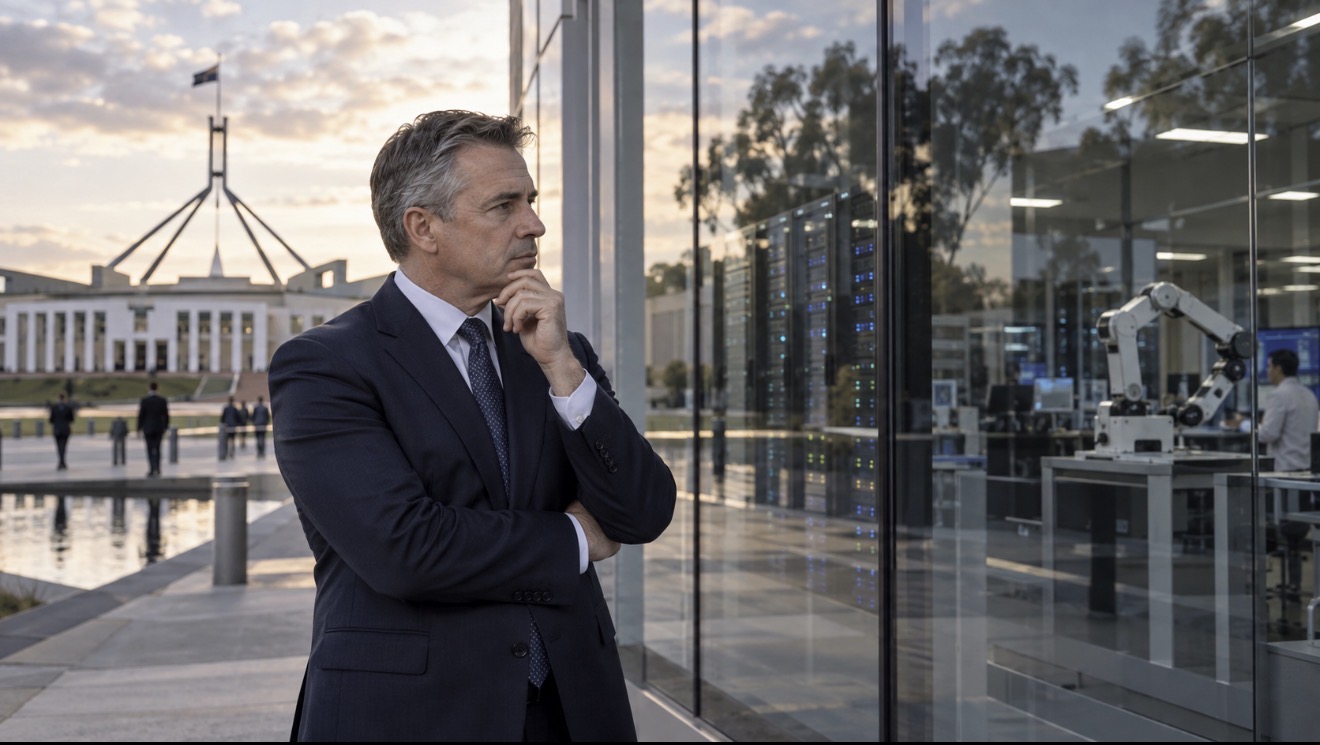
Joe Hockey has a warning for Canberra: slow down too much on AI, and Australia gets left behind. The former Treasurer and ex-US Ambassador says the country risks turning into a technology taker rather than a technology maker if it tries to rein in AI while everyone else keeps pushing forward.
It's not a one-off comment either. Hockey's been making this same case, in different rooms, all through 2026.
The Numbers He's Worried About
Back at the National Press Club earlier this year, Hockey didn't mince words about how far behind he thinks Australia already is.
"We are sleep-walking into the future," he said. "We are, and it's not just us but Europe and everyone, so far behind what is happening in the US with technology and robotics."
Then came the number that actually got people's attention.
"My expectation is by 2030, 2031, within five years, we could be facing 15 per cent unemployment in Australia and in the Western world."
Worth sitting with that for a second. Australia's unemployment rate currently sits around 4.5 percent. Hockey's talking about more than tripling it, and he reckons younger workers will cop the worst of it.
Why He's Against Tighter Rules
Here's the thing though, Hockey's not saying AI is risk-free. His actual argument is narrower than that: play it too safe now, and you lose the ability to respond later.
"If you take away the incentive to innovate you are crushing your ability to respond to the future," he said.
He's also gone after Australia's tax settings directly, particularly changes to the capital gains tax discount under the Albanese Government, arguing they discourage exactly the kind of investment the country needs right now.
"AI is the most transformative technology in our lifetime, no doubt about it," Hockey said. "The best way for us to compete with new technology is to encourage new innovation to get the very best out of that technology and build on it."
Where This Sits Globally
Hockey's comments aren't happening in a vacuum. Governments everywhere are wrestling with exactly this question right now. Australia's own government has flagged plans for a set of Australian Standards for AI, due before Parliament sometime in early 2027, along with a new Office of AI to run it.
Anthony Albanese, for his part, sounds pretty different to Hockey on all this. He's been pushing for stronger global AI rules and has promised new Australian standards by year's end.
"Making sure technology works for Australians, and not the other way around," is how Albanese has put it.
Look overseas and you'll see how differently countries are handling this. The EU's gone all in with its AI Act, a risk-tiered system that actually has teeth, real fines for non-compliance. The US is basically stuck, political gridlock on formal AI rules, with the current administration not keen on heavy regulation at all.
Even Hockey Admits He's Not Totally Sure
For someone so confident on the policy front, Hockey's been surprisingly honest about how unsettling AI feels to him personally too.
"AI makes knowledge free, and on its own that is confronting for anyone whose living depends on knowing things," he wrote recently. "My own kids ask me why they should bother learning something a machine already knows. I don't have a clean answer for them."
Why Any of This Matters
Strip it all back, and this comes down to a pretty basic disagreement: can you regulate AI carefully enough to actually protect people, without slowing down the innovation that might be the thing that saves jobs later? Hockey's firmly in the "caution is the real risk" camp. Others, including his own Prime Minister, see it the opposite way, that AI moving unchecked is dangerous enough to justify pumping the brakes and getting the rules right first.
With Australia's standards still months from even reaching Parliament, and completely different approaches already playing out in the EU and US, this argument isn't going anywhere. Expect it to keep shaping the conversation well into 2027.
This article draws on reporting from News24, InnovationAus, The Nightly, and public statements by Joe Hockey.