Introduction
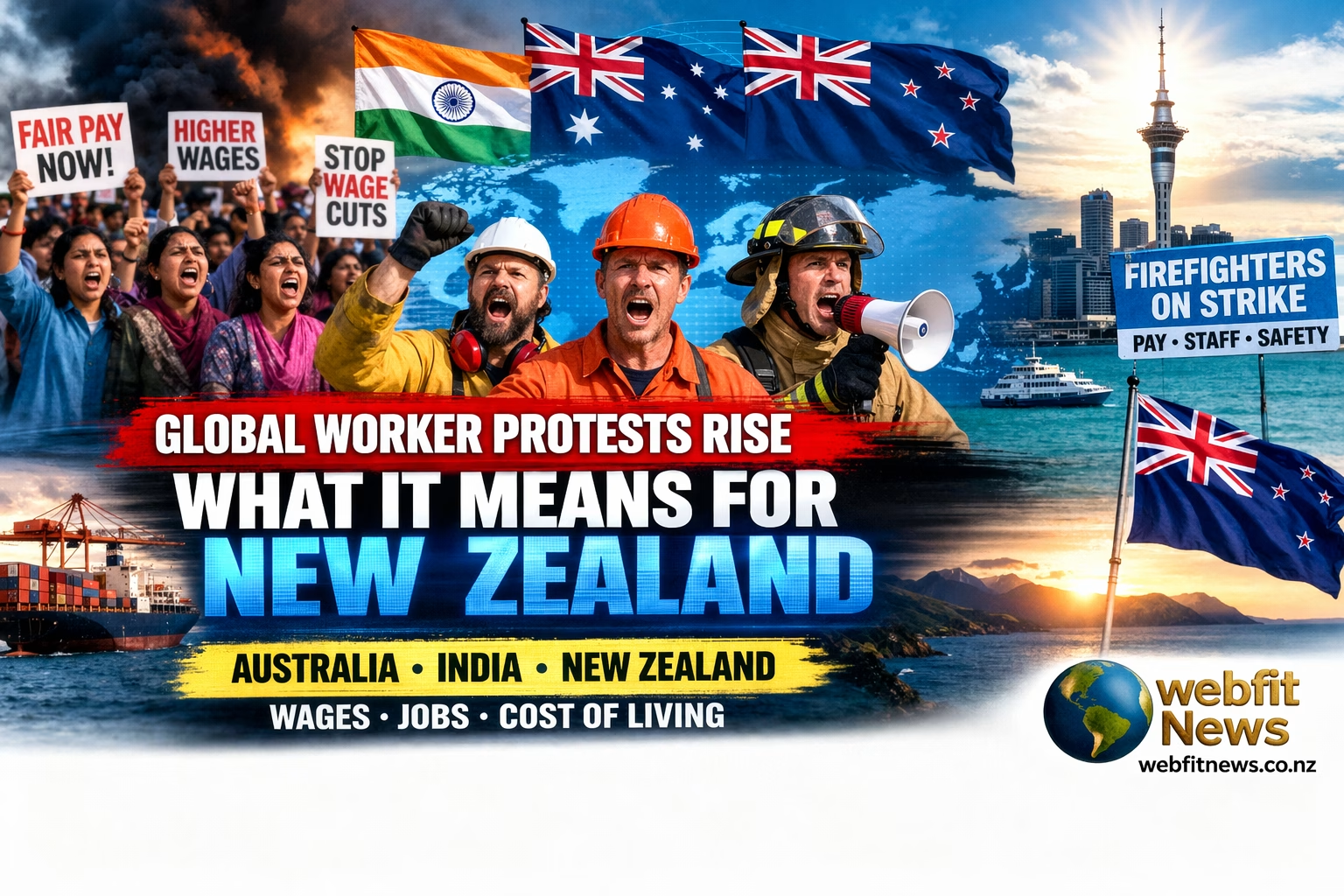
A wave of worker protests is unfolding across Asia, Australia, and the Pacific, highlighting a growing global struggle over wages, job security, and working conditions. From India’s health workers demanding fair pay to industrial strikes in Australia and ongoing firefighter action in New Zealand, a clear pattern is emerging. Workers are pushing back against rising living costs and what they see as unfair employment practices.
For New Zealand, this is not a distant story. It is a mirror.
Because the same pressures are already visible here.
A Region Under Pressure
Tiger Woods Arrested After Florida Crash, Faces DUI Charge – WebfitNews
Across multiple countries, workers are raising similar concerns:
- Low wages are not keeping up with inflation
- Job insecurity and contract-based employment
- Increasing workload without fair compensation
- Lack of basic benefits and protections
In India, community health workers are protesting for higher wages, currently earning as little as NZD $45 per month. In Australia, refinery workers have gone on strike after rejecting pay offers that fall below inflation. In universities, academic staff are pushing back against job cuts and unsafe workloads.
These are not isolated issues. They are systemic.
As noted in the report, workers across sectors are reaching a breaking point, with protests escalating from small demonstrations to full-scale strikes.
Australia’s Industrial Tension Escalates
Australia is seeing a sharp rise in organised industrial action:
- 350 refinery workers walked off the job after months of stalled negotiations
- Workers are being threatened with wage cuts for participating in legal protests
- Manufacturing workers are striking over cost-of-living pressures
One key issue stands out. Workers believe their wages are falling behind market rates by as much as 30 percent.
That gap is not just financial. It is psychological.
It creates resentment, disengagement, and eventually, disruption.
New Zealand: Firefighters Take a Stand
Now bring it closer to home.
In New Zealand, around 2,000 professional firefighters are continuing strike actions over:
- Pay increases below inflation
- Staff shortages
- Faulty equipment
- Lack of support for cancer-related health risks
These are not minor complaints. These are frontline workers raising safety concerns.
Industrial action has already lasted over seven months, with regular one-hour strikes taking place each week. Some strikes have even been paused due to extreme weather, showing the tension between duty and protest.
But the core issue remains unresolved.
What Is Driving This Global Pattern?
Let’s cut through the noise.
This is not about isolated industries. It is about a structural shift.
Three major drivers are behind this global labour unrest:
1. Inflation vs Wages Gap
Wages are not keeping up with rising living costs. This is the number one trigger.
2. Casualisation of Work
Contract-based employment is increasing, reducing job security and benefits.
3. Workforce Burnout
Higher expectations, fewer staff, and constant pressure are pushing workers to act.
These same pressures exist in New Zealand. The difference is only in scale, not in direction.
Why New Zealand Cannot Ignore This
Here is the uncomfortable truth.
New Zealand is not immune. It is just slightly behind the curve.
We are already seeing:
- Healthcare workforce shortages
- Rising cost of living pressures
- Increasing reliance on contractors in some sectors
- Ongoing disputes in public services
If these trends continue unchecked, similar large-scale industrial action could spread across more industries.
And once that happens, it becomes harder to control.
Webfit News Perspective
This is where we need to be brutally honest.
New Zealand likes to think of itself as balanced and fair when it comes to worker rights. But that belief can create complacency.
The firefighter strikes are not just a negotiation issue. They are an early warning signal.
If frontline workers are raising concerns about safety, pay, and staffing, ignoring it is not neutral. It is risky.
Globally, governments that delayed action are now facing widespread disruptions. New Zealand still has a window to act early.
But that requires one thing most systems avoid.
Listening before things escalate.
What Happens Next
Based on current trends, here is what is likely:
- More coordinated strikes across sectors
- Stronger union involvement
- Increased political pressure on wage policies
- Public debate shifting from sympathy to urgency
In New Zealand, the next few months will be critical.
If negotiations with firefighters and other public-sector workers fail, the situation could worsen quickly.
Conclusion
The message from across Asia-Pacific is clear.
Workers are no longer willing to absorb economic pressure silently.
They are organising, protesting, and demanding change.
New Zealand is not outside this story. It is already part of it.
The real question is not whether more action will happen here.
The real question is whether we act early or react late.
References
- Workers’ Struggles: Asia, Australia and the Pacific
- New Media Company Setup Plan – Auckland
- Trans-Tasman News Venture Feasibility Report