By Webfit News Desk
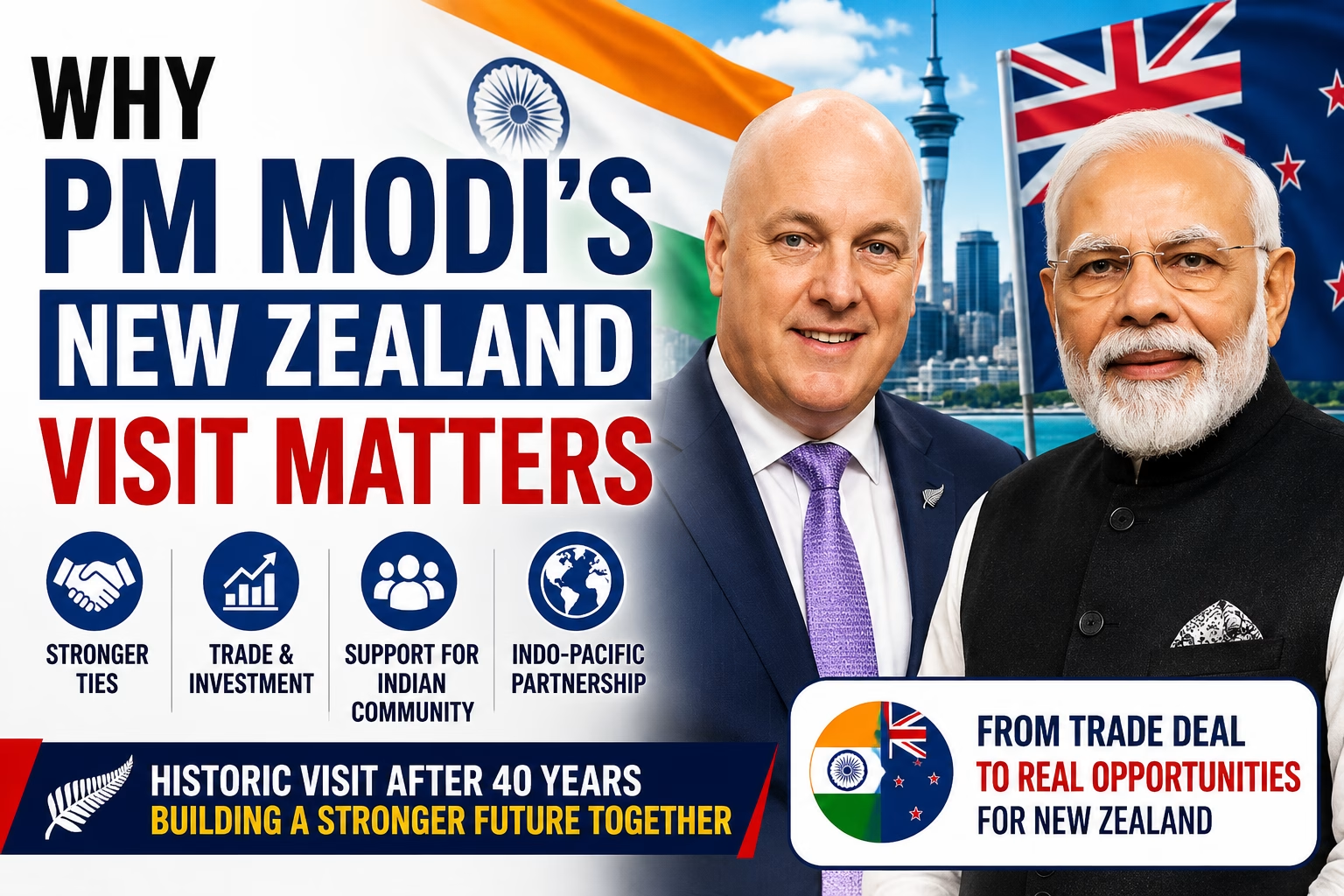
Indian Prime Minister Narendra Modi’s upcoming visit to New Zealand is being described as historic, not only because it will be the first visit by an Indian Prime Minister to New Zealand in four decades, but also because it comes at a defining moment for the relationship between Wellington and New Delhi.
Prime Minister Modi is expected to arrive in Auckland next week as part of a wider regional tour, with meetings planned with Prime Minister Christopher Luxon and a major community event expected to draw strong interest from New Zealand’s Indian diaspora.
The visit comes shortly after India and New Zealand signed a free trade agreement in April, a major step aimed at strengthening trade, investment and people-to-people links between the two countries. Reuters reported that the agreement is set to remove tariffs on all Indian goods and most New Zealand exports, including about 95 percent of New Zealand goods entering India.
A Visit Four Decades in the Making
Prime Minister Modi’s visit carries major symbolic weight. According to reports, it will be the first visit to New Zealand by an Indian Prime Minister in around 40 years.
That alone makes the visit significant. But the timing matters even more.
New Zealand has been working to diversify its trade relationships beyond traditional partners, while India has become one of the world’s fastest-growing major economies. For Wellington, closer links with India offer opportunities in exports, education, tourism, technology, investment and migration.
For India, New Zealand is a stable Indo-Pacific partner with strong agricultural, education and innovation sectors.
Brigitte Morton: A Positive Sign for Trade
Political commentator Brigitte Morton told Newstalk ZB’s The Sunday Session that the visit is a strong sign for the future of the trade agreement between the two countries. Newstalk ZB published the discussion under the title, “Why is Prime Minister Modi visiting New Zealand?” on Sunday, 5 July 2026.
Morton also suggested the visit may be seen positively by New Zealand’s Indian communities, particularly given recent political debate and comments connected to NZ First.
Her point is important. This visit is not just about trade documents and diplomatic handshakes. It also has a strong community dimension.
Why the Free Trade Agreement Matters
The India-New Zealand free trade agreement is one of the biggest recent developments in bilateral relations.
According to Reuters, the agreement includes tariff reductions and improved market access for New Zealand products such as kiwifruit, apples, seafood, iron, steel and aluminium. It also includes benefits for Indian exports such as textiles, pharmaceuticals and automobiles.
The agreement also includes mobility measures, with reported access for temporary employment visas, working holiday visas and post-study work rights for Indian students.
For New Zealand businesses, India represents a massive consumer market. For Indian businesses, New Zealand offers a trusted and high-quality gateway into the Pacific.
A Strong Message to the Indian Community
The visit also sends a powerful message to the Indian community in New Zealand.
Indian New Zealanders have played a major role in business, health, education, technology, hospitality, transport, retail and community life. A visit by India’s Prime Minister recognises that contribution and gives the diaspora a visible place in the relationship between the two nations.
For many families, especially first-generation migrants, the visit will be emotional as well as political.
It is a rare moment when community identity, diplomacy and national interest all meet in one place.
Strategic Importance in the Indo-Pacific
There is also a wider geopolitical backdrop.
India is increasingly central to Indo-Pacific diplomacy. New Zealand has been looking to deepen relationships in Asia while balancing trade, security and regional stability.
Prime Minister Modi’s wider tour includes Indonesia and Australia, underlining India’s interest in strengthening partnerships across the region.
For New Zealand, being part of that conversation matters.
The Bigger Picture
Prime Minister Modi’s New Zealand visit is about more than one leader arriving in Auckland.
It reflects:
- A major reset in India-New Zealand relations
- Stronger trade and investment ambitions
- Recognition of New Zealand’s Indian diaspora
- A broader Indo-Pacific strategy
- A chance for New Zealand businesses to engage more seriously with India
The real test will come after the visit. Speeches and photo opportunities are useful, but the long-term value will depend on whether both governments can turn the free trade agreement into real opportunities for exporters, students, workers, investors and communities.
For now, the message is clear: India and New Zealand are moving closer, and this visit may become one of the most important diplomatic moments between the two countries in a generation.
Source note: This article is based on publicly reported information, including Newstalk ZB’s interview with political commentator Brigitte Morton and Reuters reporting on Prime Minister Modi’s regional visit and the India-New Zealand free trade agreement.