Watercare has picked up four national honours at the 2026 Water New Zealand Awards, including a major award for Auckland’s $1.66 billion Central Interceptor, as the massive underground wastewater tunnel begins delivering measurable environmental benefits across the city.
AUCKLAND, 25 September 2026: One of the biggest infrastructure projects ever built beneath Auckland has received national recognition, with Watercare and its partners collecting four honours spanning major construction, network operations, digital technology and technical research.
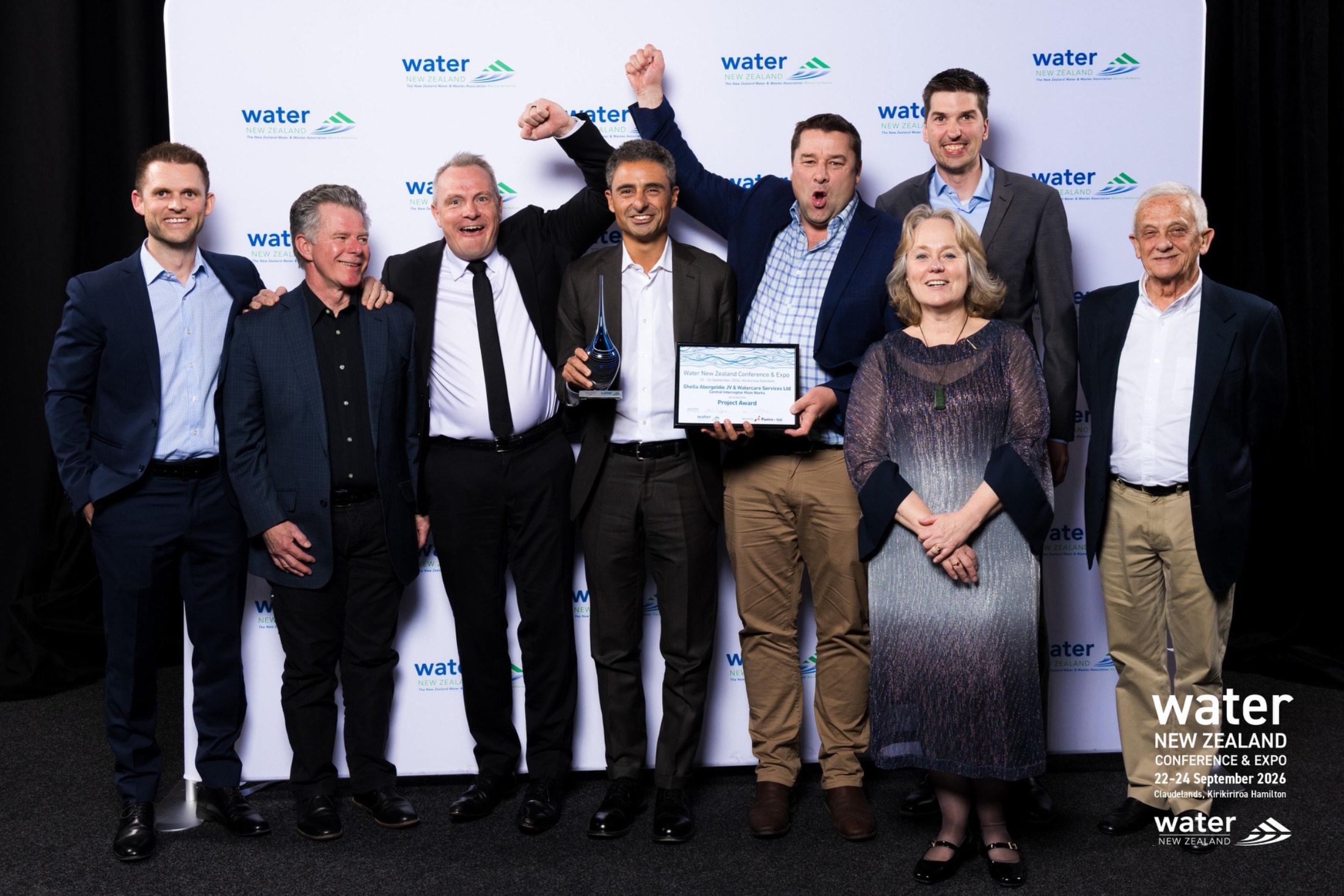
The Central Interceptor Main Works, delivered by Watercare and the Ghella Abergeldie Joint Venture, received the Project Award at the 2026 Water New Zealand Awards.
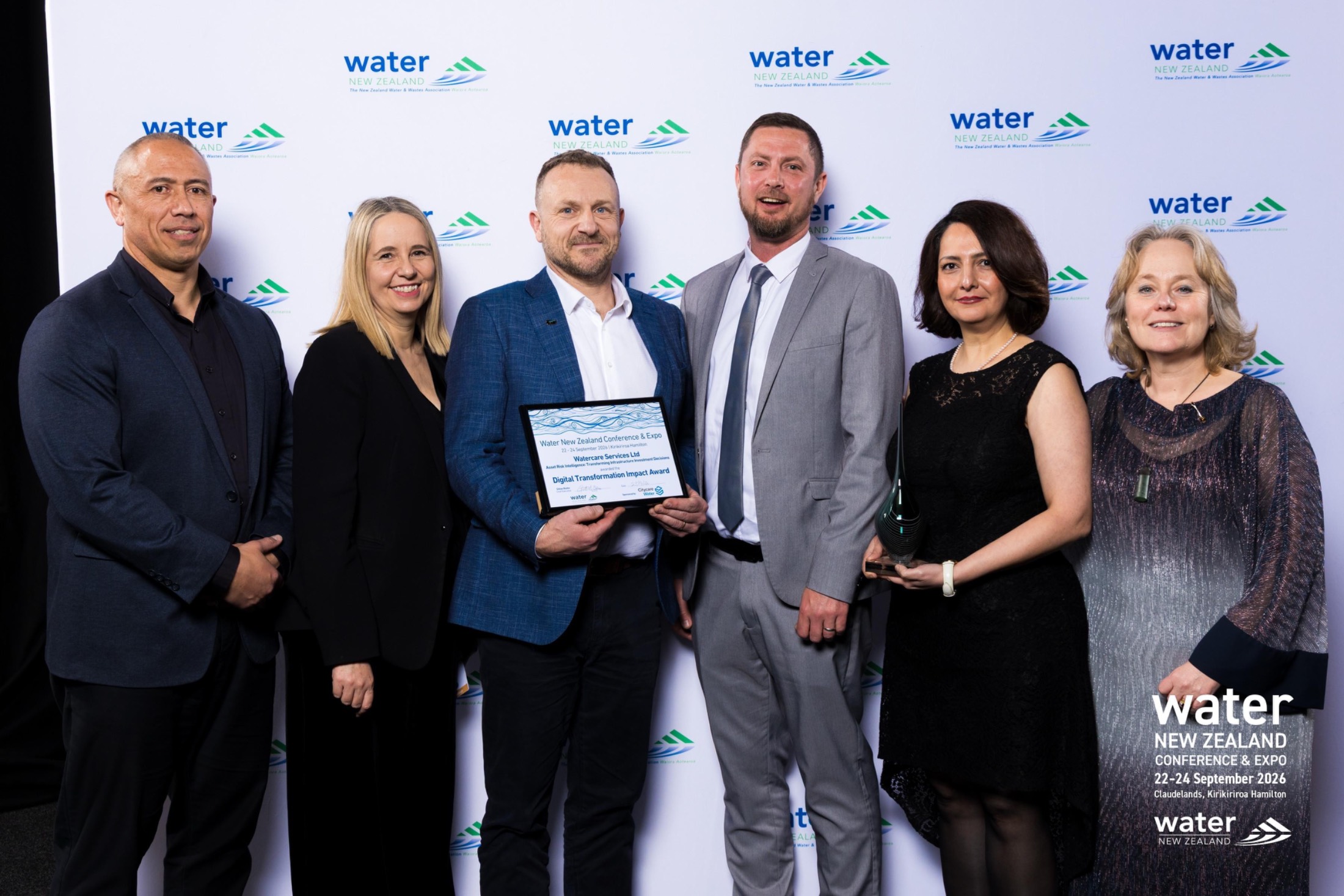
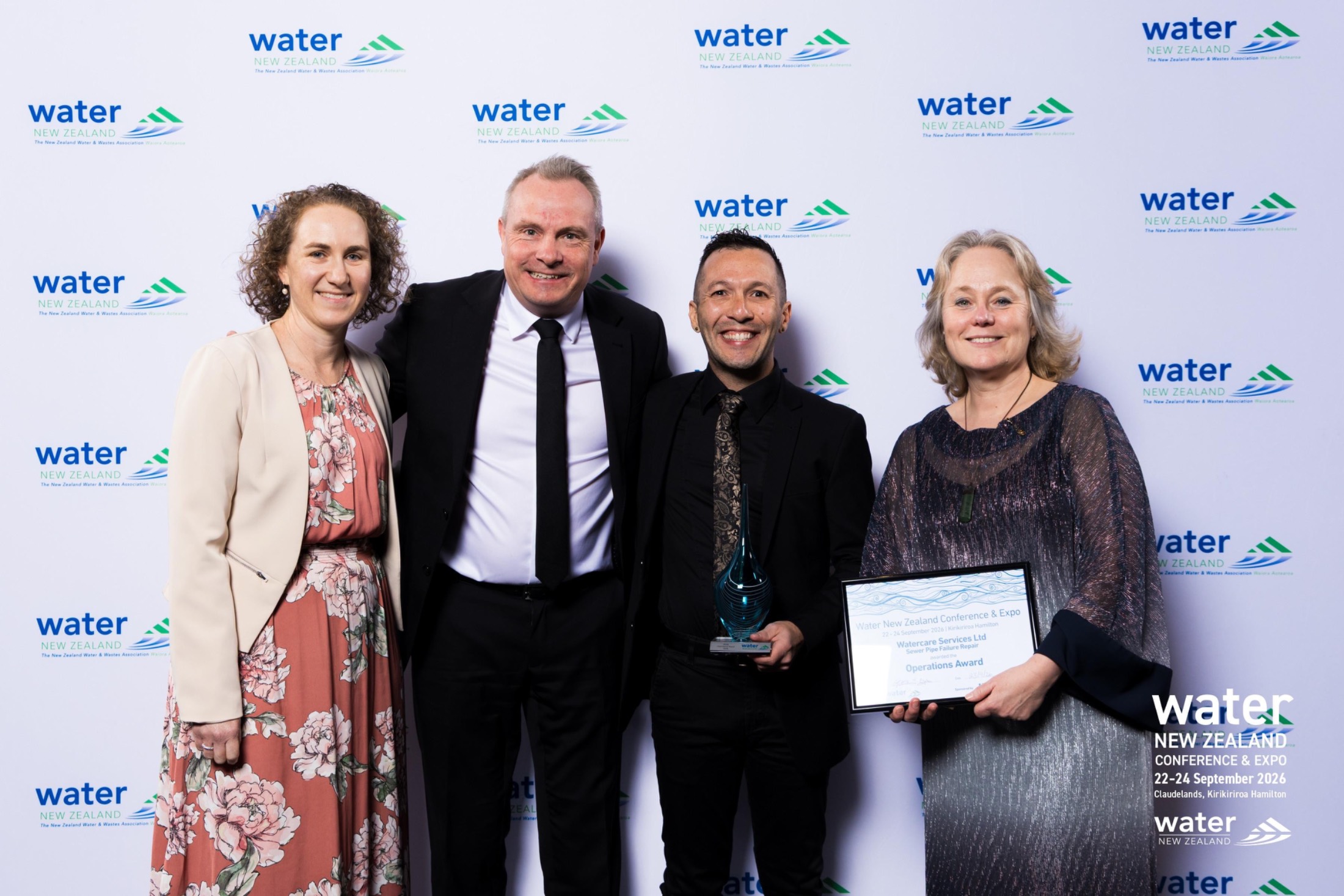
Watercare also received the Operations Award for its Sewer Pipe Failure Repair project and the Digital Transformation Impact Award for its Asset Risk Intelligence programme.
A fourth honour, Paper of the Year, went to Watercare’s Andrew Schunke and Jacobs’ Gokul Bharambe for their work on adaptive multi-mode digestion at the Māngere Wastewater Treatment Plant.
But behind the awards is a much bigger story about what is happening underneath Auckland.
A $1.66 billion tunnel most Aucklanders will never see
The Central Interceptor is not simply another wastewater pipe.
It is a 16.2-kilometre underground tunnel running between Point Erin in Herne Bay and the Māngere Wastewater Treatment Plant.
At around 4.5 metres in diameter and running as deep as approximately 110 metres underground in places, the tunnel was built beneath suburbs and even beneath the Manukau Harbour.
Construction began in 2019 and the complete tunnel became operational in 2026.
Watercare describes it as the largest wastewater infrastructure project ever delivered in New Zealand.
The final cost is around $1.66 billion.
Its purpose is straightforward but significant: capture wastewater and stormwater that would otherwise contribute to wet-weather overflows and transport it to Māngere for treatment.
741 million litres already kept out of the environment
The environmental impact is already beginning to show.
The southern section of the Central Interceptor started operating in early 2025, before the entire tunnel was commissioned.
Watercare says that by 1 July 2026, the operating section had prevented an estimated 741,000 cubic metres, or 741 million litres, of wastewater and stormwater from overflowing into Auckland’s environment.
That’s roughly equivalent to 300 Olympic-sized swimming pools.
With the complete 16.2km tunnel now operating, the infrastructure is expected to further reduce wet-weather wastewater overflows and contribute to cleaner streams, beaches and harbours.
That makes the Central Interceptor award more than recognition for completing an enormous engineering project.
The infrastructure is now moving into the stage where Aucklanders should increasingly experience the reason it was built in the first place.
Why does Auckland need such a huge wastewater tunnel?
Parts of central Auckland operate with older combined wastewater and stormwater infrastructure.
During heavy rainfall, large volumes of stormwater can enter the network.
When the system reaches capacity, diluted wastewater can overflow into streams and eventually reach beaches and harbours.
The Central Interceptor provides substantially more capacity to capture and move those flows through the network.
It also provides infrastructure needed to accommodate future population and housing growth.
For most Aucklanders, the tunnel will remain invisible.
Its success will instead be measured above ground through fewer overflows, cleaner waterways and a wastewater network better able to cope with a growing city.
Central Interceptor takes Project Award
Watercare and the Ghella Abergeldie Joint Venture received the Water New Zealand Project Award for the Central Interceptor Main Works.
The project involved years of complex underground construction across Auckland, including numerous shafts and construction sites.
Two tunnel boring machines were used during the project, with work occurring beneath established neighbourhoods and major infrastructure.
Watercare chief executive Jamie Sinclair said the awards reflected the work undertaken by Watercare employees and its delivery partners.
“These awards reflect the commitment, expertise and innovation of our people and partners who are delivering the infrastructure Auckland needs today while preparing for future growth,” Sinclair said.
Digital technology is also changing how Watercare spends money
The second major area recognised at the awards was less visible but potentially important for how Auckland’s infrastructure investment is prioritised.
Watercare received the Digital Transformation Impact Award for its Asset Risk Intelligence programme.
The programme uses data and insights to help identify risks across infrastructure assets and improve decisions about where investment should be directed.
For a network containing huge numbers of pipes, pumps, treatment facilities and other assets, knowing which infrastructure is most likely to fail can influence where maintenance and renewal money is spent.
The objective is to move towards better risk-based decision-making rather than relying only on the age of an asset or waiting for something to fail.
Sewer repair project recognised for operational excellence
Watercare’s Sewer Pipe Failure Repair project received the Operations Award.
The award recognises work involved in maintaining essential services and responding to critical problems within the wastewater network.
Pipe failures can create considerably more than an inconvenience.
Depending on their location and severity, failures can disrupt wastewater services, damage surrounding infrastructure and potentially create environmental problems.
Operational teams therefore have to restore services while managing public safety, environmental risks and disruption to surrounding communities.
Māngere research wins Paper of the Year
Technical research at the Māngere Wastewater Treatment Plant also received national recognition.
Watercare’s Andrew Schunke and Gokul Bharambe of Jacobs received the Paper of the Year Award for:
“Designing for Uncertainty: Adaptive Multi Mode Digestion at Māngere Wastewater Treatment Plant.”
The recognition highlights another side of Auckland’s water infrastructure that residents rarely see.
Running treatment plants is not simply about building more physical infrastructure. Engineers and technical teams are continually looking at how existing systems can operate more efficiently and adapt to changing demands.
Watercare faces a much larger infrastructure challenge
The awards arrive while Watercare is undertaking a major programme of investment across Auckland.
Its current 10-year business plan contains around $13.8 billion of infrastructure investment, covering drinking water, wastewater capacity, resilience, renewals and infrastructure required to support growth.
That puts projects such as the Central Interceptor into a wider context.
Auckland’s population is expected to continue growing, while ageing infrastructure needs renewal and extreme weather places additional pressure on parts of the network.
Watercare also became financially independent from Auckland Council on 1 July 2025, changing the way the organisation funds and delivers infrastructure.
Central Interceptor is becoming the backbone for more projects
Finishing the main tunnel does not mean Auckland’s wastewater upgrade is finished.
Other projects are being developed to connect into the Central Interceptor and expand its environmental benefits.
One of the most significant is the Herne Bay Collector, a nearly 1.7km wastewater tunnel that will connect into the Central Interceptor.
The project is designed to capture wet-weather overflows from some of Auckland’s older combined wastewater and stormwater networks and direct those flows towards the Māngere Wastewater Treatment Plant.
Watercare has signed a contract with Ghella to deliver the project, continuing the tunnelling expertise developed during construction of the Central Interceptor.
Other network projects will progressively make use of the additional capacity created by the new tunnel.
Recognition across four very different areas
Sinclair said he was particularly pleased that Watercare’s awards were not concentrated in one area.
“It’s particularly pleasing to see recognition across such a broad range of areas, from major project delivery and operational excellence to digital innovation and technical leadership,” he said.
“Together, they demonstrate the capability we are continuing to build across Watercare.”
The four Watercare-related winners were:
Project Award: Central Interceptor Main Works – Ghella Abergeldie Joint Venture and Watercare
Operations Award: Sewer Pipe Failure Repair
Digital Transformation Impact Award: Asset Risk Intelligence – Transforming Infrastructure Investment Decisions
Paper of the Year: Designing for Uncertainty: Adaptive Multi Mode Digestion at Māngere Wastewater Treatment Plant – Andrew Schunke, Watercare, and Gokul Bharambe, Jacobs
The real measure will be what Aucklanders experience
Industry awards recognise engineering, operations and innovation.
For Auckland residents, however, the more meaningful measure will be what happens outside the awards ceremony.
The Central Interceptor was built to reduce wastewater overflows, improve water quality, strengthen Auckland’s wastewater network and create capacity for future growth.
The fact that hundreds of millions of litres of wastewater and stormwater have already been prevented from overflowing into the environment provides an early indication of that impact.
As more parts of Auckland’s wastewater network connect into the new infrastructure, the benefits should extend further.
For a tunnel buried deep beneath Auckland that most residents will never physically see, its greatest achievement may ultimately be measured in something much more visible:
cleaner streams, cleaner beaches and a wastewater network better prepared for the Auckland of the future.
Source: Watercare media release, 25 September 2026; Watercare Central Interceptor and infrastructure information. Additional reporting and context by Webfit News.