
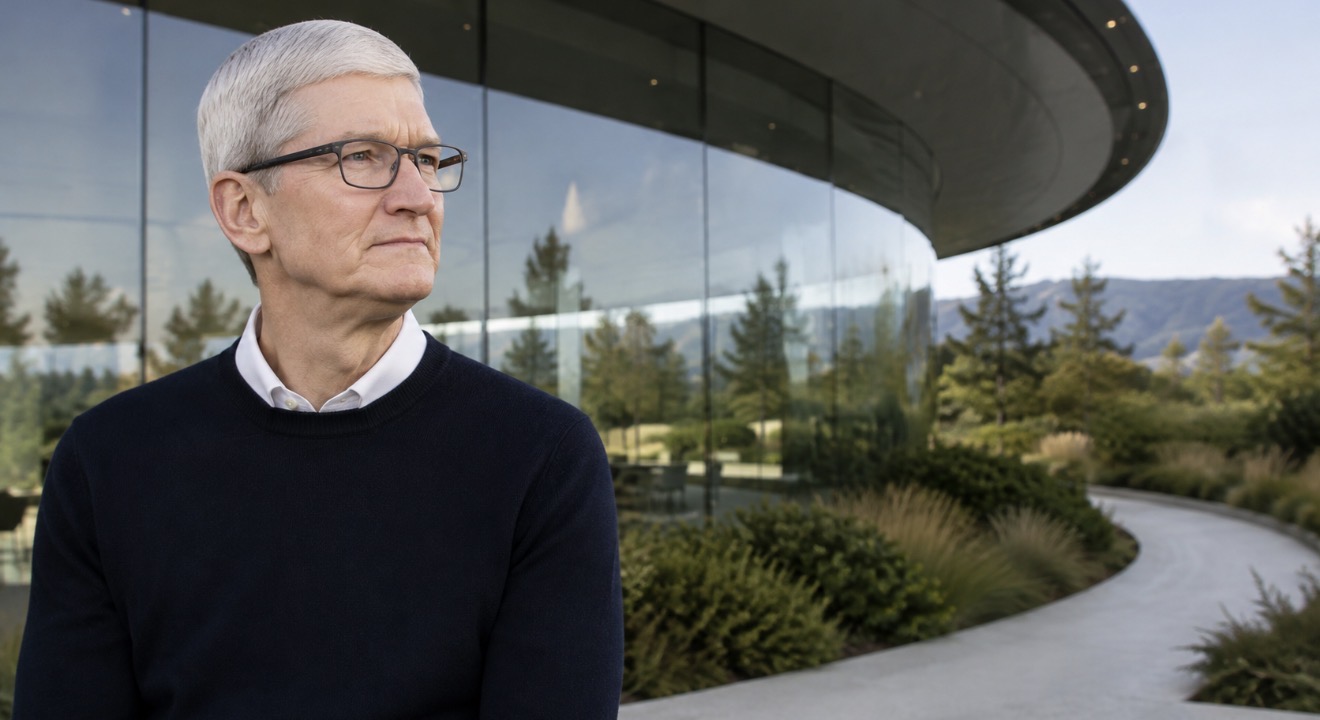
A major chapter in Apple’s history has ended.
Tim Cook has officially stepped down as chief executive of Apple after 15 years in the role, handing control of one of the world’s most valuable companies to longtime hardware executive John Ternus.
The leadership change took effect on 1 September 2026, following Apple’s announcement in April that its board had unanimously approved the succession plan.
Cook is not leaving Apple. He has moved into the role of executive chairman, where he will continue to assist with selected areas of the business, including engagement with policymakers around the world.
For Apple, the transition is significant not simply because of who is leaving the CEO’s office, but because of what Cook leaves behind.
He took over from Steve Jobs in 2011 with enormous expectations and plenty of scepticism. Fifteen years later, Apple is dramatically larger, more profitable, more diversified and more deeply embedded in everyday life.
Apple under Tim Cook
When Cook became CEO in August 2011, Apple’s market value was roughly US$350 billion.
By the time he stepped down, the company was worth around US$4.6 trillion, according to recent market reporting.
Apple’s share price rose by more than 2,000 percent during Cook’s tenure, while annual revenue grew from roughly US$108 billion to more than US$400 billion.
That makes Cook’s period at the helm one of the most commercially successful CEO tenures in modern corporate history.
|
Measure |
Around 2011 |
By 2026 |
|
Market value |
About US$350b |
About US$4.6t |
|
Annual revenue |
About US$108b |
More than US$400b |
|
Apple ecosystem |
Primarily hardware-led |
Hardware, services, subscriptions and wearables |
|
Major new categories |
Limited |
Apple Watch, AirPods, Vision Pro and more |
|
Active devices |
Far smaller installed base |
More than 2.5 billion globally |
The image circulating online claiming Apple had become a “nearly $5 trillion company” is directionally close to recent valuations, but the more reliable current figure is around US$4.6 trillion rather than a confirmed US$5 trillion.
Cook did not try to become Steve Jobs
One of the most important things Cook did was resist the temptation to imitate his predecessor.
Steve Jobs was associated with dramatic product launches, design instincts and a highly personal style of leadership.
Cook’s strengths were different.
He was an operations specialist.
He understood supply chains, manufacturing, logistics and execution.
And rather than trying to recreate Jobs, Cook turned those strengths into Apple’s advantage.
Under his leadership, the company expanded its global supply chain, strengthened manufacturing relationships and built an operating model capable of producing enormous volumes of devices while protecting profit margins.
That less glamorous side of technology leadership became one of the foundations of Apple’s growth.
Apple became much more than the iPhone
The iPhone remained the company’s most important product, but Cook reduced Apple’s dependence on a single device by expanding into new categories.
Apple Watch became one of the world’s most successful wearable products.
AirPods became a major product line in their own right.
Apple developed its own silicon for Mac computers, reducing its reliance on Intel and allowing the company to control more of the hardware and software stack.
The company also moved into spatial computing with Vision Pro.
At the same time, Apple’s services business expanded dramatically.
Apple Music, Apple TV+, Apple Pay, iCloud+, Fitness+, Arcade and other subscription and digital services created a large recurring revenue stream that barely existed when Cook became CEO.
Apple’s services business generated more than US$100 billion in annual revenue by 2025, while the company said it had around 1.5 billion paid subscriptions across its services.
Privacy became part of Apple’s identity
Cook also pushed privacy into the centre of Apple’s public positioning.
Apple increasingly presented privacy as a fundamental right rather than simply another technical feature.
That stance influenced product design, advertising policies, app tracking rules and the way Apple differentiated itself from businesses more dependent on user data.
Apple says Cook also made accessibility, environmental performance and workplace inclusion more central to the company’s decision-making.
According to Apple, its carbon footprint fell by more than 60 percent from 2015 levels during a period when revenue nearly doubled.
But Cook leaves unfinished business
Cook’s record is extraordinary, but it is not without weaknesses.
The biggest unresolved issue is artificial intelligence.
While Microsoft, Google, Meta and other technology companies spent aggressively on AI infrastructure and large language models, Apple moved more cautiously.
That approach protected capital and avoided some of the massive infrastructure spending undertaken by competitors.
But it also created a perception that Apple was behind in generative AI.
The company has increasingly relied on partnerships and external models in parts of its AI strategy, while work on a substantially upgraded Siri has faced intense scrutiny.
That challenge now lands directly on John Ternus.
Who is John Ternus?
Ternus is not an outsider brought in to overhaul Apple.
He is a company veteran.
He joined Apple’s product design team in 2001 and later became vice president of Hardware Engineering in 2013.
He joined Apple’s executive leadership team in 2021 as senior vice president of Hardware Engineering.
Over the years, Ternus has overseen engineering across major Apple products including:
- iPhone
- iPad
- Mac
- Apple Watch
- AirPods
- Apple Vision Pro
He also played an important role in the transition of Mac computers from Intel processors to Apple-designed silicon.
Before joining Apple, Ternus worked as a mechanical engineer at Virtual Research Systems.
He holds a degree in mechanical engineering from the University of Pennsylvania.
Why Apple chose a hardware engineer
Ternus’s appointment says something important about what Apple believes comes next.
He is fundamentally a product and hardware executive.
Apple’s board specifically highlighted his technical knowledge and focus on product development when announcing him as Cook’s successor.
That may reflect the company’s belief that its next growth phase will require major new devices, rather than relying only on services and incremental iPhone upgrades.
Apple is exploring areas including foldable devices, robotics, next-generation wearables and AI-integrated hardware.
Ternus therefore takes over at a moment when Apple needs to prove it can still create new categories that feel genuinely important.
His first major test comes almost immediately
Ternus does not get much time to settle in.
Apple has scheduled its next major product event for 9 September, just days after his first official day as CEO.
The company is expected to introduce its latest iPhone range, and speculation has intensified around a possible foldable iPhone.
That means Ternus’s first major public moment as chief executive could also become one of Apple’s most closely watched product launches in years.
For investors, it will be the first opportunity to see how visibly Ternus intends to lead.
For customers, it will begin answering a different question: will Apple under Ternus feel noticeably different from Apple under Cook?
Cook will still be nearby
The transition is also unusual because Cook is not disappearing from the company.
As executive chairman, he will remain influential.
Apple says he will continue helping with selected areas and dealing with policymakers internationally.
That could provide continuity during a period when Apple is facing complex regulatory battles around the world.
Governments are scrutinising the App Store, competition rules, digital payments, privacy and Apple’s control over its ecosystem.
Cook has spent years building relationships with political leaders and regulators.
Keeping him involved gives Ternus access to that experience while allowing the new CEO to focus more heavily on products and technology.
A wider leadership transition is already underway
Ternus’s appointment is not the only senior change inside Apple.
Johny Srouji has been appointed Chief Hardware Officer, taking on expanded responsibility for hardware engineering and hardware technologies.
That move effectively separates some of Ternus’s previous responsibilities and gives Apple another senior technical leader overseeing hardware development.
Longtime executive Phil Schiller is also stepping back from major responsibilities involving the App Store and Apple events.
The company is therefore going through one of its biggest leadership transitions in years.
What Cook’s era meant for New Zealand
For New Zealand consumers, Cook’s tenure coincided with Apple products moving from premium technology purchases to everyday infrastructure.
iPhones became embedded in banking, authentication, payments, photography and communication.
Apple Watch expanded into health and fitness tracking.
AirPods changed how many people consume music, podcasts and calls.
Apple Pay became part of everyday retail payments.
Macs and iPads became common across businesses, schools, universities and creative industries.
So while this is a leadership change taking place in California, it affects a company whose products are woven deeply into everyday life in New Zealand.
The decisions Ternus makes about pricing, AI, subscriptions, privacy, repairability and new devices will eventually reach New Zealand users as well.
The comparison with Steve Jobs will now move to Ternus
Cook spent much of his early tenure being compared with Jobs.
That comparison was ultimately unfair because the two men had very different strengths.
Cook’s achievement was showing that Apple could survive and then become dramatically bigger after its co-founder was gone.
Ternus now inherits a similar burden.
But his challenge is different.
He is not taking control of a company trying to prove it can survive without Steve Jobs.
He is taking over a company worth around US$4.6 trillion that already dominates several major technology categories.
Maintaining that position may be harder than reaching it.
At Apple’s scale, even successful new products need enormous sales to materially change the business.
The Cook legacy
Cook will ultimately be remembered less as the man who invented Apple’s defining products and more as the executive who transformed Apple into one of the most powerful companies the world has ever seen.
He took the company Steve Jobs rebuilt and turned it into a global commercial machine.
He expanded the ecosystem.
He created recurring revenue streams.
He strengthened the supply chain.
He oversaw new product categories.
And he dramatically increased shareholder value.
After 15 years, he leaves the CEO role with Apple larger than when almost anyone imagined he took over.
The next question belongs to John Ternus.
Can he protect what Cook built while giving Apple something genuinely new?
That will define Apple’s next era.
Sources: Apple; Reuters; Financial Times; Barron’s; Investopedia.