Introduction
New Zealand has lost one of its most influential business leaders.
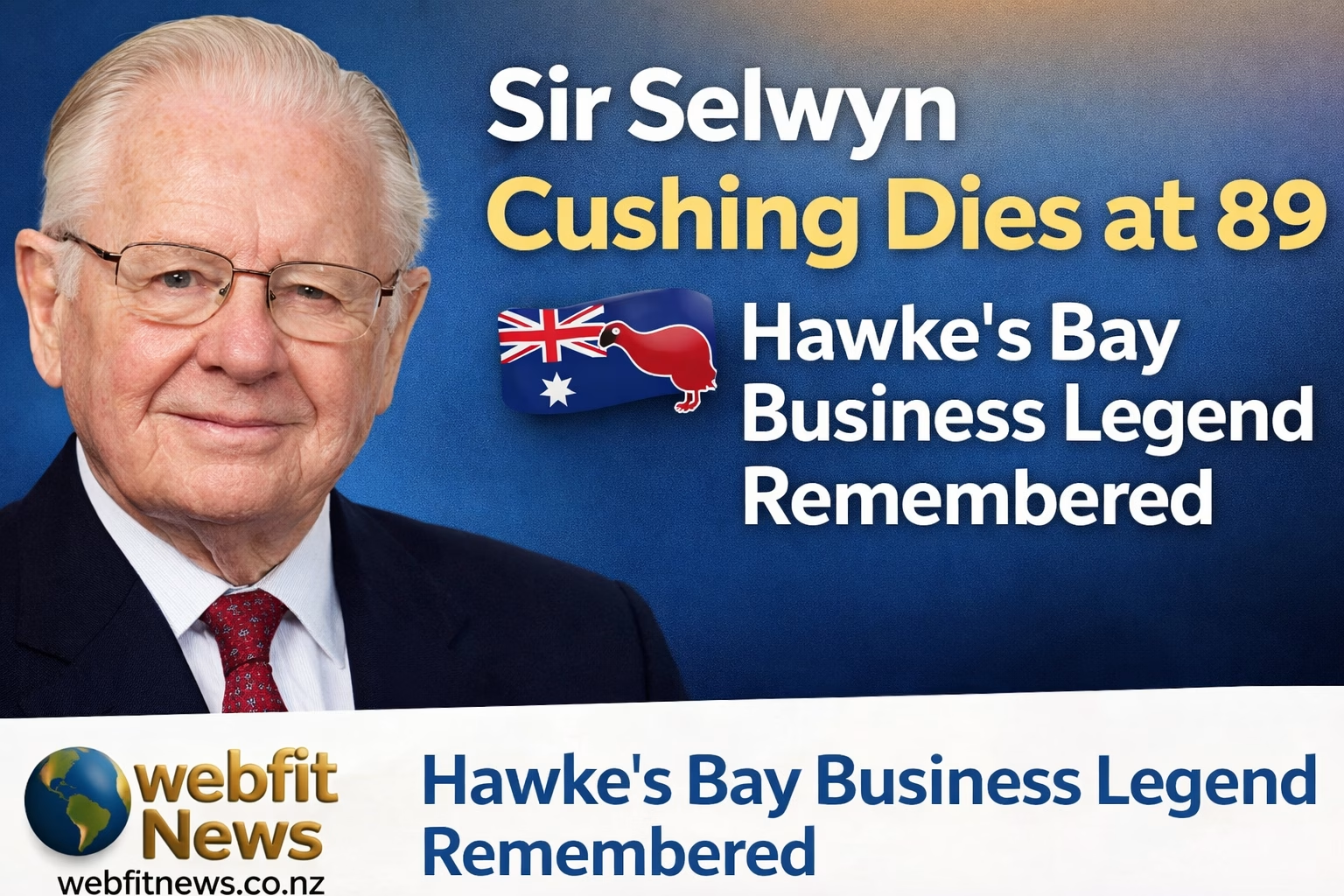
Sir Selwyn John Cushing, one of Hawke’s Bay’s most respected sons and a giant of New Zealand commerce, passed away peacefully at his Hastings home on 10 February 2026 at the age of 89.
For many Kiwis, his name is linked with some of the country’s biggest companies, including Air New Zealand, Skellerup, ECNZ, and Brierley Investments. But beyond the boardrooms, Sir Selwyn was deeply rooted in his community, passionate about cricket, music, and the future of regional New Zealand.
His passing marks the end of a generation that reshaped New Zealand business during decades of economic change.
From Freezing Works to the Boardroom
Sir Selwyn was born in Hastings on 1 September 1936. His father managed the Whakatū freezing works, a key part of Hawke’s Bay’s rural economy at the time.
Instead of following a traditional academic path, Selwyn left Hastings Boys’ High School at just 16. He joined an accounting firm in Hastings and studied part-time. By 19, he had qualified as a Chartered Accountant, a remarkable achievement.
In 1957, he was awarded a national medal as New Zealand’s top student in cost and management accounting. By 24, he had become a senior partner in his firm.
His early success was built on discipline, financial sharpness, and a strong work ethic. Those qualities defined his career for decades.
The “Industry Fixer” Who Reshaped Corporate New Zealand
In the early 1970s, Sir Selwyn partnered with Sir Ron Brierley at Brierley Investments Limited. This partnership became one of the most talked-about forces in New Zealand corporate history.
While others called them corporate raiders, Sir Selwyn saw himself differently. He believed in fixing underperforming businesses. His focus was on:
• Removing inefficiencies
• Strengthening management
• Building scale in small markets
• Making companies globally competitive
He believed New Zealand’s small size meant businesses needed strength and efficiency to survive internationally.
That thinking influenced rural services, manufacturing, forestry, and energy sectors for decades.
Air New Zealand and the Ansett Crisis
Sir Selwyn served as Chairman of Air New Zealand from 1998 to 2001. This period included one of the most challenging chapters in the airline’s history.
The purchase of Ansett Australia was meant to build a stronger Australasian airline. Instead, it led to financial losses and a government bailout after Ansett collapsed.
The decision drew heavy public criticism. Yet even critics acknowledged that Sir Selwyn was leading during one of the most complex aviation crises in New Zealand history.
He also navigated the sensitive balance between foreign investment and national control of the airline, protecting New Zealand’s strategic aviation interests.
Leadership Across New Zealand Industry
Sir Selwyn’s influence extended far beyond aviation.
He chaired or directed major organisations, including:
• Electricity Corporation of New Zealand during energy sector reform
• Skellerup Holdings for more than 30 years
• Carter Holt Harvey
• Williams and Kettle
• New Zealand Symphony Orchestra
At Skellerup, he helped transform the company into a specialist global manufacturer. At ECNZ, he was deeply involved during major deregulation changes in the 1990s.
He was known for calm decision-making during periods of economic turbulence.
A Hawke’s Bay Man at Heart
Despite his national influence, Sir Selwyn never left Hawke’s Bay.
He remained based in Hastings while many business leaders relocated to Auckland. He believed strongly in regional New Zealand and supported the rural economy throughout his life.
His long involvement with Williams and Kettle reflected his commitment to farmers and rural communities.
For locals, he was not just a corporate figure. He was a proud Hawke’s Bay identity.
The Arts, Cricket, and Community
Many Kiwis may not realise that Sir Selwyn was also an accomplished violinist. He helped found the Hawke’s Bay regional orchestra and later chaired the New Zealand Symphony Orchestra during a financially difficult period.
He also supported the Royal New Zealand Ballet and worked to secure corporate sponsorships for cultural organisations.
In sport, he represented Hawke’s Bay in cricket and later supported youth cricket development. He believed sport built character, discipline, and leadership.
This balance of business, arts, and sport made him a uniquely rounded New Zealand figure.
Family and Legacy
Sir Selwyn was married to Kaye Dorothy Anderson, who passed away in 1986. He had two sons, David and Graham. His son David continues to lead major family business interests, particularly in the rural sector.
The Cushing family has remained active in agriculture and industry, maintaining strong ties to Hawke’s Bay.
Even in later years, Sir Selwyn remained engaged in business and community life.
National Recognition
New Zealand recognised Sir Selwyn’s contributions with high state honours.
He was appointed:
• Companion of the Order of St Michael and St George in 1994
• Knight Companion of the New Zealand Order of Merit in 1999
These honours reflected not only business success, but also service to sport, arts, and public life.
A Life That Helped Shape Modern New Zealand
Sir Selwyn Cushing’s career spanned decades of transformation in New Zealand’s economy. From deregulation to global expansion, from state enterprise reform to international aviation, he was often at the centre of major change.
Some of his decisions were debated. Some were controversial. But few can deny his impact.
He represented a generation of leaders who believed in discipline, efficiency, and long-term thinking.
Webfit News Perspective
Sir Selwyn Cushing’s life is a reminder that strong economies are built by people who combine financial skill with community responsibility.
For Kiwi readers, he symbolised resilience and regional pride. For readers from other ethnic communities, his story shows how New Zealand rewards hard work, professional excellence, and contribution beyond profit.
He was not just a businessman. He was part of the national fabric.
New Zealand today is shaped by leaders like him who believe that success should strengthen both companies and communities.