By Geet G | Webfit News
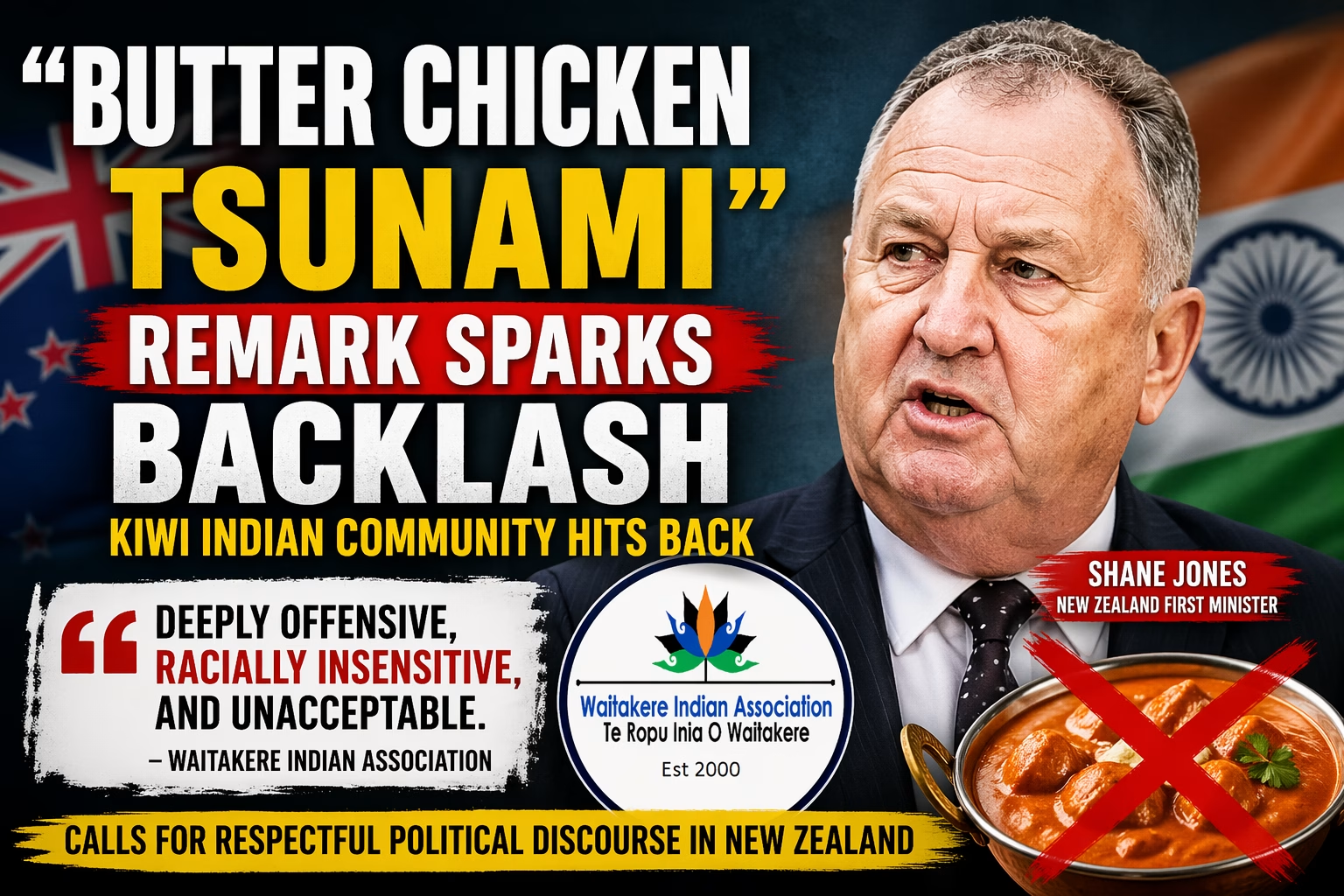
A political remark made during discussions around a potential New Zealand–India Free Trade Agreement has triggered strong backlash from the Indian community, with a leading Auckland-based organisation calling the language “deeply offensive” and “racially insensitive.”
The controversy centres around comments made by New Zealand First Minister Shane Jones, who reportedly used the phrase “butter chicken tsunami” in reference to the growing ties between New Zealand and India.
Community Response Turns Firm
The Waitakere Indian Association, a well-established community organisation representing Kiwi Indians in West Auckland, has publicly condemned the statement, warning that such language undermines the dignity of an entire community.
Sunil Kaushal, President of the Waitakere Indian Association, said the remark does not reflect the values of a modern, multicultural New Zealand and risks reducing a diverse community to stereotypes.
In a formal press release, the association said the language used was unacceptable and out of step with the principles of inclusion, respect, and fairness that New Zealand stands for.
More Than Just a Comment
West Bengal Elections 2026: 9 Million Voters Removed as High-Stakes Polling Begins – WebfitNews
While political language often sparks debate, community leaders argue that this incident goes beyond a single remark.
The association described the comment as part of a broader concern where rhetoric can fall short of the standards expected from elected officials in a diverse democracy.
Their concern is not only about the words used, but about the message they send to communities who are deeply embedded in New Zealand’s economic and social fabric.
A Community That Contributes
The response also highlighted the scale of contribution made by the Indian diaspora in New Zealand.
According to data referenced by the association:
- Kiwi Indians contribute over $10 billion annually to the New Zealand economy
- They are active across key sectors, including healthcare, IT, education, construction, hospitality, and small business
Kaushal added that the community continues to play a vital role not just economically, but socially as well, through volunteering, cultural initiatives, and youth development.
The message is clear. This is not a marginal voice. This is a community deeply woven into New Zealand’s growth story.
Timing Matters
The controversy comes at a sensitive time.
New Zealand and India are currently in discussions around a Free Trade Agreement that could reshape economic ties between the two countries.
At the same time, the country is moving toward an election cycle where political messaging and public perception carry added weight.
Community leaders say this is exactly when language needs to be more responsible, not less.
Call for Accountability and Respect
The Waitakere Indian Association has called on all political leaders to:
- Exercise greater responsibility in public statements,
- maintain respectful and inclusive dialogue
- , and ensure communities are not singled out or reduced to stereotypes
“Political discourse must bring people together, not divide them,” Kaushal emphasised in the statement.
Webfit News Perspective
This incident is not just about one phrase.
It highlights a deeper issue in modern politics.
How leaders speak about communities matters as much as the policies they promote.
New Zealand’s strength lies in its diversity.
But that strength can weaken quickly if public discourse slips into casual stereotyping.
The Indian community is not asking for special treatment.
It is asking for basic respect.
Reference
Waitakere Indian Association Press Release (April 2026)