
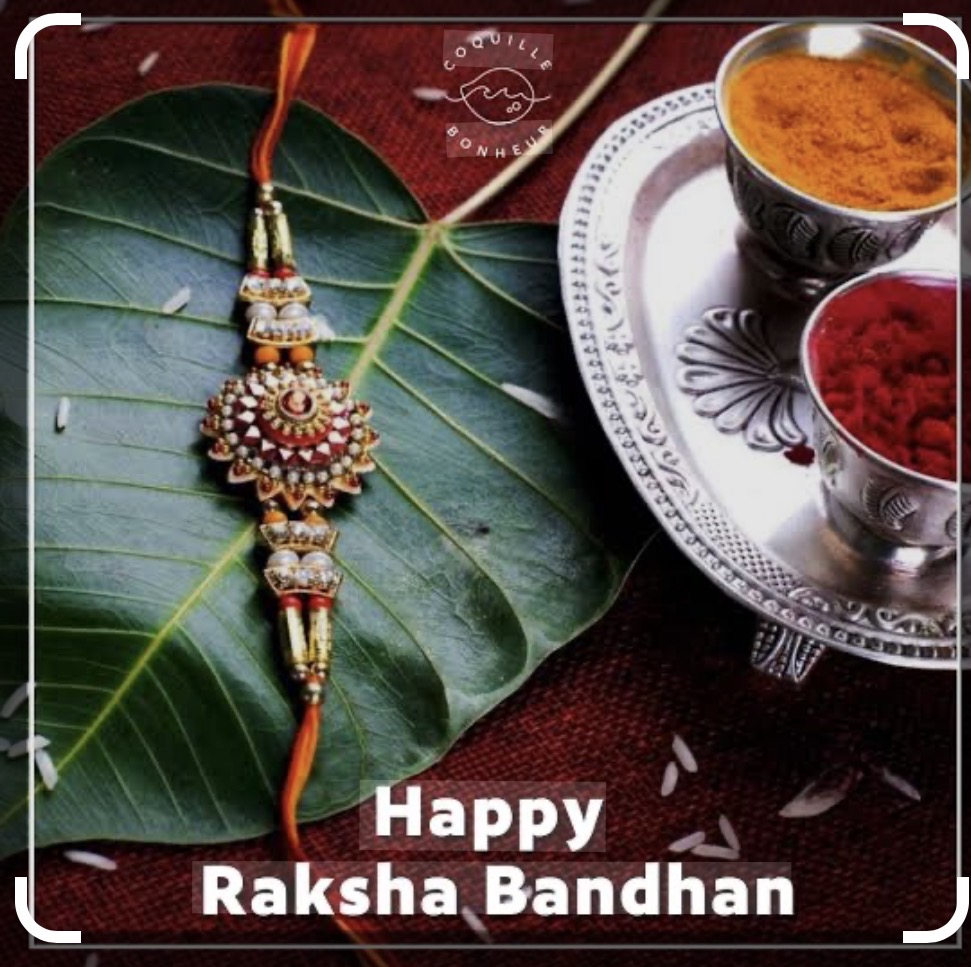
Somewhere in Auckland today, a sister will open a video call to India, hold a rakhi towards the screen and wish the thousands of kilometres between her and her brother could disappear for a few minutes.
Somewhere in Delhi, Mumbai, Chandigarh, Bengaluru or Ahmedabad, a brother will open an envelope that has travelled halfway around the world.
There will be sweets, laughter, blessings and family memories.
That is Raksha Bandhan.
But this year, the ancient Indian festival carries an unexpectedly timely message for another relationship stretching across oceans: India and New Zealand.
Raksha Bandhan is traditionally about the bond between siblings, but its deeper meaning goes beyond a thread tied around a wrist. It represents trust, responsibility, affection and the promise to stand beside each other when it matters.
And in 2026, India and New Zealand seem to be building something surprisingly similar.
A new thread between two countries
On 27 April 2026, India and New Zealand signed their long-awaited Free Trade Agreement in New Delhi.
Then in July, Prime Minister Christopher Luxon and Indian Prime Minister Narendra Modi elevated the relationship further through a Strategic Partnership and a Roadmap to 2030.
Trade, investment, technology, education, security, tourism and people-to-people ties are now all part of a much bigger relationship.
So perhaps, without intending to, the two countries have spent this year tying their own kind of rakhi.
Not a thread around a wrist.
A thread of trust across the Pacific.
So who is the brother and who is the sister?
It is tempting to make the comparison literal.
New Zealand could be imagined as the thoughtful sister, green, independent and carrying the spirit of manaakitanga, with its emphasis on care, hospitality and respect.
India could be seen as the elder brother, bringing enormous scale, economic strength, technological capability and growing influence across the Indo-Pacific.
But perhaps that is not the most important part of the comparison.
Raksha Bandhan is not really about deciding who is stronger.
Modern sibling relationships are about mutual support.
Sometimes the brother protects the sister.
Sometimes the sister protects the brother.
Sometimes both simply need someone they can trust.
That may be the better way to understand India and New Zealand.
India brings scale. New Zealand brings specialisation.
India brings markets. New Zealand brings expertise.
India brings manufacturing strength and talent. New Zealand brings food innovation, education, technology and trusted institutions.
Neither country needs to become like the other.
Their value lies in what they can bring to each other.
If the FTA were a Raksha Bandhan ceremony
Every Raksha Bandhan celebration has familiar elements.
A rakhi.
A blessing.
A sweet.
A gift.
And a promise.
The India-New Zealand FTA can almost be viewed through the same lens.
The rakhi is the agreement itself, a formal commitment that both countries want the relationship to grow.
The gifts are the opportunities being exchanged.
New Zealand wants greater access for areas such as horticulture, forestry, seafood, technology, education and specialist services.
India brings manufacturing, engineering, pharmaceuticals, textiles, technology, professional talent and access to one of the largest markets in the world.
But the real opportunity goes beyond simply selling more products.
It comes when businesses start creating things together.
When New Zealand technology companies work with Indian manufacturers.
When Indian companies use New Zealand as a gateway into the Pacific.
When universities collaborate.
When students travel.
When researchers work together.
When entrepreneurs find partners on the other side of the world.
That is when a trade agreement stops being a document and starts becoming a relationship.
The real living bridge already exists
Perhaps the strongest India-New Zealand connection was never created by governments at all.
It was created by people.
New Zealand is home to a large and growing Indian community, with roughly 300,000 people of Indian origin now living across the country.
Today, many of them will celebrate Raksha Bandhan.
In Auckland, Wellington, Hamilton and Christchurch, sisters will tie rakhis to brothers sitting beside them.
Others will make video calls to India.
Some rakhis will have been posted weeks ago.
Some friends will become family for the day because migration often creates new relationships when blood relatives live thousands of kilometres away.
This community is often described as a living bridge between India and New Zealand.
On Raksha Bandhan, that phrase feels especially meaningful.
Because governments can sign agreements.
Diplomats can negotiate.
Trade officials can write rules.
But people are the ones who make relationships real.
From the Ganges to the Waitematā
There is something beautiful about imagining a silk thread stretching today from the banks of the Ganges to the shores of Auckland’s Waitematā Harbour.
One end carries thousands of years of Indian tradition and cultural memory.
The other sits in a Pacific nation increasingly connected to India through trade, migration, education and diplomacy.
The two countries are very different.
That may be exactly why the relationship matters.
India does not need New Zealand to become more like India.
New Zealand does not need India to become more like New Zealand.
The opportunity lies in bringing different strengths to the same table.
And perhaps Raksha Bandhan offers one particularly useful lesson.
Not every valuable relationship has to be equal in size to be equal in respect.
India is vastly larger than New Zealand.
But size does not automatically determine the value of a relationship.
A rakhi itself proves that.
It weighs almost nothing.
Yet to the person wearing it, it can mean everything.
The promise behind the thread
Raksha Bandhan has survived for generations because its message is simple.
Distance does not have to weaken a relationship.
Difference does not have to divide people.
And disagreement does not have to end trust.
India and New Zealand will not agree on everything.
No serious international partnership works that way.
But in 2026, both countries have chosen to move closer.
An FTA has been signed.
A Strategic Partnership has been announced.
A Roadmap to 2030 has been created.
Now comes the part that matters most.
Turning those promises into opportunities that ordinary people can actually feel.
For businesses.
For students.
For farmers.
For researchers.
For tourists.
For entrepreneurs.
And for the families who already live with one foot in India and another in New Zealand.
Because whether a rakhi is tied around a wrist in Delhi, opened from an envelope in Auckland or shown through a phone screen between siblings separated by an ocean, it ultimately asks one simple question:
When it matters, will you stand beside me?
For India and New Zealand, that may be the most meaningful question of their new partnership too.
Happy Raksha Bandhan to everyone celebrating across India, New Zealand and around the world.