
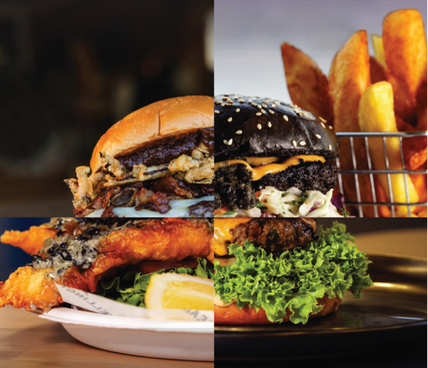
Porirua’s hospitality sector has turned burgers into serious business.
More than 21,500 burgers were sold across the city during August as part of Visa Wellington On a Plate, generating more than $602,000 in direct burger sales and giving local operators one of their strongest showings yet in the regional food festival.
The result is not just a good month for cafés and restaurants.
It shows how quickly Porirua’s food scene has grown.
Direct Burger Wellington sales in the city have now more than tripled in just two years, rising from $197,732 in 2024 to $364,415 in 2025 and then to $602,498 this year.
That growth is even more significant because the figures do not include money spent on drinks, sides or other purchases.
The numbers tell the story
Porirua had 19 local businesses participating in Burger Wellington this year, alongside five Wellington On a Plate events hosted across the city.
The campaign delivered:
| Measure | Result |
|---|---|
| Burgers sold | 21,595 |
| Direct burger sales | $602,498 |
| Direct burger sales in 2025 | $364,415 |
| Direct burger sales in 2024 | $197,732 |
| Burger Wellington entries from Porirua | 19 |
| Total regional entries | 245 |
| Porirua businesses in regional top five | 2 |
The figures show a clear upward trend.
Compared with 2024, direct burger revenue has increased by more than $400,000.
That is a substantial change for a campaign built around what is effectively a month of special menu items.
Porirua took two of the regional top five spots
The city also performed strongly in the competition itself.
Elemental Eats in Kenepuru finished third overall out of 245 Burger Wellington entries and secured the top ranking for Porirua.
Sushil’s Musclechef Café in Aotea also placed in the regional top five.
That means Porirua accounted for only about 8 percent of the total entries but still secured two of the top five positions.
It is a small statistic, but it says a lot.
Porirua was not simply participating.
It was competing successfully against restaurants and cafés from across the wider Wellington region.
A sell-out event added to the momentum
Sushil’s Musclechef Café also made another mark on the festival.
Its event, “A Culinary Tale of India”, became the first Wellington On a Plate festival event to sell out.
That success suggests Porirua’s growing food appeal is not limited to burgers.
It also points to demand for more diverse dining experiences and culturally driven food events.
For local hospitality operators, that matters because it creates reasons for people from outside the city to visit.
More than just burger money
The $602,498 figure only captures direct burger sales.
It does not include:
- drinks
- chips and sides
- desserts
- additional meals
- transport spending
- other retail purchases
- repeat visits after the festival
That means the total economic impact is likely to be higher.
A customer who drives into Porirua for a festival burger may also buy coffee, meet friends, shop nearby or return later after discovering a business they had not previously visited.
That kind of spillover is where food festivals can have a wider local effect.
Businesses reported new customers from outside Porirua
According to Porirua City Council, participating businesses reported attracting new customers from across the Wellington region and further afield.
That may be one of the most valuable outcomes.
Hospitality businesses depend heavily on repeat trade.
A festival can provide the initial reason for someone to visit, but the longer-term benefit comes if that person returns after the event is over.
For Porirua, which has often competed with central Wellington and other regional centres for dining traffic, that extra visibility is significant.
Why Porirua is punching above its weight
The phrase “punching above its weight” can be overused, but in this case the numbers support it.
Porirua supplied fewer than one in 10 of Burger Wellington’s total entries.
Yet two local businesses reached the top five.
That suggests the city’s hospitality sector is developing quality alongside quantity.
It also challenges older perceptions of where the Wellington region’s strongest dining experiences are found.
For years, central Wellington dominated much of the region’s food identity.
But increasingly, strong independent operators are building reputations in suburban and regional centres.
Porirua appears to be one of them.
The growth since 2024 is striking
The progression in sales is worth looking at closely.
In 2024, direct burger sales were $197,732.
In 2025, that rose to $364,415.
This year, it reached $602,498.
That is not a small increase.
It is a sustained rise over three consecutive campaigns.
It could reflect several things at once:
- more participating businesses
- higher customer turnout
- stronger marketing
- better-performing menu items
- increased visitor traffic
- more local support
- growing confidence in Porirua’s hospitality sector
Whatever the mix, the direction is clear.
The campaign is becoming more economically significant.
Hospitality benefits when the whole city gets attention
For individual cafés and restaurants, the immediate reward is sales.
For the city, the benefit is broader.
Successful food events can help change how a place is perceived.
People who may not usually think of Porirua as a dining destination suddenly have a reason to visit.
If the experience is good, that perception can shift.
That creates value not only for participating businesses but for the wider city centre, retail areas and local tourism.
This is particularly important for places competing for discretionary spending.
People have limited money and limited free time.
They need a reason to choose one destination over another.
Food can be that reason.
Local identity matters too
Porirua’s success also reflects something distinctive about its food culture.
The city is one of New Zealand’s most culturally diverse communities.
That diversity can translate directly into hospitality.
Indian, Pacific, Māori, Asian and other influences can give local operators a different offering from more conventional metropolitan dining.
When festivals allow those businesses to showcase what they do well, the result can be more than novelty.
It can strengthen the city’s identity.
But success during a festival needs to carry into the rest of the year
The challenge now is what happens after August.
A festival can create a temporary spike.
What local businesses need is sustained trade.
The strongest outcome would be if some of the thousands of customers who visited during Burger Wellington keep returning.
That is where the economic value becomes more durable.
Hospitality margins are tight.
Labour costs, food prices, rents and utilities remain significant pressures.
A strong month helps, but long-term survival depends on consistent customer numbers.
The opportunity for Porirua
The latest results suggest Porirua has an opportunity to build a stronger regional food identity.
That could mean more events.
More collaboration between operators.
Better promotion of local hospitality precincts.
More reasons for people to visit outside major festival periods.
The city has now shown it can compete on quality.
The next step is turning that recognition into a year-round advantage.
A simple campaign with a large local impact
At first glance, Burger Wellington is just a food festival.
But in Porirua this year, it generated more than $600,000 in direct sales, drew new customers into the city, placed two local businesses among the region’s best and helped one event become the first of the festival to sell out.
That is a meaningful local economic result.
And perhaps the most interesting part is how quickly it has grown.
From under $200,000 in direct burger sales two years ago to more than $600,000 now, Porirua’s hospitality sector is showing that food tourism does not have to belong only to the big city centre.
Sometimes, one very good burger is enough to get people through the door.
The real success is getting them to come back.
Source: Porirua City Council.