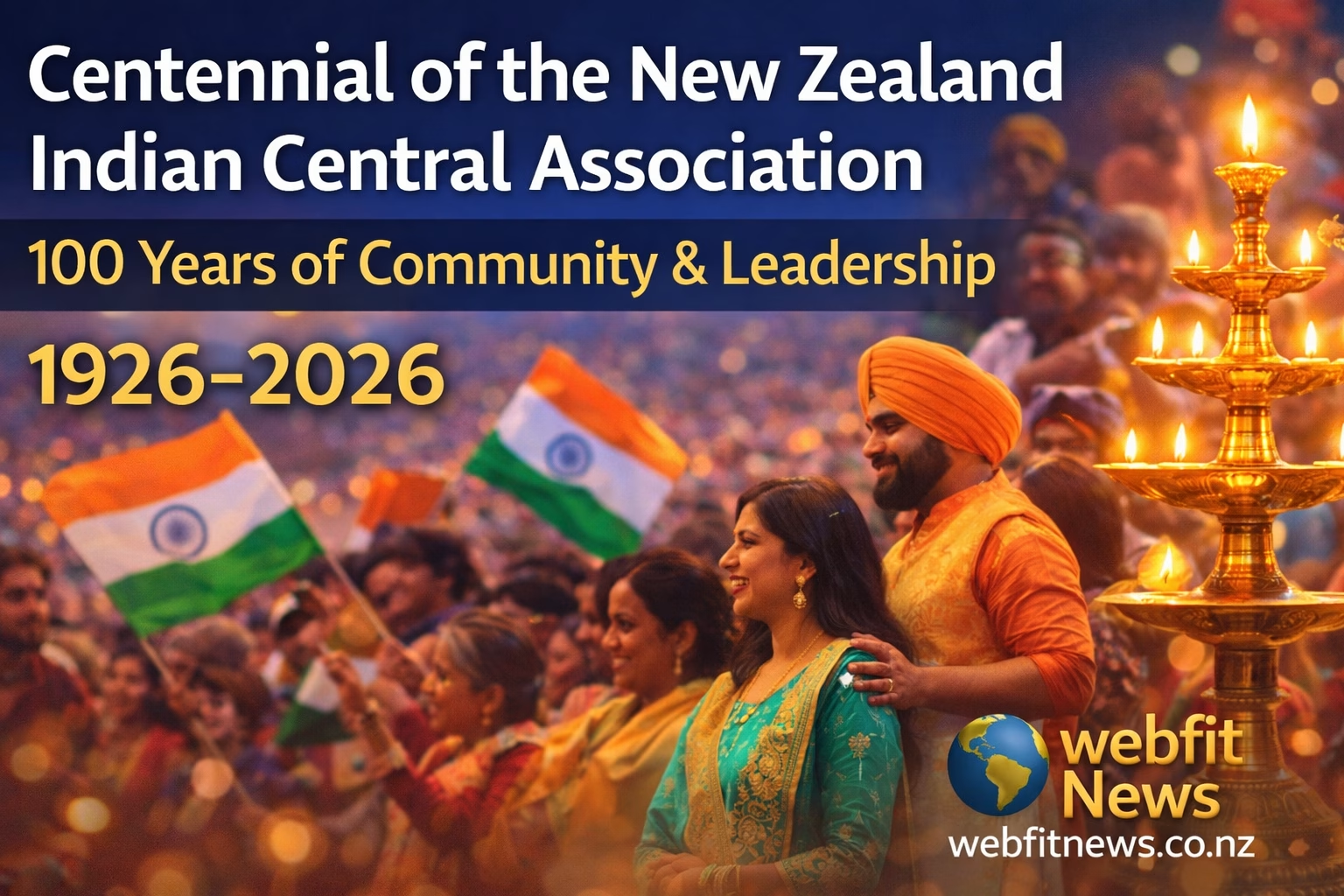
February 28, 2026, marks a defining milestone in New Zealand’s multicultural history. The New Zealand Indian Central Association (NZICA), the national umbrella body representing Indians in Aotearoa, celebrates 100 years since its founding in 1926.
This centennial is more than an anniversary. It is recognition of a century-long journey from marginalisation to meaningful participation, from defensive advocacy to proactive leadership, and from survival to contribution at scale.
As New Zealand’s Indian population has grown to more than 350,000 people, the NZICA has evolved alongside it, shaping policy conversations, strengthening social cohesion, and ensuring that the Indian community’s voice remains constructive, principled, and nationally relevant.
From exclusion to organisation: the origins of NZICA
| Executive Office | Incumbent (2025–2026) | Historical Context and Responsibility |
| President | Veer Khar | Leads national advocacy and government relations; elected in 2025. |
| Vice President | Dhansukh Lal | Supports regional coordination and branch development. |
| General Secretary | Taruna Bhana | Manages administrative governance and institutional records. |
| Treasurer | Ratilal Champaneri | Oversees financial sustainability and grant management. |
| Assistant Secretary | Kalyan Rao | Facilitates internal communications and committee support. |
| Immediate Past President | Narendra Bhana | Provides continuity and strategic guidance from previous terms. |
Indian presence in New Zealand dates back to the late 19th century, with early settlers arriving as hawkers, labourers, and small business owners from regions such as Punjab and Gujarat. By the early 1920s, these pioneers faced increasing hostility, including racially motivated campaigns by groups such as the White New Zealand League and the restrictive Immigration Restriction Amendment Act of 1920.
In response, community leaders recognised that fragmented regional associations were insufficient to counter institutional discrimination. The visit of Indian statesman Srinivasa Sastri in 1922 further highlighted the need for a unified national body.
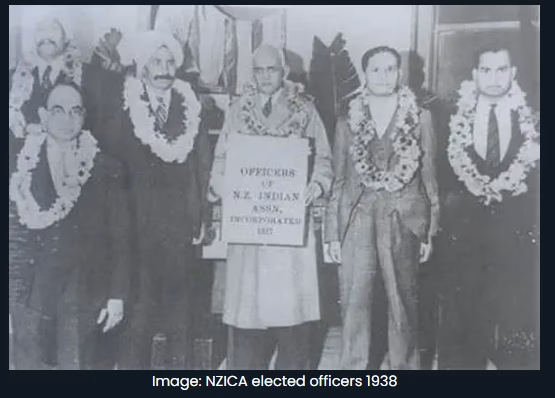
The New Zealand Indian Central Association was formally established in 1926, bringing together three founding branches in Auckland, Wellington, and the rural Country Section centred around Taumarunui. Under its first president, S.N. Mahraj, the NZICA immediately positioned itself as a legitimate interlocutor with the government, setting a precedent for principled engagement that continues today.
A national structure built on representation
Today, the NZICA operates through a decentralised but coordinated governance model. Ten independent, incorporated regional associations form the backbone of the organisation, each addressing local needs while contributing to a shared national agenda.
This structure allows the NZICA to represent one of New Zealand’s most diverse communities, encompassing multiple languages, religions, and regional identities. Associate members include Telugu, Tamil, Gujarati, Punjabi, Malayali, and Kannada organisations, reflecting the mosaic nature of the Indian diaspora.
The association’s Executive Committee, elected at its Annual Conference, provides strategic direction and continuity. The current leadership team, serving during the centennial year, reflects a balance of experience, institutional memory, and future focus.
Advocacy, safety, and justice in a modern context
While its early mission centred on fighting discriminatory laws, the NZICA’s modern advocacy focuses on community safety, justice, and equity within New Zealand’s legal and social systems.
Retail safety has become a priority area, particularly following attacks on dairy and small business owners. The NZICA works closely with the Ministry for Ethnic Communities, New Zealand Police, and policymakers to advocate for improved sentencing, increased visibility, and preventative approaches.
At the same time, the association champions restorative justice models that align with both Māori principles and Indian cultural values of accountability and rehabilitation. This approach recognises that long-term safety is built not only through enforcement, but through trust, education, and social cohesion.
The NZICA has also played a consistent role in immigration advocacy, ensuring migrant workers are protected from exploitation and that policy debates remain grounded in fairness and evidence rather than rhetoric.
| Safety and Justice Initiatives | Mechanism of Action | Intended Outcome |
| Retail Safety Advocacy | Parliamentary submissions on sentencing and police visibility. | Reduction in “ram raids” and unprovoked attacks on dairy owners. |
| Restorative Justice Programs | Integration of Māori cultural practices (mana/connectedness) in youth courts. | Diversion of youth from the criminal justice system toward healing. |
| Interfaith Unity Initiatives | Collaboration between Hindu, Sikh, Muslim, and Christian groups. | Reduction in ethnic tensions and promotion of social cohesion. |
| Community Monitoring | Volunteer-led surveillance and reporting in high-risk zones. | Improved proactive prevention of property-based crimes. |
Investing in youth and identity
As the Indian community enters its second and third generations in New Zealand, youth development has become a strategic focus.
Research supported by the NZICA highlights ongoing challenges faced by Indian youth, including bullying, stereotyping, and identity pressure within schools. In response, the association has launched initiatives designed to strengthen confidence, leadership, and cultural connection.
Key projects include a planned youth hub aimed at providing a dedicated space for mentorship and innovation, leadership development through national youth forums, and continued support for language and cultural education through community schools.
By pairing cultural retention with civic engagement, the NZICA ensures that young Indian-New Zealanders are equipped to contribute confidently to the country’s future.
Recognising overlooked contributions
| Educational Domain | Program/Initiative | Target Audience |
| Historical Literacy | “Mokaa” Exhibition and Commemorative Books. | Students and the general public. |
| Linguistic Proficiency | Gujarati and Punjabi language classes. | Multi-generational learners. |
| Leadership Skills | Youth Forum and National Conference Delegates. | Young professionals (ages 18-35). |
| Cultural Identity | Rangoli contests and Bollywood dance festivals. | Children and teenagers. |
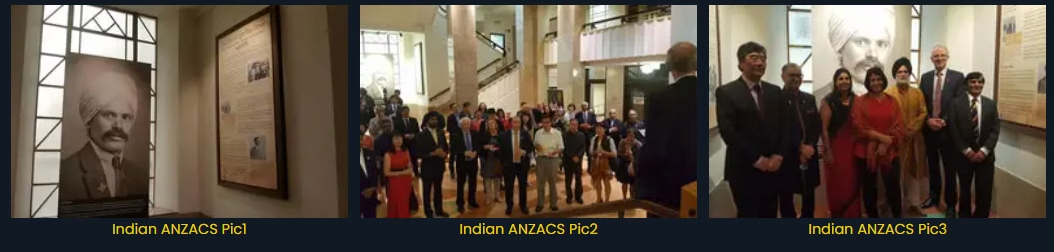
One of the NZICA’s most significant contributions to national memory has been its work in recognising Indian ANZACs. For decades, the service of Indian soldiers connected to New Zealand was overlooked in mainstream narratives.
Through exhibitions such as “Lest We Forget – The Other,” curated in partnership with the New Zealand Chinese Association, the NZICA has helped restore these stories to the national consciousness. This work reinforces a broader truth: New Zealand’s history is richer and more complex than previously acknowledged.
Economic contribution and social cohesion
The Indian community’s economic impact is substantial and multi-sectoral. Beyond the well-known presence in retail, Indian New Zealanders contribute significantly to IT, healthcare, academia, and professional services.
In Wellington alone, the community contributes an estimated $5 billion to the regional economy. Indian professionals in the IT sector contribute hundreds of millions annually nationwide, underscoring the community’s role as a strategic economic partner.
The NZICA has worked to translate this economic contribution into broader engagement, promoting trade, digital collaboration, and bilateral connections with India while reinforcing New Zealand’s global positioning.
The centennial celebration and the road ahead
The centenary event on 28 February 2026 at the Cordis Hotel, Auckland, is therefore positioned as both a celebration and a statement of intent. It affirms the Indian community’s permanent place in New Zealand’s story, and the NZICA’s ongoing commitment to contributing positively to the nation’s future.
For many, the evening will stand as a landmark moment, recognising a century of unity, perseverance, and progress.
Featuring keynote addresses, cultural performances, and the launch of centennial records, the event reflects both reflection and renewal.
As the NZICA enters its second century, its focus remains clear: relevance, resilience, and value. Through youth investment, principled advocacy, and inclusive leadership, the association continues to demonstrate that unity is not only a strength of the diaspora but a benefit to New Zealand as a whole.
A century on, the NZICA stands not as a community on the margins, but as an integral part of the nation’s story, shaping its future with confidence, responsibility, and purpose.