New Zealand defence and border agencies have completed a series of maritime and air surveillance operations across the Pacific, monitoring hundreds of vessels and helping regional governments protect fisheries, territorial waters and other vital ocean resources.
The New Zealand Defence Force and New Zealand Customs Service worked jointly across several Pacific nations during August, using uncrewed surface vessels and aircraft to gather information for Fiji, Tonga, Papua New Guinea, Solomon Islands and the Pacific Islands Forum Fisheries Agency.
The operations covered large areas of ocean and highlighted the growing importance of maritime surveillance in a region where illegal fishing, unidentified vessels and transnational organised crime remain persistent concerns.
Fiji deployment monitored 145 vessels
At the request of the Fijian Government, the Royal New Zealand Navy and Customs deployed two jointly owned Uncrewed Surface Vessels, Tahi and Rua, for four weeks inside Fiji’s Exclusive Economic Zone.
The vessels were controlled remotely from New Zealand.
NZDF and Customs personnel monitored the operation from the Customs Integrated Targeting and Operations Centre in Auckland, while NZDF analysts worked from Devonport Naval Base.
Together, Tahi and Rua surveilled 145 vessels.
The deployment was designed to strengthen Fiji’s maritime awareness and give authorities a clearer picture of activity taking place across its waters.
Why uncrewed vessels matter
The use of remotely operated vessels gives New Zealand and Pacific partners another option for monitoring large maritime areas without relying entirely on crewed ships.
That can be particularly valuable in the Pacific, where Exclusive Economic Zones cover enormous stretches of ocean.
Customs Assistant Comptroller Maritime Operations Paul Campbell said the operation showed the benefits of agencies sharing technology, intelligence and personnel.
“Bringing our people, technology, and intelligence together allows us to share information in real time, make faster and better-informed decisions, and provide stronger support to our Pacific partners,” Campbell said.
He said the model could also create more options for future deployments.
RNZAF P-8A patrols Fiji, Papua New Guinea and Solomon Islands
New Zealand’s surveillance effort was not limited to the water.
A Royal New Zealand Air Force P-8A Poseidon also conducted patrols across the Exclusive Economic Zones of Fiji, Papua New Guinea and the Solomon Islands.
The aircraft additionally covered two areas of high seas in support of the Pacific Islands Forum Fisheries Agency.
During those flights, 53 fishing vessels were observed and reported.
NZDF said many of those vessels either did not hold fishing licences or had deliberately obscured their name plates.
That is the kind of activity that can immediately raise concerns for fisheries authorities.
What was found
Across the different operations, New Zealand surveillance teams recorded:
|
Operation |
Activity observed |
|
Fiji USV deployment |
145 vessels surveilled |
|
P-8A Pacific patrols |
53 fishing vessels observed and reported |
|
Tonga MC-12K patrols |
20 vessels photographed for follow-up |
|
Additional Tonga tasking |
Two volcanic islands photographed |
The figures show the scale of the surveillance effort, but the more important issue is what happens after a vessel is identified.
New Zealand’s role was primarily to gather and share information.
It is then up to the relevant Pacific authorities to decide whether further investigation or enforcement action is required.
Some fishing vessels raised immediate concerns
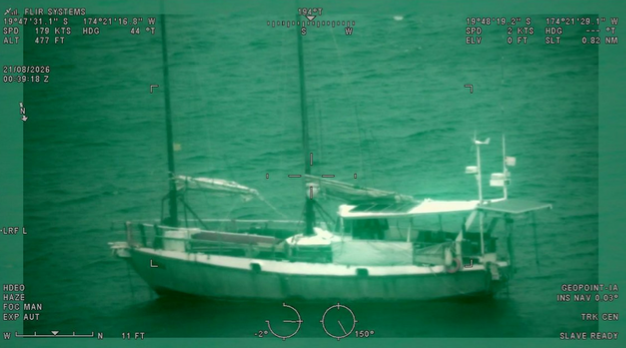
The P-8A flights identified a number of vessels that either appeared to lack fishing licences or were obscuring their identification markings.
That matters because fisheries enforcement depends heavily on authorities being able to establish who is operating a vessel and whether it has permission to fish in a particular area.
Deliberately hiding a vessel name can make enforcement more difficult and may justify closer scrutiny.
The surveillance flights therefore provide Pacific authorities with evidence they can use to follow up suspicious activity.
Tonga patrols focused on areas of interest
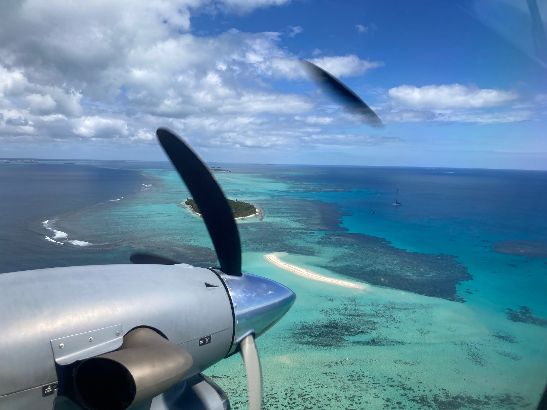
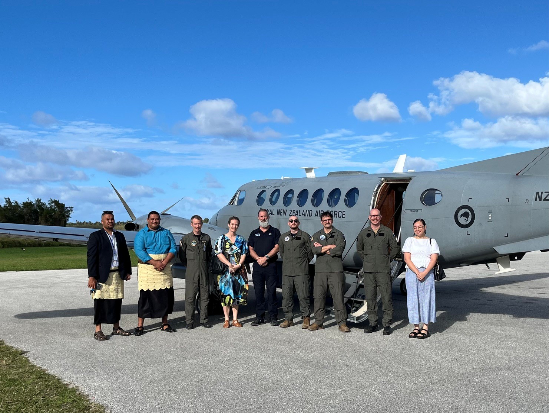
In Tonga, an RNZAF MC-12K King Air carried out a week of patrols around the Ha’apai Island group and northeast of Tongatapu.
His Majesty’s Armed Forces Tonga Maritime Intelligence identified specific vessels and areas for the New Zealand crew to investigate.
Twenty vessels were photographed for possible follow-up.
The aircraft was also asked to photograph two volcanic islands for Tonga’s Department of Lands and Survey.
That highlights how military surveillance aircraft can serve several purposes in the Pacific.
Alongside fisheries and maritime security work, they can also support mapping, disaster preparedness and environmental monitoring.
Protecting fisheries means protecting national income
The importance of these patrols is economic as well as security-related.
For many Pacific countries, fisheries are a major source of revenue, employment and food security.
Large ocean territories can contain valuable tuna and other commercial stocks, but those areas are expensive and difficult to monitor.
Illegal, unreported or unregulated fishing can therefore cause serious harm.
It can reduce legitimate fishing income.
It can damage fish stocks.
It can undermine local communities.
And it can allow organised criminal networks to operate in areas where government surveillance is limited.
That is why patrol aircraft, maritime intelligence and uncrewed technology are becoming increasingly important.
Pacific geography creates a unique challenge
Pacific Island nations control some of the largest ocean areas in the world relative to the size of their populations.
A country may have a relatively small land area but an Exclusive Economic Zone extending hundreds of kilometres in every direction.
Monitoring that space requires significant resources.
Patrol vessels can only cover limited distances at one time.
Aircraft can cover more ground but are expensive to operate.
Satellites can provide useful information but do not replace direct observation.
Uncrewed vessels offer another tool that can remain at sea for extended periods while transmitting information back to analysts.
The August deployment shows New Zealand increasingly combining those capabilities.
The security picture extends beyond illegal fishing
Commander Joint Forces New Zealand Major General Rob Krushka said the deployments were also about broader regional security.
“We stand by our Pacific neighbours as they work to protect their resources and livelihoods, upholding fishing regulations and preventing transnational serious and organised crime,” Krushka said.
That reference to organised crime is important.
Maritime routes can be used for more than illegal fishing.
They may also be exploited for drug trafficking, weapons movement, people smuggling and other illicit activity.
A vessel behaving suspiciously in one context can therefore attract attention for several reasons.
New Zealand’s role in the Pacific is increasingly practical
The operations also show how New Zealand’s Pacific engagement works in practice.
Regional relationships are often discussed through diplomacy, development assistance and political meetings.
But maritime surveillance is a much more direct form of cooperation.
New Zealand provides aircraft, technology, analysts and operational expertise.
Pacific governments identify priorities.
Information is then returned to those governments for possible enforcement.
That model allows Pacific nations to retain control over decisions inside their own territories while gaining access to capabilities that may otherwise be difficult to maintain independently.
Why Fiji, Tonga, Papua New Guinea and Solomon Islands matter to New Zealand
These countries are not distant from New Zealand’s strategic environment.
They are part of the same Pacific neighbourhood.
Instability, organised crime or depletion of marine resources elsewhere in the region can eventually affect New Zealand as well.
New Zealand also has long-standing defence, policing, customs and diplomatic relationships throughout the Pacific.
Helping partner governments monitor their maritime zones supports both regional sovereignty and New Zealand’s own security interests.
Uncrewed surveillance could become much more common
The deployment of Tahi and Rua may also point towards the future of maritime security.
Uncrewed systems can potentially operate for long periods while reducing the need to place personnel at sea.
They can monitor shipping lanes, fishing grounds or remote areas and transmit data back to land-based centres.
They are unlikely to replace crewed patrol vessels or aircraft.
But they can extend surveillance coverage and help authorities decide where more expensive assets should be sent.
In a region as large as the Pacific, that is a significant advantage.
Technology is only useful if countries can act on the information
There is, however, a limit to surveillance.
Finding a suspicious vessel is only the first step.
Authorities then need the legal powers, patrol capacity and investigative resources to respond.
That means effective maritime security still depends on:
- intelligence sharing
- national fisheries enforcement
- customs cooperation
- police capability
- maritime patrol vessels
- diplomatic coordination
- reliable legal processes
New Zealand’s surveillance assets can help create the picture.
Pacific partners still need the capacity to act on it.
A stronger regional network is the real goal
The August operations are therefore best viewed as part of a wider regional security network rather than isolated patrols.
A P-8A aircraft observing a fishing vessel over the Solomon Islands can provide information to local authorities.
An uncrewed vessel operating in Fiji can gather data remotely while analysts remain in Auckland.
A King Air in Tonga can photograph vessels identified by Tongan intelligence.
Each component becomes more useful when it is connected.
That is the logic behind the growing emphasis on information sharing and joint operations.
What happens next
NZDF says it intends to continue making its capabilities available to Pacific partners.
Krushka described the region as New Zealand’s shared neighbourhood and said cooperation would continue.
“We will continue to make our capabilities available to our Pacific whānau so we can face the threats to our neighbourhood together,” he said.
The August operations show what that cooperation increasingly looks like.
Not simply ships and aircraft flying the New Zealand flag, but mixed networks of technology, intelligence, remote operators and regional partners working across huge stretches of ocean.
For Pacific nations, the objective is straightforward.
Know what is happening in their waters.
Know who is fishing there.
Know which vessels warrant closer attention.
And make it harder for those seeking to exploit the region’s distance and scale to operate unseen.
Source: New Zealand Defence Force media release, 3 September 2026.