
Auckland, New Zealand – What should have been a strategic economic conversation around the proposed New Zealand–India Free Trade Agreement has now taken an uncomfortable turn. In recent days, political commentary, social media reactions, and a disturbing graffiti message targeting Indians have forced community leaders to step in and draw a line.
At the centre of this response is the New Zealand Indian Central Association (NZICA), one of the most established and respected voices of the Indian diaspora in Aotearoa. In a detailed press release issued on April 16, NZICA has not only condemned the rising tone but also actively engaged with political leaders, government officials, and law enforcement to stabilise the situation.
This is no longer just about trade. It is about community safety, political responsibility, and the kind of country New Zealand wants to remain.
From Trade Talks to Community Tension
The NZ–India Free Trade Agreement has been positioned as a major economic opportunity. With India representing a market of over 1.4 billion people and one of the fastest-growing economies in the world, the deal has strong strategic backing.
But somewhere along the line, the conversation shifted.
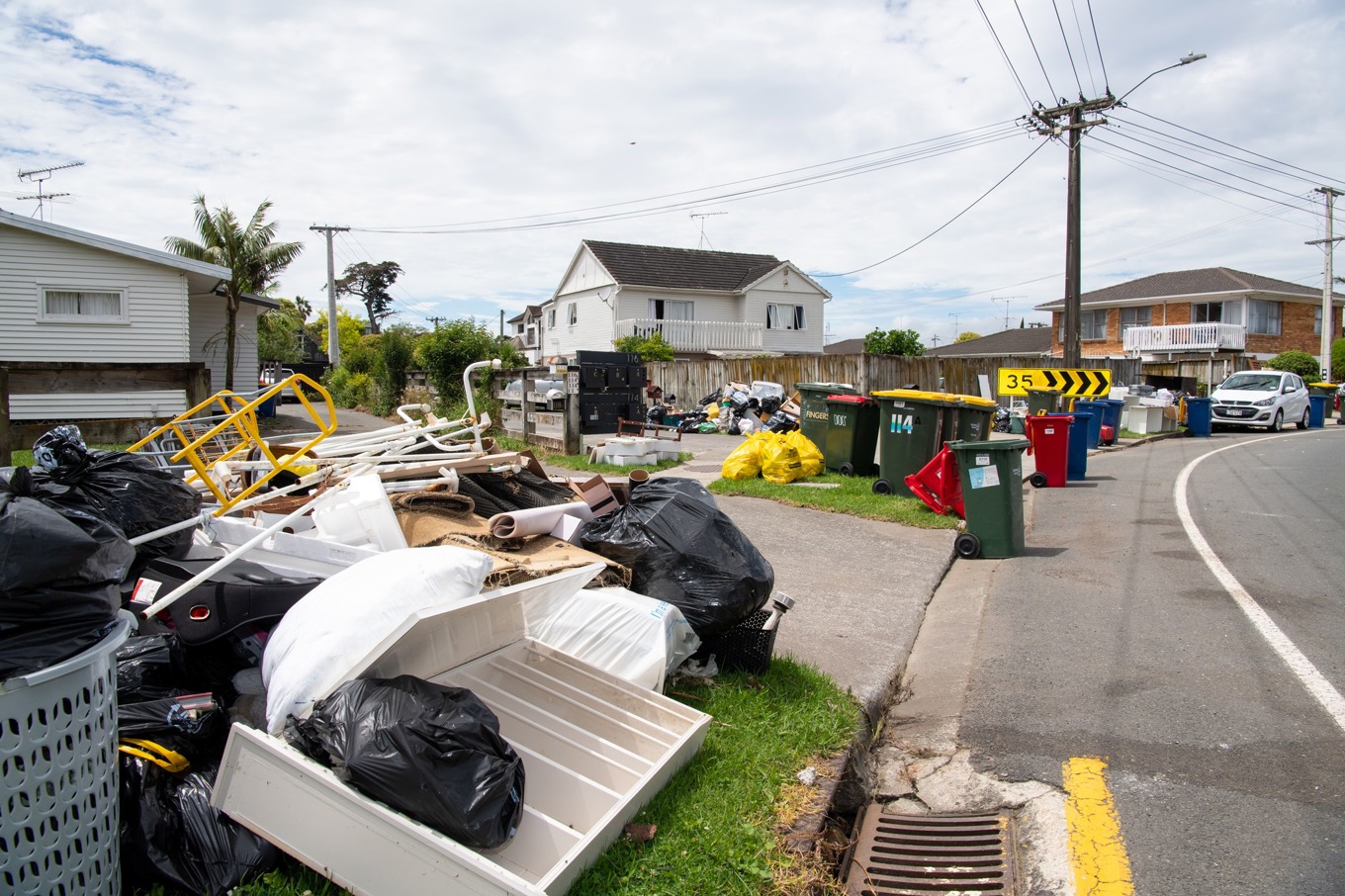
According to NZICA, “irresponsible comments” linked to the FTA debate began circulating, particularly on social media. What followed was more concerning. A graffiti message carrying the words “Kill Indians” surfaced, pushing the situation from political disagreement into something far more serious.
Let’s be clear. That is not political opinion. That is targeted hate.
NZICA Moves Fast, Sends a Clear Message
Instead of reacting emotionally, NZICA did something smart. They acted structurally.
Their response was not limited to statements. It included direct action:
- Immediate demand for police intervention
- Engagement with multiple political parties
- Direct communication with the Indian Consul in Auckland
- Internal assessment of the FTA and its benefits
This matters. Because while social media noise escalates quickly, institutional responses shape outcomes.
NZICA also confirmed that New Zealand Police acted swiftly and that an arrest has already been made in connection with the graffiti incident.
That is the New Zealand people expect. Quick response. Zero tolerance.
Political Reactions: Agreement, But With Gaps
The association’s outreach triggered immediate political engagement.
A meeting with the Labour Party in Manukau on April 15 revealed a familiar political position:
- Support for trade in principle
- Concerns around specific clauses, especially investment
- Acknowledgement that full details of the FTA are still not widely understood
- Shared concern about anti-Indian messaging
At the same time, NZICA also met with the Trade Minister in Rotorua. The government’s stance was more assertive. The FTA was described as a “big win for New Zealand,” with an expectation that bipartisan support should follow.
Here is where things get interesting.
Both sides agree on trade. Both sides disagree on details. And neither side fully controls how public narratives spiral online.
That gap is exactly where problems start.
Election Year Politics: The Real Underlying Risk
NZICA’s statement does not shy away from calling this out.
They clearly point to election-year pressures influencing the tone of public debate. According to them, some statements may have been politically motivated, designed to gain short-term advantage rather than reflect responsible leadership.
This is the uncomfortable truth most people avoid saying out loud.
When elections come closer, messaging gets sharper. Lines get blurred. And sometimes, communities get caught in the middle.
The risk here is not disagreement. Disagreement is healthy.
The risk is when political language indirectly fuels social hostility.
The Indian Diaspora: Not a Small Voice Anymore
Let’s not underestimate the context.
The Indian community in New Zealand is no longer a small or silent group. It is one of the fastest-growing and most economically active communities in the country. It contributes across business, healthcare, education, and public service.
NZICA represents not just cultural identity but also a collective voice that carries weight.
Their message in this situation is firm but measured:
- Support economic progress
- Reject hate in any form
- Expect accountability from political leaders
That balance is important. Because emotional reactions would have weakened the argument. Strategic positioning strengthens it.
The Bigger Question New Zealand Must Answer
This incident raises a deeper issue.
What kind of national conversation do we want?
New Zealand has built a global reputation as a peaceful, inclusive, and fair society. That reputation does not sustain itself automatically. It requires constant discipline from leaders, media, and communities.
If trade debates start triggering racial targeting, even indirectly, then something is slipping.
NZICA has essentially issued a warning without making it sound like one.
They are saying:
You can debate policy. You cannot damage social harmony.
Webfit News Perspective
This is where most coverage will go wrong. They will either sensationalise the “Kill Indians” angle or dilute the issue into a generic political story.
Both are mistakes.
The real story is this:
New Zealand is entering a phase where global trade, local politics, and multicultural identity are colliding more often.
That means:
- Leaders must be more careful with language
- The media must be more responsible with framing
- Communities must respond with clarity, not fear
NZICA handled this well. They did not escalate. They did not stay silent. They stepped in at the right level.
Now the responsibility shifts to political leadership.
Because if this is not controlled early, small incidents turn into bigger narratives. And once narratives harden, they are much harder to fix.
What Happens Next
The FTA conversation will continue. That is inevitable.
But now there is an added expectation:
- Clear communication from the government
- Responsible opposition critique
- Zero tolerance enforcement on hate incidents
And most importantly, a reset in tone.
Because New Zealand does not have the luxury of getting this wrong.
References
- NZ Indian Central Association Press Release, 16 April 2026
Crisis Management & Strategic Advocacy: The NZICA Response Blueprint
1. The Catalyst: When Economic Policy Meets Social Hostility
The proposed New Zealand–India Free Trade Agreement (FTA) was conceptualized as a transformative economic lever, intended to integrate New Zealand into a market of 1.4 billion people. However, as the debate intensified within an election cycle, the narrative shifted from a strategic trade discussion to a significant community safety crisis. Irresponsible commentary on social media and politically motivated rhetoric catalyzed a transition from policy disagreement to targeted hostility.
“Kill Indians” — The discovery of this targeted graffiti transformed the FTA discourse from a standard trade debate into a matter of national security and social cohesion. This incident represents a significant sovereign risk; such hostility threatens New Zealand’s diplomatic credibility and provides ammunition for trade detractors in both nations to stall negotiations. It signals that when political rhetoric is not managed, it creates a volatile environment that jeopardizes both the safety of the Indian diaspora and investor confidence in New Zealand’s social stability.
This case confirms that for the Indian diaspora, community safety is now an inextricable component of trade diplomacy, necessitating a structured and professional organizational intervention to protect national interests.
2. The Multi-Level Response Framework
In addressing this crisis, the New Zealand Indian Central Association (NZICA) moved beyond reactive protest, adopting a “structural, not emotional” advocacy strategy. By engaging the formal levers of government and law enforcement, the NZICA sought to stabilize the social environment while preserving the economic potential of the FTA.
| Action Taken | Strategic Objective |
|---|---|
| Immediate demand for Police intervention | To restore public order through swift law enforcement and establish a “zero tolerance” precedent for hate crimes. |
| Direct engagement with political parties | To hold leadership accountable for election-year rhetoric and demand a return to policy-focused discourse. |
| Communication with the Indian Consul | To manage international perceptions of the diaspora’s safety and mitigate damage to bilateral diplomatic relations. |
| Internal assessment of FTA benefits | To provide a credible, evidence-based mandate for the association’s support of the deal, independent of social hostility. |
While tactical containment was achieved through law enforcement—resulting in a swift arrest—strategic stability requires a sustained executive-level dialogue to address systemic political fragmentation.
3. Navigating the Political Landscape
The NZICA’s advocacy revealed a fragmented political landscape where the lack of a unified front on trade specifics allowed social tensions to escalate.
- The Labour Party (Opposition): During an April 15 meeting in Manukau, the party confirmed a pro-trade stance but raised specific concerns regarding investment clauses. Critically, a strategic “Information Vacuum” was identified; the party admitted to not having full information about the deal’s current details. This lack of transparency functions as a bottleneck to bipartisan progress.
- The Trade Minister (Government): In a meeting in Rotorua, the government framed the FTA as a “big win” for the nation. The Minister emphasized the expectation for bipartisan support, citing the precedent of the National Party supporting Labour on major deals in the past. The government also committed extra resources to ensuring the graffiti culprit faced justice.
- Ministry of Foreign Affairs (Winston Peters’ Office): The Minister’s office provided an administrative acknowledgement of the situation, confirming the arrest of the suspect and referring the NZICA to technical staff within the Ministry of Foreign Affairs and Trade (MFAT) for ongoing policy dialogue.
This “gap” between government and opposition—driven by information asymmetry and election-year friction—creates a dangerous vacuum. In the absence of a unified political narrative, fringe actors on social media are permitted to define the public discourse, escalating racial targeting.
4. The Dual Mandate: Safety vs. Economic Progress
The NZICA operates under a dual mandate: safeguarding the physical and social security of the Indian community while advocating for New Zealand’s long-term economic prosperity. Despite the “Kill Indians” incident, the association remains firm in its support of the FTA, based on three strategic pillars:
- Unparalleled Market Scale: Access to 1.4 billion people is essential for New Zealand’s export-led recovery.
- Global Economic Alignment: Partnering with the world’s fastest-growing economy is a prerequisite for national resilience.
- Bipartisan Legacy: Protecting the tradition of consistent trade policy ensures that shifts in government do not derail international agreements.
The risk remains that election-year volatility can compromise these long-term economic frameworks if community safety is marginalized for temporary political gains.
5. Critical Insights: Lessons in Responsible Leadership
The intersection of global trade and multicultural identity requires a new set of protocols for leaders and media to prevent social spillover.
Key Takeaways for Future Crises:
- [ ] Political Leaders: Establish a cross-party “Code of Conduct” for trade rhetoric during election cycles to prevent “seat projections” from undermining social cohesion.
- [ ] Media & Narrative Control: Adopt a “Responsible Framing” policy that avoids sensationalizing hate incidents (which emboldens extremists) or diluting them into generic political stories (which ignores the victimized community).
- [ ] Law Enforcement: Maintain a high-visibility, zero-tolerance posture on hate-related graffiti and speech to preserve public confidence in institutional protection.
- [ ] Community Groups: Prioritize high-level institutional engagement and technical policy assessment over emotional social media escalation to maintain credibility as a stakeholder.
6. Final Synthesis: The Path Forward
The NZICA’s intervention serves as a mandate for a “decent” national conversation. New Zealand’s future depends on its ability to pursue global economic integration without fracturing its internal social fabric. The Indian diaspora, as a primary economic and social stakeholder, will no longer tolerate being collateral damage in political posturing. For the New Zealand–India FTA to succeed, political leadership must move beyond the compulsions of the election year and recognize that social harmony is the foundation upon which all international commerce is built.
Closing Insight: Social harmony is not a luxury of economic success; it is a prerequisite for it.