
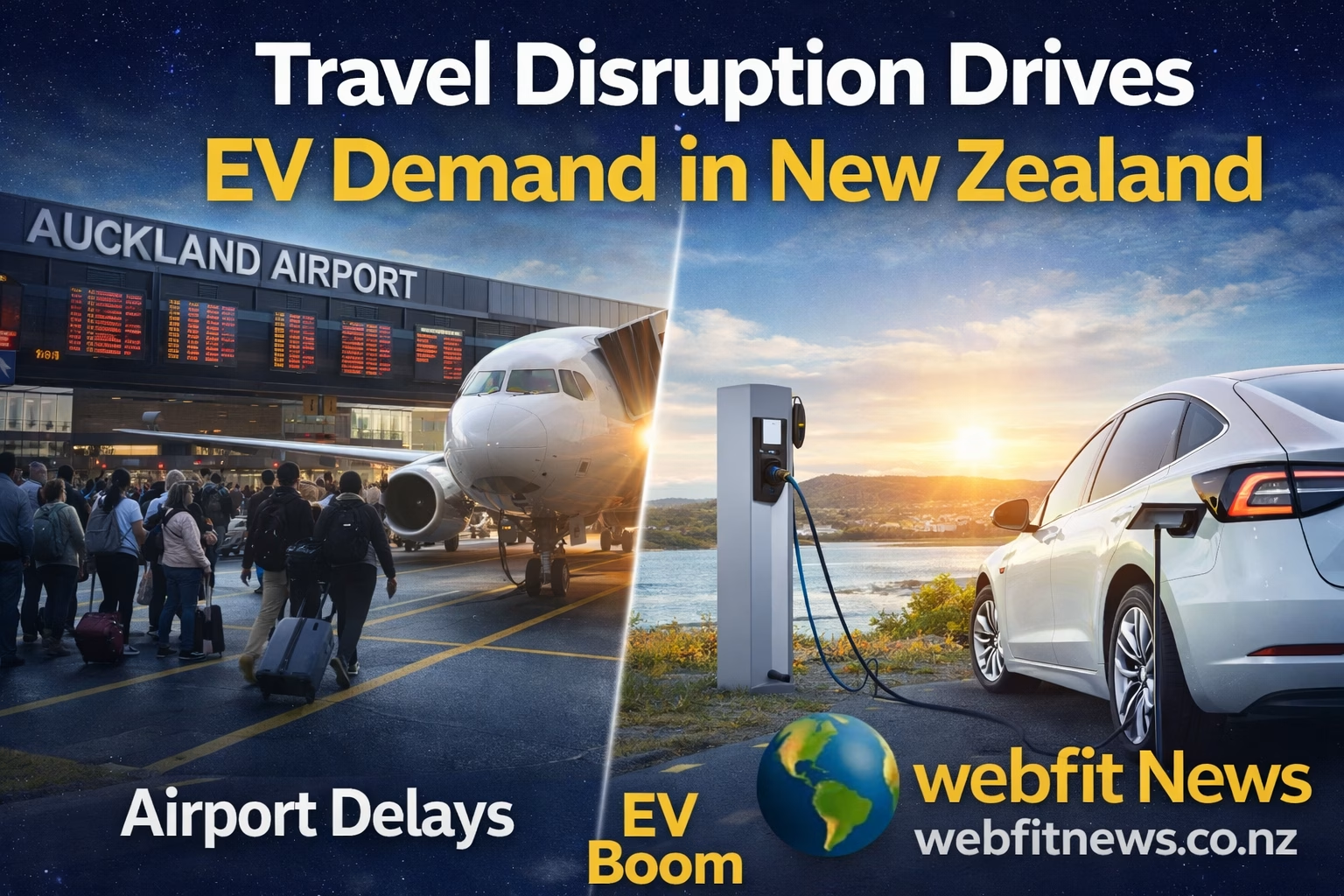
A shift in how Kiwis move, spend, and plan their journeys
Auckland Airport saw hundreds of delays and cancellations this week, leaving travellers frustrated, stranded, and in many cases, out of pocket.
At the same time, a very different trend is quietly gaining momentum across the country. More New Zealanders are turning away from petrol cars and moving toward electric vehicles.
These two developments may seem unrelated. But they are part of the same bigger story.
New Zealand is beginning to feel the real, everyday impact of global instability, and it is already changing how people travel.
Airport Chaos Hits Auckland
On 31 March 2026, Auckland Airport experienced one of its most disrupted days in recent months.
- Over 200 delays reported
- Multiple flight cancellations
- Long waiting times for passengers
The cause was not local.
Airspace closures in parts of the Middle East forced airlines to reroute flights. This added hours to travel time and disrupted connections across global networks.
For many travellers, especially those flying long-haul routes, this created a ripple effect.
Missed connections.
Extra costs.
Uncertainty.
Passengers connecting through major hubs were hit the hardest, with airlines struggling to adjust schedules in real time.
The Real Cost of Global Disruption
What makes this situation more serious is that it is not temporary.
Global aviation relies on tightly connected routes. When one region becomes unstable, the impact spreads quickly.
New Zealand, being geographically distant, feels this impact even more.
Travellers are now facing:
- Higher ticket prices
- Longer flight durations
- Limited route options
Airlines are also adding fuel surcharges, increasing the financial burden on passengers.
For families, students, and migrant communities, this is not just inconvenience. It is becoming a real cost-of-living issue.
Meanwhile, a Quiet Shift on the Roads
While international travel is becoming more uncertain, something very different is happening within New Zealand.
Electric vehicle adoption is rising sharply.
Recent data shows:
- EV and hybrid demand has more than quadrupled this month
- Petrol vehicle sales are declining
- Consumers are actively looking for alternatives
This is not driven by environmental awareness alone.
It is a direct response to rising fuel prices and global supply uncertainty.
Fuel Prices Driving Behaviour Change
The same global conflict that is affecting aviation is also pushing fuel prices higher.
Diesel costs, in particular, have risen significantly, impacting transport, logistics, and everyday travel.
For many households, this is becoming unsustainable.
Owning a petrol vehicle now comes with:
- Unpredictable fuel costs
- Higher running expenses
- Long-term uncertainty
Electric vehicles, on the other hand, offer:
- Lower operating costs
- Stability in energy pricing
- Reduced dependence on global oil markets
This is why more Kiwis are making the switch.
Not just for the environment, but for financial security.
Two Stories, One Reality
Airport disruption and EV growth may look like separate issues.
They are not.
They are both responses to the same underlying pressure.
👉 Global instability is starting to reshape everyday life in New Zealand.
- International travel is becoming more complex and expensive
- Local transport choices are shifting toward independence and cost control
This is a structural shift, not a temporary trend.
Webfit News Perspective
Let’s be clear.
New Zealand cannot control global conflicts. But it will continue to feel their impact.
The real question is how the country adapts.
Right now, we are seeing early signs of that adaptation:
- Travellers becoming more cautious and flexible
- Consumers investing in long-term cost savings through EVs
- A slow move toward reducing reliance on global fuel supply chains
But there are gaps.
EV infrastructure is still developing.
Flight disruptions are still reactive, not well-managed.
If these trends continue, both government and industry will need to move faster.
What Happens Next
If global tensions remain high, New Zealand could see:
- Continued pressure on international travel
- Further rise in fuel prices
- Faster adoption of electric vehicles
This could reshape not just how people travel, but how cities plan transport and infrastructure in the coming years.
Conclusion
What happened at Auckland Airport this week is not just a travel story.
And the rise in electric vehicles is not just a technology trend.
Together, they tell a deeper story about a country adjusting to a changing world.
New Zealand is not isolated from global shocks anymore.
It is adapting in real time.