
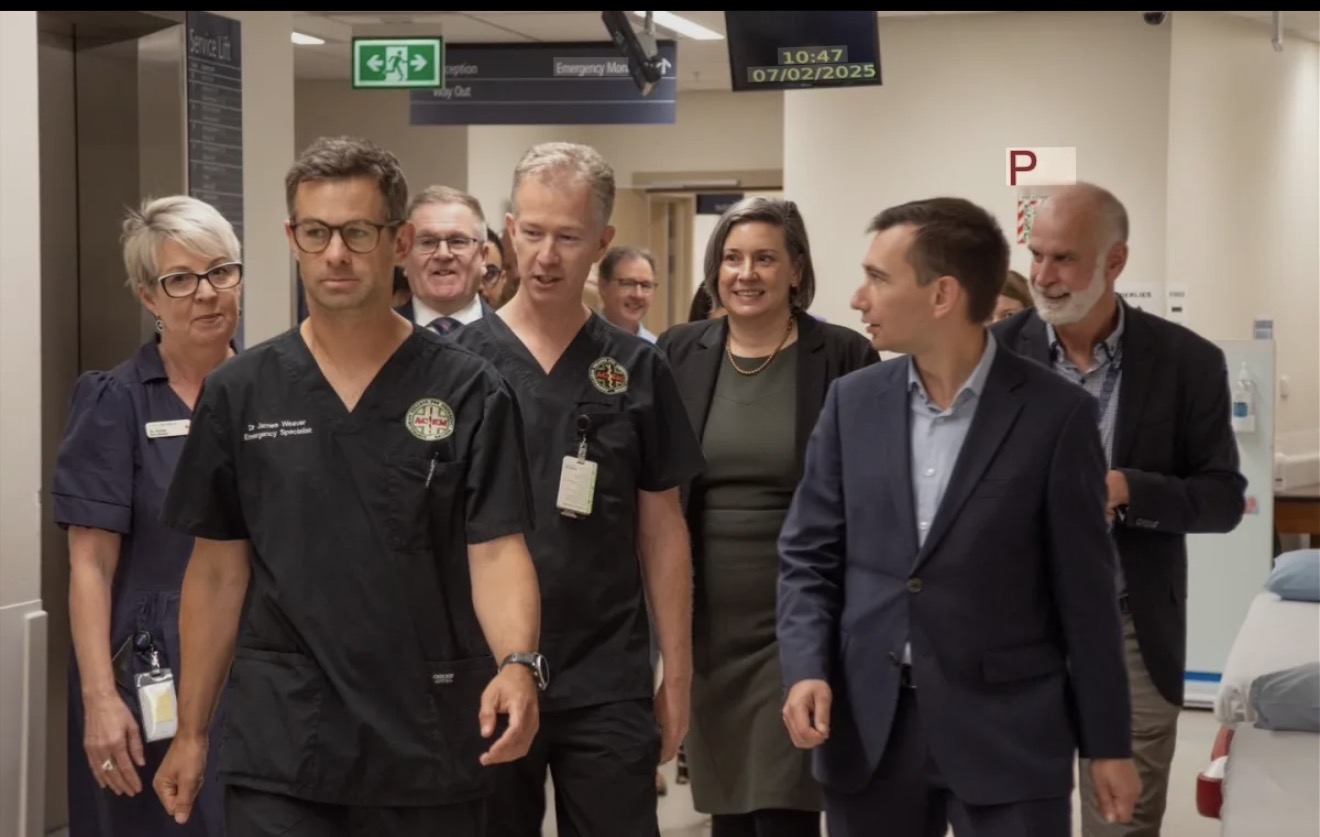
The New Zealand Nurses Organisation has sharply rejected Health Minister Simeon Brown’s claim that hospitals are “managing well” through winter, saying frontline conditions tell a very different story.
In a statement released on 26 August, Tōpūtanga Tapuhi Kaitiaki o Aotearoa New Zealand Nurses Organisation said emergency departments remained under severe pressure, with patients being treated in waiting rooms and corridors while hospital wards were full.
NZNO Kaiwhakahaere Kerri Nuku said the Minister’s assessment did not reflect what nurses were seeing on the ground.
“Despite Emergency Departments being completely overwhelmed and patients being treated in waiting rooms and corridors, Simeon Brown claims the Coalition Government’s failed Winter Plan is ‘managing well’,” she said.
The criticism comes amid a wider debate over hospital capacity, nurse recruitment and access to primary healthcare.
What NZNO is saying
The union’s central argument is that the health system remains under heavy winter pressure and that government claims of effective management are overstating the situation.
NZNO says nurses are continuing to raise concerns about:
- overcrowded emergency departments
- patients being treated in corridors and waiting areas
- full hospital wards
- difficulty accessing local doctors
- the cost of GP appointments
- patients arriving at emergency departments in a more serious condition
- ongoing nursing shortages
Nuku said the pressure in emergency departments was linked partly to problems elsewhere in the health system.
She said patients who could not access or afford primary care were increasingly arriving at hospital more unwell.
Once in emergency departments, she said, some patients could not be moved on because hospital wards were already full.
Dispute over nurse numbers
A major point of disagreement is the Government’s claim around nurse recruitment.
According to NZNO, the Minister has pointed to the Government having hired 2,100 more nurses.
But Nuku said the Minister had acknowledged in Parliament that the net increase was just 54 full-time nurses.
That distinction matters.
Gross recruitment figures can show how many nurses have been hired, while net growth reflects staff leaving through resignation, retirement or other forms of attrition.
NZNO argues that with New Zealand’s population both growing and ageing, a small net increase in nursing numbers is not enough to meet demand.
Recruitment drive under scrutiny
The Minister has also pointed to Te Whatu Ora actively recruiting for the equivalent of 2,378 full-time nursing roles across the country.
According to the figures cited by NZNO, 475 nurses had already accepted offers.
The union says that recruitment is welcome but too late to relieve the immediate winter pressure.
Nuku said the current recruitment effort followed what NZNO describes as an earlier recruitment freeze that left around 1,300 nursing roles unfilled.
She also argued that headline vacancy numbers do not necessarily translate directly into thousands of additional nurses entering the system.
Some vacancies may be filled by nurses moving between hospitals, while retirement and other staff departures continue at the same time.
Graduate nursing jobs also questioned
NZNO has also challenged the Government’s position on graduate nursing employment.
The union says around 1,800 graduate jobs have been promised.
However, Nuku said New Zealand produces about 3,000 nursing graduates each year.
On that basis, the union argues that only about 60 percent of graduates would be placed into roles.
NZNO says that is significantly lower than previous recruitment levels, when it says around 90 to 100 percent of graduates were being hired.
The union is warning that some new graduates are now considering moving to Australia if they cannot secure work in New Zealand.
Nuku said that could leave New Zealand effectively training nurses who then enter the Australian workforce.
Why this matters
The disagreement between the Minister and NZNO is more than a political argument over wording.
It goes to the heart of how well New Zealand’s health system is coping with winter demand.
If hospitals are genuinely managing well, then the Government’s winter planning measures are working.
If frontline accounts of overcrowding, full wards and staff shortages are more representative of the system, then the pressure may be more serious than official messaging suggests.
The gap between those two assessments is significant.
For patients, the practical questions are simple:
- Can they get a GP appointment when they need one?
- Can they afford primary care?
- How long are they waiting in emergency departments?
- Are there enough nurses to provide safe care?
- Are hospital wards able to take patients from ED?
These are the measures most people will use to judge whether the health system is coping.
Government response is important
The NZNO statement is a strong criticism of the Minister, but it represents one side of the dispute.
A responsible assessment also requires the Government’s full response.
The Minister’s position, as referenced by NZNO, is that the Winter Plan is helping hospitals manage demand and that substantial recruitment is underway.
The union disputes whether those recruitment figures reflect genuine growth in frontline staffing.
That disagreement should be tested against official workforce data, hospital occupancy figures, emergency department waiting times and primary care access data.
Without those measures, both political claims risk becoming arguments over headline numbers rather than a clear picture of what patients are actually experiencing.
Winter pressure remains a major test
Winter is traditionally the most difficult period for New Zealand hospitals, with respiratory illness, influenza and other seasonal conditions placing additional pressure on emergency departments and inpatient wards.
NZNO says this year has been particularly difficult.
Its criticism is that recruitment and staffing decisions made earlier have left the system less able to absorb the seasonal surge.
The Government, on the other hand, is pointing to recruitment activity and its Winter Plan as evidence that the system is being actively managed.
The real test will be whether pressure eases, whether staffing levels improve and whether patients experience shorter waits and better access to care.
The bigger workforce issue
The dispute also highlights a broader challenge that extends beyond one winter.
New Zealand’s health system faces long-term workforce pressures as the population ages, demand for care rises and competition for nurses remains strong internationally.
Recruiting more staff is only one part of the problem.
Retention, graduate employment, working conditions, workload and the ability to keep experienced nurses in New Zealand will all determine whether staffing shortages improve over time.
NZNO’s concern is that the system risks losing both experienced nurses and new graduates if they do not see a viable future in the local workforce.
What happens next
The argument over whether hospitals are “managing well” is unlikely to end with this press release.
It is likely to remain politically sensitive as the Government continues to defend its health policies and unions continue to highlight pressure on frontline services.
For the public, the most useful next step is clear reporting based on measurable outcomes.
That means watching:
- emergency department wait times
- hospital occupancy
- nurse vacancy and retention figures
- graduate nurse employment
- primary care access
- winter illness trends
Those numbers will provide a better measure of system performance than political language alone.
Source
New Zealand Nurses Organisation media release, 26 August 2026.