
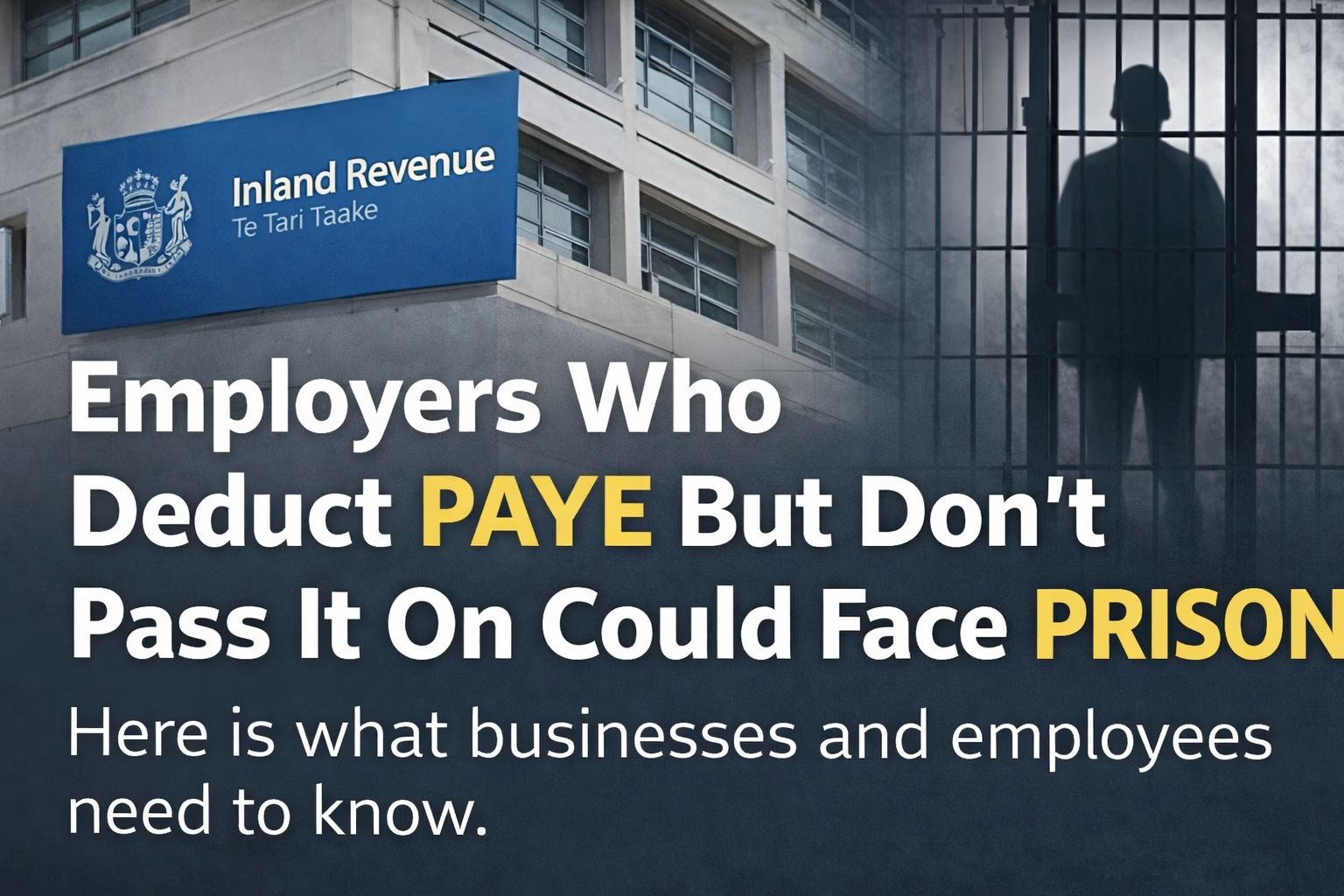
Inland Revenue warns employers that failing to pass PAYE deductions to the government is a serious criminal offence in New Zealand, with penalties including prison sentences. PAYE New Zealand, Inland Revenue PAYE rules, employer tax obligations NZ, PAYE penalties NZ, tax compliance New Zealand
New Zealand’s tax authority has issued a strong warning to employers who deduct tax from workers’ wages but fail to pass the money to the government. According to a recent alert from Inland Revenue (IR), withholding Pay As You Earn (PAYE) from employees and not paying it to the tax authority is considered a serious criminal offence that can result in prison sentences.
The warning follows cases where employers kept large amounts of employee tax deductions instead of transferring them to Inland Revenue. Officials say the practice damages trust in the tax system and unfairly disadvantages employees who expect their taxes to be paid properly.
What Is PAYE and Why Does It Matter
PAYE is the system used in New Zealand to collect income tax directly from employees’ wages or salaries. Employers are responsible for deducting tax from each pay and sending it to Inland Revenue.
PAYE deductions can include:
- Income tax
- Student loan repayments
- KiwiSaver contributions
- Other government deductions
Employees rely on employers to transfer these funds correctly. When an employer keeps the money instead of paying it to Inland Revenue, the employee may still appear to have paid tax even though the government never received the funds.
Inland Revenue states that employers must send these deductions by the required due dates.
Inland Revenue Warning
Inland Revenue recently issued a formal Revenue Alert highlighting concerns about employers who fail to transfer PAYE deductions. Revenue Alerts are issued by the Commissioner of Inland Revenue when authorities identify serious or emerging tax compliance risks.
Officials say the consequences for breaking the law are severe.
Key points from the warning include:
- Employers must pass PAYE deductions to Inland Revenue by the due date.
- Failure to do so can lead to criminal prosecution.
- The maximum sentence for this offence is up to five years in prison.
- Directors or individuals who assist or encourage the offence can also face charges.
The alert aims to remind businesses that PAYE deductions are not company funds. They belong to employees and must be transferred to the government.
Real Cases That Led to Prison
New Zealand courts have already handed down significant sentences for PAYE-related offences.
One of the most serious examples occurred in Christchurch, where a woman was jailed for three years after taking $1,602,864.17 from employee wages and failing to send the money to Inland Revenue.
In another case referenced by the court, a Wellington property developer was criticised for avoiding tax obligations while earning high levels of income. The judge warned that such behaviour undermines society.
A company director also returned from Australia to face charges rather than be extradited after failing to pay PAYE deductions.
These cases show that authorities are willing to pursue serious penalties when tax deductions are withheld.
Example Scenario: How PAYE Misuse Happens
To understand how the problem can occur, consider a simple example.
An employee earns $1,200 per week. Their employer deducts PAYE tax, KiwiSaver contributions, and student loan repayments.
Example breakdown:
| Payment Item | Amount Deducted (Example) |
|---|---|
| Gross Weekly Salary | $1,200 |
| PAYE Income Tax | $300 |
| KiwiSaver Contribution | $36 |
| Student Loan Repayment | $48 |
| Net Pay to Employee | $816 |
In this case the employer must transfer the $384 deducted to Inland Revenue.
If the employer keeps the $384 to cover business expenses or cash flow problems, they have effectively taken money that belongs to both the employee and the government.
Doing this repeatedly across multiple employees can quickly add up to hundreds of thousands or even millions of dollars.
Why Inland Revenue Takes This Seriously
Tax experts say PAYE nonpayment harms several parts of the economy.
1. Employees are put at risk
Workers believe their tax obligations are being met. If deductions are not passed on, it can affect student loan balances, tax records, and government entitlements.
2. It creates unfair competition
Businesses that keep PAYE deductions gain an unfair financial advantage over companies that follow the rules.
3. It damages trust in the tax system
New Zealand’s tax system relies heavily on voluntary compliance. Misuse of PAYE undermines public confidence.
Because of these risks, authorities treat PAYE misuse more like theft than a typical tax mistake.
Responsibilities of Employers
Employers in New Zealand have several obligations under tax law. Inland Revenue says businesses must:
- Deduct correct PAYE from employee wages
- Keep accurate payroll records
- Pay deductions to Inland Revenue on time
- File employer returns correctly
Failure to meet these responsibilities can lead to penalties, audits, and criminal prosecution.
Businesses facing financial difficulty are encouraged to contact Inland Revenue early to discuss payment arrangements rather than withholding deductions.
What Employers Should Do Now
Following the Revenue Alert, tax advisors suggest employers take several steps to ensure compliance:
- Review payroll systems to confirm deductions are accurate
- Ensure PAYE payments are made before deadlines
- Separate employee deductions from company operating funds
- Seek professional tax advice if unsure about obligations
Experts say that maintaining proper payroll systems and accounting practices can prevent most PAYE compliance issues.
Conclusion
The Inland Revenue warning serves as a clear reminder that PAYE deductions belong to employees and must be transferred to the government. Employers who fail to do so risk serious consequences, including criminal charges and prison sentences.
With several high profile cases already resulting in jail terms, authorities are signalling that PAYE misuse will not be tolerated. Businesses are being urged to review their payroll practices and ensure they meet their legal obligations.
For employees, the message is also important. Understanding how PAYE works can help workers check their payslips and ensure deductions are being handled correctly.
References
- Inland Revenue New Zealand. Revenue Alert RA 26-01: Failure to pay PAYE deductions to Inland Revenue.
- Inland Revenue Employer Guide IR335.
- Inland Revenue media release on PAYE enforcement and employer obligations.
- New Zealand tax compliance and payroll guidance from the Inland Revenue official website.
- Scoop Media press release reporting the Inland Revenue warning.