What Wellington’s response reveals about foreign policy, trade fears, and global power politics
By Webfit News | International Affairs
Introduction
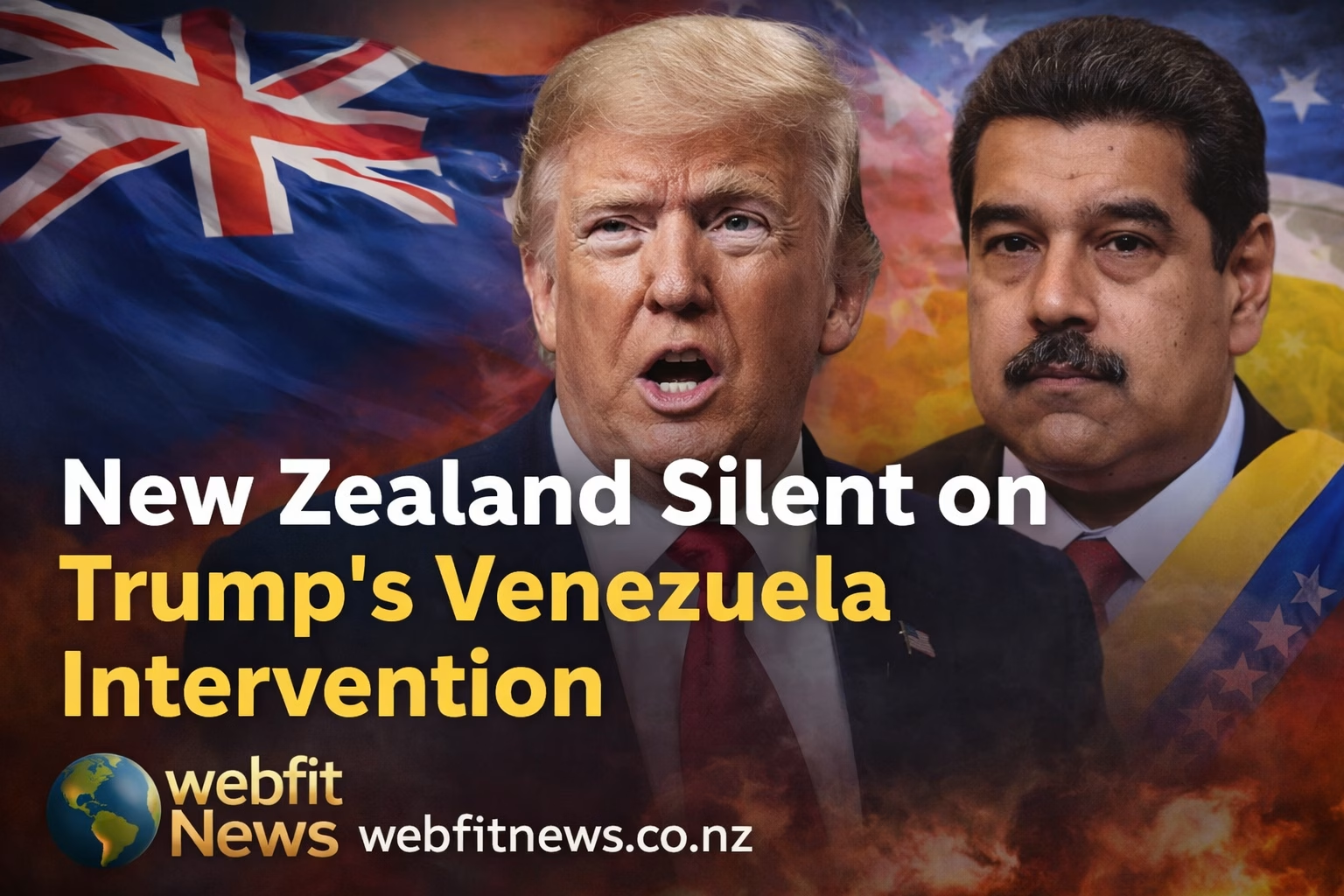
New Zealand has chosen caution over condemnation following the United States’ dramatic military intervention in Venezuela under President Donald Trump. While the operation reportedly involved airstrikes and the seizure of Venezuelan President Nicolás Maduro, Wellington stopped short of criticising Washington.
The muted response has sparked debate across political circles, universities, and civil society. At the centre of the controversy is a difficult question for small nations everywhere. When powerful countries break international rules, where does a country like New Zealand stand?
What the New Zealand government said
Foreign Minister Winston Peters issued a brief statement saying New Zealand was “concerned” and was “monitoring developments”, while expressing support for the Venezuelan people’s pursuit of a democratic future.
Notably, the statement did not mention the United States directly. There was no reference to military strikes, reported civilian deaths, or the question of Venezuelan sovereignty.
When media asked for a stronger response, Prime Minister Christopher Luxon’s office referred journalists back to the foreign minister’s original statement.
For critics, the lack of clarity was itself a message.
What happened in Venezuela
According to international media reports, US forces launched airstrikes inside Venezuela, killing around 100 people, before detaining President Maduro and his wife. President Trump later said the United States would take control of Venezuela’s oil resources, calling the move strategically necessary.
The intervention marked one of the most direct US actions in Latin America in decades. Several countries condemned the operation, including China.
China’s ambassador to New Zealand described the action as a clear violation of international law and warned that global politics was shifting towards a system where raw power outweighed legal norms.
Australia and allies followed a similar line
New Zealand was not alone in its cautious response. Australian Prime Minister Anthony Albanese also avoided condemning Washington, instead calling for dialogue and diplomacy.
Across much of the Western alliance, governments appeared reluctant to openly challenge the Trump administration, despite growing discomfort behind closed doors.
Why New Zealand is treading carefully
Analysts point to three main reasons behind Wellington’s restraint.
1. Trade dependence
China remains New Zealand’s largest trading partner. Any perception that New Zealand is fully aligning with US military actions could risk economic consequences.
2. Strategic alliances
New Zealand maintains close defence and intelligence ties with the United States and its allies. Public condemnation could strain those relationships at a time of heightened global tensions.
3. Domestic pressure
Public opposition to war is visible in ongoing protests over Gaza and Ukraine. The government faces a delicate balance between international alignment and domestic sentiment.
Opposition voices speak out
Labour’s associate foreign affairs spokesperson Phil Twyford described the Venezuela operation as illegal and warned that abandoning international law undermines New Zealand’s values.
Green Party co-leader Marama Davidson went further, calling the intervention “pure American imperialism” driven by oil interests rather than concern for Venezuelan citizens.
Former prime minister Helen Clark also said the attack breached the United Nations Charter, although she stopped short of defending the Maduro government.
Critics see hypocrisy across party lines
Some commentators argue that opposition criticism lacks credibility. Both Labour and the Greens have historically supported New Zealand’s alliance with the United States, including backing military involvement in Afghanistan, Ukraine, and indirect support for Israel.
University of Otago international relations professor Robert Patman warned that New Zealand’s cautious approach towards Trump could embolden China. Critics counter that Trump’s actions themselves are accelerating global instability.
Why this matters for New Zealanders
This is not just a distant foreign policy debate.
If international law becomes optional for powerful nations, smaller countries lose protection. New Zealand depends on rules-based systems for trade, diplomacy, and security. When those rules weaken, so does Wellington’s influence.
At the same time, confronting a global superpower carries economic and security risks that governments are often unwilling to take.
The bigger picture
The Venezuela crisis highlights a growing gap between political language and reality. Words such as democracy and international law are still used, but often applied selectively.
For New Zealand, the dilemma is uncomfortable. Silence may protect short-term interests, but it also signals acceptance of a world where force outweighs law.
Whether that trade-off is sustainable remains an open question.
Conclusion
New Zealand’s response to the Venezuela intervention reflects a cautious and calculated foreign policy shaped by trade, alliances, and geopolitical uncertainty. Yet caution has consequences.
Silence today may limit New Zealand’s moral authority tomorrow.
As global power politics intensify, Wellington will increasingly be forced to choose between principle and pragmatism. Venezuela may be the first test, but it will not be the last.