By Geet G | Webfit News
Introduction: Two Different New Zealands Emerging
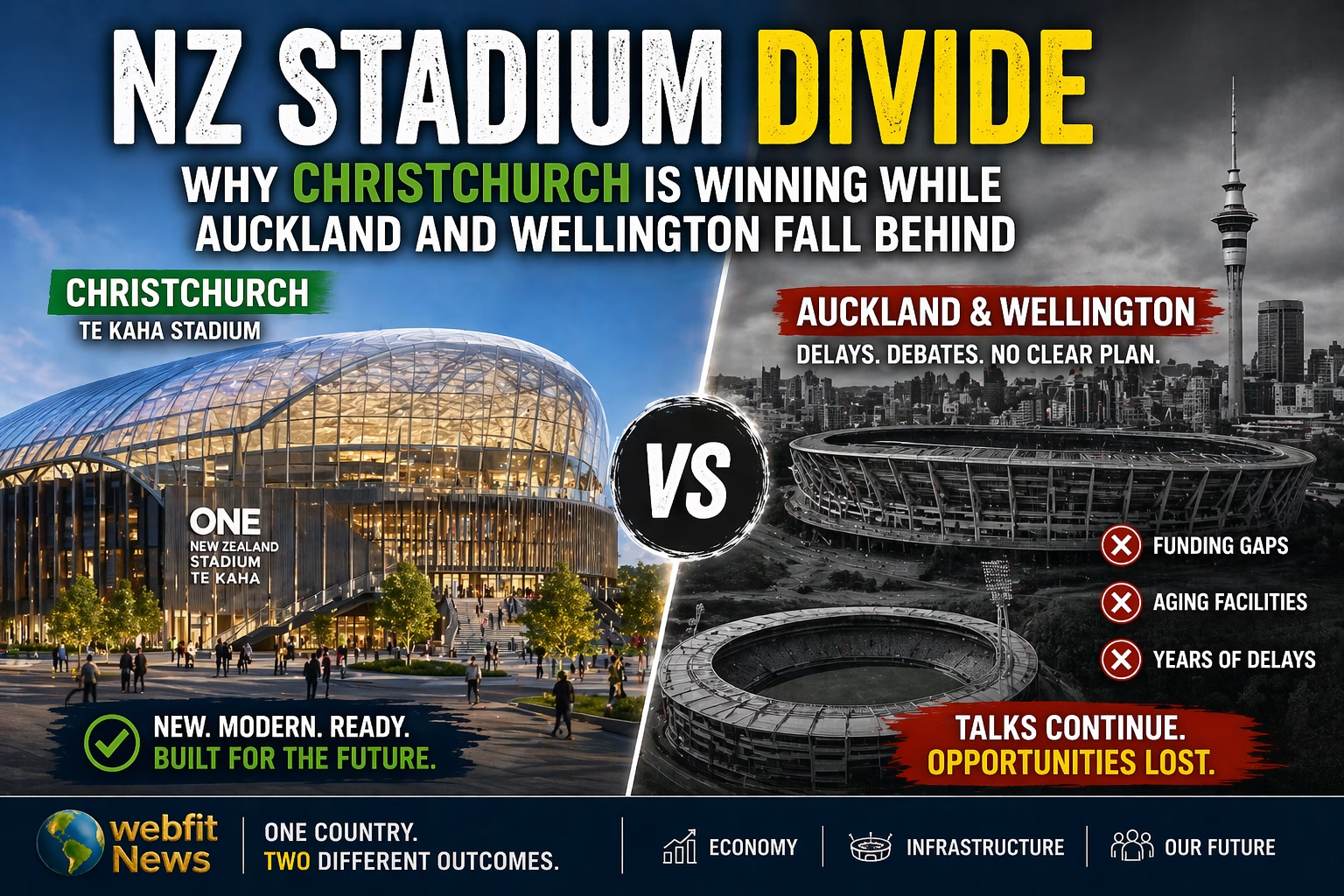
On 27 March 2026, Christchurch opened something more than just a stadium.
It opened a statement.
The One New Zealand Stadium at Te Kaha is modern, bold, and built with purpose. It represents a city that rebuilt itself with clarity after a disaster.
At the same time, Auckland and Wellington are still debating, delaying, and struggling to decide what their future should look like.
Same country. Completely different outcomes.
So what is really going on?
Christchurch: From Disaster to Direction
After the 2011 earthquakes, Christchurch had no choice but to rebuild.
But instead of patchwork fixes, the city chose long-term thinking.
The result is Te Kaha. A $683 million stadium built inside the CBD, not outside it. A place designed not just for sports, but for concerts, tourism, and daily city life.
Key highlights:
- 25,000 permanent seats, expandable for major events
- Covered roof design for all-weather use
- Located within walking distance of restaurants and hotels
- Expected to attract 500,000 visitors annually
This is not accidental success.
It is what happens when planning is clear, funding is aligned, and execution is disciplined.
More Than a Stadium: A City Engine
Te Kaha is not just about rugby or concerts.
It is designed as an economic driver.
- Estimated $50 million per year into tourism and hospitality
- Over $400 million long-term economic impact
- Thousands of jobs were created during construction
Christchurch understood something early:
A stadium is not an expense.
It is an investment in city energy.
And they built around it accordingly.
Meanwhile, in Auckland and Wellington: Still Deciding
Now look at the North Island.
Auckland has multiple stadiums, but no clear strategy.
Wellington has a stadium, but struggles to maintain it.
Both cities are facing the same problem:
Too many ideas, not enough decisions.
Auckland’s Problem: Too Many Options, No Execution
Auckland is stuck between two major options:
- Upgrade Eden Park
- Build a new waterfront stadium
Both sound good. Neither is moving fast.
Challenges include:
- Funding gaps
- Complex land and rail issues
- Political disagreements
- Long approval timelines
The result?
Years of talk. No clear outcome.
Wellington’s Problem: Aging Infrastructure
Wellington’s Sky Stadium is facing a different issue.
It is getting old. And expensive.
- Ongoing seismic upgrade costs
- Maintenance expenses rising
- Revenue is not keeping up
The reality is simple:
The stadium needs investment, but the city is already stretched.
So decisions get delayed.
Again.
Government Steps In: Eden Park Gets a Lifeline
In early 2026, the Government made a critical move.
It relaxed restrictions around Eden Park.
What changed?
- More concerts allowed
- Extended event hours
- Fewer restrictions on night games
Why does this matter?
Because it turns Eden Park into a revenue-generating asset, not just a sports venue.
And the impact is immediate.
- Economic contribution could jump from $37M to over $100M annually
- Major events like State of Origin 2027 are already locked in
This shows something important:
When policy supports infrastructure, things move.
The Bigger Shift: Thinking Like a System
The Government is now pushing a broader idea called the City Deal model.
In simple terms:
Central government and local councils work together on long-term infrastructure.
For Auckland, this includes:
- Reviewing Eden Park ownership
- Relocating smaller sports activities
- Aligning transport, housing, and event planning
This is a step in the right direction.
But let’s be honest.
It is still early.
Why Christchurch Worked (And Others Didn’t)
Let’s cut through the noise.
Christchurch succeeded because:
- One clear plan
- Centralised funding
- Strong execution
- Less political fragmentation
Auckland and Wellington struggle because:
- Too many stakeholders
- Conflicting priorities
- Funding uncertainty
- Long decision cycles
This is not about capability.
It is about alignment.
The Opportunity Ahead
New Zealand is entering a major events cycle:
- Rugby League World Cup 2026
- FIFA-related matches
- State of Origin 2027
- Global music tours
These are not just events.
They are economic opportunities.
Ready cities will win.
Cities that are still debating will watch from the sidelines.
Webfit News Perspective
New Zealand does not have an infrastructure problem.
It has a decision-making problem.
Christchurch proves that when leadership is aligned, results follow.
Auckland and Wellington are not lacking ideas. They are lacking execution clarity.
And here is the uncomfortable truth:
Every year of delay is not neutral.
It is a lost opportunity, lost revenue, and lost global relevance.
If New Zealand wants to compete internationally, it needs to stop asking:
“What should we build?”
And start answering:
“What are we actually committing to?”
Conclusion
The stadium divide is not about North vs South.
It is about certainty vs hesitation.
Christchurch chose certainty.
Auckland and Wellington are still negotiating with hesitation.
And in infrastructure, hesitation always costs more.