By Webfit News | Explainer
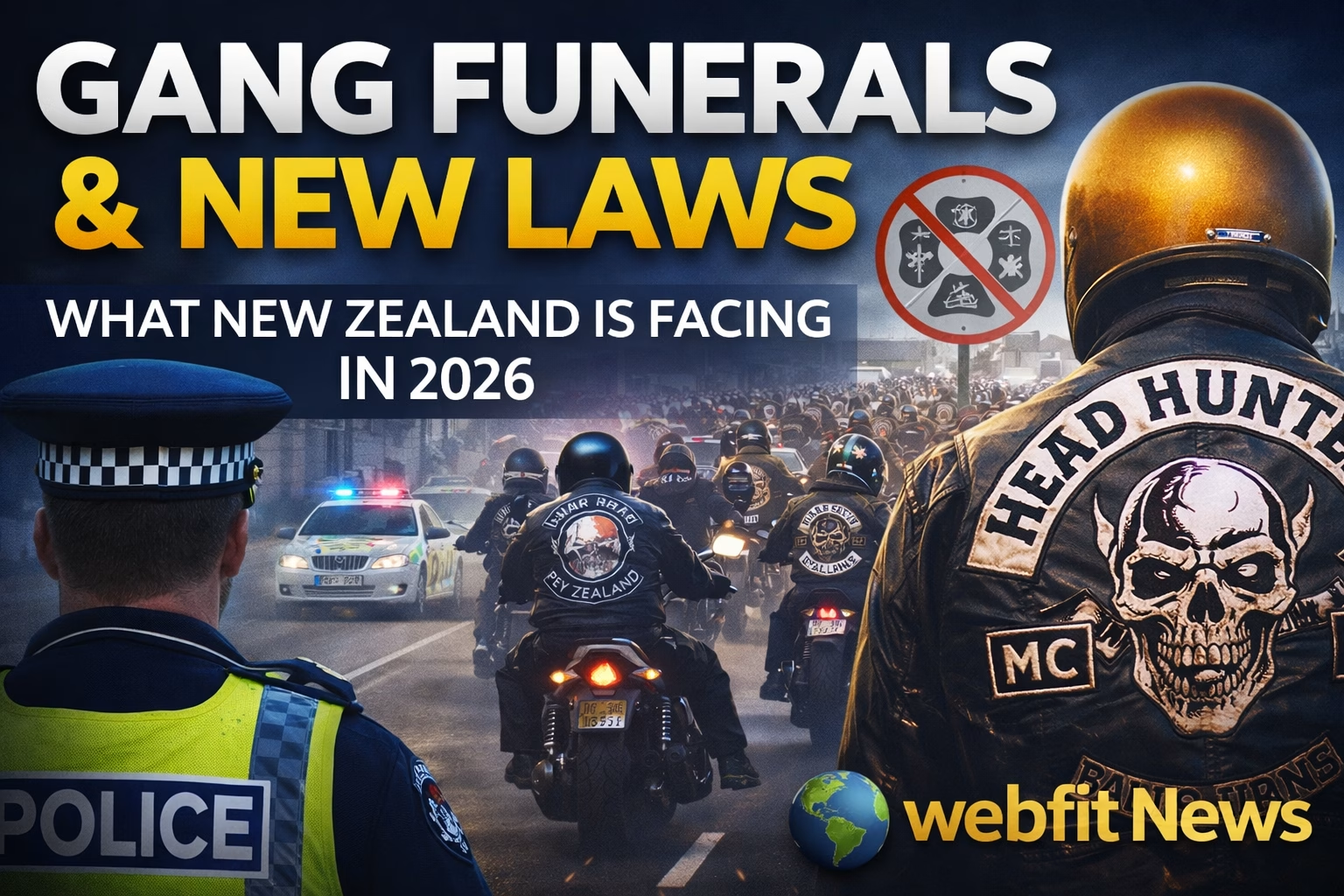
The death of a senior gang figure in early 2026 has once again put gang activity, public order, and policing in the spotlight. What might otherwise have been a private funeral became a national talking point because of its scale, its visibility, and the laws now surrounding it.
This is not just about one funeral. It is about how New Zealand is changing the way it deals with gangs, public safety, and the line between cultural practice and public disruption.
Why This Funeral Mattered
Large gang funerals have long been used to show unity, power, and reach. Convoys stretching across cities and highways are not accidental. They are statements.
This time, the funeral involved a planned journey of several hundred kilometres, crossing multiple regions, with the potential to disrupt traffic, intimidate communities, and test police limits.
But the key difference in 2026 is this: the law has changed.
The Gangs Act Has Changed the Rules
Since late 2024, New Zealand has operated under stronger anti-gang legislation. The Gangs Act introduced clear restrictions, including:
- Banning the display of gang insignia in public
- Allowing police to issue dispersal notices
- Enabling non-consorting orders
- Treating large coordinated gang gatherings as public order risks
In earlier years, police often tolerated gang funerals to avoid confrontation. That approach is now largely over.
This funeral became one of the first major tests of how firmly the new law would be enforced in real life.
Policing Is No Longer Passive
Police made it clear that the approach had shifted. This was not about monitoring from a distance. It was about active enforcement, traffic management, and deterrence.
Officers were deployed across regions. Surveillance was continuous. Any dangerous driving, intimidation, or visible gang symbolism was treated as an offence, not a grey area.
The message was simple: mourning does not excuse public disruption.
The Cultural Tension Is Real
This is where the issue becomes more complex.
In Māori and Pasifika communities, funerals and tangihanga are sacred. They involve large gatherings, extended timeframes, and strong expressions of solidarity.
When gang membership intersects with these traditions, tensions arise. Community leaders argue that heavy policing can feel intrusive during mourning. Police argue that the law must apply equally, regardless of context.
This debate is not settled. But what has changed is that public safety now takes priority over symbolic displays of power, even during funerals.
Following the Money, Not Just the Motorbikes
One major shift in recent years is how the state targets gangs.
Instead of focusing only on visible behaviour, authorities are increasingly hitting gangs where it hurts most: finances.
Asset seizures, unexplained wealth investigations, and criminal proceeds recovery have stripped millions of dollars from organised crime groups. Luxury items, cash, vehicles, and property are no longer safe.
This approach has quietly done more damage to gangs than roadblocks or arrests ever did.
The Webfit News Perspective: Gangs Are Evolving
At Webfit News, we see a deeper shift underway.
Traditional gang imagery is fading. The leather patches and noisy convoys are being replaced by something less obvious but potentially more dangerous.
Modern gangs are adapting by:
- Using luxury branding instead of patches
- Operating through trusts and businesses
- Recruiting through fitness culture and lifestyle image
- Blending into casinos, gyms, and social media spaces
In short, gangs are becoming quieter, cleaner-looking, and harder to spot.
Banning patches is necessary, but it is not enough on its own.
Why This Matters to Everyday Kiwis
For most New Zealanders, the concern is not ideological. It is practical.
People want to:
- Drive safely on public roads
- Feel unthreatened in their communities
- Trust that the law applies equally
- Know that police resources are being used wisely
When a funeral shuts down highways or intimidates locals, public patience runs thin. That frustration is real and growing.
What Comes Next
This moment marks a transition point.
The state is signalling that:
- Public spaces are not stages for intimidation
- Cultural respect does not override public safety
- Organised crime will be challenged economically, legally, and visibly
At the same time, gangs are adapting faster than many realise. The next phase of this issue will not be loud or obvious. It will be quieter, more digital, and more embedded in everyday life.
The Bigger Question
This is no longer just about gangs.
It is about how New Zealand balances:
- Freedom and enforcement
- Culture and law
- Safety and civil rights
- Visibility and accountability
The funeral may be over, but the debate is not.
And for the rest of the country, the real question remains: are we ready for the next version of organised crime, or are we still fighting the last one?