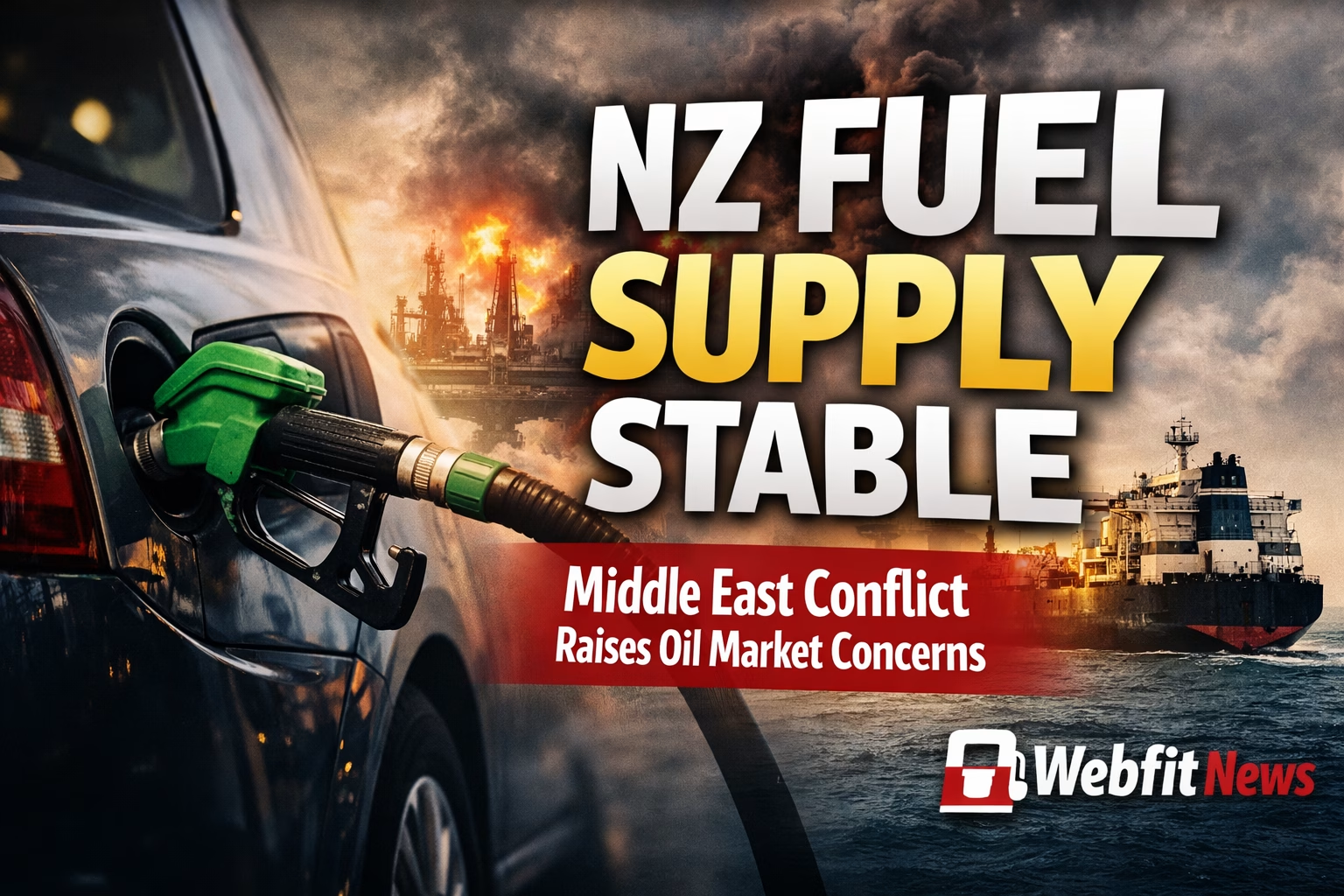
Watching global energy markets this week, the concern was easy to understand.
Conflict in the Middle East has historically been one of the fastest ways to send oil prices climbing and shipping routes into uncertainty. For a country like New Zealand that imports nearly all of its fuel, that kind of instability usually raises an immediate question.
Do we have enough fuel?
According to the Ministry of Business, Innovation and Employment (MBIE), the answer for now is yes.
Officials say fuel supply across New Zealand remains stable, with healthy reserves already in the country and additional shipments on their way.
The Global Picture
The conflict unfolding in the Middle East is already putting pressure on international fuel markets.
Shipping routes through the region carry a significant portion of the world’s oil supply. Disruption can slow tanker traffic, lengthen shipping times and shift supply routes, all of which can push global prices higher.
For countries that produce oil, that mainly affects revenue.
For countries that import it, like New Zealand, the concern is supply security.
So far, MBIE says there are no signs of a direct disruption to fuel deliveries into New Zealand.
What the Numbers Show
The latest figures released by the fuel industry show New Zealand’s fuel reserves remain strong.
As of midnight on 15 March, the country held the following levels of fuel in storage:
- Petrol: 28.1 days of supply
- Diesel: 22.7 days
- Jet fuel: 25.6 days
Combined across all fuel types, the country currently holds about 25 days of fuel within New Zealand itself.
But that is only part of the picture.
Fuel already on ships heading toward New Zealand adds another layer of supply.
Including those shipments, the country has roughly 49 days of total fuel cover.
Shipments Already on the Way
Fuel supply in New Zealand works like a moving pipeline rather than a fixed stockpile.
Tankers arrive regularly to replenish fuel as it is consumed.
Over the next two weeks alone:
- 10 vessels are expected to arrive between 16 and 22 March
- 1 additional vessel is scheduled between 23 and 29 March
Those shipments will add the equivalent of:
- 22 days of petrol supply
- 14 days of diesel
- 13 days of jet fuel
The data does not include shipments scheduled further in the future, meaning actual incoming supply may be even larger.
New Fuel Security Rules
New Zealand strengthened its fuel security framework in January 2025 by introducing the Minimum Stockholding Obligation.
The rules require fuel importers to maintain minimum reserves either in New Zealand or within the country’s Exclusive Economic Zone.
The minimum requirements are:
- 28 days of petrol
- 21 days of diesel
- 24 days of jet fuel
Current fuel levels exceed those thresholds.
That buffer is designed to protect the country from temporary global disruptions.
Why Authorities Warn Against Panic Buying
MBIE says there is no reason for motorists or businesses to change their normal fuel purchasing habits.
Fuel supply systems rely on predictable demand. Sudden spikes in buying can create unnecessary pressure on distribution networks even when overall supply remains healthy.
In other words, panic buying can create the appearance of shortages even when fuel stocks are adequate.
Officials say sticking to normal buying patterns helps the system function smoothly.
The Plan if Things Get Worse
New Zealand also operates under the National Fuel Plan, which outlines how the country would respond if global supply disruptions became severe.
The plan has four escalation phases.
The country is currently operating in Phase 1, the lowest level, where supply is managed commercially by fuel companies while government agencies monitor international developments.
If conditions worsen, the plan allows authorities to prioritise fuel distribution for essential services such as:
- hospitals and health services
- emergency response agencies
- food and freight transport
- electricity and telecommunications infrastructure
At this stage, those measures are not considered necessary.
Global Energy Cooperation
New Zealand also benefits from international coordination through the International Energy Agency (IEA).
Earlier this month, the agency announced a coordinated release of 400 million barrels of oil from global reserves to help stabilise supply and ease market pressure caused by the Middle East conflict.
The move is intended to ensure refineries around the world continue receiving crude oil even if shipping disruptions occur.
The Bottom Line
Despite global uncertainty, New Zealand’s fuel system is currently operating as expected.
Regular shipments continue to arrive, domestic stock levels remain healthy, and contingency plans are in place should global conditions deteriorate.
For now, the message from officials is simple.
Fuel is flowing normally and there is no need for New Zealanders to change how they buy or use it.
References
Ministry of Business, Innovation and Employment
Middle East conflict and New Zealand fuel stocks
International Energy Agency energy market updates