
By Geet G | Webfit News
For decades, becoming a New Zealand citizen was largely based on trust.
If a migrant lived in New Zealand long enough, maintained good character, met residency rules, and signed a declaration saying they understood the responsibilities of citizenship, that was generally enough.
That era is now ending.
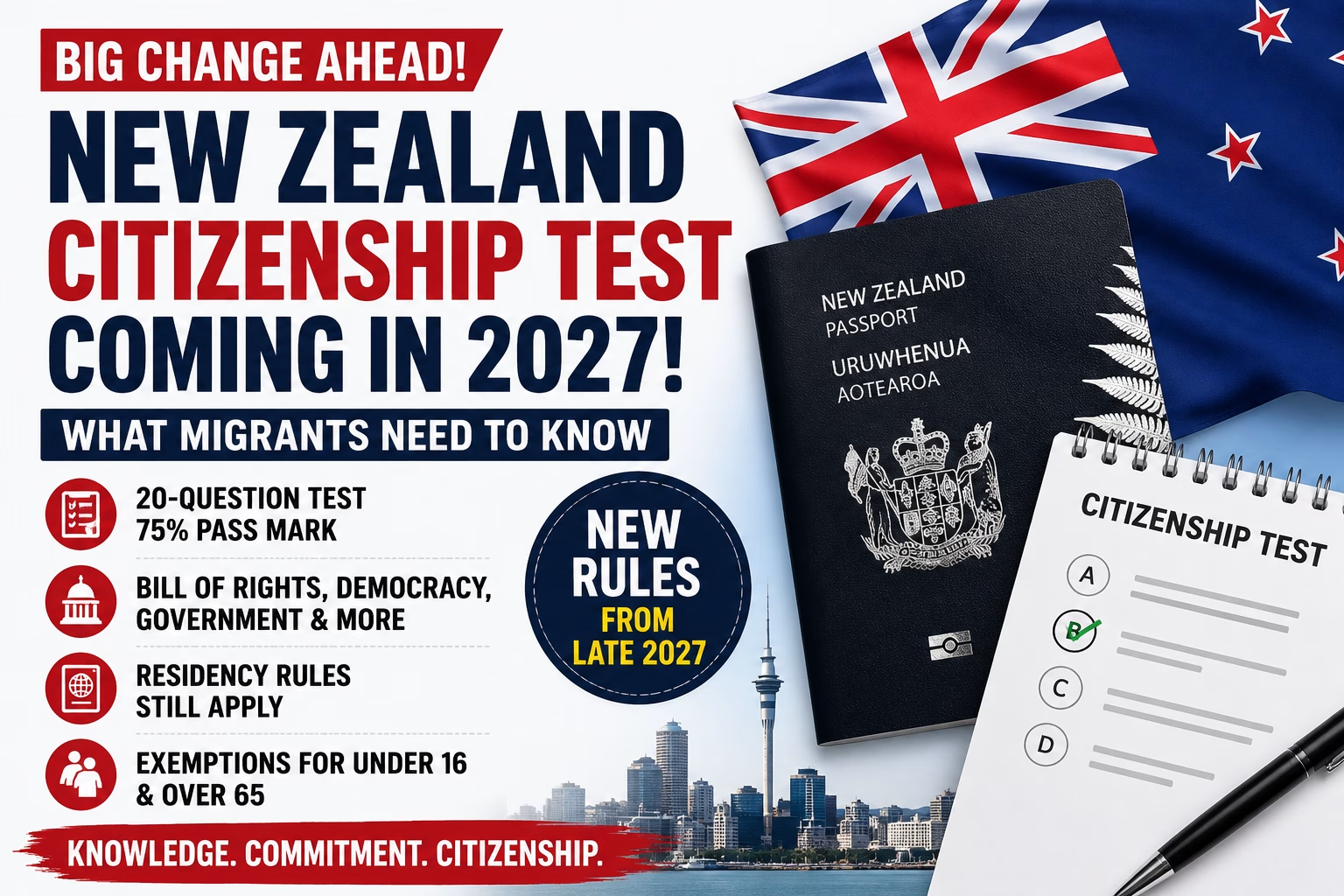
On 6 May 2026, Internal Affairs Minister Brooke van Velden officially announced that New Zealand will introduce a formal citizenship test from late 2027 for people applying for citizenship by grant.
The change represents one of the biggest shifts in New Zealand’s citizenship system in decades.
For many migrants already planning their citizenship journey, this announcement changes the conversation completely.
Because from 2027 onward, becoming a New Zealand citizen will no longer be based only on residency and declarations. Applicants will now need to actively prove their civic knowledge through a formal exam.
What Are the Current Citizenship Rules in New Zealand?
As of today, 6 May 2026, New Zealand citizenship by grant still follows the existing system.
To become a New Zealand citizen currently, most applicants must:
- Hold a resident visa for at least 5 years
- Be physically present in New Zealand for:
- At least 240 days each year during those 5 years
- At least 1350 days total across the 5-year period
- Show good character
- Demonstrate basic English ability
- Intend to continue living in New Zealand
- Sign a declaration confirming they understand the rights and responsibilities of citizenship
Importantly, there is currently no formal written test.
No multiple-choice exam.
No citizenship interview quiz.
No pass mark.
Applicants simply sign a declaration during the process.
That is exactly what is changing.
What Will Change From Late 2027?
From the second half of 2027, New Zealand plans to introduce a formal in-person citizenship test.
According to the Government announcement:
- The test will be multiple-choice
- It will be conducted in person
- Applicants must score at least 75%
- Applicants will likely need to answer at least 15 out of 20 questions correctly
The Department of Internal Affairs is still finalising operational details, but the core structure is now confirmed.
The Government says the goal is to “strengthen” the value of New Zealand citizenship.
Minister Brooke van Velden said citizenship is “a commitment to shared responsibilities and privileges” and that applicants should understand democratic principles and the rights that define New Zealand society.
What Topics Will Be Included in the Citizenship Test?
According to the Government announcement, the test is expected to include questions on:
- The New Zealand Bill of Rights Act
- Human rights
- Voting rights
- Democratic principles
- The structure of government
- Criminal offences
- Travel rules into and out of New Zealand
That means migrants may soon need to understand:
- How Parliament works
- What freedoms exist under New Zealand law
- Basic civic responsibilities
- Electoral rights
- Legal obligations as citizens
In simple terms, New Zealand is moving closer to systems already used in countries like Australia, Canada, the UK, and the United States.
Why Is the Government Introducing This Test Now?
The timing is not random.
A massive wave of migrants is approaching citizenship eligibility.
The key reason is the one-off 2021 Resident Visa programme introduced during the Covid period.
That special pathway gave residency to around 200,000 migrants already living in New Zealand.
Many of those migrants will become eligible for citizenship from late 2026 onward.
That means the Department of Internal Affairs is preparing for a major surge in applications through 2027 and beyond.
At the same time, the Government says it wants citizenship to represent more than just administrative eligibility.
It wants citizenship to become a stronger civic milestone.
The Government also points to major improvements in processing efficiency.
According to the Minister, citizenship wait times dropped by 72%, from around 180 days in 2023 to approximately 51 days by early 2026.
Now the Government appears confident enough operationally to add a testing layer to the system.
Will Everyone Need to Sit the Test?
Not necessarily.
The Government has indicated that:
- People under 16 years old will generally be exempt
- People over 65 years old may also be exempt
Further details are still being designed by the Department of Internal Affairs.
Special cases may also continue under existing ministerial discretion pathways.
Could This Become Harder for Some Migrants?
Yes. That is where the debate becomes serious.
Supporters argue the test strengthens national identity and ensures new citizens understand New Zealand’s democratic system.
Critics argue it could create additional barriers for:
- Older migrants
- People with limited formal education
- Non-English-speaking communities
- Refugees and vulnerable applicants
The concern is not just language.
It is also the complexity of constitutional and legal knowledge.
Understanding the Bill of Rights, Parliament, voting systems, and criminal law requires a higher level of civic literacy than the current declaration-based process.
Even many New Zealand-born citizens might struggle with some questions if tested unexpectedly.
That criticism is already appearing publicly online, where debates have emerged around fairness, accessibility, and whether native-born citizens themselves could pass such a test comfortably.
How Does New Zealand Compare Internationally?
New Zealand was previously unusual among Western democracies because it had no formal citizenship test.
Australia already requires applicants to pass a citizenship test.
Canada also requires a citizenship exam.
The United Kingdom and United States have long-standing citizenship testing systems as well.
By introducing this reform, New Zealand is moving closer to international norms among developed democracies.
But New Zealand’s approach still appears less aggressive than some overseas systems.
At this stage:
- There is no indication of essay writing
- No oral history interview
- No advanced English examination
- No extreme memorisation requirements
The focus appears centred on practical civic understanding.
What Migrants Should Do Right Now
For migrants already eligible or close to eligibility, timing now matters more than before.
People who apply before the test becomes mandatory may still avoid the new assessment entirely.
Others who will apply after 2027 should begin understanding:
- New Zealand’s political system
- Voting rights
- The Bill of Rights
- Basic constitutional principles
- Citizenship responsibilities
The Department of Internal Affairs has confirmed it will provide study guidance and preparation materials before implementation.
The Webfit News Perspective
This reform is about far more than a test.
It reflects a deeper political shift in how New Zealand now defines citizenship itself.
For years, New Zealand treated citizenship primarily as a residency milestone. Live here long enough, contribute positively, stay out of trouble, and eventually citizenship followed.
The 2027 reform changes that philosophy.
The Government is now signalling that citizenship is not only about presence. It is also about demonstrated civic understanding.
Supporters will see this as protecting the value of citizenship.
Critics will see it as introducing unnecessary hurdles for migrants who have already spent years building lives, families, careers, and communities in New Zealand.
But politically, the direction is now very clear.
New Zealand is moving from a trust-based citizenship system toward a verification-based citizenship system.
And for hundreds of thousands of migrants already planning their future in New Zealand, that shift could become one of the most important immigration changes of the next decade.
References
- New Zealand Government – Citizenship Test Announcement
- Department of Internal Affairs
- New Zealand Government Citizenship Requirements
- 1News New Zealand
- Immigration New Zealand