New Manufacturing and Engineering Subjects Planned for Year 12 and 13 Students
New Zealand’s manufacturing and engineering sector is being invited to help shape two new secondary school subjects designed to give students a more realistic understanding of modern industry and future careers.
The Manufacturing and Engineering Industry Skills Board, known as MAEISB, is seeking expressions of interest from industry professionals to contribute to the development of:
- Next-Gen Manufacturing
- Engineering Technology
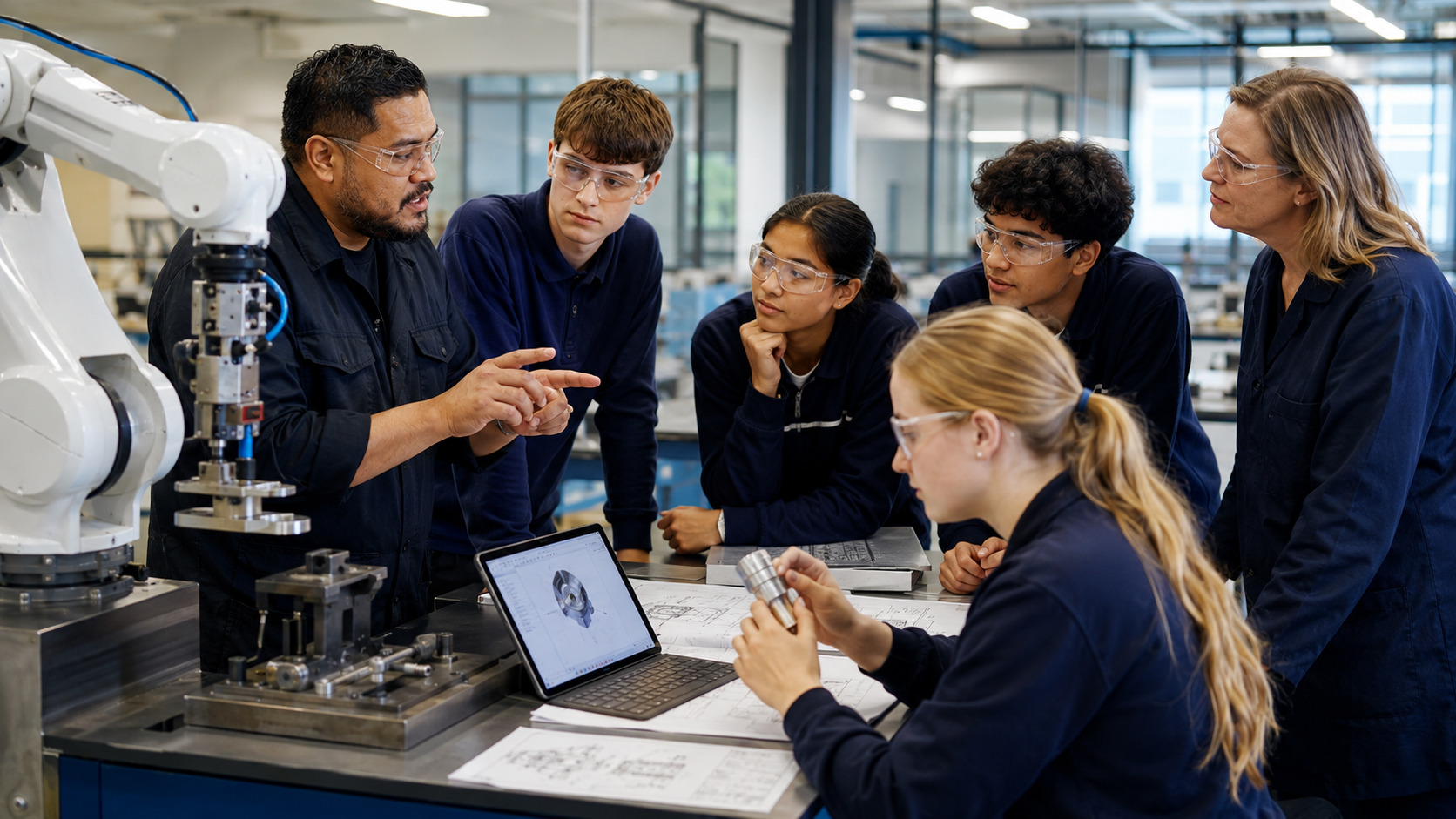
The subjects are being designed for Year 12 and Year 13 students and are intended to connect classroom learning more closely with what actually happens in manufacturing plants, engineering workshops, technical workplaces and modern production environments.
For students, the aim is simple: give them earlier exposure to real industry skills, technologies and career options.
For employers, it is an opportunity to influence what future workers learn before they enter tertiary study, apprenticeships or the workforce.
What is being developed?
|
New subject |
Main focus |
|
Next-Gen Manufacturing |
Modern manufacturing practices, technologies, production environments and future industry skills |
|
Engineering Technology |
Engineering applications, technical problem-solving, workplace practices and career pathways |
|
Target students |
Year 12 and Year 13 |
|
Consultation period |
September 2026 to February 2027 |
|
Expressions of interest close |
End of day, 1 September 2026 |
The final curriculum has not yet been detailed publicly in the information provided, which is why MAEISB is asking people working in the sector to become involved now.
The consultation process is intended to make sure the new subjects reflect real workplace expectations rather than being designed only from an academic perspective.
Why industry involvement matters
Manufacturing and engineering workplaces can include everything from fabrication and CNC machining to automation, maintenance, industrial design, production management and process engineering.
Technology and workplace practices can also change quickly.
Someone working directly with automated machinery, computer-controlled manufacturing or modern production systems may therefore have practical knowledge that is difficult to reproduce in a classroom without industry input.
MAEISB wants participants to provide examples of what happens in real workplaces, explain emerging trends and review curriculum material as it is developed.
A simple example could be a student learning about manufacturing.
A traditional classroom lesson might explain how a product is made.
An industry-informed subject could potentially help students understand the wider process, including design, production planning, machinery, quality control, automation, safety and the different jobs involved.
That kind of exposure could help a student decide whether engineering or manufacturing is actually a career they want to pursue.
Who can apply?
The board is looking for a wide range of people, not only senior engineers.
Employers and business leaders
Applications are encouraged from:
- operations managers
- production managers
- plant managers
- workshop owners
- small and medium-sized business owners
Technical specialists
The consultation group may also include:
- manufacturing engineers
- process engineers
- industrial engineers
- qualified engineers
- toolmakers
- designers
- CNC specialists
- automation technicians
- maintenance engineers
- fabricators
- technicians
Training and workforce specialists
People involved in developing workers are also being sought, including:
- apprenticeship supervisors
- workplace trainers
- learning and development managers
- industry training coordinators
- HR and people capability managers
Young workers, recent apprentices and recent graduates under the age of 30 are also encouraged to participate.
That is important because someone who entered the sector recently may have a different view of what helped them, what was missing from their school education and what students need to know before choosing a career.
What commitment is required?
This is not intended to be a one-off survey.
Participants are expected to remain involved between September 2026 and February 2027.
|
Requirement |
Expected involvement |
|
Online meetings |
Fortnightly |
|
Curriculum review |
Between meetings |
|
Industry input |
Workplace examples and emerging trends |
|
Feedback |
Practical comments on curriculum material |
|
Overall commitment |
Regular participation for about six months |
MAEISB says continuity is important, so people should only apply if they can participate regularly throughout the development period.
Māori and cultural perspectives are also being sought
The consultation process specifically welcomes people who can contribute Māori perspectives and help develop culturally responsive learning.
That includes Māori business owners, industry leaders, practitioners, iwi and hapū representatives, Māori trusts and people with experience supporting ākonga Māori.
Professionals with expertise in mātauranga Māori and kaupapa Māori approaches are also encouraged to take part.
The intention is for the curriculum development process to recognise Te Tiriti o Waitangi, bicultural contexts and equitable outcomes for Māori learners.
How will participants be selected?
Not everyone who applies will necessarily be selected.
MAEISB wants a balanced group representing different:
- industries
- occupations
- business sizes
- regions
- workforce experiences
That means a small engineering workshop in regional New Zealand could bring a different perspective from a large manufacturing company in Auckland or Christchurch.
The aim is to avoid creating subjects based on only one type of workplace or one part of the country.
What could this mean for students?
For a Year 12 student trying to decide what to do after school, manufacturing or engineering can sometimes feel like a broad career label.
A more industry-led subject could make those options easier to understand.
Students may be exposed to the difference between being a fabricator, automation technician, manufacturing engineer, CNC specialist or production manager.
That could help them make more informed decisions about apprenticeships, tertiary study and employment.
It could also give employers an opportunity to explain the skills and attitudes they actually look for when recruiting young people.
What happens next?
Expressions of interest close at the end of 1 September 2026.
The consultation and curriculum development process is then expected to run from September 2026 until February 2027.
For manufacturing and engineering professionals, this is an opportunity to contribute directly to what future students learn about their industry.
For students, the bigger goal is to make secondary education more closely connected to the jobs, technologies and opportunities they may encounter after leaving school.
Key information
|
Item |
Detail |
|
Organisation |
Manufacturing and Engineering Industry Skills Board |
|
Subjects |
Next-Gen Manufacturing and Engineering Technology |
|
Students |
Years 12 and 13 |
|
Consultation starts |
September 2026 |
|
Consultation ends |
February 2027 |
|
Meeting frequency |
Fortnightly online |
|
EOI deadline |
1 September 2026 |
References
Manufacturing and Engineering Industry Skills Board, Expression of Interest notice for development of Industry-Led Subjects, August 2026.