
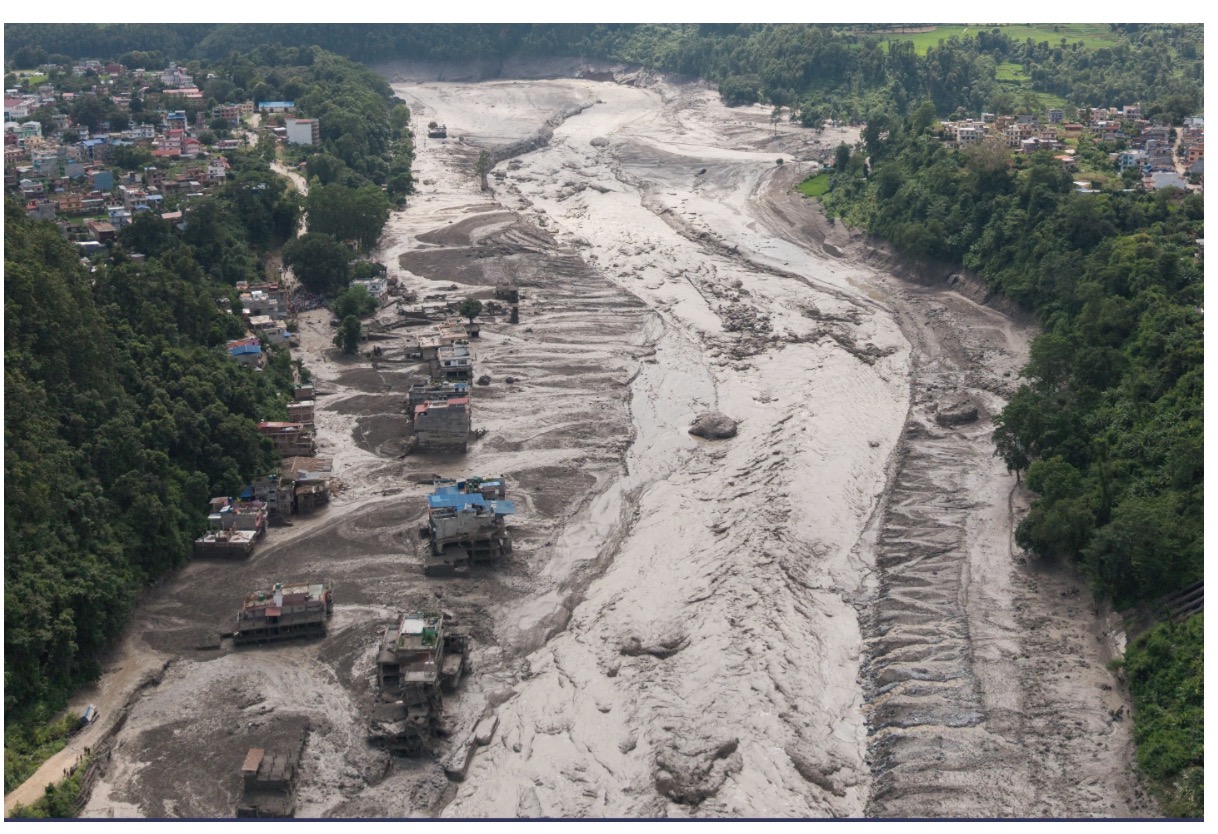
Nepalese authorities are warning of another possible flood after a new natural lake formed upstream of the Bhotekoshi River in Rasuwa district.
At least 359 people have been killed across Nepal and Tibet and more than 1,000 remain missing, Reuters reported on 27 August, although casualty figures continue to change as search teams reach isolated communities.
The disaster struck on 26 August after a huge surge of water, mud and rock moved through the Himalayan border region.
Authorities are now monitoring another blockage in the Lhende River, upstream of the Nepal-China border, amid concern a temporary natural dam could fail and send a second surge downstream.
Hamilton couple among missing New Zealanders
Hamilton residents Mihir Patel and Kinnari Patel are among at least five New Zealanders reported missing.
The couple own the Best Value Urlich Ave Dairy in Hamilton and had travelled to Nepal ahead of Kinnari Patel’s 50th birthday.
Their eldest son, Drishya Patel, told RNZ the trip was partly a pilgrimage and his parents had been enjoying their journey before contact was lost.
He had spoken to his father the day before the flood.
The family’s last known WhatsApp message from Kinnari Patel was sent from Timure at about 5.30am local time and indicated they were leaving for Kerung, near the Nepal-China border.
Their family is hoping the pair had already moved out of the most dangerous area before the flood struck.
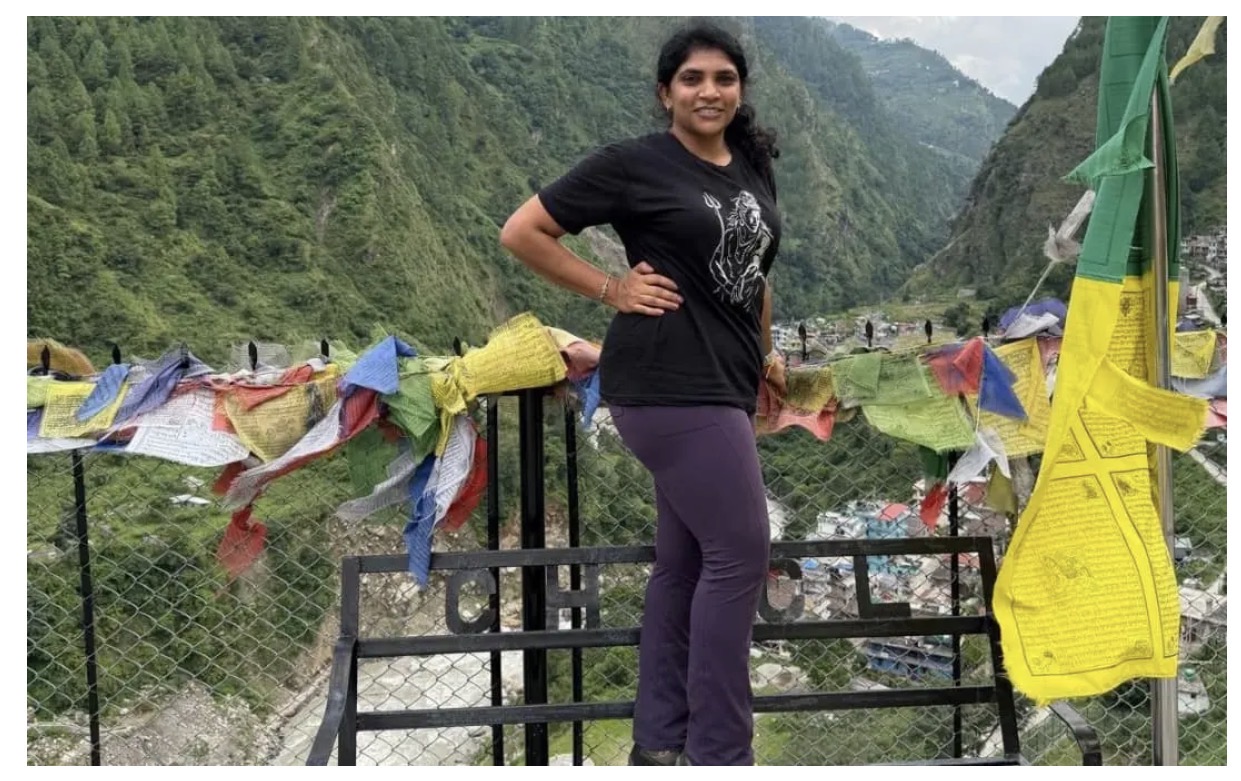
Suhasini Reddy and Dejan Kuzmic have also been identified among the New Zealanders reported missing. Reddy had been hiking with friends and was believed to have been travelling towards the Nepal-China border.
Former Honorary Consul of Nepal to Auckland Dinesh Khadka said Nepal Police had provided him with the names of five New Zealanders who were unaccounted for.
The Ministry of Foreign Affairs and Trade has not independently confirmed the number.
MFAT has said it is aware of a small number of New Zealanders who may have been in the affected area and is in contact with their families and authorities in Nepal.

What happened in Rasuwa
The flash flood struck Nepal’s Rasuwa district after a sudden surge entered the Bhotekoshi River from the Tibet side of the border.
The Nepal Red Cross said Timure, Rasuwagadhi and Syabrubesi were among the areas hit.
Settlements, roads, police infrastructure and hydropower facilities were damaged.
Preliminary assessments suggest an avalanche involving ice and rock may have blocked the Lhende River upstream.
Water appears to have accumulated behind that blockage before the temporary barrier failed, releasing a powerful flood downstream.
Nepal’s Department of Hydrology and Meteorology has said satellite information supplied by Chinese authorities showed debris blocking the river about 20 kilometres upstream of the Miteri Bridge before the flood.
The precise chain of events is still being investigated.
Scientists and officials are examining whether the disaster involved an ice avalanche, glacier instability or another high-altitude outburst event.
New lake creates fresh concern
Nepal’s National Disaster Risk Reduction and Management Authority has now warned of another blockage upstream.
Preliminary satellite analysis indicates a new lake has formed about 18 kilometres upstream of the Rasuwagadhi border crossing.
The lake is estimated to cover about 0.11 square kilometres.
The stability of the natural barrier holding the water back is not yet known.
If it fails, another large volume of water could move through the Lhende and Bhotekoshi river systems.
People living in downstream areas have been told to stay away from riverbanks and other exposed areas and to move to safer ground if instructed.
Nepalese hydrology authorities are continuing to monitor the river.
Death toll and missing numbers remain fluid
Reuters reported at least 359 deaths across Nepal and Tibet on 27 August, with more than 1,000 people missing.
Associated Press reported more than 1,400 people remained unaccounted for across the wider disaster zone.
The differences underline how difficult it remains to establish reliable casualty figures.
Roads and communications have been destroyed, some communities remain inaccessible, and authorities in Nepal and Tibet are still reconciling lists of residents, workers, tourists and pilgrims.
Figures are therefore expected to change as more people are located and more remote areas are reached.
Hundreds of Indian nationals also uncontactable
India is among the countries with large numbers of citizens caught up in the disaster.
Indian authorities said 288 Indian nationals were uncontactable on 27 August.
They include tourists, pilgrims and workers associated with hydropower projects.
Twenty-one Indian nationals from Tamil Nadu had been rescued, while around 200 Indians on the Tibet side had sought assistance from Indian authorities.
Many people travelling through the affected region were taking part in the Kailash Mansarovar pilgrimage.
Authorities have stressed that being listed as uncontactable does not mean a person has been confirmed injured or dead.
Mobile networks, road access and other communications have been badly affected.
Nepal establishes emergency team for foreigners
Nepal’s Ministry of Foreign Affairs has established an Emergency Response Team to deal specifically with foreign nationals affected by the disaster.
It is coordinating:
search and rescue information
verification of missing-person reports
consular assistance
information for families and diplomatic missions
Nepal’s foreign ministry has urged people not to circulate unverified information about deaths or missing people while rescue operations are continuing.
Roads, bridges and hydropower infrastructure damaged
The flood has caused extensive damage along the Bhotekoshi and Trishuli corridors.
Roads and bridges have been washed away, settlements damaged and hydropower projects affected.
Important routes through Rasuwagadhi towards Tibet have also been disrupted.
The damaged transport network is making it harder for rescue teams to reach some communities.
Helicopters and emergency personnel are being used where weather and terrain allow.
The disaster has also damaged power infrastructure and left some communities isolated.
Why temporary mountain lakes are dangerous
When an avalanche, landslide or large volume of rock and ice blocks a mountain river, water can quickly accumulate behind the debris.
The blockage effectively becomes a temporary dam.
If it fails suddenly, the stored water can move downhill at high speed, collecting rock, soil, ice and other debris.
In steep Himalayan valleys, that can create a highly destructive flood with very little warning.
The Bhotekoshi system has experienced serious flooding before, including a major event investigated by Nepalese authorities in July 2025.
Advice for people in the affected area
Nepalese authorities are advising residents, travellers and rescue workers to remain cautious while the upstream lake is being monitored.
People in vulnerable areas are being told to:
stay away from riverbanks and unstable slopes
avoid damaged roads and bridges
move to higher ground when instructed
follow official flood alerts
keep identification and emergency supplies accessible
avoid entering floodwater to recover belongings
report missing foreign nationals through official channels
The risk of another flood cannot yet be predicted with certainty.
Advice for New Zealanders
New Zealanders in Nepal should monitor local authorities and New Zealand SafeTravel advice.
People should avoid disaster areas unless they are involved in authorised emergency work.
Travellers should also be prepared for significant road closures, delays and communication outages.
Families unable to reach someone in the affected region should be aware that a loss of contact does not necessarily mean that person has been harmed.
New Zealanders requiring urgent consular assistance can contact MFAT’s emergency consular service on +64 99 20 20 20.
Search continues as threat remains
Rescue teams are continuing to search for people missing after the first flood while authorities simultaneously monitor the newly formed lake upstream.
That means the disaster has moved into an unusually difficult phase.
Nepal is dealing with widespread deaths, missing people, damaged infrastructure and displaced communities while also preparing for the possibility of another sudden flood.
For the families of the missing New Zealanders, including the Patel family in Hamilton, the immediate focus remains finding out whether their loved ones reached safety.
Emergency contacts for foreign nationals in Nepal
Nepal Ministry of Foreign Affairs Emergency Response Team
Hotline / WhatsApp:
+977-9744441227
+977-9744441228
Hours: 7am to 10pm Nepal time
Email: emergency@mofa.gov.np
References
Nepal Ministry of Foreign Affairs, Emergency Response Team notice, 27 August 2026.
Nepal Department of Hydrology and Meteorology.
Nepal Red Cross Society, Rasuwa flood situation reporting.
Nepal National Disaster Risk Reduction and Management Authority.
Reuters reporting on the Nepal and Tibet flood disaster, 27 August 2026.
Associated Press reporting on foreign nationals missing following the floods.
New Zealand Ministry of Foreign Affairs and Trade statements.
RNZ reporting on New Zealanders missing in Nepal.
India Ministry of External Affairs statements.
New Zealand SafeTravel.