By Webfit News
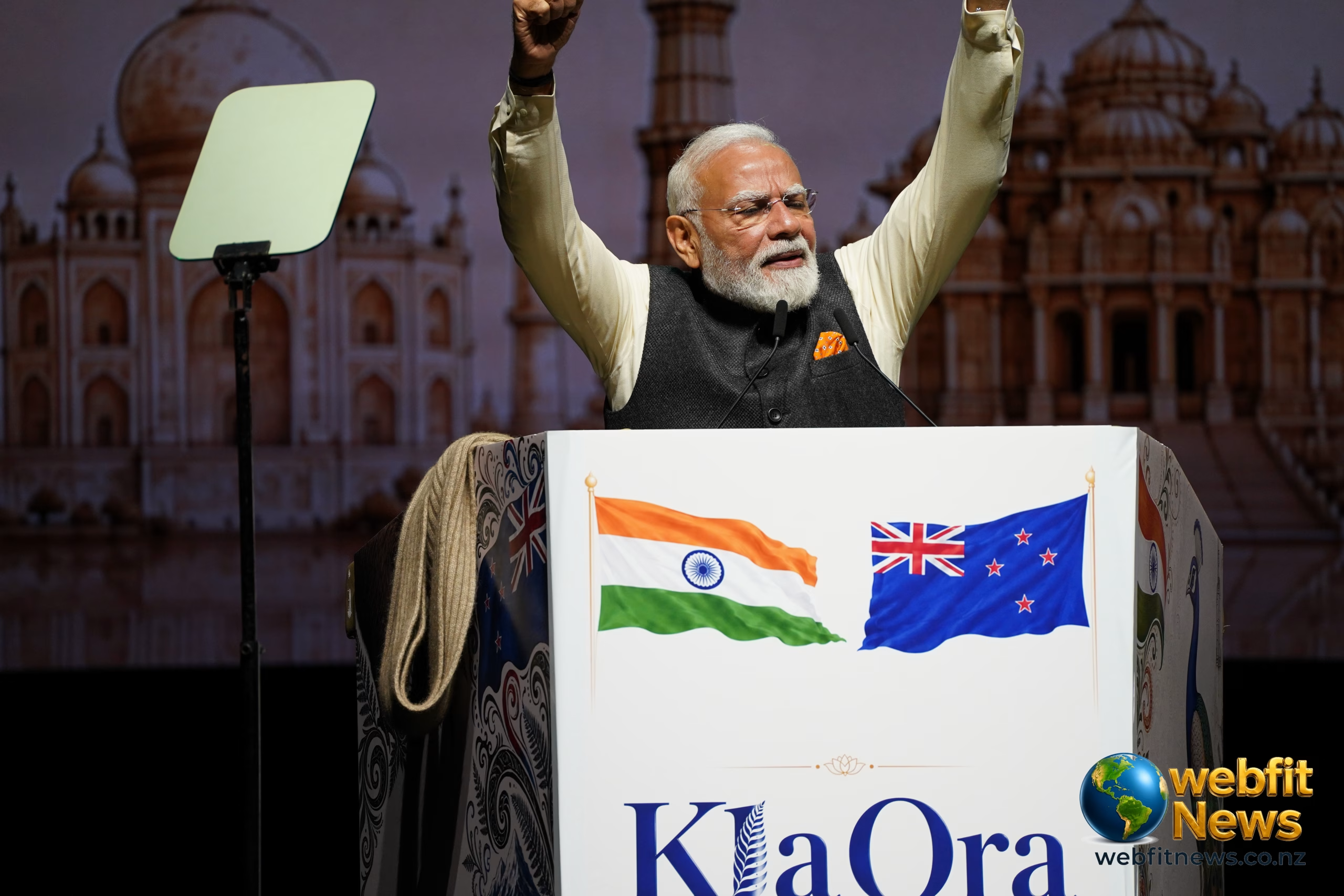
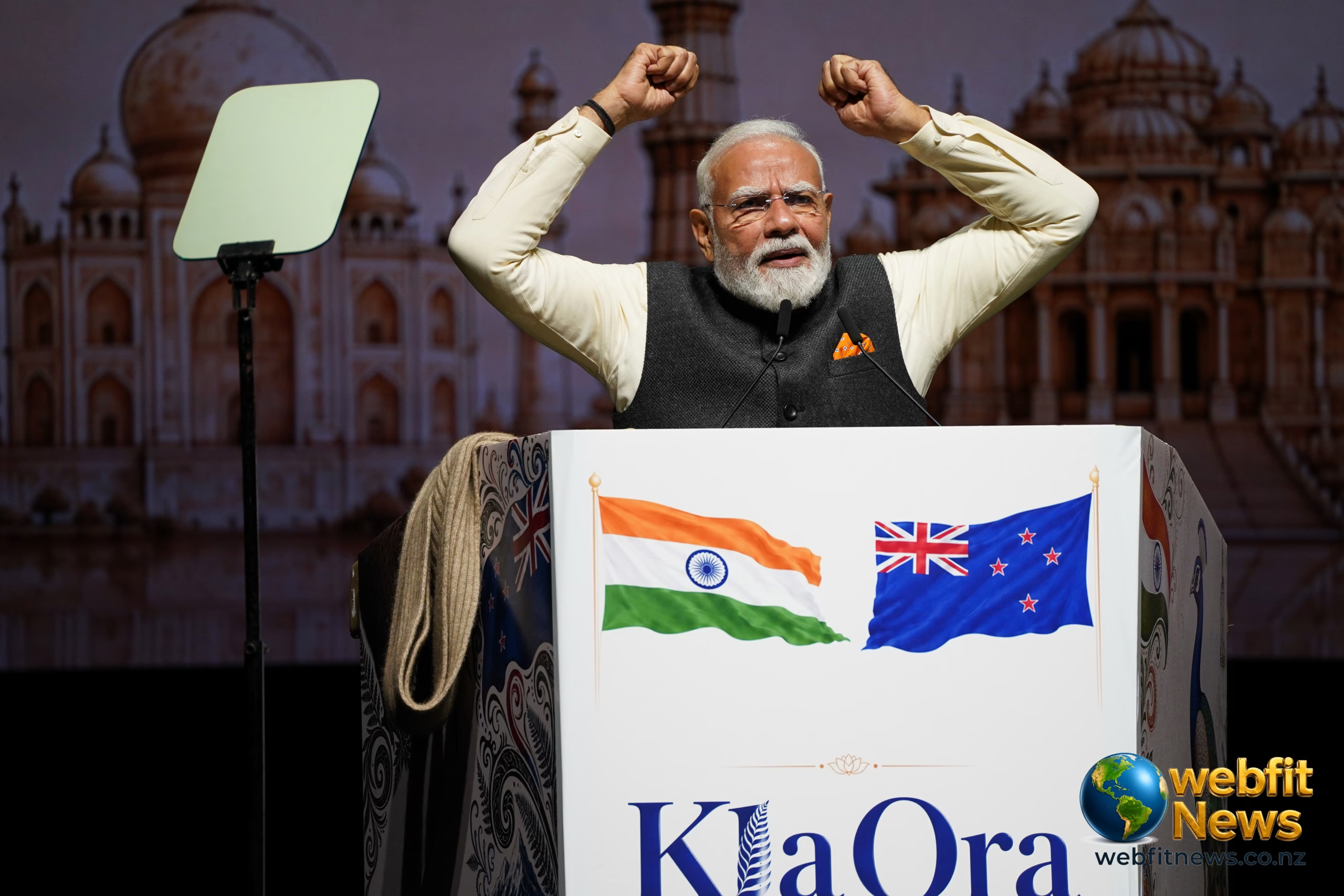
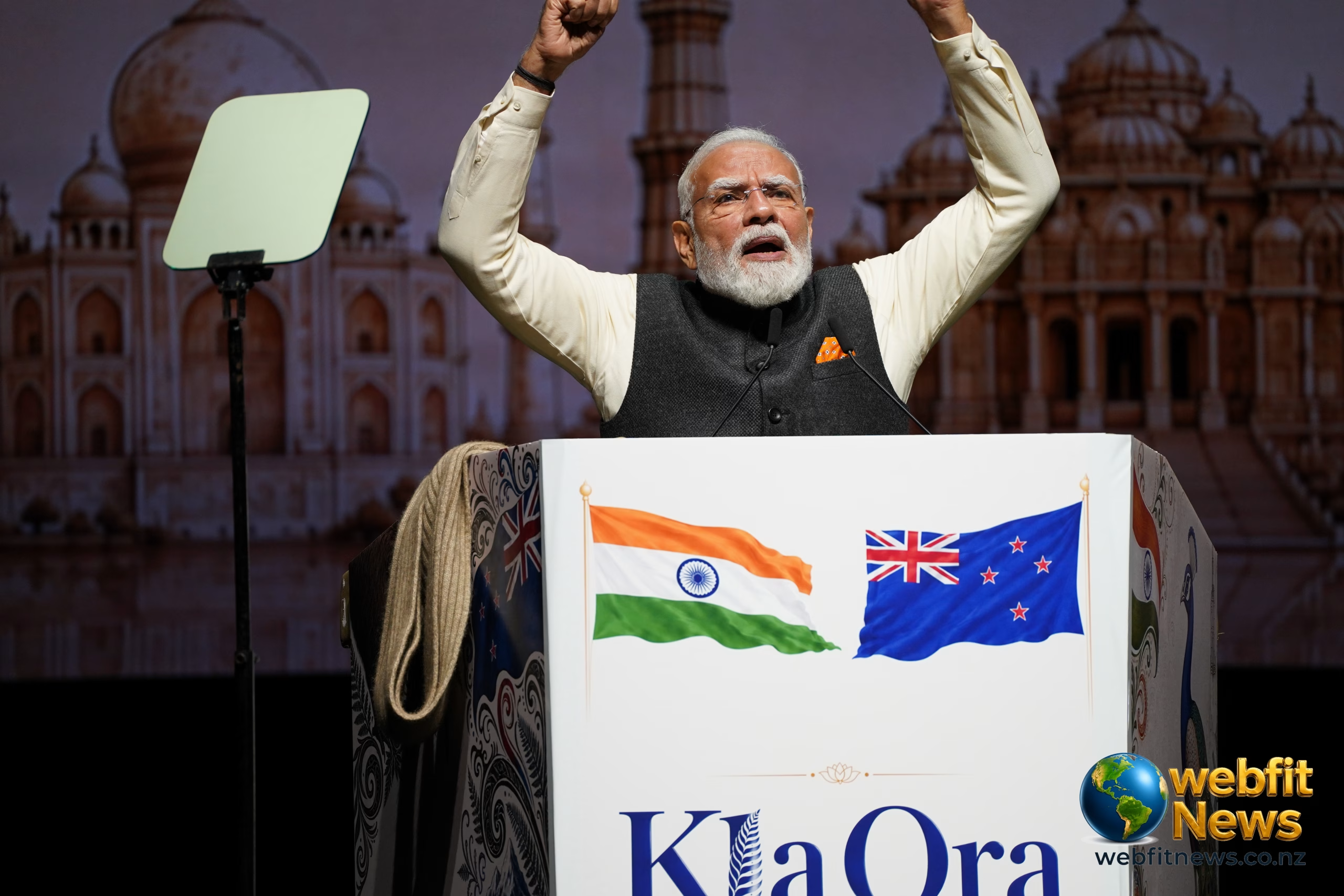
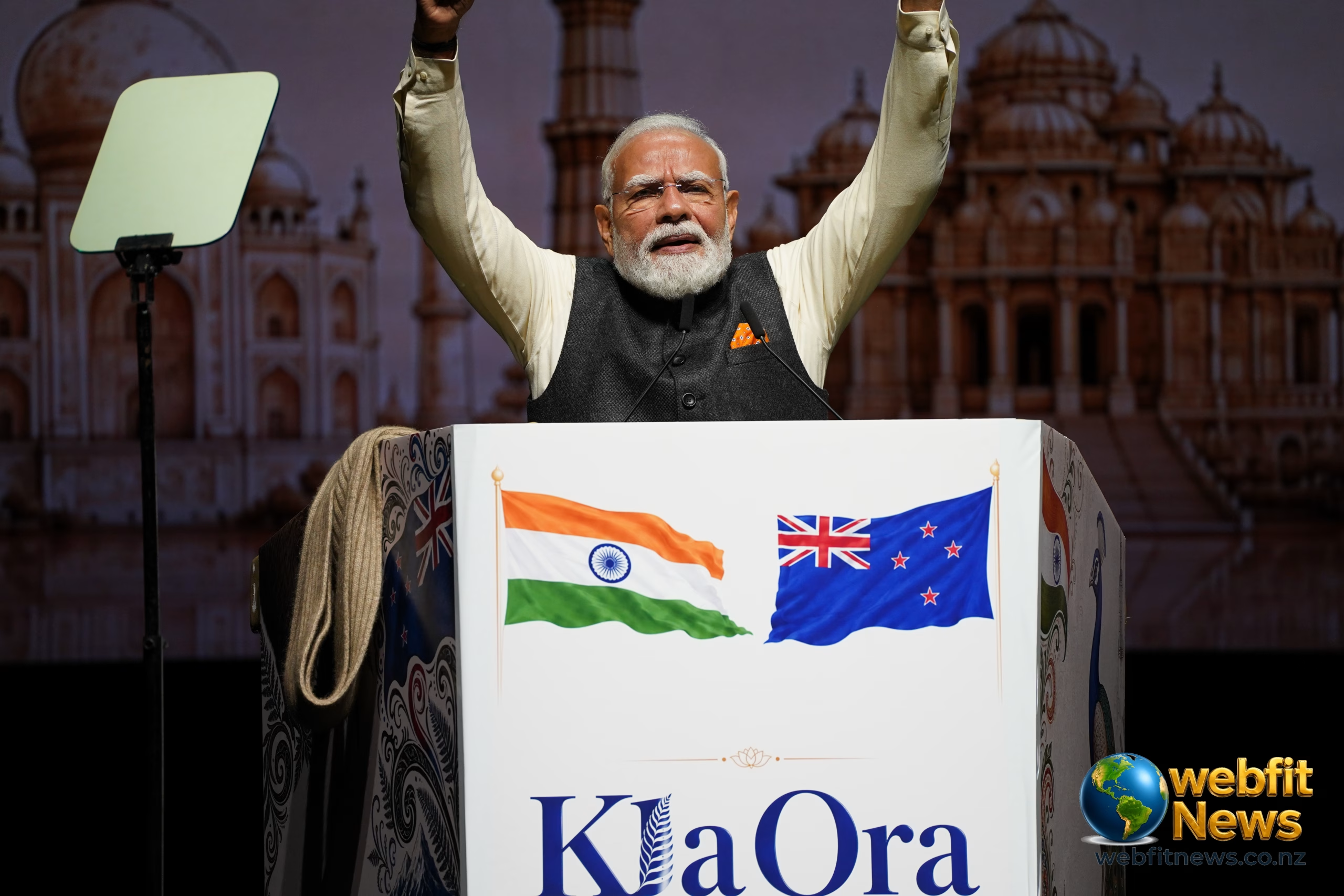
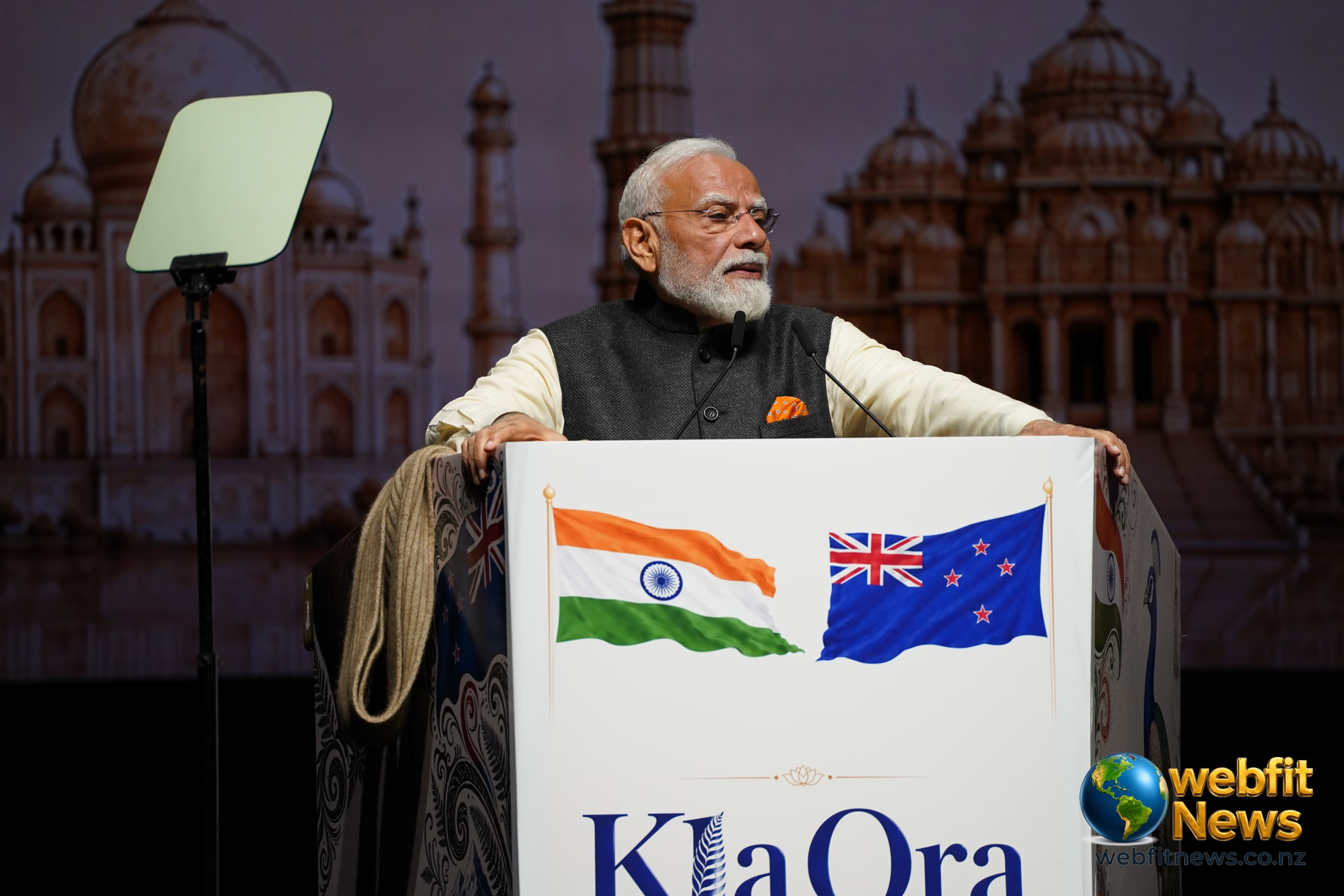
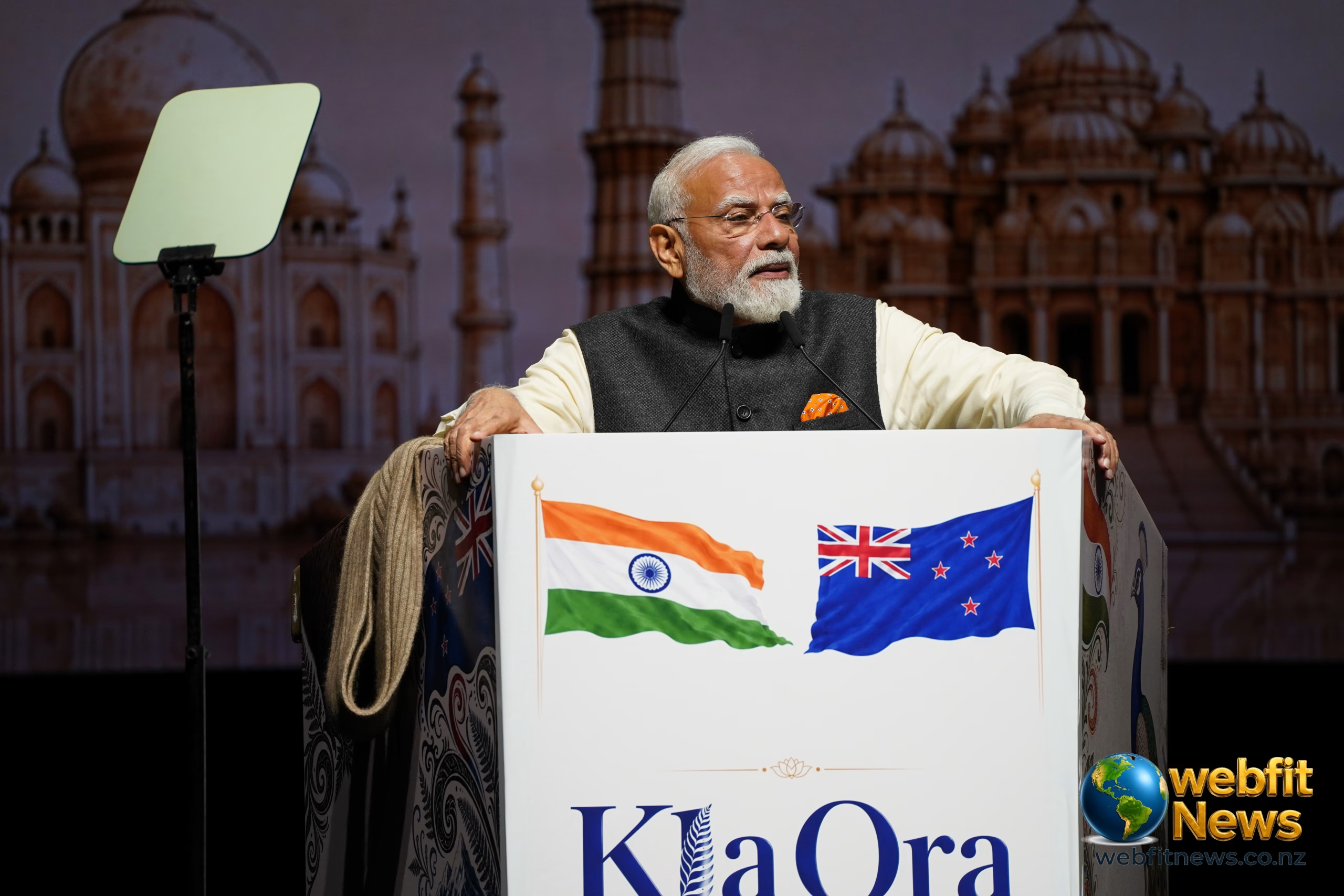
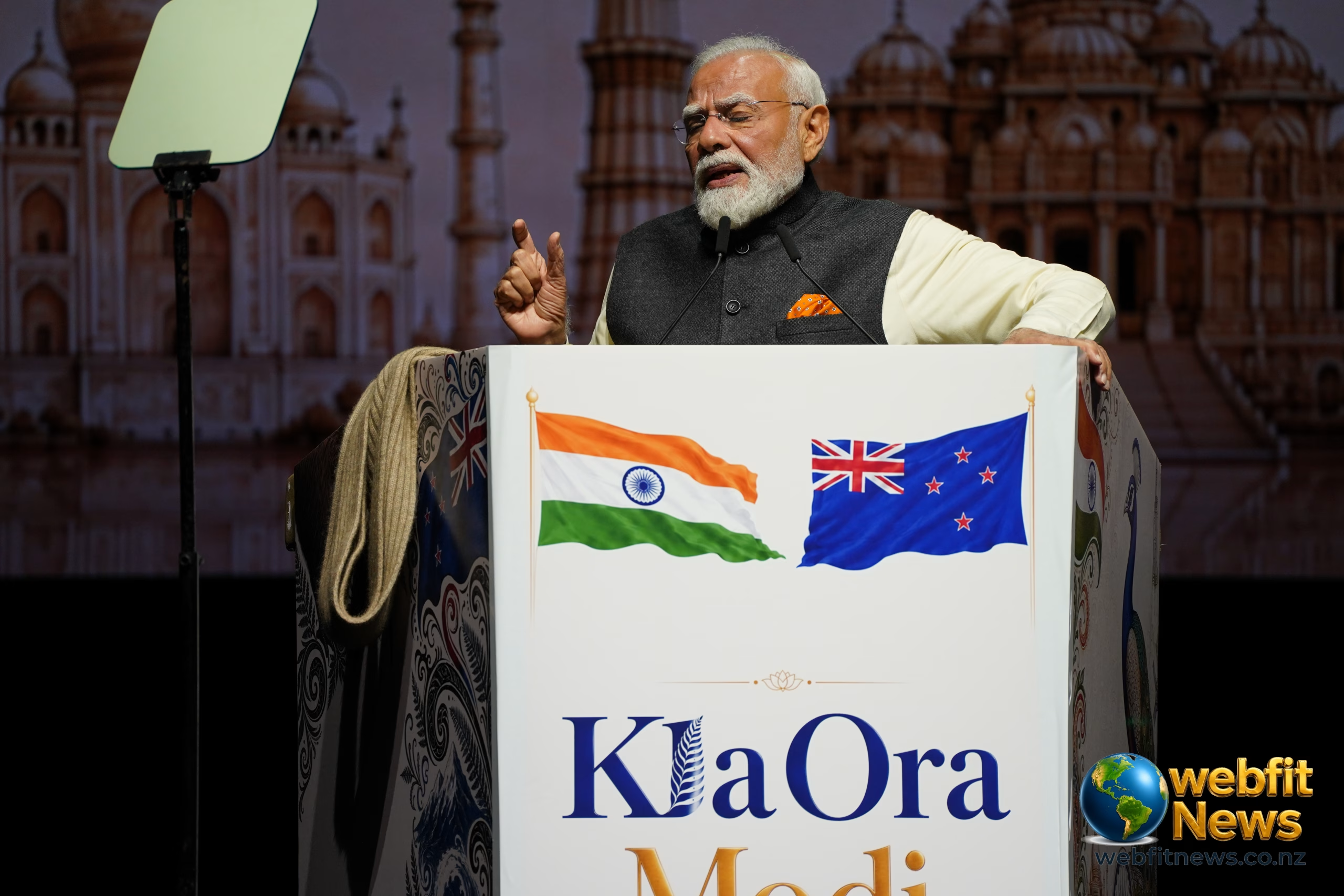
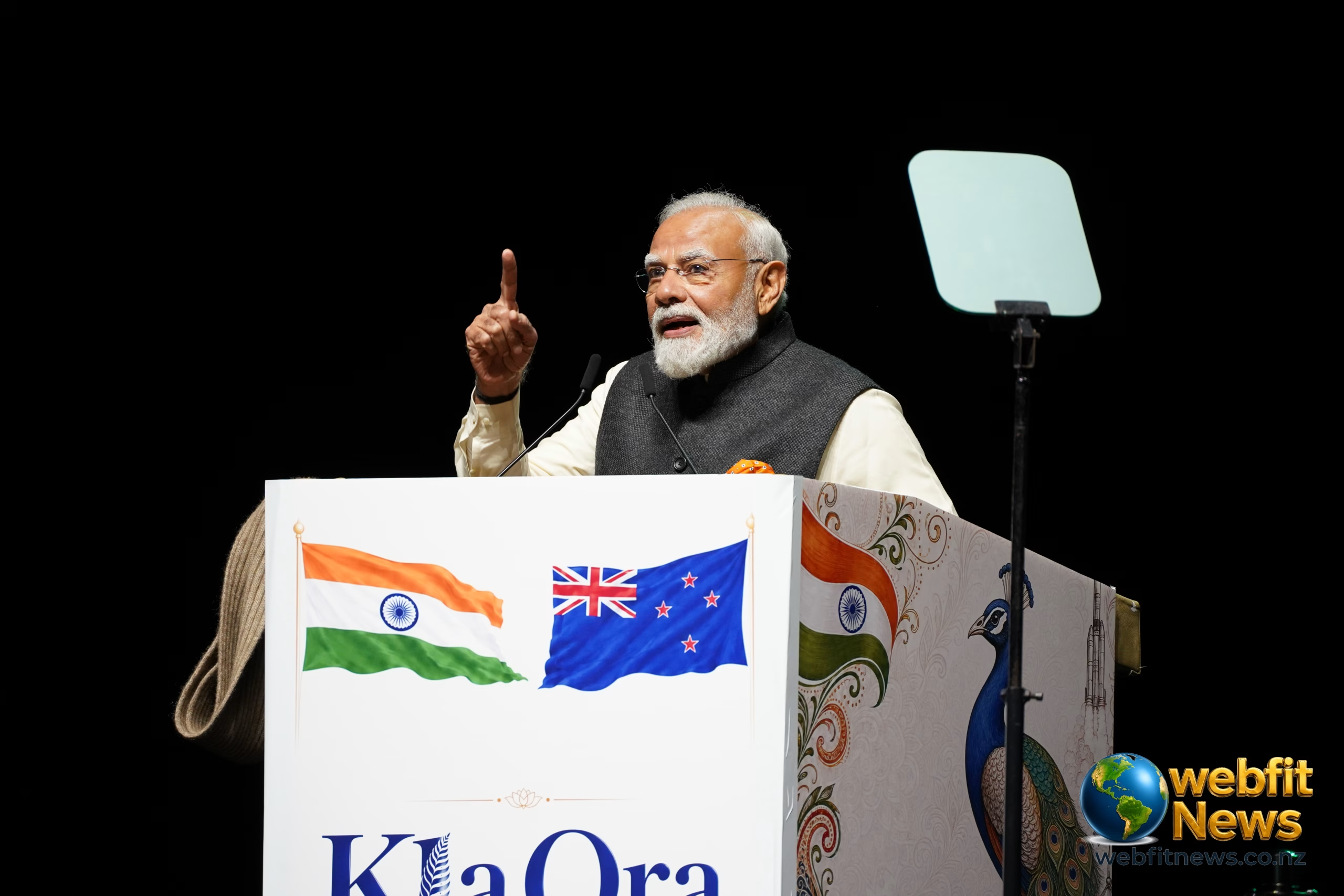
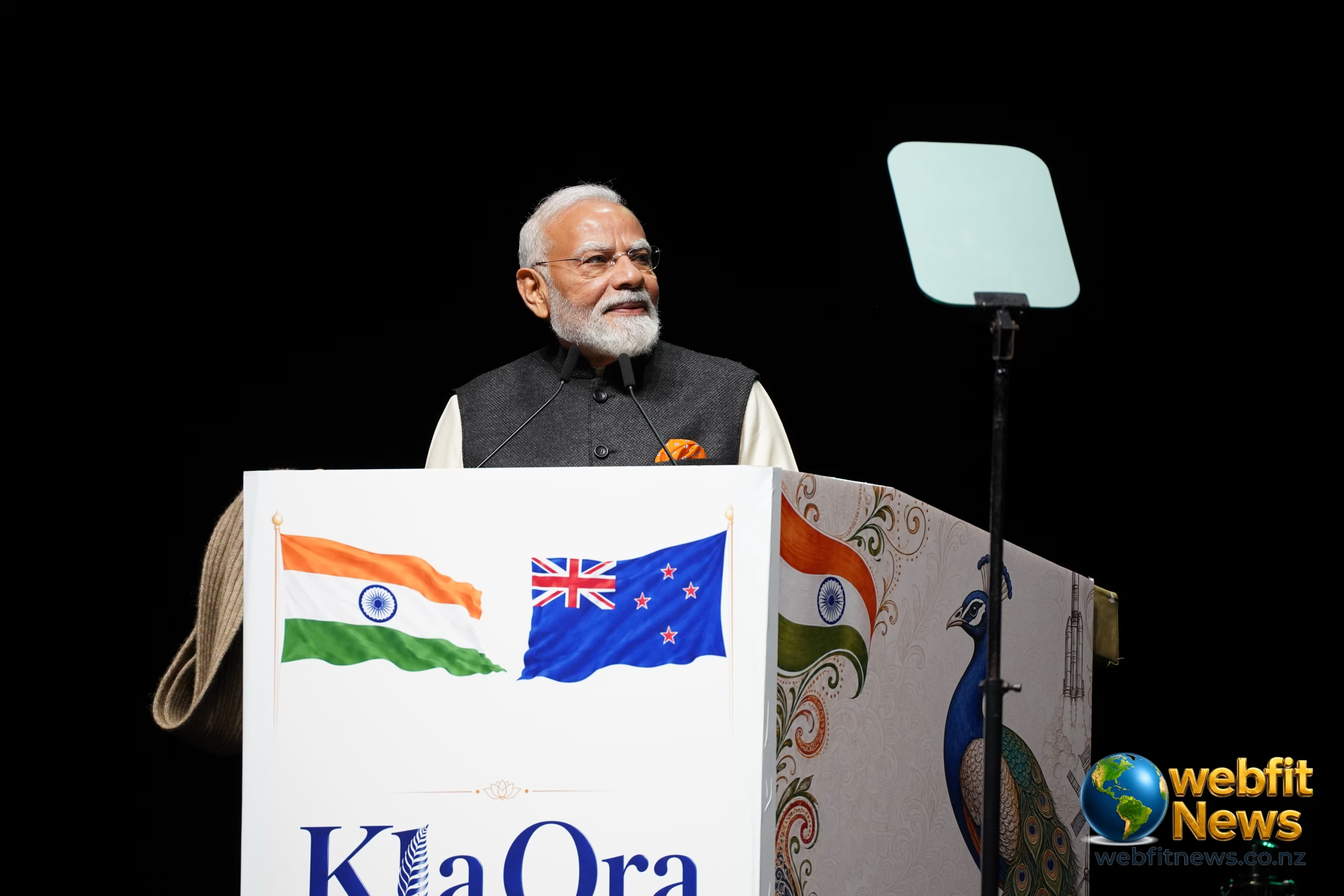
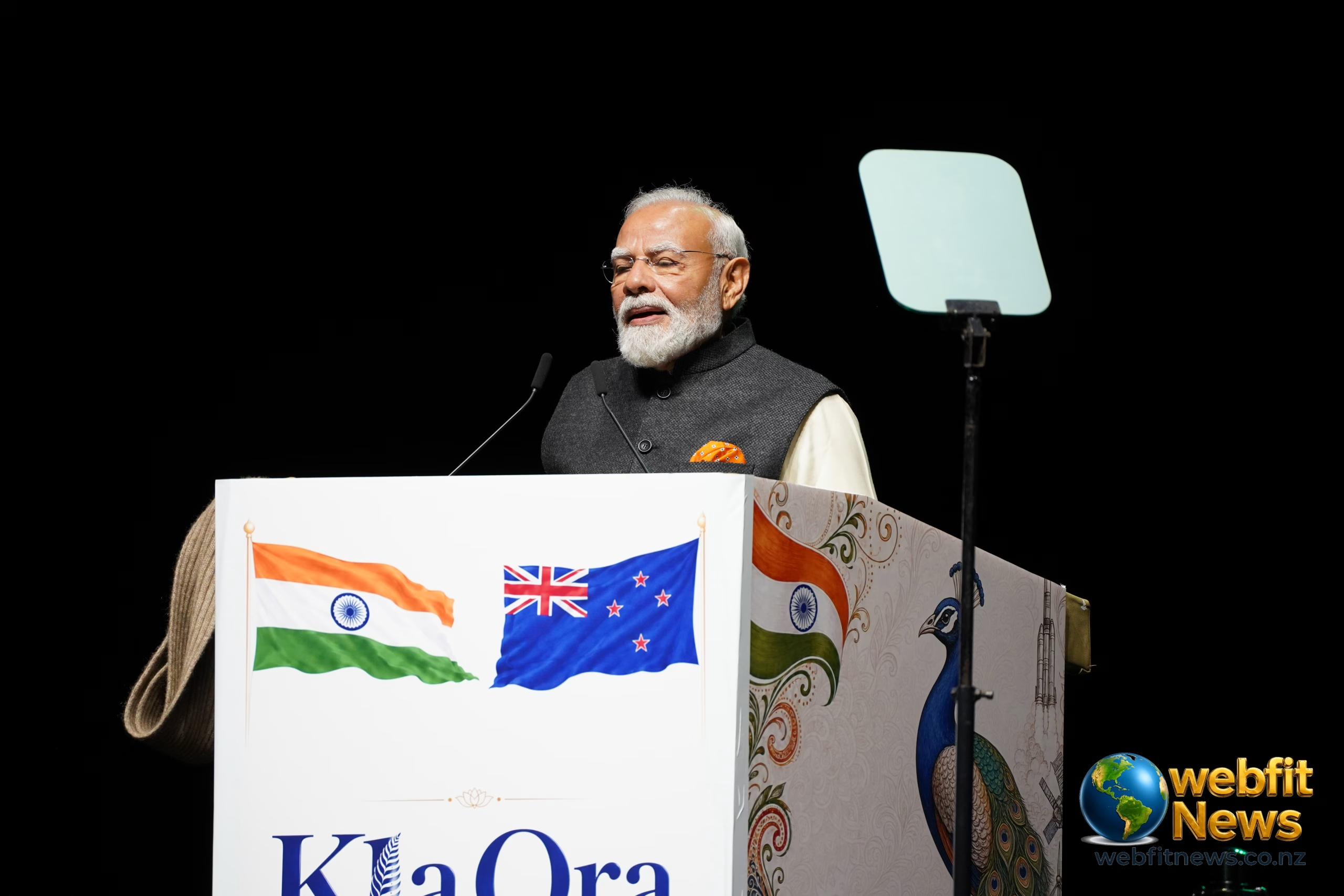
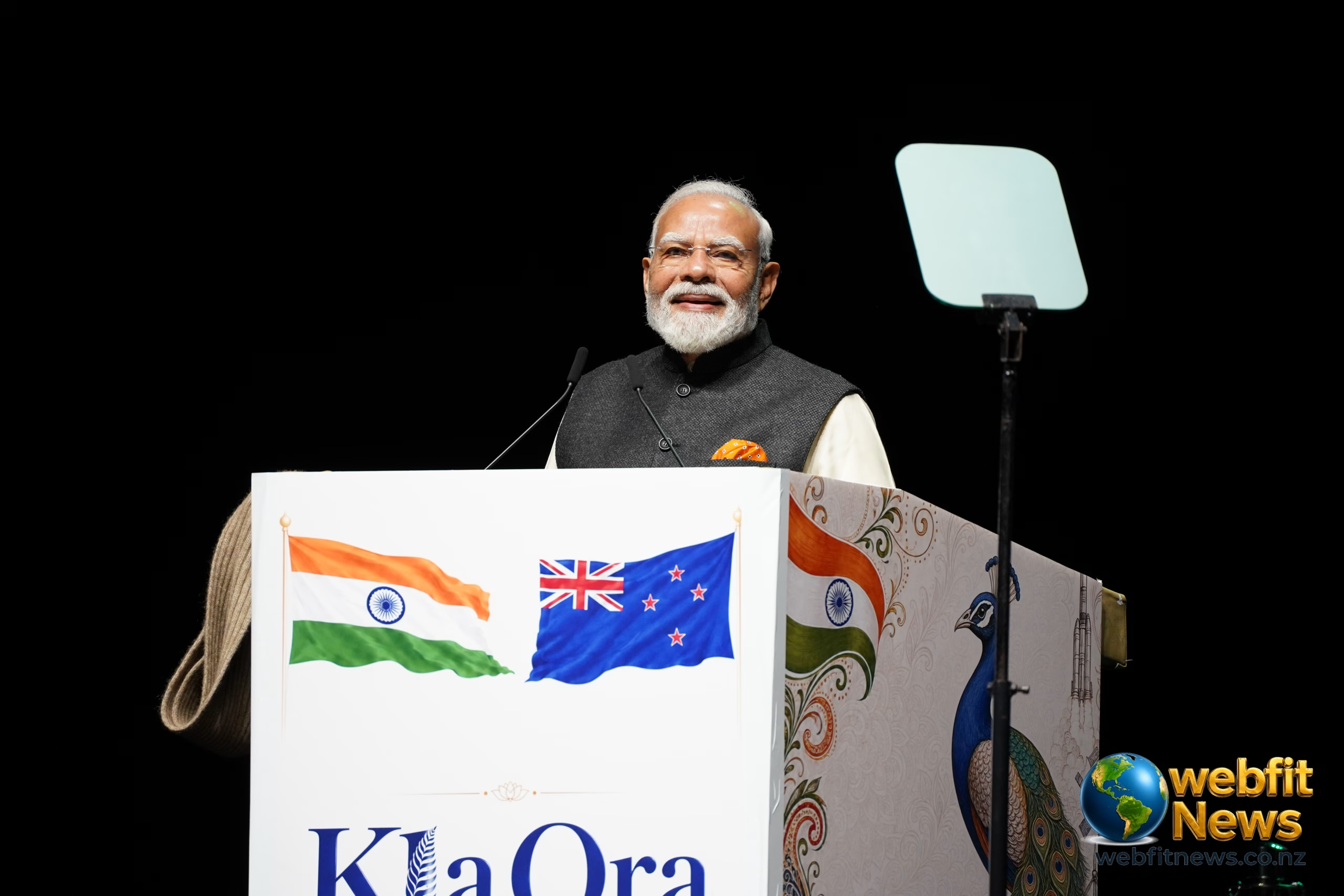
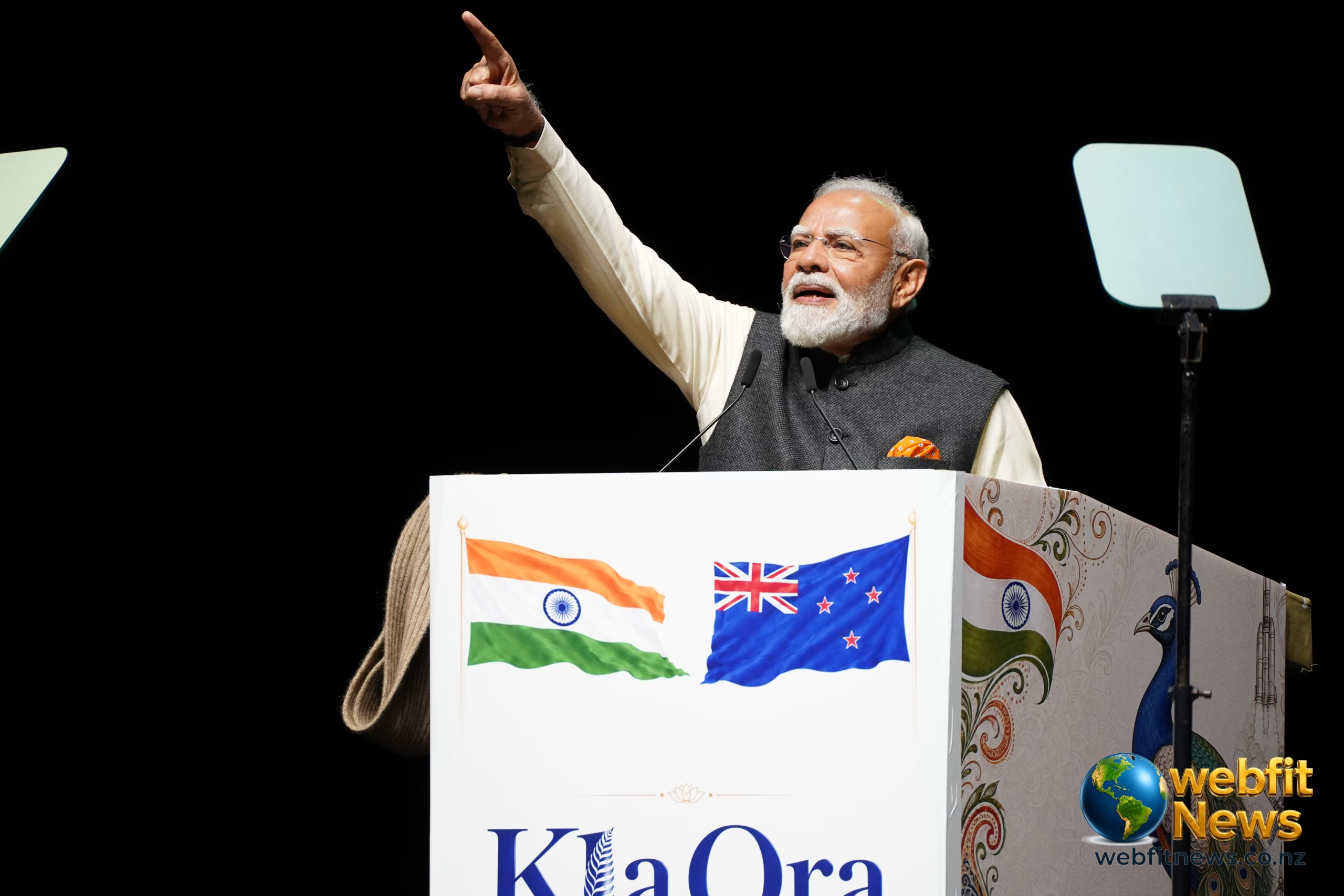
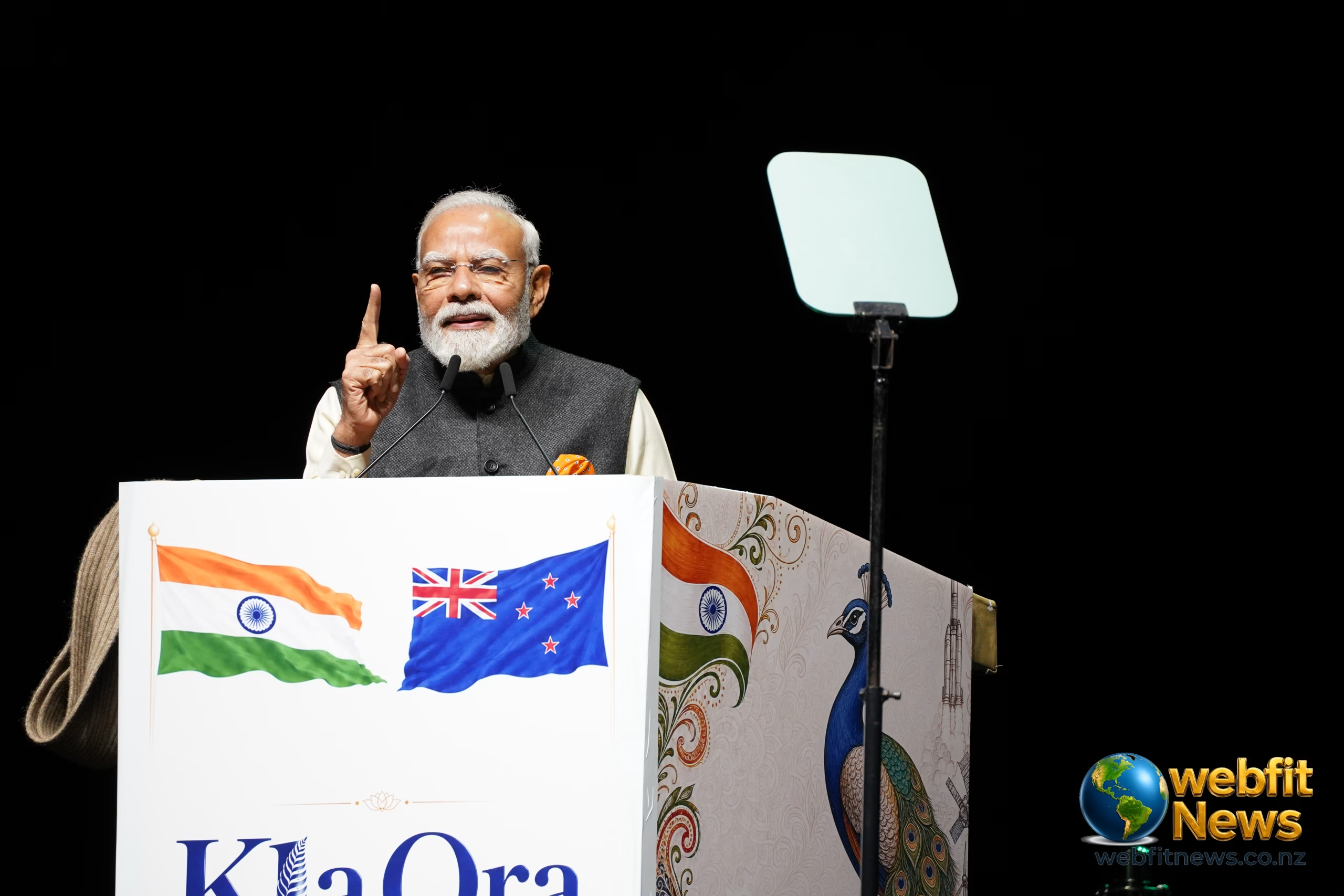
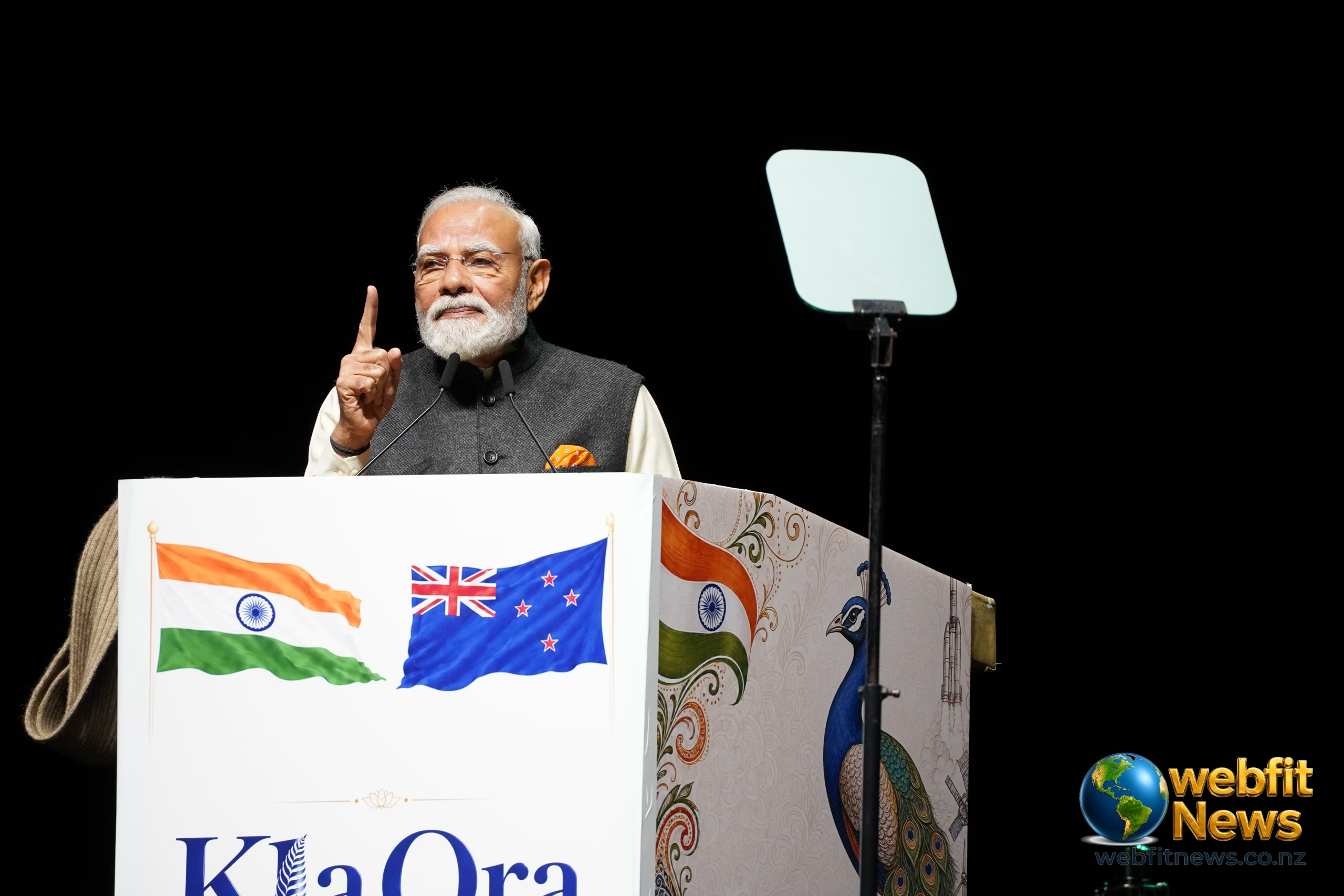
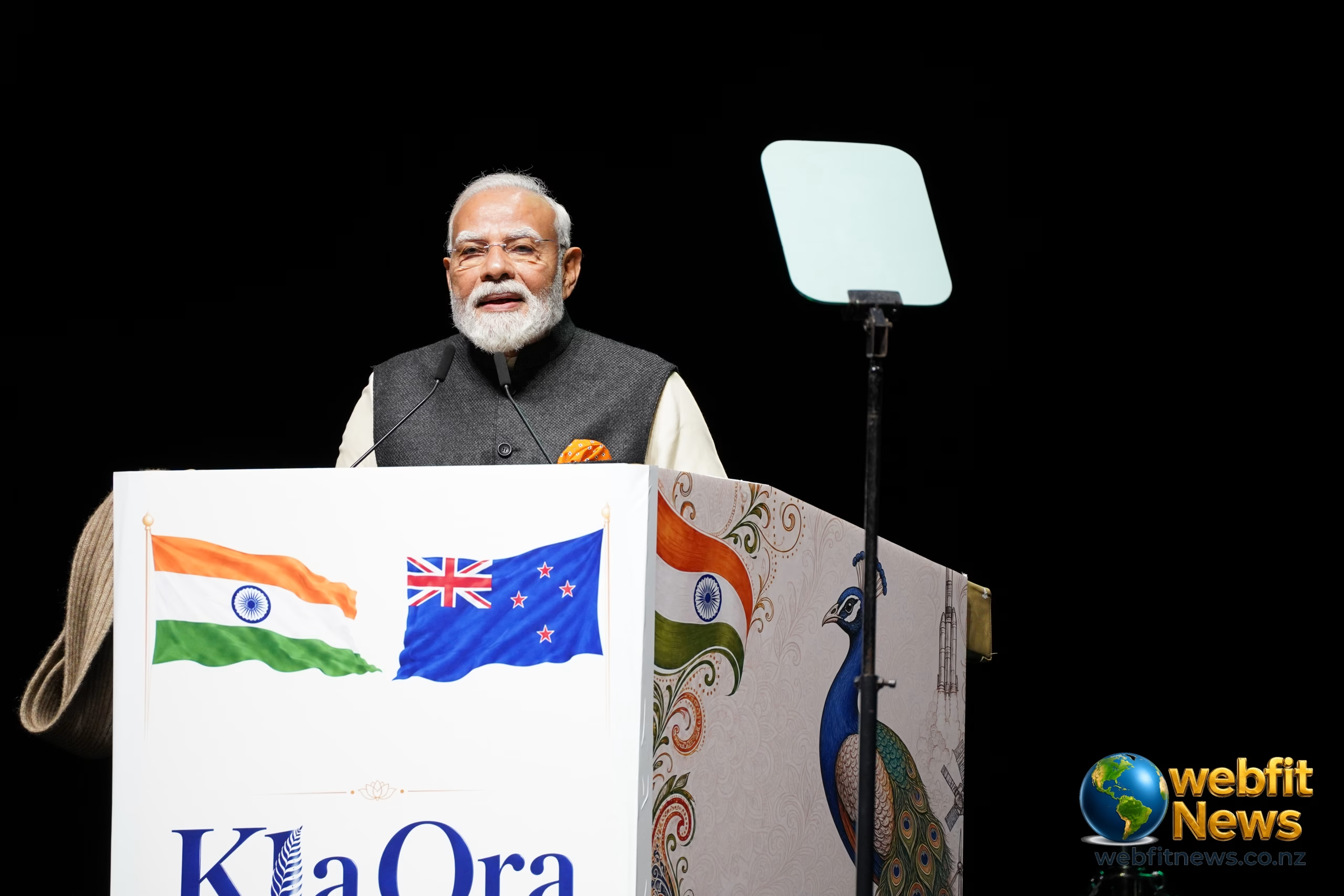
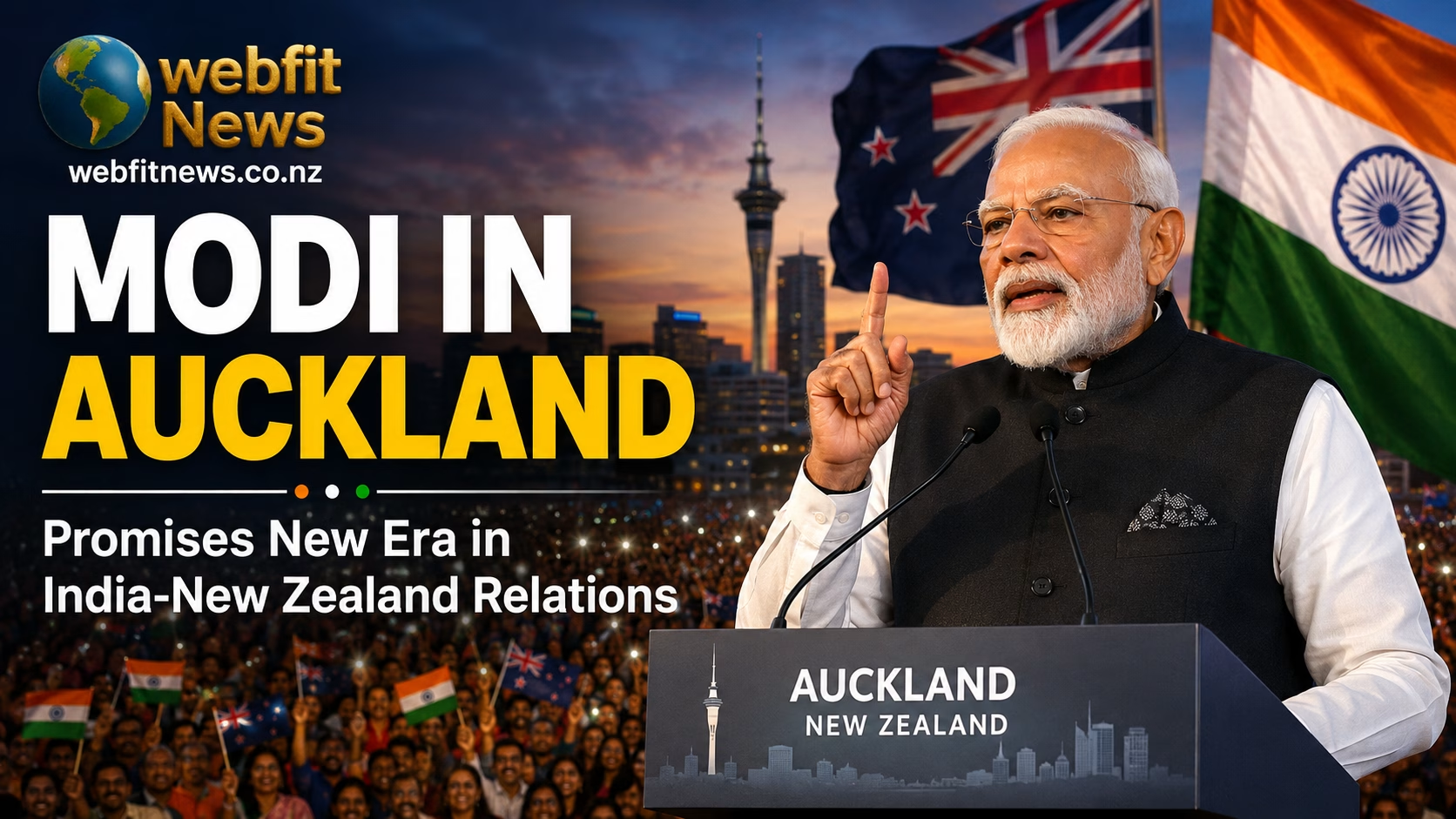
Prime Minister Narendra Modi has told thousands of members of New Zealand’s Indian community that India and New Zealand are ready to begin a new shared journey, using the Māori and Pacific concept of a “waka” to describe the future of relations between the two countries.
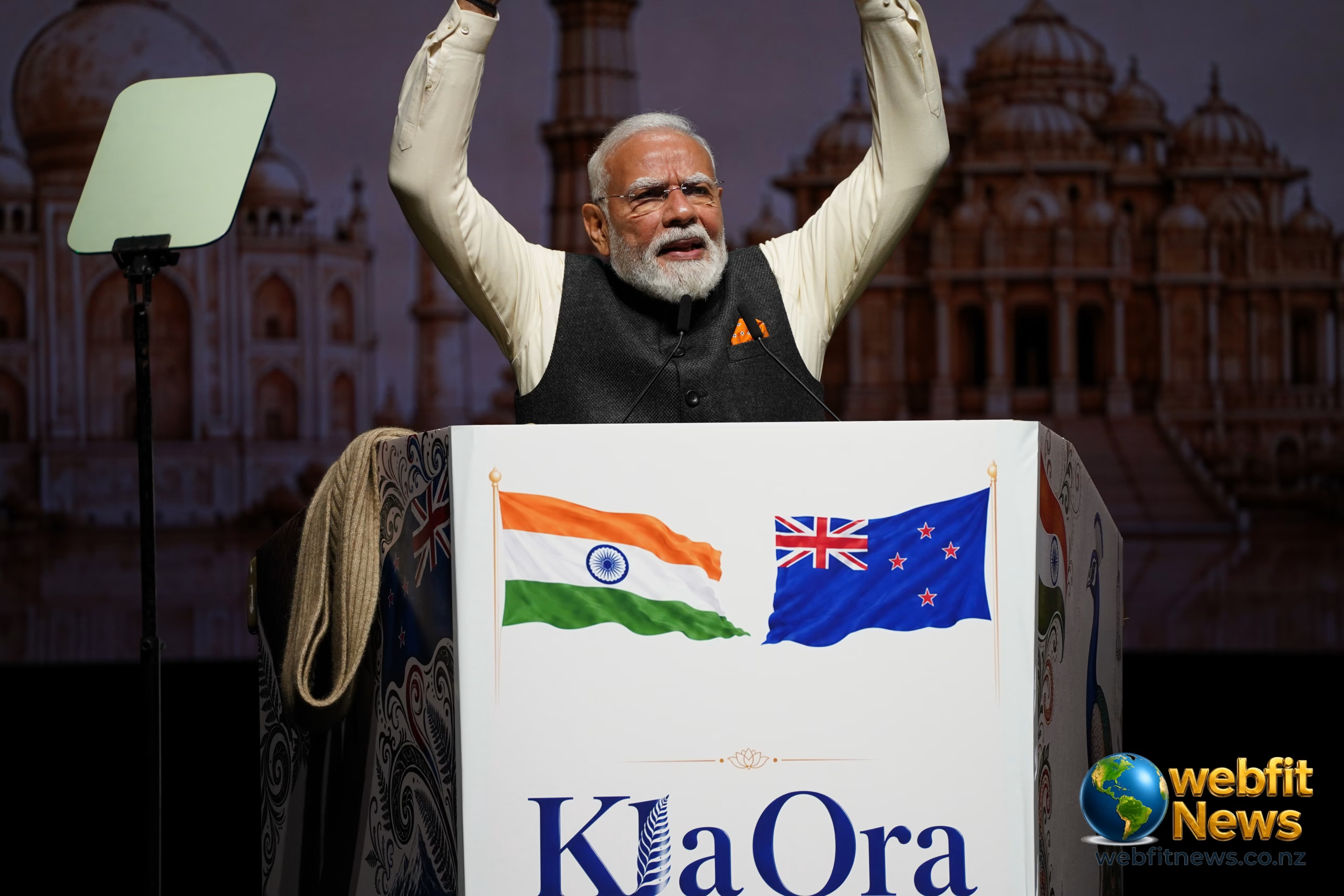
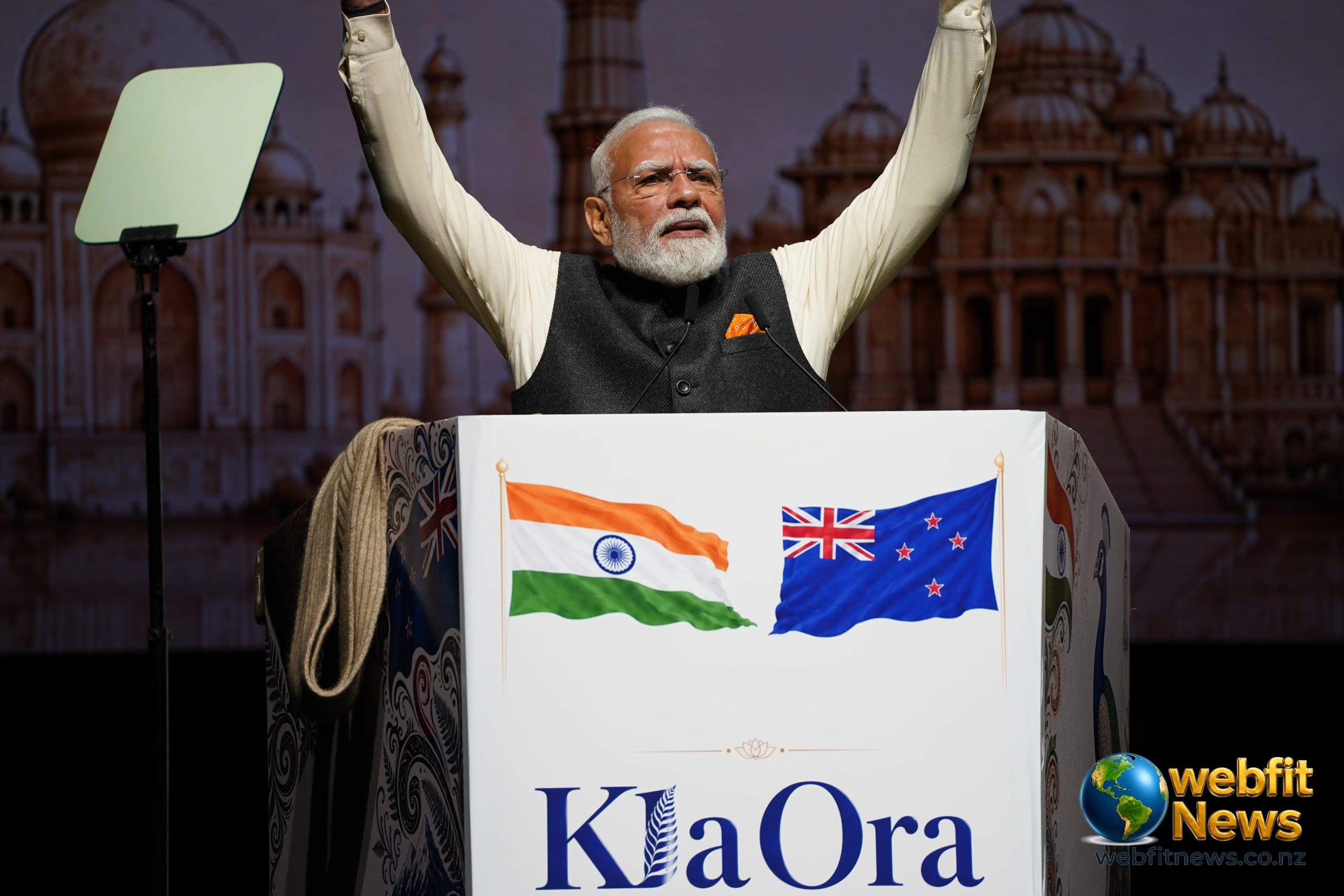
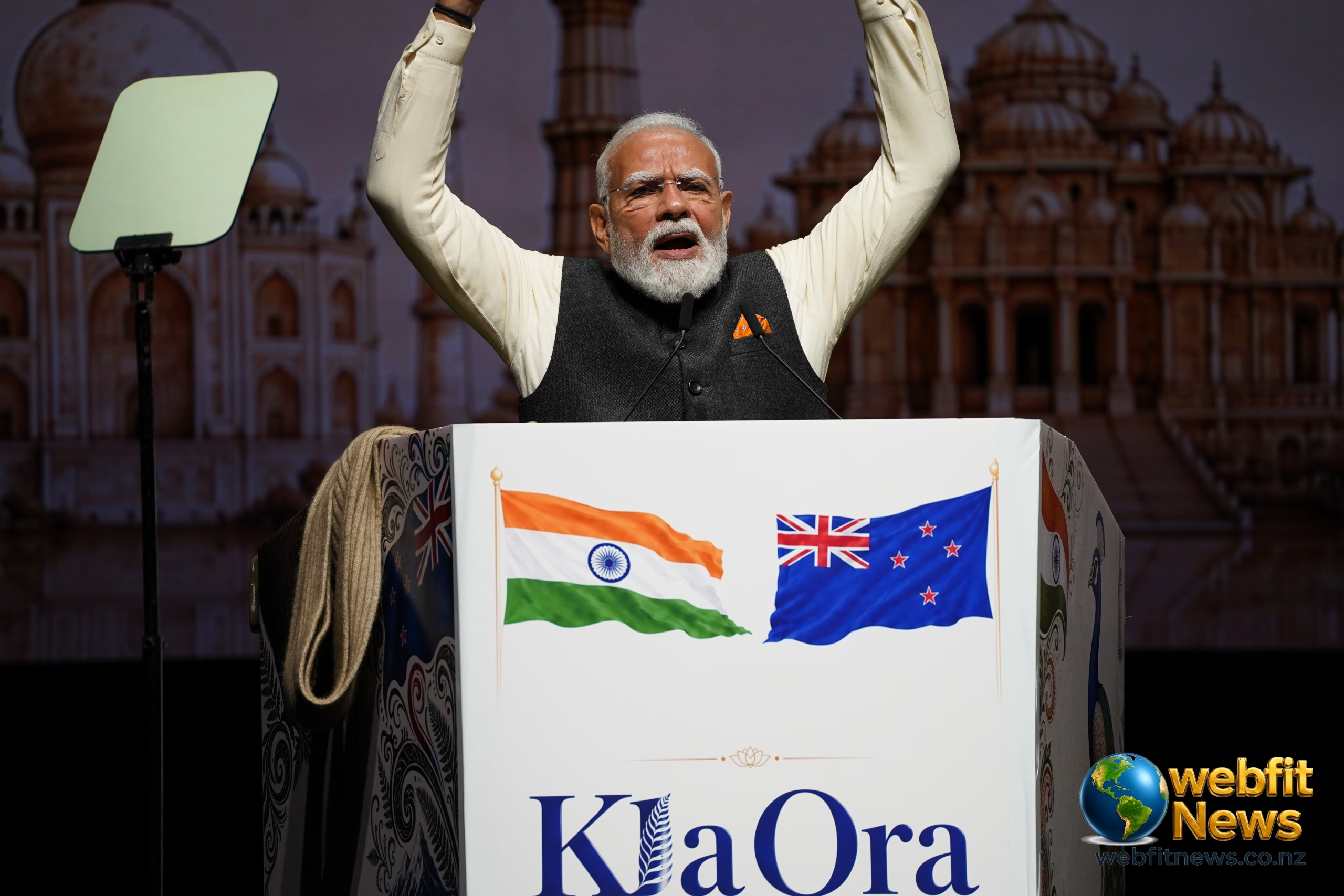
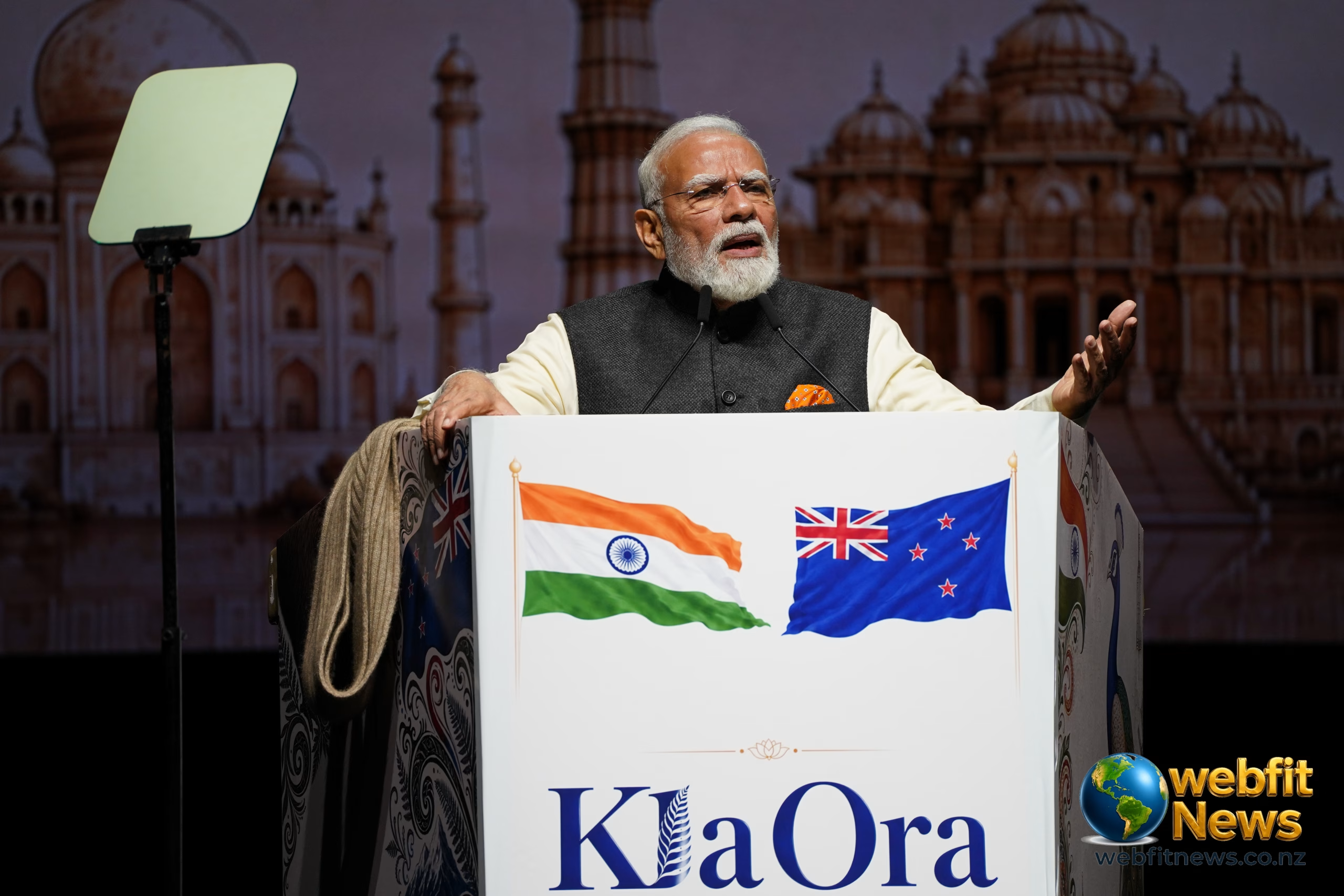
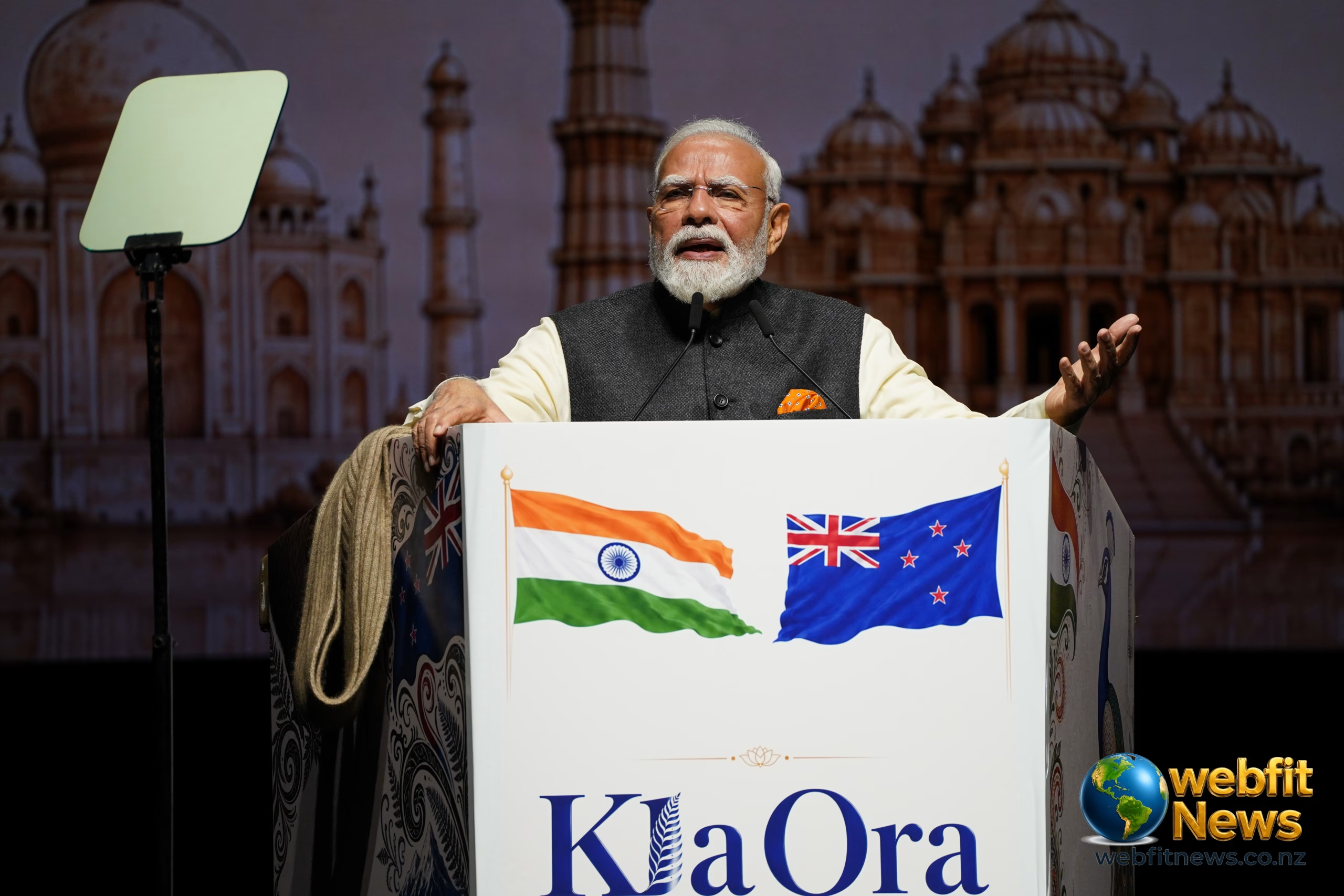
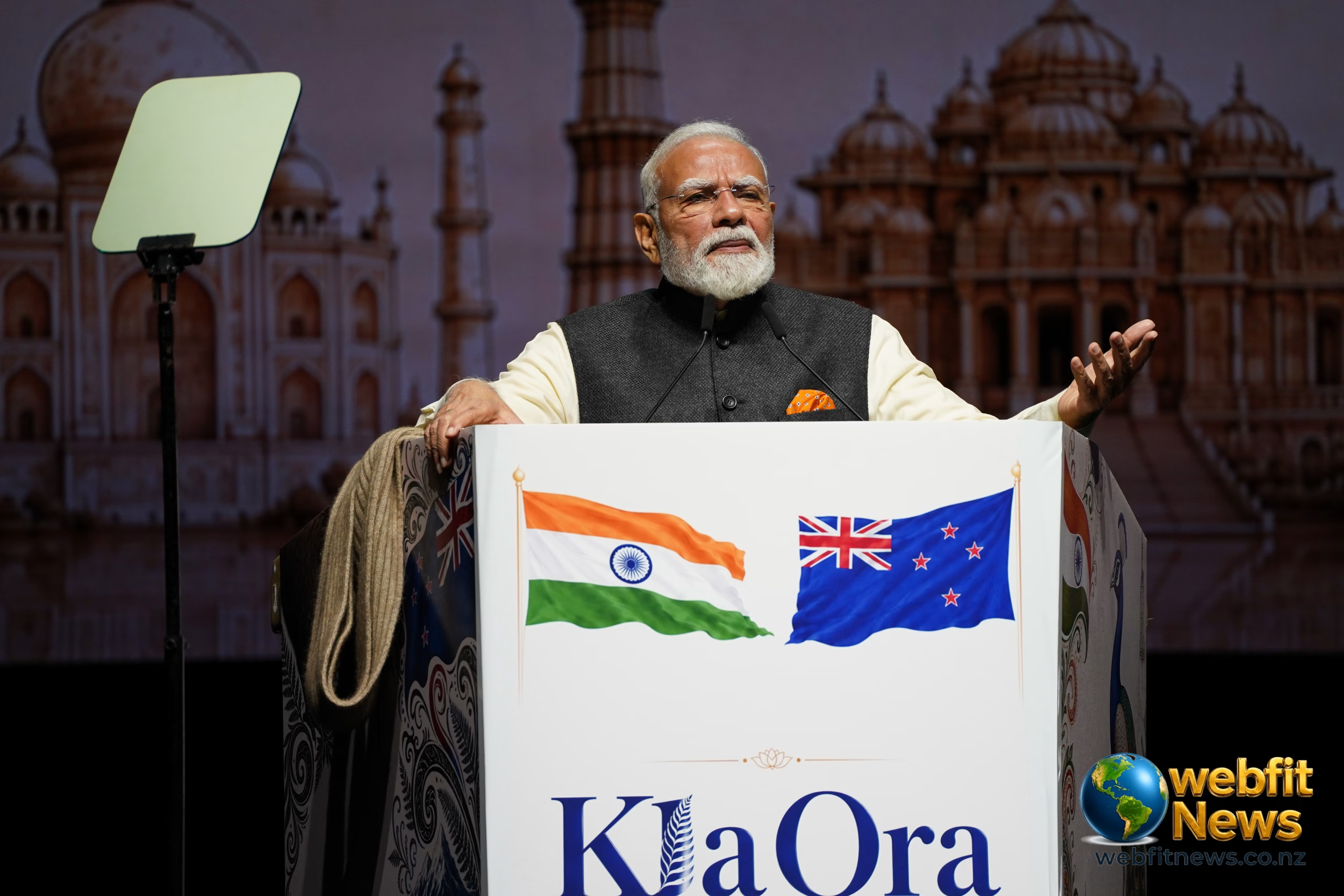
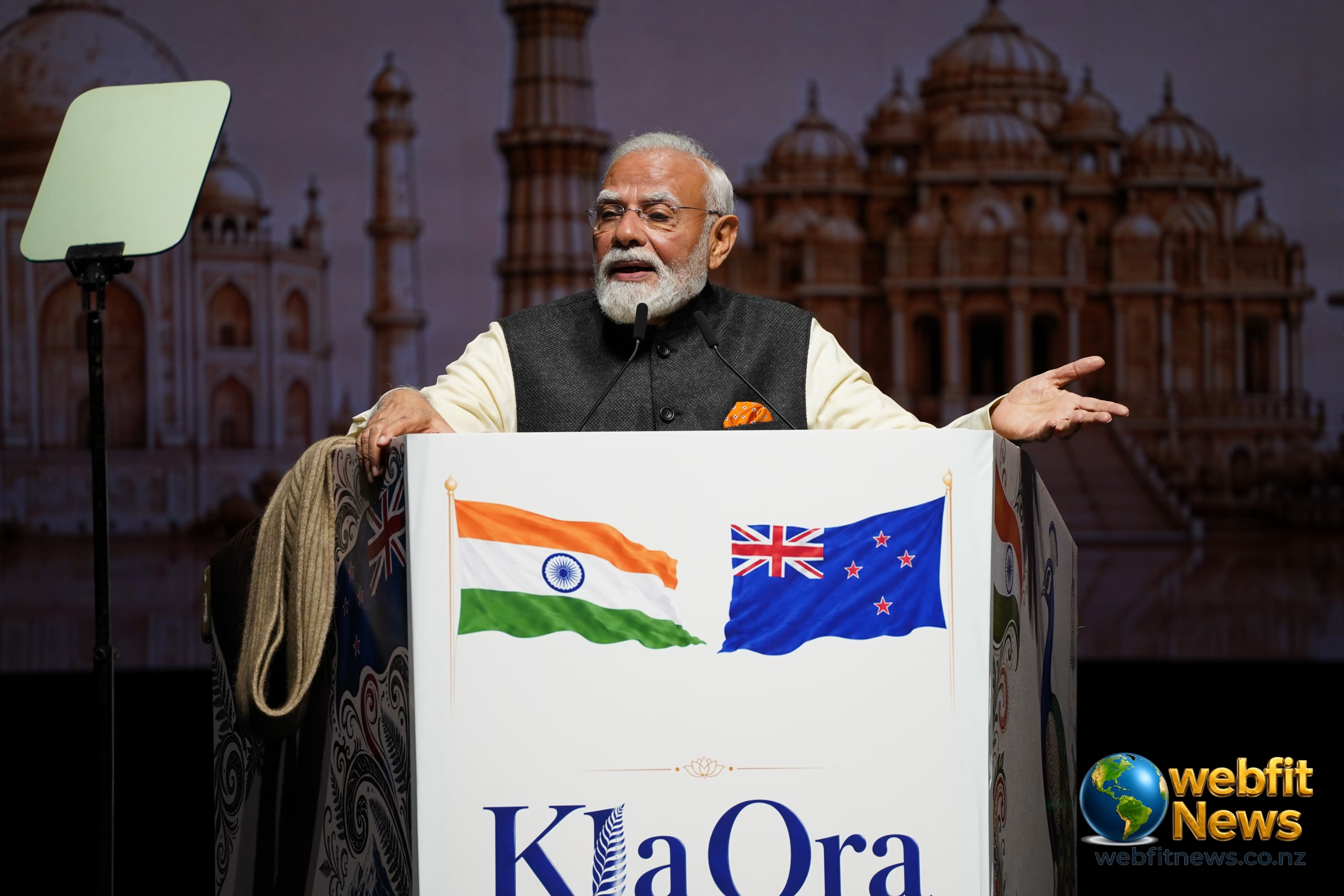
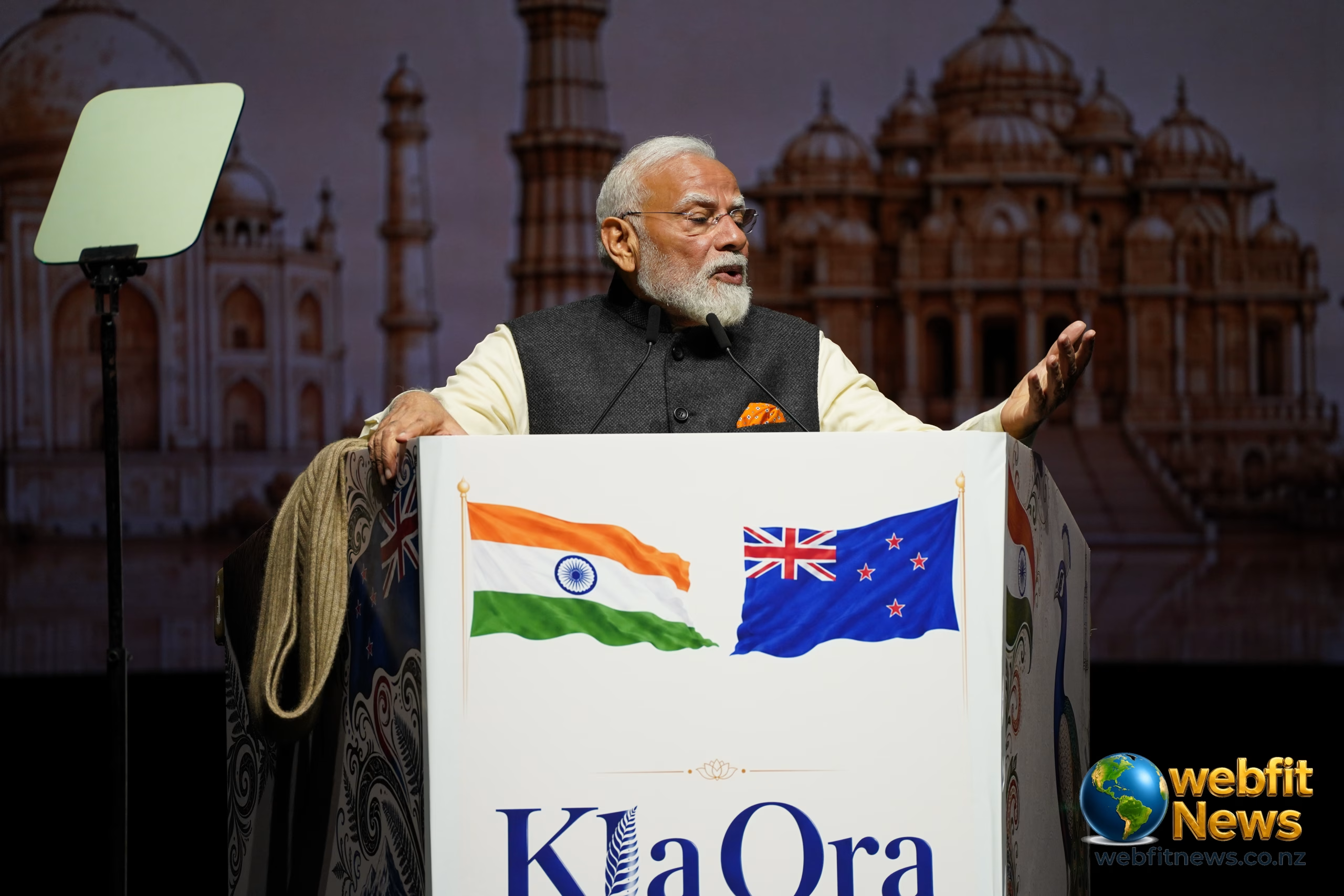
Addressing the Indian community in Auckland on 11 July 2026, Modi delivered a wide-ranging speech covering trade, agriculture, technology, sport, the Indian diaspora, Māori culture, Sikh heritage and India’s growing economic ambitions.
The Indian Prime Minister also made one particularly direct promise to the Auckland audience.
After noting that an Indian Prime Minister had returned to New Zealand after a gap of around 40 years, Modi said the community would not have to wait another four decades.
“It will not take another 40 years,” Modi said in his Hindi-language address, before adding his familiar political line about a “Modi guarantee”.
The address combined personal memories of New Zealand with a strong diplomatic message that economic, cultural and strategic cooperation between India and New Zealand should now move into a deeper phase.
A Personal New Zealand Memory From Decades Ago
Modi began his remarks by recalling a visit to New Zealand around 25 to 30 years ago, before he held national government office.
He told the audience that during the earlier visit he had been gifted a muffler, a cap and a glove because of the cold weather.
In a highly personal moment, the Prime Minister revealed that he had brought the old muffler back to New Zealand for his 2026 visit.
“The muffler you see is the one a friend from New Zealand gave me 25 to 30 years ago,” Modi said, according to the transcript of his address.
He said he had used and carefully preserved the item over the years, comparing its preservation with the affection he said he continued to hold for the people connected with his earlier New Zealand experience.
The anecdote quickly became a symbolic opening to a much larger speech about the history and future of the India-New Zealand relationship.
Modi Uses ‘Waka’ to Describe a Shared Journey
One of the strongest themes of the Auckland speech was Modi’s use of the word “waka”.
He described a waka as more than a boat, saying it could represent a shared journey.
“Today, the India-New Zealand waka is ready to begin a new journey,” Modi told the gathering.
He said the two countries had opportunities before them and argued that the Indian community across New Zealand would be among the real navigators of this relationship.
Modi specifically referred to Indians living from Auckland and Wellington to Christchurch and Queenstown.
The message was clear. New Zealand’s Indian diaspora was being presented not simply as an overseas community, but as an important human bridge between the two countries.
Praise for Christopher Luxon and Bipartisan Support
Modi acknowledged Prime Minister Christopher Luxon, members of the New Zealand Government and Labour Party representatives who were present.
He said their participation demonstrated bipartisan support for stronger India-New Zealand relations.
The Prime Minister also made a lighter reference to Luxon’s previous participation in Indian community celebrations, joking about his dance moves to “Dama Dam Mast Qalandar”.
Modi said Luxon’s moves had become popular among Kiwi Indians.
The humour was part of a broader effort throughout the speech to connect directly with the Auckland audience.
At another point, Modi joked that after living in New Zealand, Indians had become so Kiwi that any conversation would eventually turn to the weather.
Kiwi Indians Praised for Contribution to New Zealand
A major section of the address was dedicated to the contribution of Indian New Zealanders.
Modi said New Zealanders had welcomed the Indian community, trusted its talent and made Kiwi Indians part of the country’s wider social and economic life.
He referred to prominent people of Indian heritage or background in New Zealand public life, business and sport.
Among the names mentioned were Anand Satyanand, Rachin Ravindra, Ish Sodhi and Ajaz Patel.
Modi said New Zealand’s leaders regularly praised the contribution of Kiwi Indians.
“The praise is for you, but my head rises with pride,” he told the community.
The Prime Minister also emphasised a message frequently heard within Indian diaspora communities: loyalty to one’s country of residence and affection for one’s country of birth should not be viewed as competing ideas.
“We love our birthplace, and we show the same dedication to the land where we work,” he said.
For New Zealand’s Indian community, this was one of the clearest diaspora-focused messages of the night.
New Zealand’s Agriculture Model Praised
Modi devoted significant attention to New Zealand’s rural economy and agricultural systems.
He praised the country’s work in traceability, food safety and regulatory compliance, describing the agricultural ecosystem as a potential source of learning for India.
India has a very different agricultural structure, including a vast population of small farmers.
Modi argued that New Zealand’s experience could still offer practical lessons.
He specifically highlighted the Zespri model, saying it had shown how smaller producers could participate in a powerful market brand.
Climate-smart agriculture and precision farming technology were also identified as potential areas for cooperation.
The comments suggest that agricultural knowledge exchange could remain an important part of future India-New Zealand engagement, particularly as both countries face pressure to improve productivity while responding to environmental and climate-related challenges.
Manuka Honey, Ayurveda and Beekeeping
In another New Zealand-specific reference, Modi discussed mānuka honey.
He noted its reputation as “liquid gold” and compared New Zealand’s connection between honey, health and wellness with the importance of honey in India’s Ayurvedic traditions.
The Prime Minister said India was also promoting beekeeping and had recorded growth in honey production.
He suggested India could learn further from New Zealand’s experience in honey production.
Although presented in a conversational way, the remarks reflected a wider theme running through the speech: Modi repeatedly identified areas where India could learn from New Zealand rather than presenting the relationship as a one-way economic opportunity.
Rugby and Sports Technology Identified as Growth Areas
Sport was another major topic.
Modi said 2026 marked 100 years of sporting relations between India and New Zealand, recalling an Indian hockey tour to New Zealand a century ago and the impact of Major Dhyan Chand.
He then used the language of modern content creators, telling the audience that this was the age of “collaboration”.
Rugby was presented as an obvious area for cooperation.
Modi said India wanted to learn from New Zealand’s rugby expertise and needed coaches and specialists to help the sport grow.
He referred positively to coaching cooperation involving New Zealand Rugby and Rugby India in Bhubaneswar.
The Prime Minister also said he had attended a New Zealand sports startup event before his community address and had been impressed by innovation in sports technology.
He expressed confidence that the countries could work together in sports tech.
Space Cooperation Highlighted
Modi also used India’s space programme to illustrate the potential for high-technology cooperation.
He referred to India’s Chandrayaan lunar programme and told the audience that New Zealand technology had contributed to India’s space success.
According to Modi, a New Zealand space company had worked with India on several occasions.
He said both governments wanted to expand cooperation in this area.
The remarks placed space alongside sport, agriculture and trade as sectors where the relationship could move beyond traditional diplomatic engagement.
Trade Agreement Seen as a Major Opportunity
Trade was central to Modi’s economic message.
He said the economies of India and New Zealand had much to offer each other and linked this potential to the spirit of a trade agreement between the two countries.
Modi argued that closer trade ties could support India’s ambition to become a developed economy while also creating opportunities for New Zealand businesses.
The Auckland speech did not focus on detailed tariff schedules or individual export categories.
Instead, Modi presented the wider economic relationship as part of a long-term strategic partnership.
For businesses and policymakers in New Zealand, the emphasis on opportunities for companies in both countries is likely to be one of the most closely watched parts of the address.
Strong Praise for Māori Culture
One of the most distinctive sections of Modi’s speech focused on Māori culture.
He said India and New Zealand shared a respect for indigenous traditions and the importance of preserving cultural heritage.
Modi described the haka as more than a performance.
He said he saw courage, self-respect, respect for ancestors and the collective strength of a community within it.
The Prime Minister also discussed the Māori concepts of manaakitanga, whānau and kaitiakitanga.
He compared manaakitanga with India’s principle of “Atithi Devo Bhava”, which expresses the idea that a guest should be treated with deep respect.
Discussing whānau, Modi said India similarly saw family as more than a social arrangement, describing it as an institution.
He then linked kaitiakitanga with Indian philosophical ideas about humanity’s relationship with the Earth.
“We are not the owners of nature. We are its guardians,” he said while explaining the concept.
The cultural comparisons were among the most New Zealand-focused elements of the speech and appeared designed to build a connection between Indian and Māori traditions without suggesting that the two were identical.
Modi Lists India’s Economic and Technology Achievements
The Prime Minister later presented what he called a “bouquet” of India’s achievements.
He described India as the world’s fastest-growing major economy and highlighted the country’s role in vaccine production, mobile manufacturing, telecommunications, agriculture, dairy, fisheries, automobiles and startups.
He also focused heavily on digital infrastructure.
Modi referred to India’s digital identity systems and the billions of digital transactions conducted through UPI.
Drone technology, renewable energy, solar capacity and the space economy were also highlighted.
The larger message was that India wanted to be seen in New Zealand not only through the lens of history, culture and migration, but also as a rapidly changing technology and economic partner.
Sikh Heritage Receives Major Attention
A significant part of the address was dedicated to Sikh history, sacred heritage and government initiatives connected with the Sikh community.
Modi referred to the evacuation of sacred saroops of Sri Guru Granth Sahib Ji from Afghanistan during a period of crisis.
He also spoke about the Sikh principles of service, courage, equality and compassion.
The Prime Minister discussed Hemkund Sahib and government work on a ropeway intended to improve access, particularly for elderly pilgrims.
He also highlighted Veer Bal Diwas, observed on 26 December in memory of the Sahibzadas.
Another detailed section focused on sacred Jore Sahib associated with Sri Guru Gobind Singh Ji and Mata Sahib Kaur Ji, which Modi said had been preserved by the family of Union Minister Hardeep Puri for generations before being taken to Patna Sahib.
Modi encouraged members of the New Zealand Indian community to visit Patna Sahib when travelling to India.
A Direct Appeal to Young Indians in New Zealand
Towards the end of the speech, Modi turned his attention to young members of the Indian diaspora.
He promoted the Bharat Ko Janiye Quiz, an initiative designed to help overseas Indian youth learn more about India and its diversity.
Modi said the sixth edition was being made more technology-focused, with activities planned through an app.
He encouraged young people in New Zealand to participate and to help connect India’s heritage with wider New Zealand society.
For Webfit News, this part of the speech is especially relevant to the growing second and third generations of the Indian community in New Zealand.
Many young Kiwi Indians are negotiating identities shaped by both countries.
Modi’s message was an explicit call for them to maintain knowledge of India while continuing to build connections within New Zealand.
A Speech Focused on the Next Chapter
Modi’s Auckland address was much more than a traditional diaspora speech.
It was part personal memory, part cultural diplomacy and part economic pitch.
The repeated use of New Zealand references, including waka, manaakitanga, whānau, kaitiakitanga, rugby, mānuka honey and Kiwi weather, showed a deliberate effort to frame the relationship in language familiar to the local audience.
At the same time, Modi strongly promoted India’s economic, digital and technological development.
The key political and diplomatic message was that India sees New Zealand as a country with which it wants a deeper relationship.
For the Indian community in Auckland, however, the most memorable line may remain the simplest.
After four decades between visits by an Indian Prime Minister, Modi said the next wait would not be as long.
Whether the growing political momentum leads to faster progress in trade, technology, agriculture, sport and people-to-people cooperation will now be closely watched in both New Zealand and India.
References
- Transcript of Prime Minister Narendra Modi’s address to the Indian community in Auckland, New Zealand, delivered on 11 July 2026.
- Statements and policy themes attributed directly to Prime Minister Narendra Modi in the supplied Hindi-language speech transcript.
Webfit News will continue covering the growing India-New Zealand relationship, the Kiwi Indian community and major developments affecting Auckland and wider New Zealand.