By Webfit News Desk
Published: December 2025
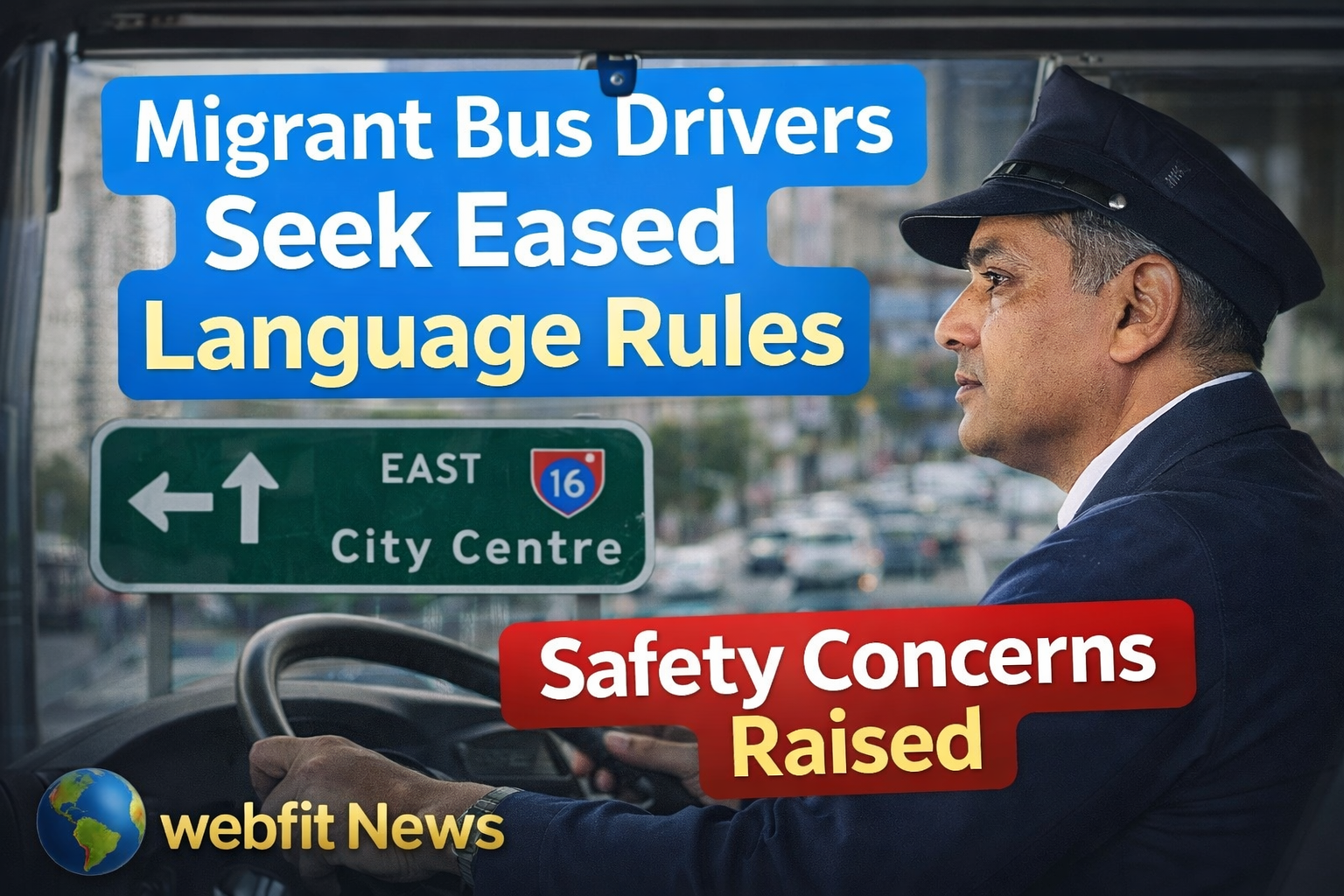
A call by migrant bus drivers to ease English language requirements for residency has sparked debate across New Zealand, raising questions about road safety, workforce shortages, and fairness in immigration settings.
The issue has drawn attention after concerns were raised about how reduced language standards could work in a country where road signs, safety instructions, and emergency communications are primarily in English.
What Migrant Drivers Are Asking For
Migrant bus drivers and industry advocates say current English language rules create barriers for experienced drivers who are already working in New Zealand.
They argue that:
- Many drivers have strong practical driving skills and years of experience
- Language tests do not always reflect real-world job performance
- Driver shortages are putting pressure on public transport services
- Residency pathways should better reflect workforce needs
Supporters of easing the rules say the transport sector relies heavily on migrant labour and needs flexible policies to keep services running.
Why Language Standards Matter
At the same time, critics say English proficiency is not just an immigration issue, but a public safety one.
Road signs, traffic warnings, detour notices, and emergency instructions are written in English. In fast-moving or high-risk situations, a clear understanding can be critical.
Transport safety experts point out that:
- Bus drivers must respond quickly to road signage and alerts
- Clear communication with passengers is essential during emergencies
- Language gaps can increase risk during incidents or breakdowns
The concern is not about migrant workers themselves, but about ensuring consistent safety standards across the public transport system.
A Workforce Under Pressure
New Zealand continues to face a shortage of bus drivers, especially in major cities. Operators say recruitment remains difficult, and service cancellations have become more common.
Because of this, migrant workers have become essential to keeping buses on the road. Industry groups warn that without policy changes, shortages could worsen.
However, others argue that lowering language requirements may shift the problem rather than solve it.
Balancing Safety and Supply
The debate highlights a broader challenge for policymakers. How can New Zealand support critical workers while maintaining safety and communication standards?
Some experts suggest alternatives, such as:
- Job-specific language assessments instead of general tests
- Targeted English training linked to transport roles
- Phased language requirements tied to residency timelines
These approaches aim to balance workforce needs with public confidence.
Public Reaction and Next Steps
Public response has been mixed. Some New Zealanders support easing rules to keep transport services reliable. Others worry that lowering standards could create risks on already busy roads.
So far, the Government has not announced changes to language rules for bus drivers. Any decision would likely involve consultation with transport agencies, unions, and safety regulators.
The Bigger Picture
This issue sits at the intersection of immigration, transport, and public safety. As New Zealand continues to rely on migrant workers across key sectors, similar debates are likely to emerge.
For now, the central question remains unresolved.
How should New Zealand balance the need for skilled workers with the need for clear communication and road safety?
Webfit News will continue to follow developments on this issue.
Independent. Neutral. Community-focused.