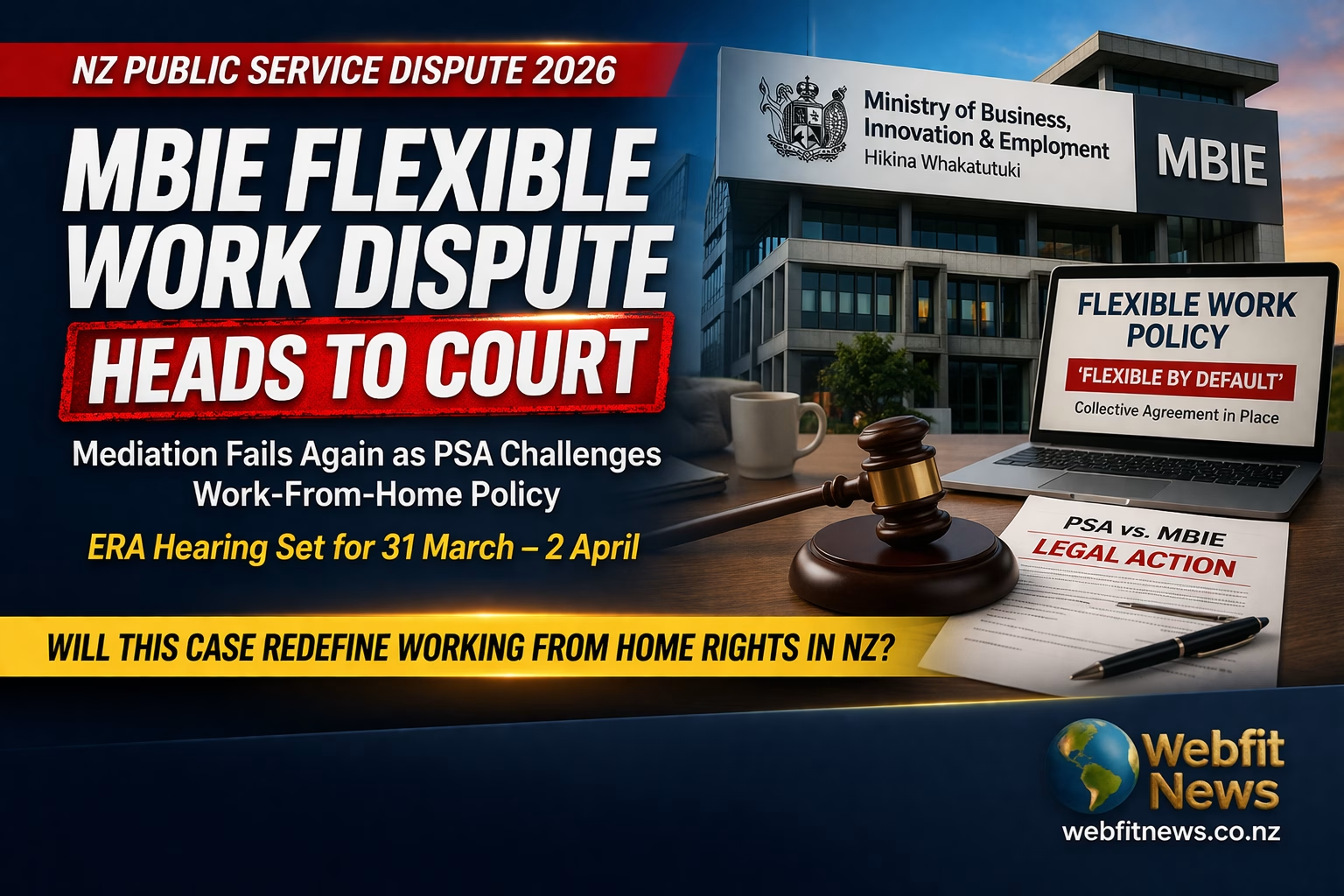
A major workplace dispute inside New Zealand’s public service is heading toward a critical moment, as the Ministry of Business, Innovation and Employment (MBIE) faces a third round of mediation over its controversial flexible work policy.
If talks fail, the issue will move to a formal hearing before the Employment Relations Authority (ERA) later this month. That means what started as an internal policy change could soon become a legal test case with wider implications for workers across the country.
What the dispute is about
At the centre of the conflict is MBIE’s decision to tighten flexible working arrangements, including working from home.
The Public Service Association (PSA), which represents many government employees, argues that MBIE’s approach breaches existing collective agreements. These agreements include a “flexible by default” principle, which gives employees the right to request working arrangements that suit their personal circumstances unless there is a strong business reason to refuse.
According to the PSA, MBIE’s new policy does the opposite.
- Existing flexible arrangements must now be renegotiated
- Reviews are required every six months
- There is a clear push to reduce work-from-home days
Union leaders say this effectively weakens employee rights that were already agreed upon.
Why this matters now
This dispute is not happening in isolation. It comes at a time when many households are under pressure from rising costs, especially fuel prices.
Working from home is no longer just a lifestyle choice. For many, it is a financial necessity.
PSA National Secretary Fleur Fitzsimons made that point clearly, saying flexible work helps reduce commuting costs and supports workers dealing with rising living expenses.
There is also a broader shift in how work is viewed globally. Since the pandemic, flexible work has become standard in many industries. Rolling it back is likely to face resistance.
Government influence behind the policy
MBIE’s policy change did not come out of nowhere. It aligns with a wider government directive aimed at limiting working from home across the public sector.
The intention appears to be bringing more employees back into offices. Supporters argue this improves collaboration, productivity, and accountability.
But critics say this approach is outdated and ignores how modern workplaces operate.
This tension between traditional office culture and flexible work is now playing out in real time inside one of the country’s most important government agencies.
What happens next
A third mediation session is scheduled in Wellington. This follows two earlier attempts that failed to resolve the dispute.
If mediation breaks down again, the case will move to the Employment Relations Authority.
The ERA hearing is set for:
- 31 March to 2 April
- Expected to run over three days
- Could result in a binding legal determination
The PSA is seeking a clear ruling that MBIE is violating its collective agreement obligations.
At the same time, the union is also challenging broader government restrictions on flexible work through a separate case involving the Public Service Commission.
So even if this MBIE dispute is resolved, the wider battle is far from over.
A pattern emerging across the public sector
This is not the first time a government agency has faced pushback over flexible work.
The PSA pointed out that ACC, another public sector organisation, had already backed down after similar concerns were raised by staff.
That sets a precedent. It shows agencies can change direction when enough pressure builds.
The question now is whether MBIE will follow that path or continue defending its position in court.
The real issue underneath
On the surface, this looks like a dispute about working from home. But the real issue runs deeper.
It is about control.
- Who decides how work gets done
- How much flexibility employees actually have
- Whether agreements signed in good faith still mean something
If MBIE can successfully change or override these arrangements, it could open the door for other agencies to do the same.
That is why unions are treating this case as a line in the sand.
Impact on workers and organisations
For employees, the outcome could directly affect daily life.
- Commute costs
- Work-life balance
- Childcare arrangements
- Mental wellbeing
For organisations, the stakes are different.
- Productivity expectations
- Office space utilisation
- Culture and team dynamics
There is no one-size-fits-all answer. That is exactly why flexible work policies exist in the first place.
Webfit News Perspective
This is where MBIE may be misreading the situation.
They are treating flexible work like a perk that can be adjusted when convenient. It is not. It has become part of the employment contract in both legal and practical terms.
If you sign agreements that promise flexibility, then try to quietly reverse them later, you are not managing policy. You are breaking trust.
Also, let’s be honest. This is not just about productivity or collaboration. It is about control and visibility. Leaders feel more comfortable when they can see people working.
But comfort is not a strategy.
If MBIE pushes this to the ERA and loses, it will not just be a legal defeat. It will damage credibility across the public sector.
If they win, they risk setting a precedent that weakens worker protections everywhere.
Either way, this is bigger than MBIE. It is a test of what modern work in New Zealand actually looks like.
What to watch next
Over the coming weeks, a few key questions will define how this story unfolds:
- Will mediation finally lead to a compromise
- Will the ERA set a clear legal precedent
- Will other agencies rethink their policies
- Will the government adjust its stance
One thing is certain. Flexible work is not going away.
The only question is whether institutions adapt to that reality or fight it and lose time, money, and trust in the process.
References:
- PSA Media Release (20 March 2026)
- Employment Relations Authority process guidelines
- MBIE Flexible Work Policy updates