A major step towards inclusive innovation and a stronger Māori economy
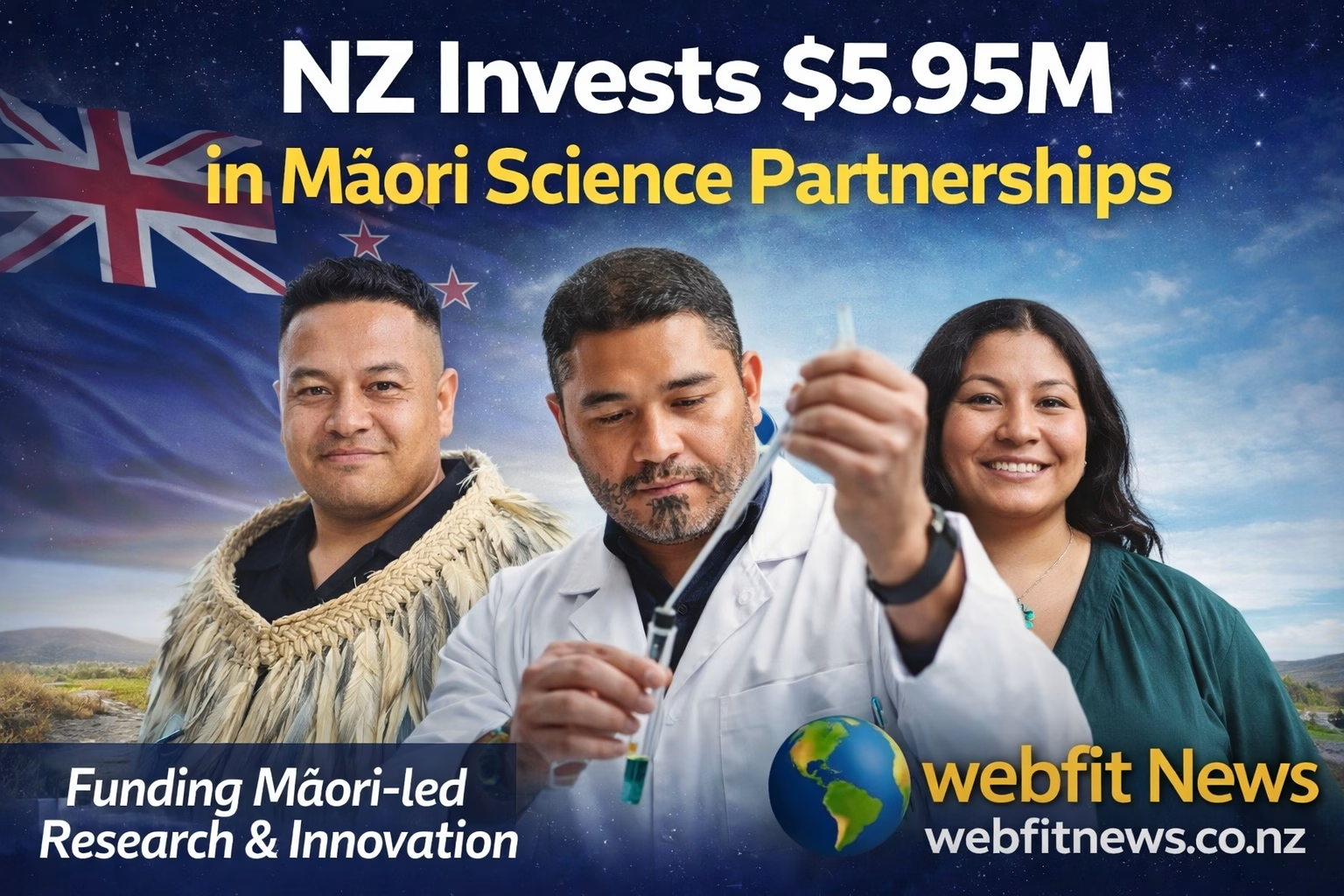
In a move that reflects both cultural respect and future-focused innovation, the New Zealand Government has announced a $5.95 million investment to support Māori-led research partnerships across the country.
The funding will support 17 new science programmes, bringing together Māori organisations and research institutions to co-develop solutions that benefit communities, the environment, and the wider economy.
At its core, this initiative is not just about science. It is about partnership, identity, and long-term impact for Aotearoa New Zealand.
What is the He Ara Whakahihiko Fund?
What PM Modi’s 2026 New Zealand Visit Means for Trade, Diaspora, and Regional Power – WebfitNews
The funding comes under the He Ara Whakahihiko Capability Fund – Rangapū Rangahau, a government-backed initiative designed to strengthen Māori participation in science, innovation, and technology.
Each selected project will receive $350,000 over two years, supporting collaboration between iwi, Māori businesses, and leading research providers.
Dr Willy-John Martin, Director of Māori Science, Innovation and Technology, highlighted the deeper purpose behind the funding:
“Mā ēnei rangapū rangahau ka tau ai, ā, ka renarena ai ngā taura hou i waenganui i te ōhanga Māori me te pūnaha pūtaiao.”
In simple terms, this means building strong, lasting connections between the Māori economy and the science system.
Why This Matters for New Zealand
This initiative comes at a time when New Zealand is trying to balance economic growth with cultural responsibility.
There are three key reasons why this matters:
1. Growing the Māori Economy
The Māori economy is already worth tens of billions and continues to grow. Supporting Māori-led innovation ensures that growth is inclusive, sustainable, and community-driven.
2. Better Environmental Outcomes
Many Māori organisations operate with a strong focus on kaitiakitanga, or guardianship of the environment. This brings a unique perspective to scientific research, especially in areas like conservation, climate resilience, and land use.
3. Stronger National Innovation
When diverse knowledge systems come together, the result is often better. Blending mātauranga Māori with modern science creates new ways of solving complex problems.
Real Projects Making Real Impact
Some of the funded programmes show exactly how this collaboration will work in practice.
AI Meets Māori Tourism
The New Zealand Institute for Earth Science is working with Māori tourism operators, including Whale Watch Kaikōura, to develop AI-powered forecasting tools.
These tools will help businesses understand weather and environmental conditions, improving safety and decision-making.
Fighting Kauri Dieback
Te Rūnanga o Te Rarawa, alongside the University of Otago, is developing a fast diagnostic tool for kauri dieback disease.
This will allow frontline kaitiaki to detect the disease early and act quickly, protecting one of New Zealand’s most iconic native trees.
Harakeke Innovation
The University of Waikato, working with iwi partners, is exploring ways to turn harakeke into high-quality textile fibres.
This could open new Māori-led business opportunities while staying environmentally sustainable.
Strong Interest Across the Country
More than 100 proposals were submitted for this funding round. That alone tells a bigger story.
There is a clear and growing appetite across New Zealand for:
- Māori-led innovation
- Collaborative research
- Community-driven solutions
This is not a small niche anymore. This is becoming a mainstream direction for the country’s future.
Webfit News Perspective
Let’s be honest. New Zealand has talked about a partnership with Māori for years.
But the real question has always been:
👉 Are we actually building systems that reflect that partnership?
This funding is a step in the right direction.
But here is the reality check.
$5.95 million sounds big, but across 17 projects, it is still an early-stage investment, not a full transformation.
If New Zealand truly wants to lead globally in indigenous innovation, this cannot be a one-off announcement. It needs:
- Long-term funding
- Measurable outcomes
- Real integration into national policy
Otherwise, it risks becoming another good idea that never reaches full impact.
What Comes Next
This is the second phase of the He Ara Whakahihiko fund, following earlier programmes focused on commercialisation and economic growth.
Now, the focus is shifting toward:
- Capability building
- Research partnerships
- Skills development
If these projects succeed, they could shape how New Zealand approaches:
- Science funding
- Economic development
- Cultural inclusion
The Bigger Picture for Aotearoa
New Zealand has always positioned itself as a country that values both innovation and identity.
This initiative brings those two together.
It shows that:
- Science does not have to be separate from culture
- Economic growth does not have to ignore community values
- Māori knowledge is not just historical, it is future-focused
And that is where the real opportunity lies.
Conclusion
The investment into Māori–science partnerships is more than just funding.
It is a signal.
A signal that New Zealand is trying to build a future where:
- Innovation is inclusive
- Growth is shared
- Culture is respected
But whether this becomes a turning point or just another announcement will depend on what happens next.